

There is a particular kind of disorder that only becomes possible through extreme control. Yohji Yamamoto’s Spring/Summer 2027 collection, presented in Paris on October 2, operates within that contradiction. Across 43 looks, fabric is cut, pulled apart, woven, knotted and allowed to fall away from the body, creating clothes that seem to exist somewhere between construction and dissolution.
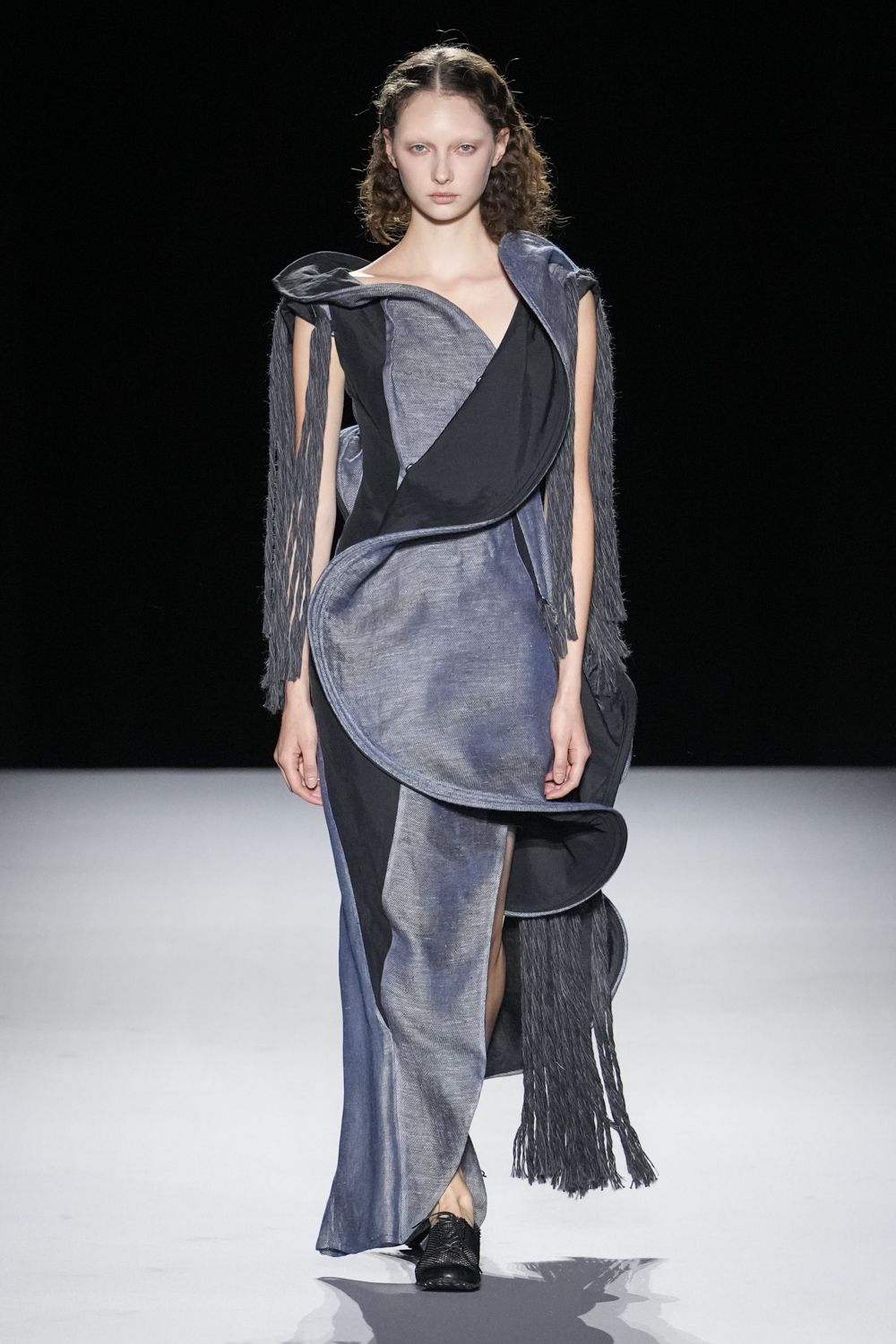
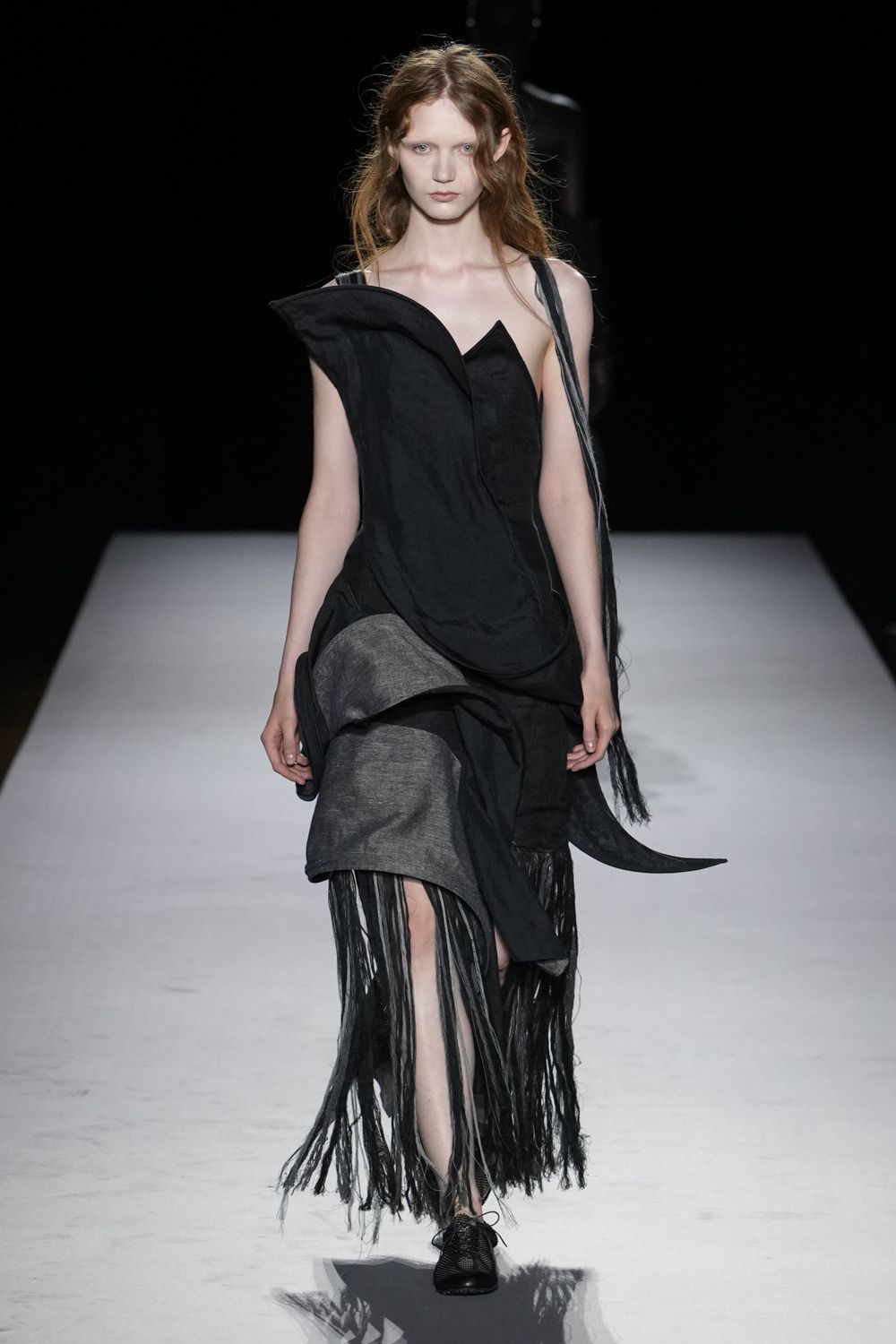
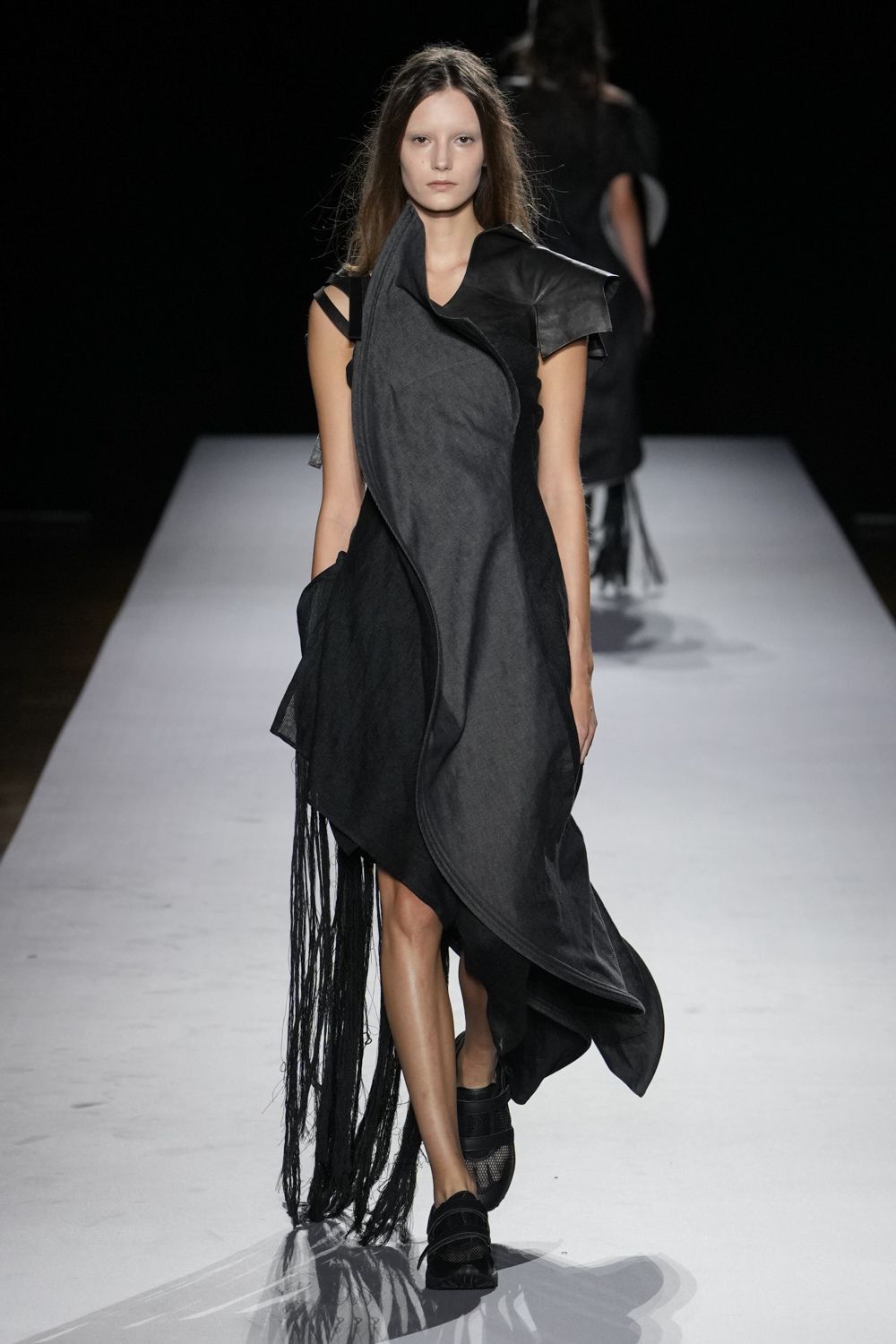
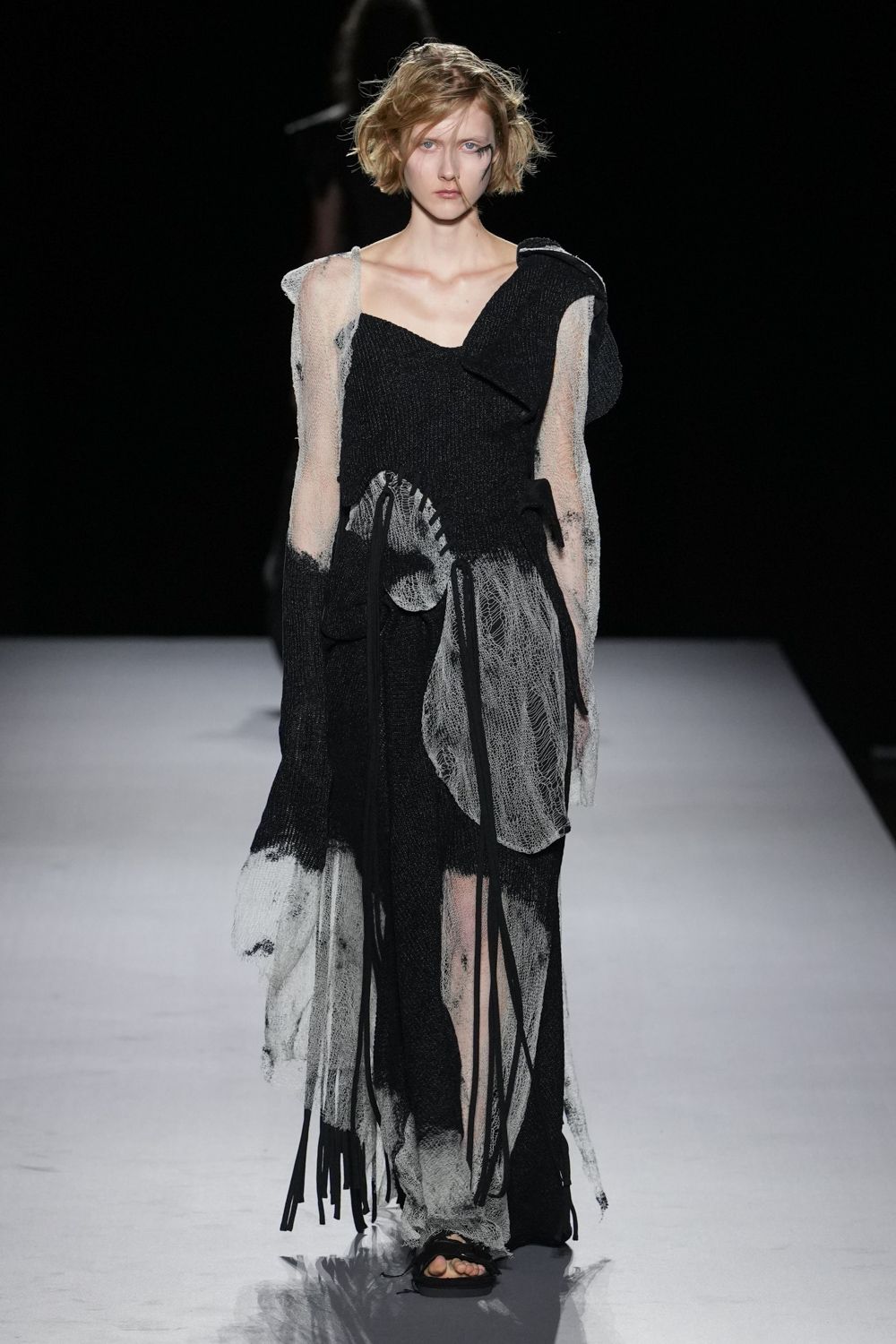
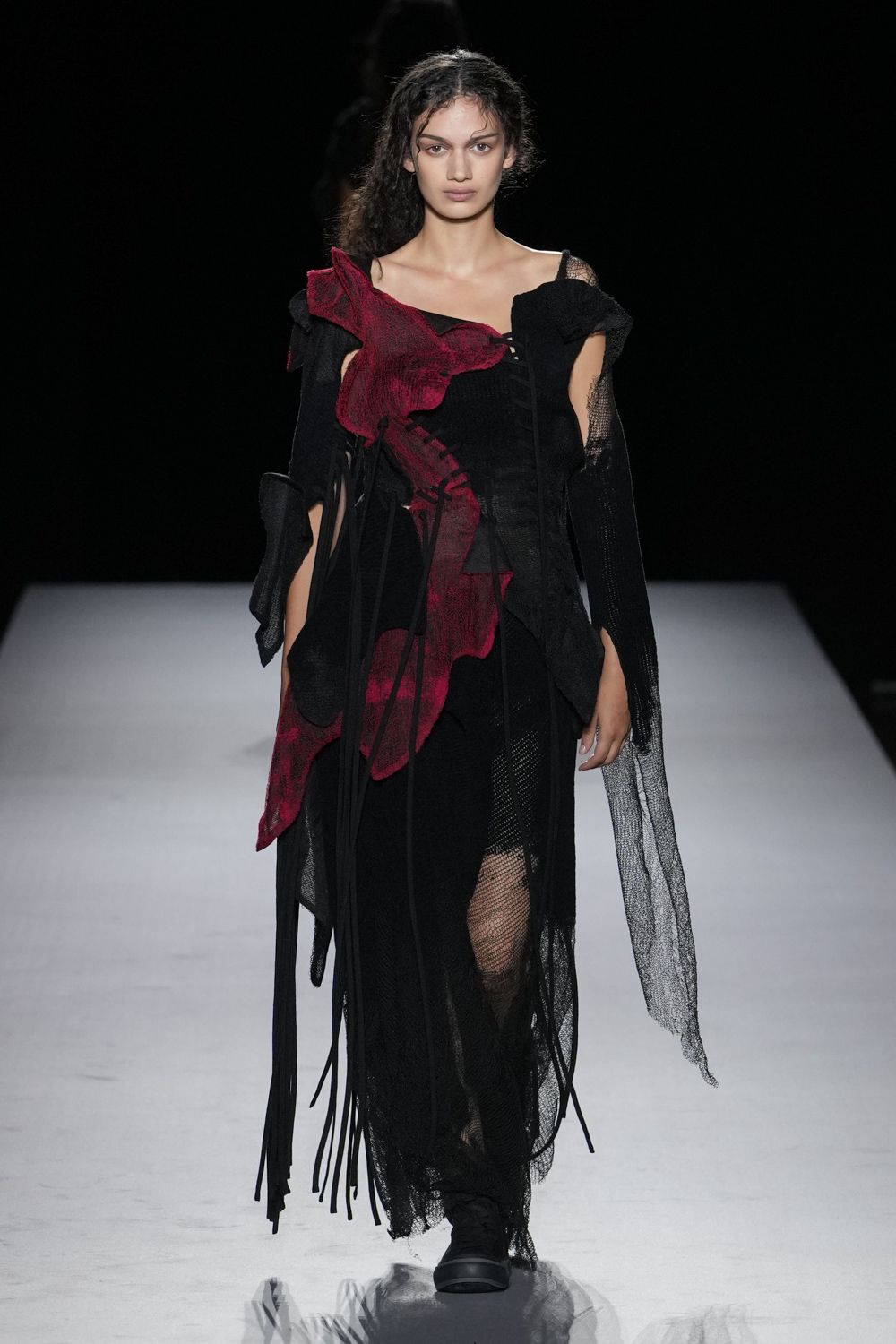
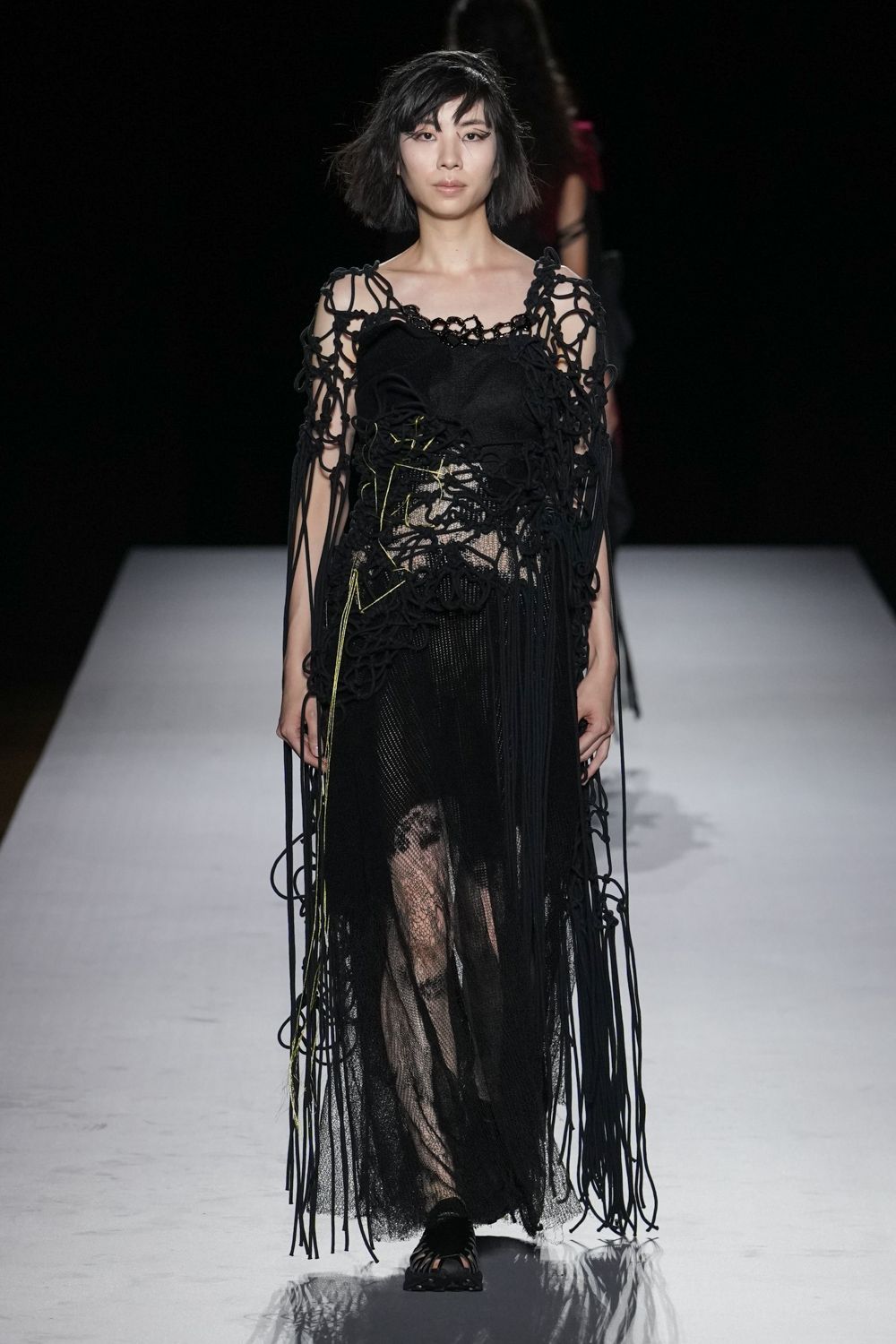
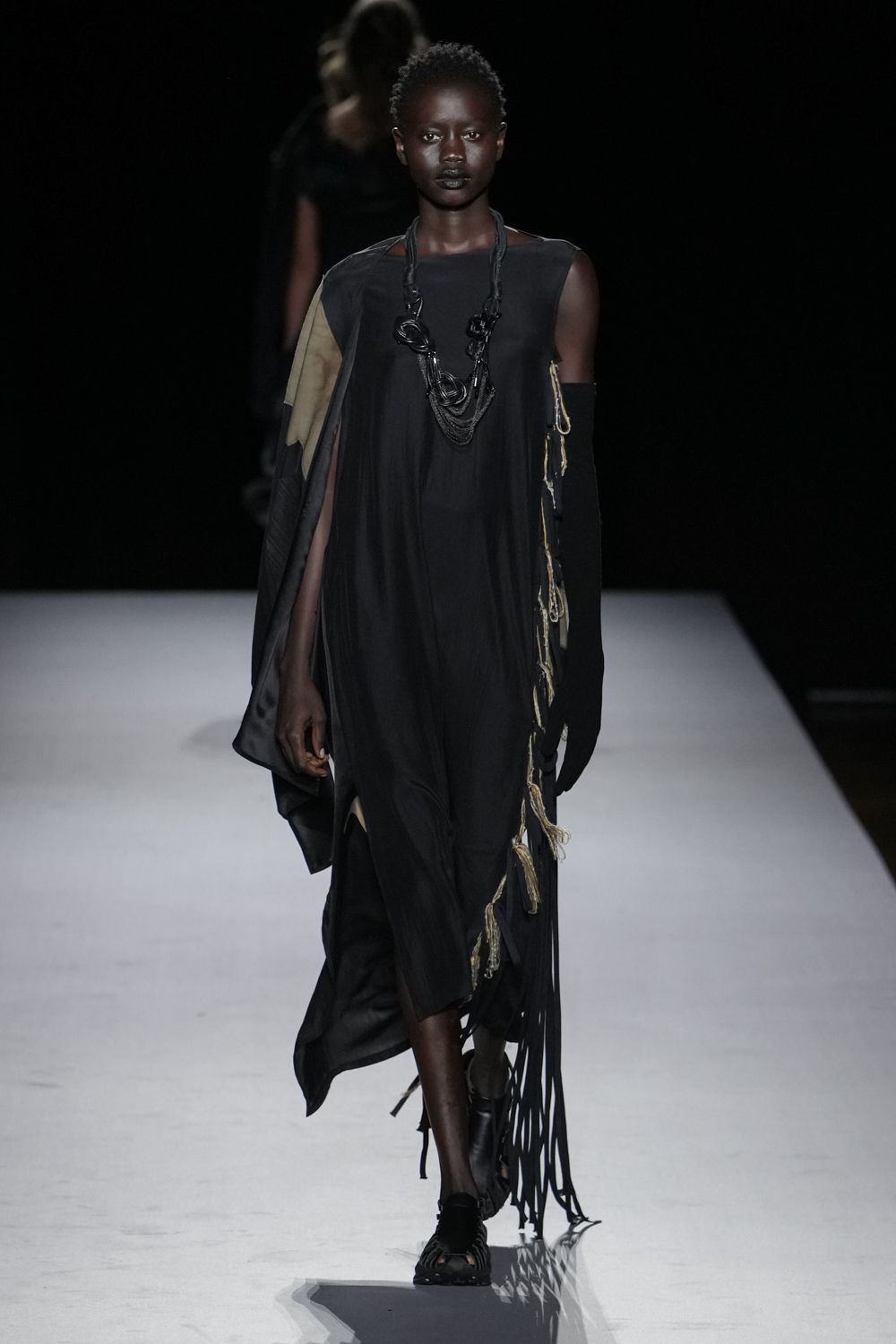
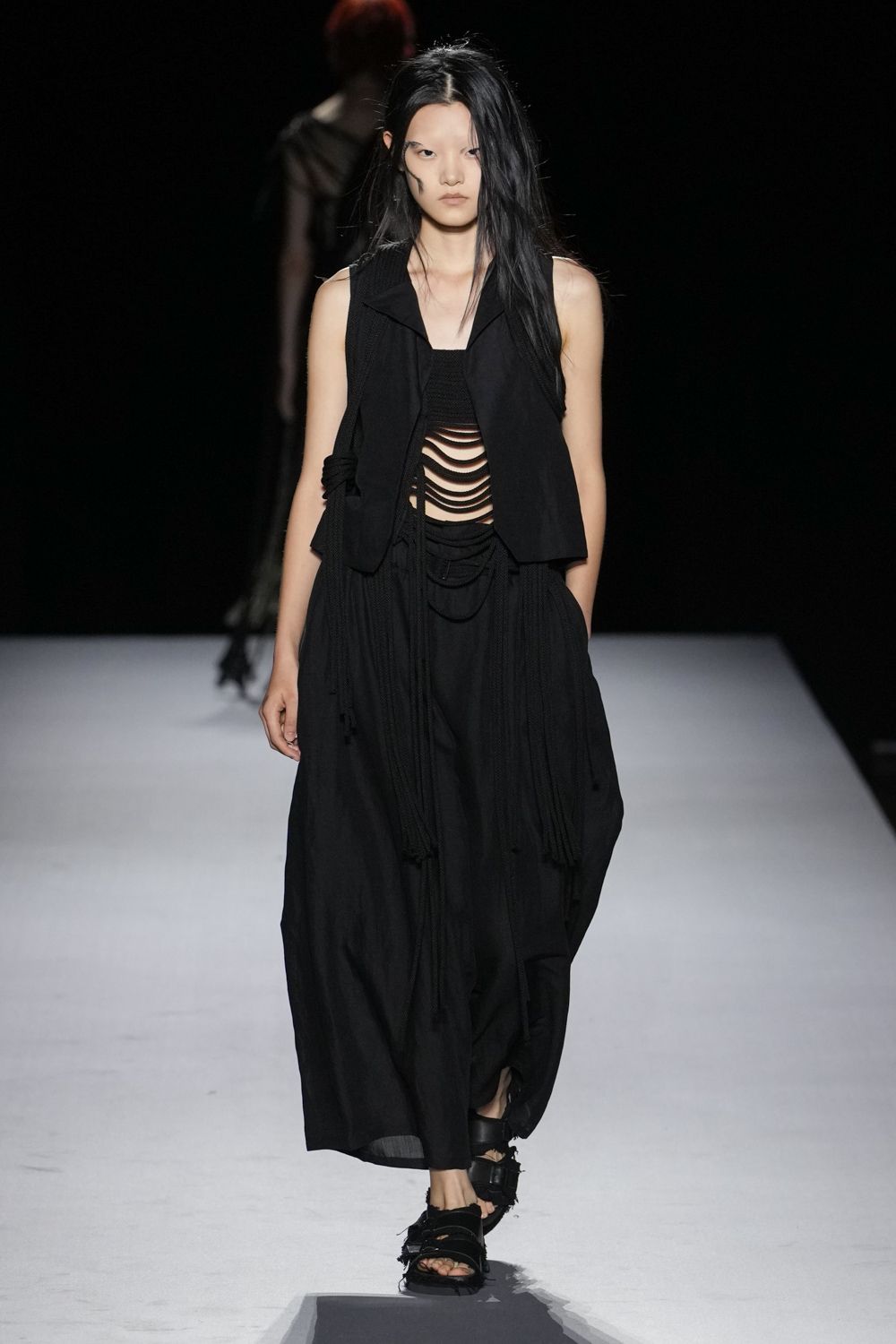
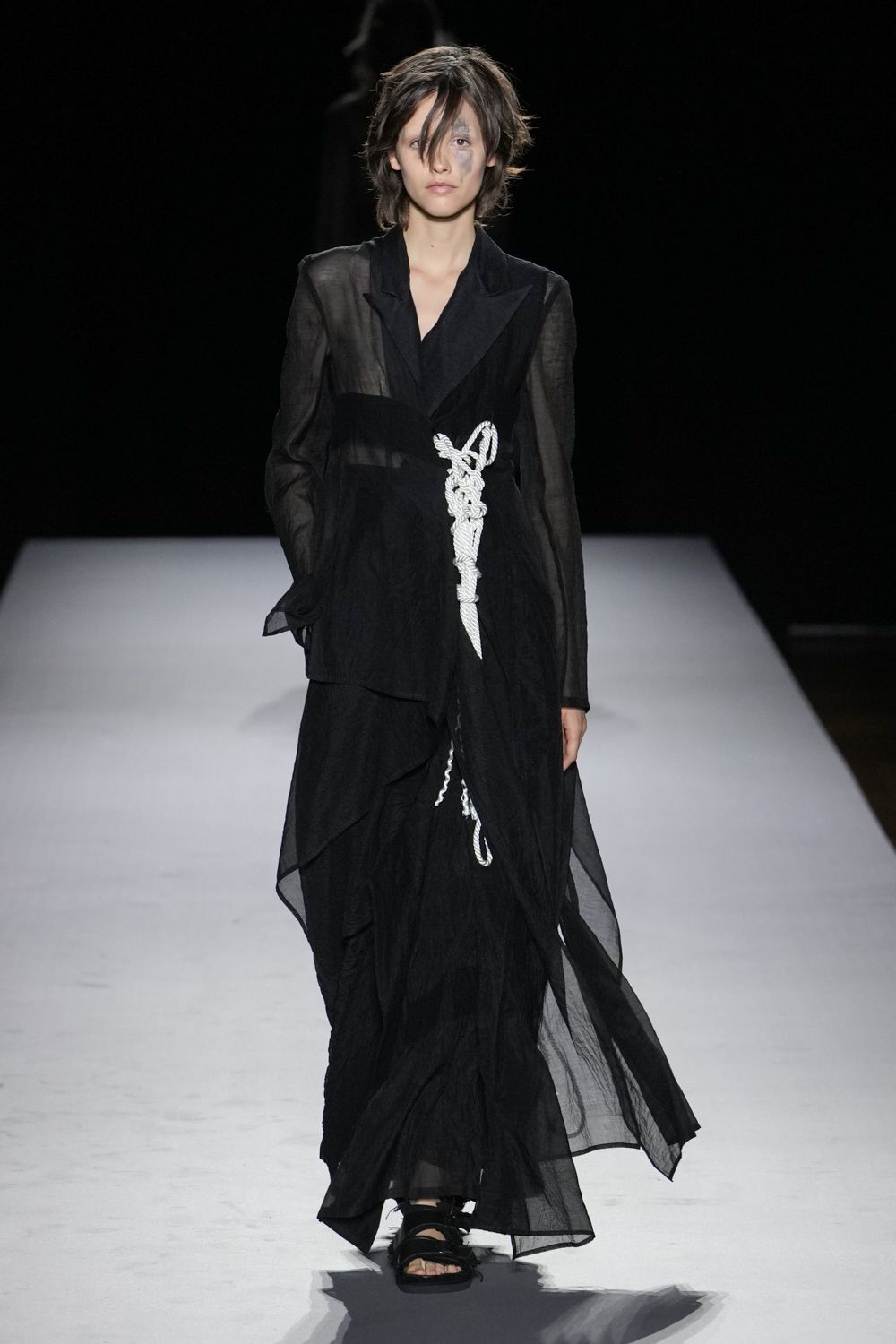
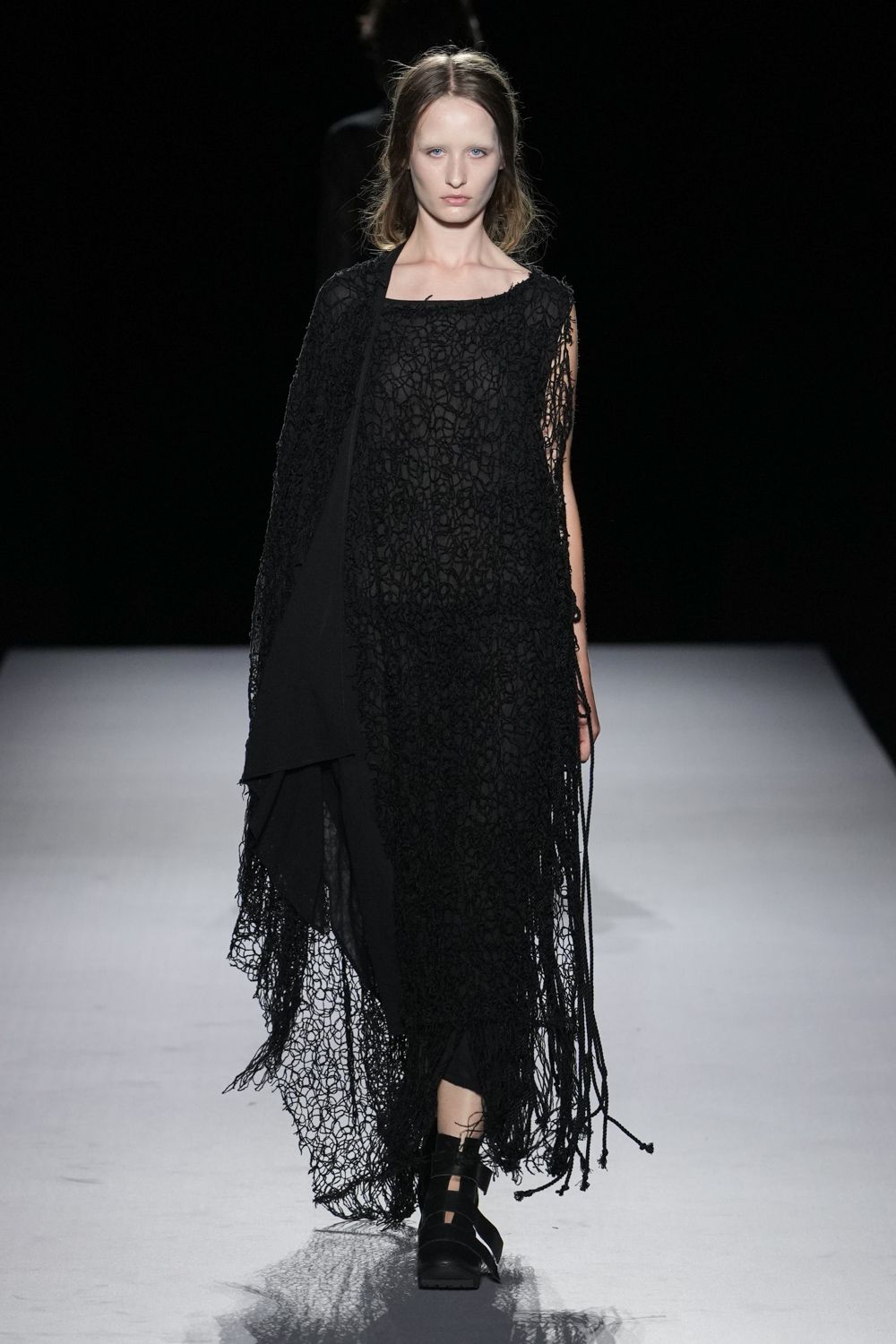
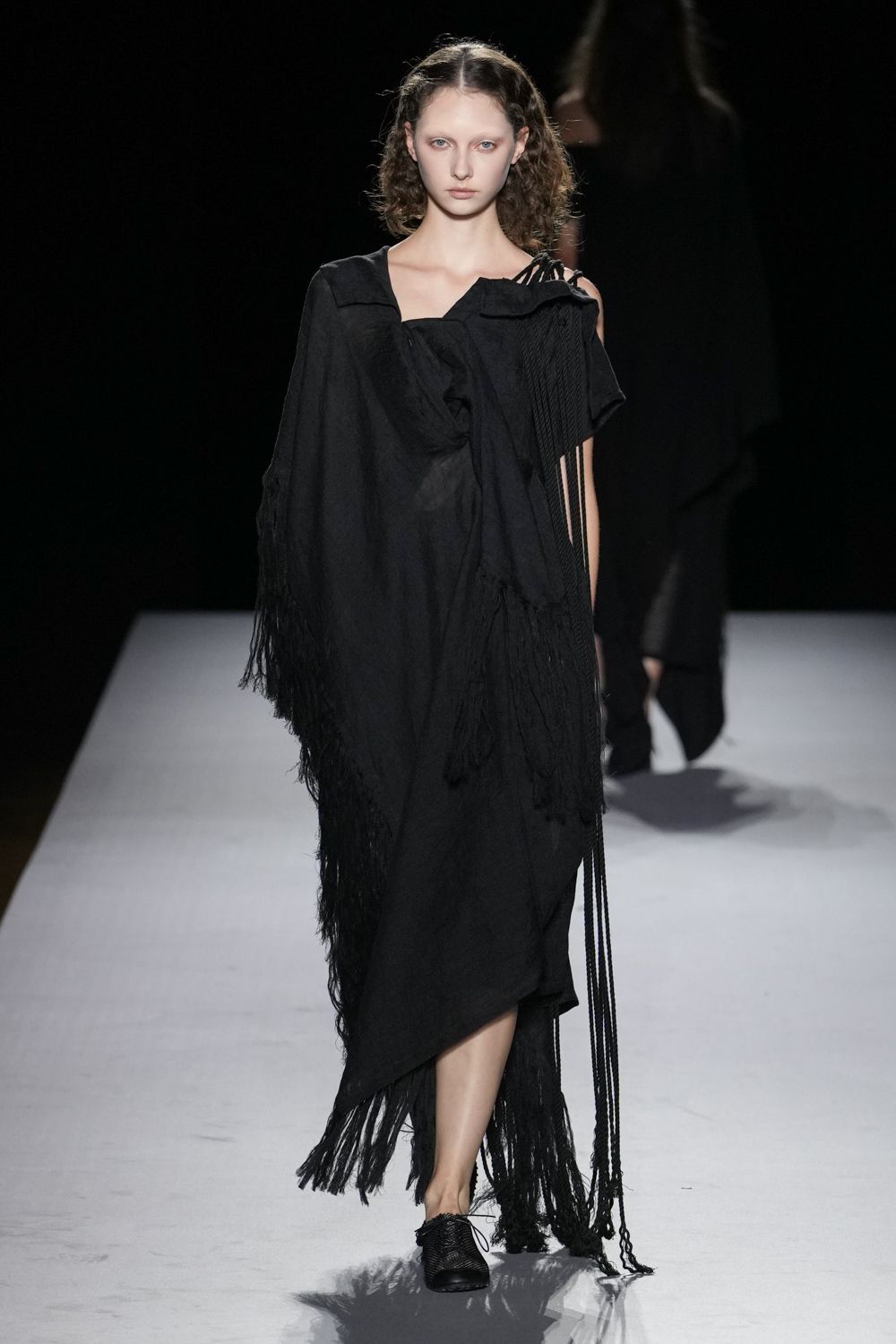
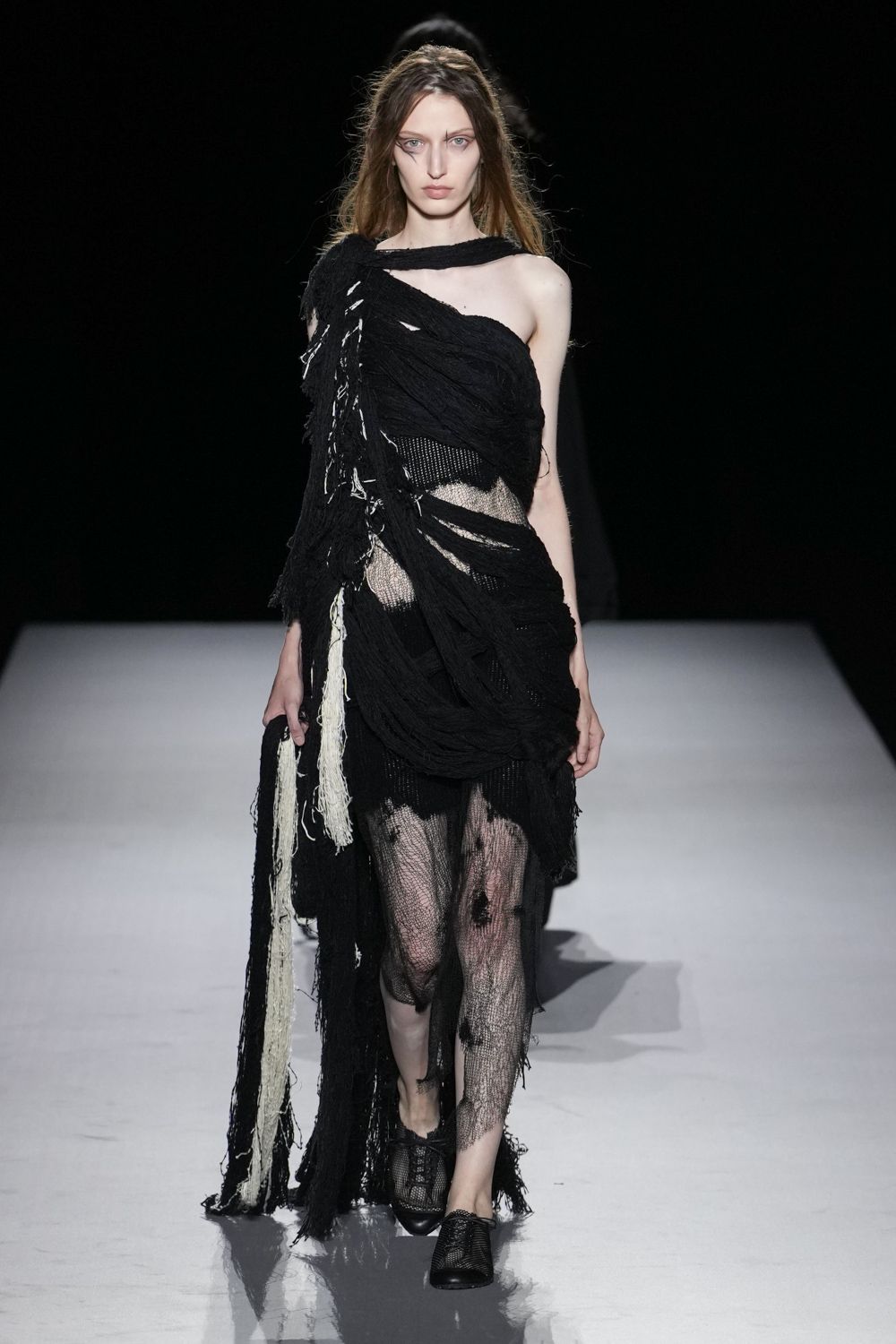
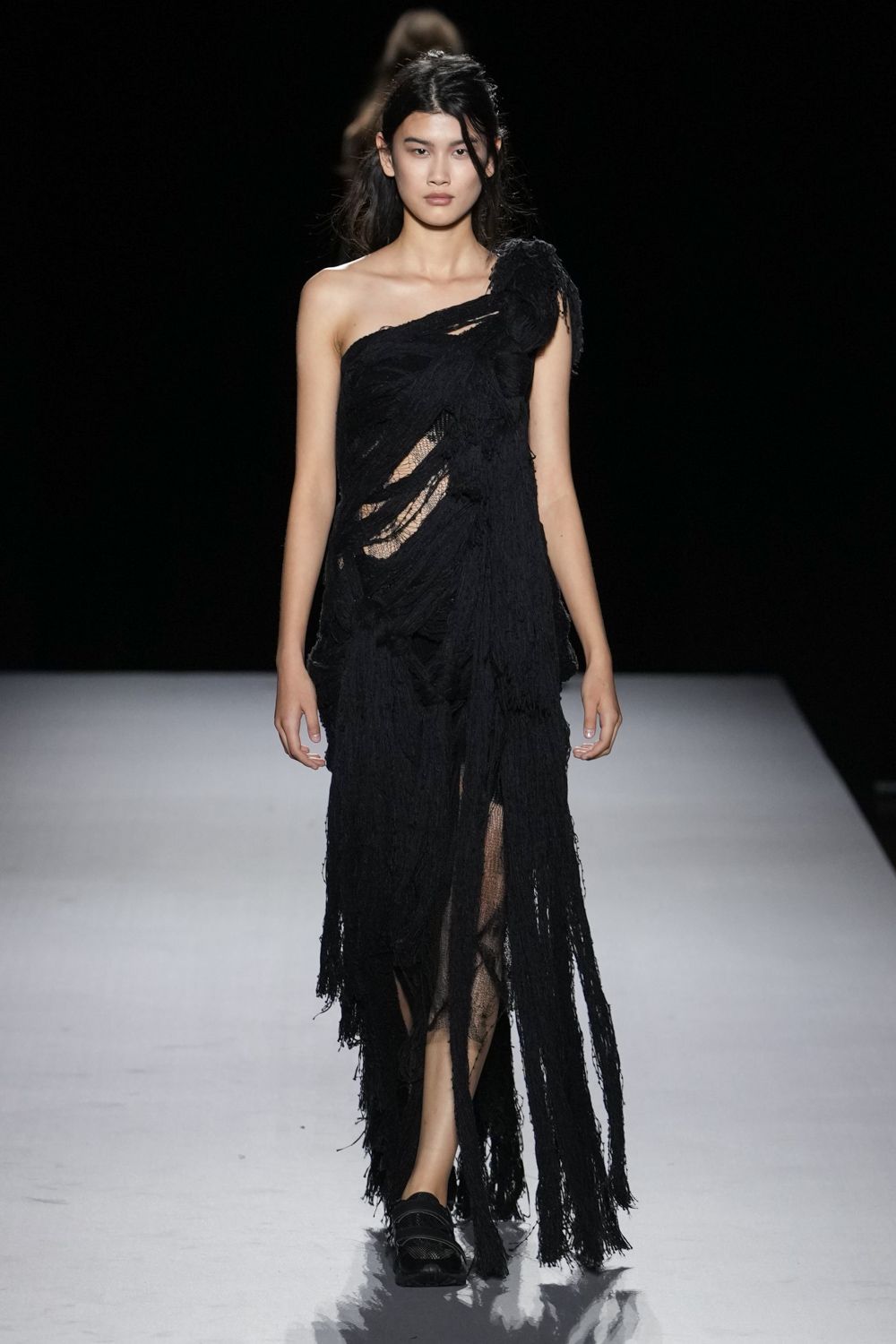
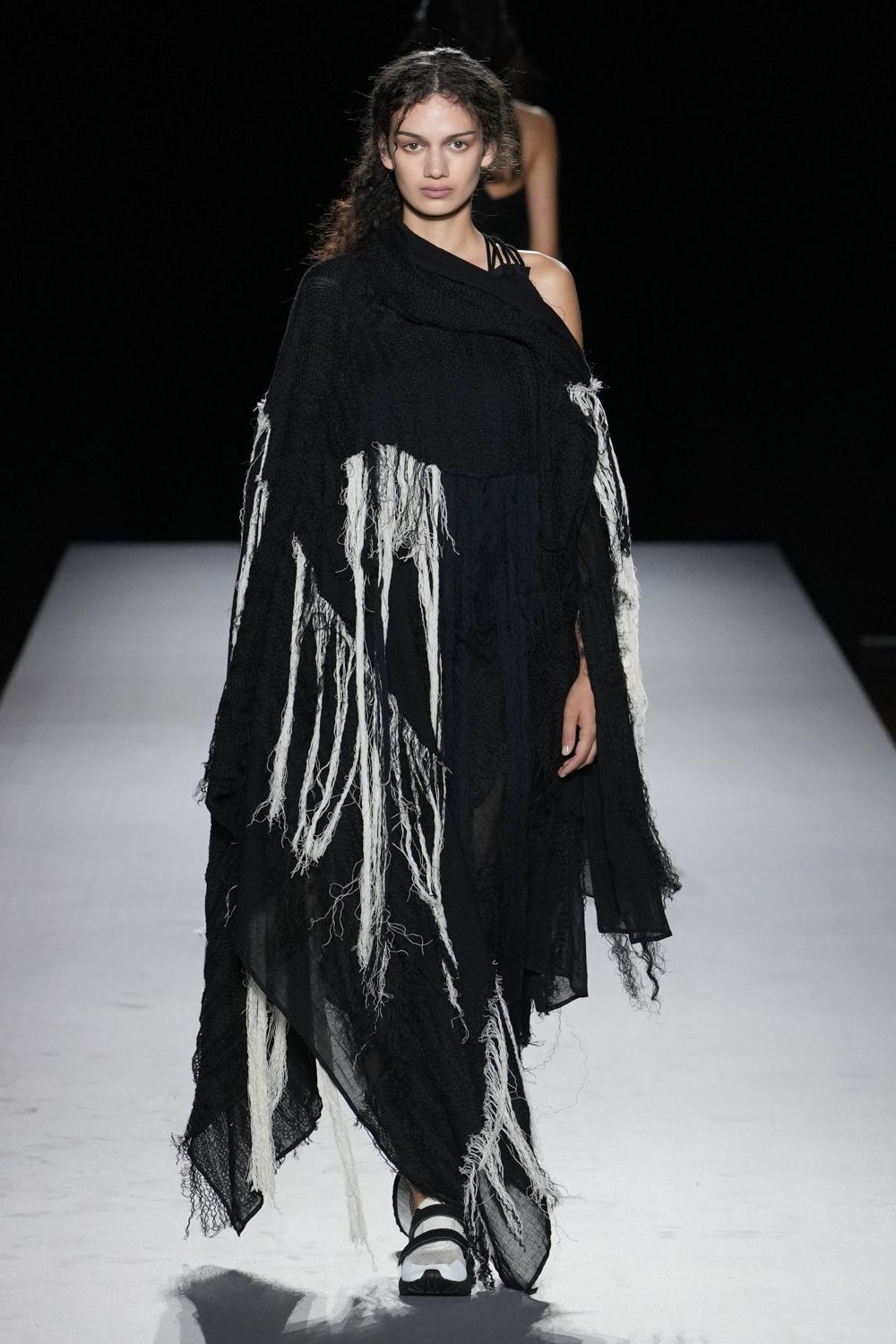
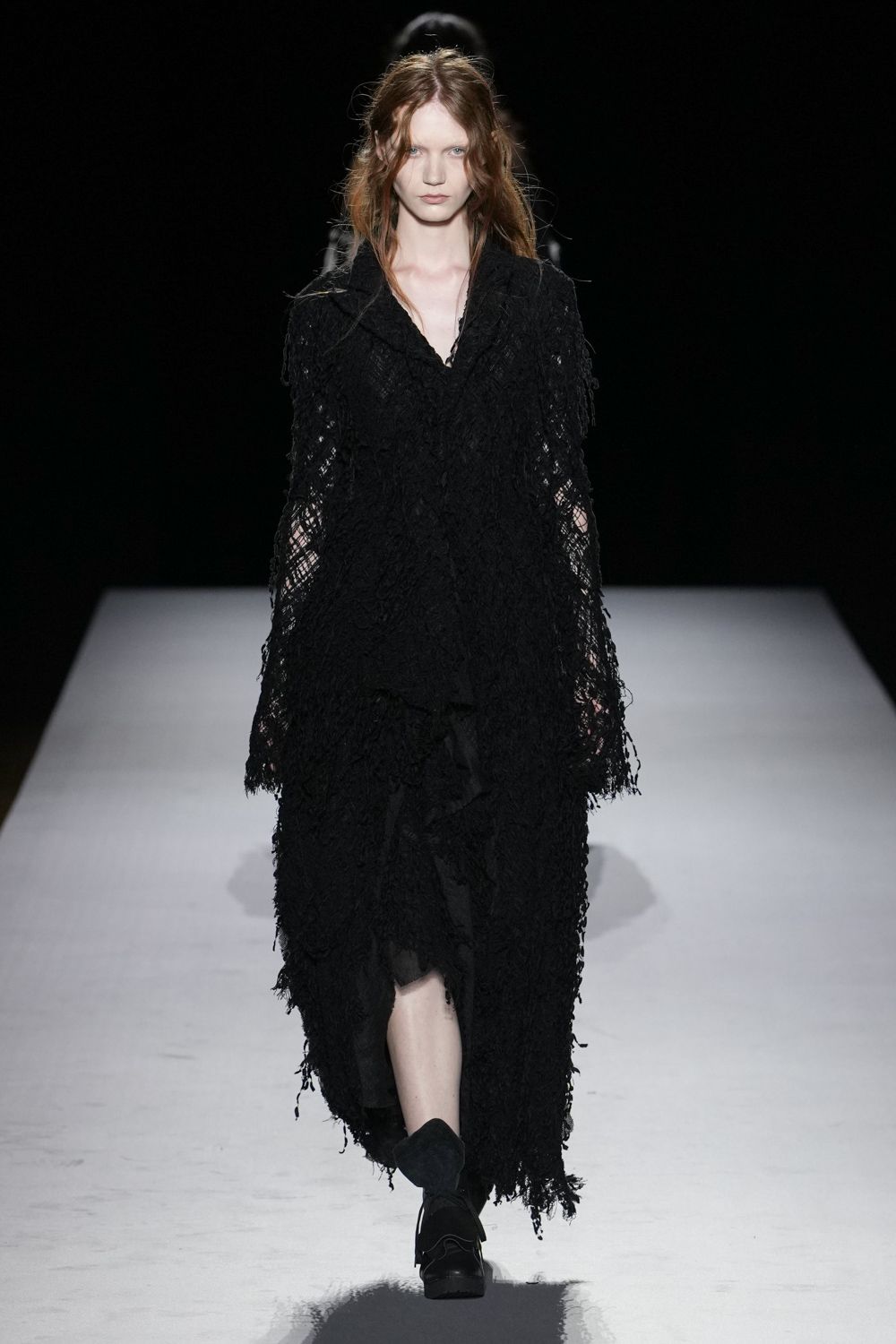
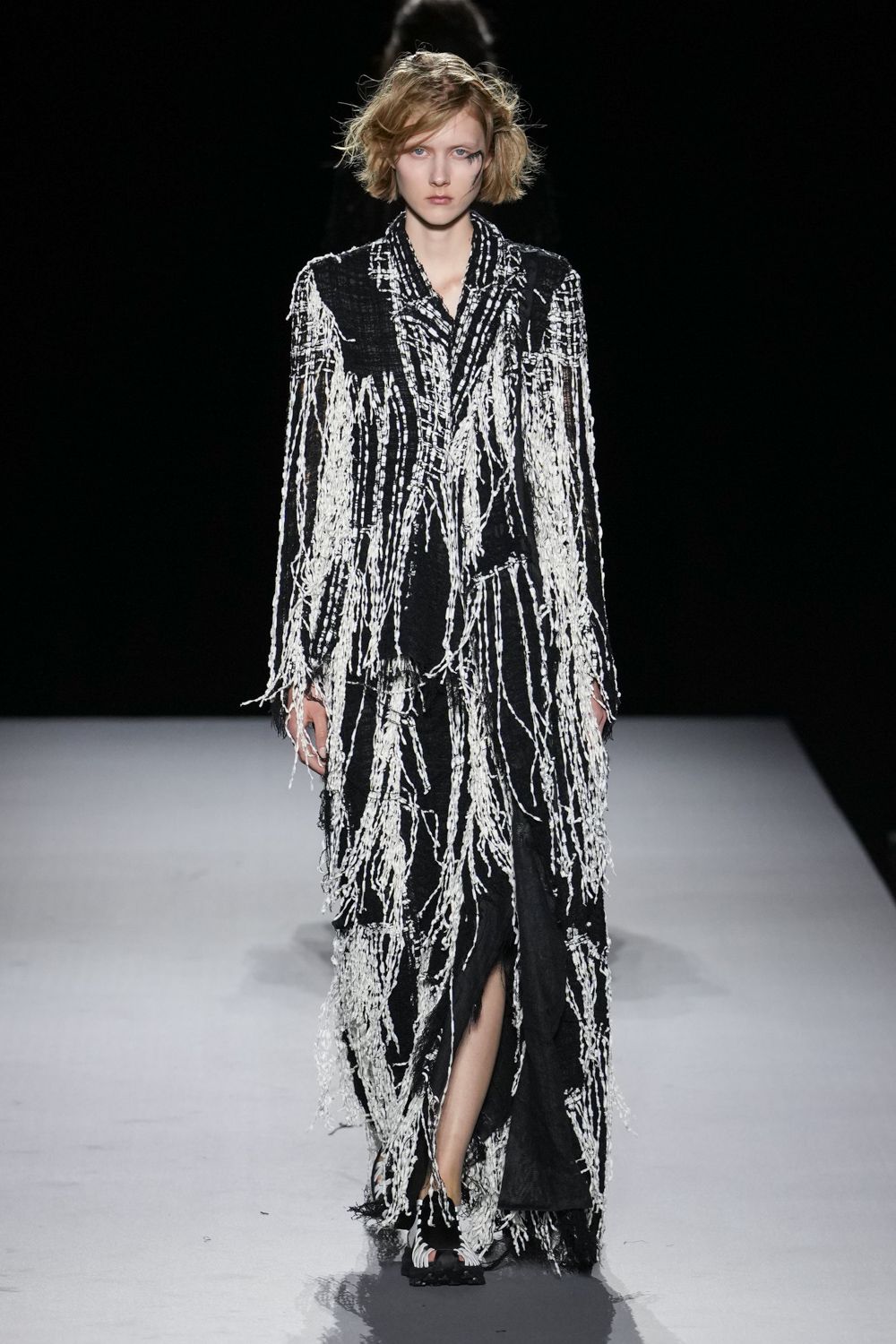
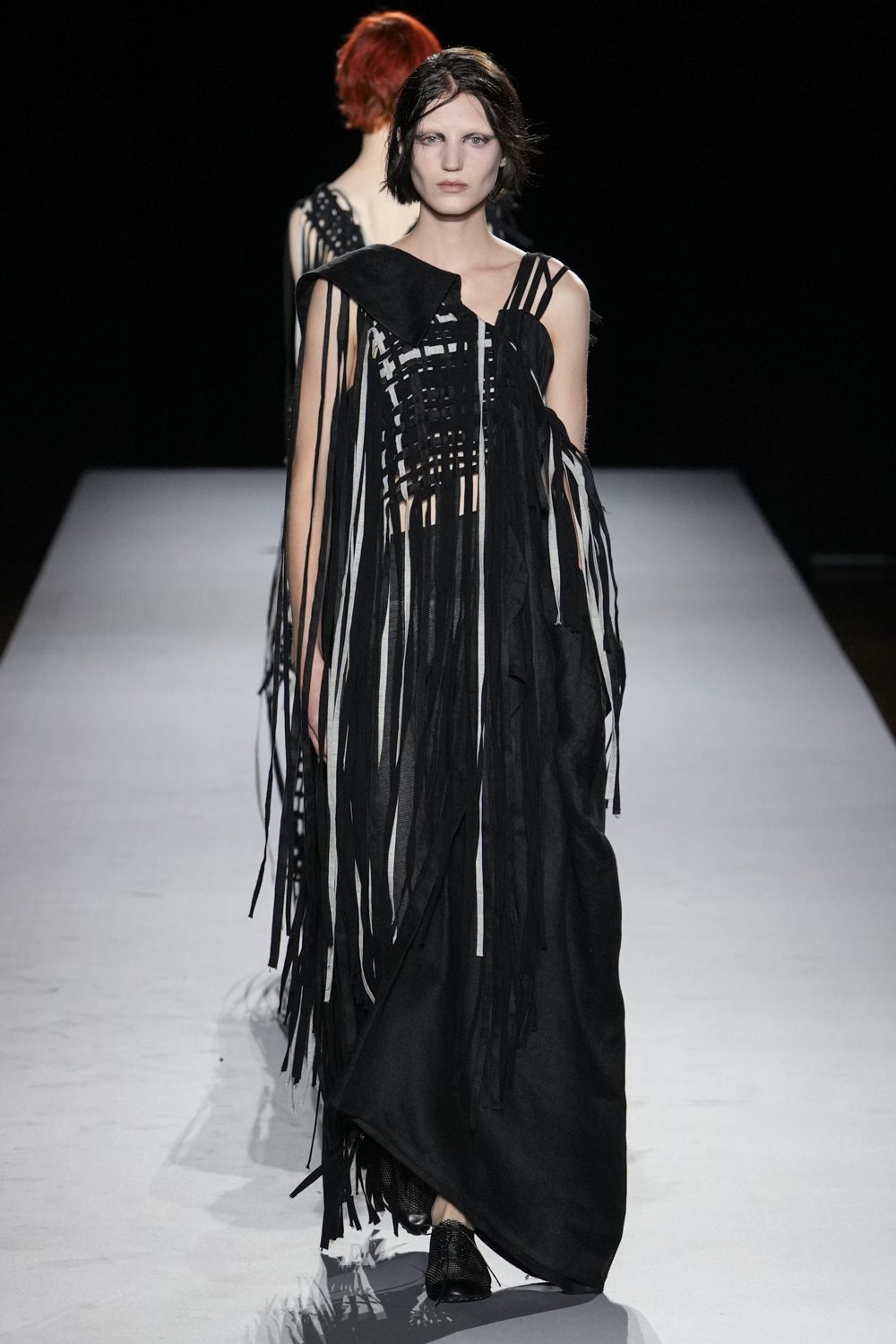
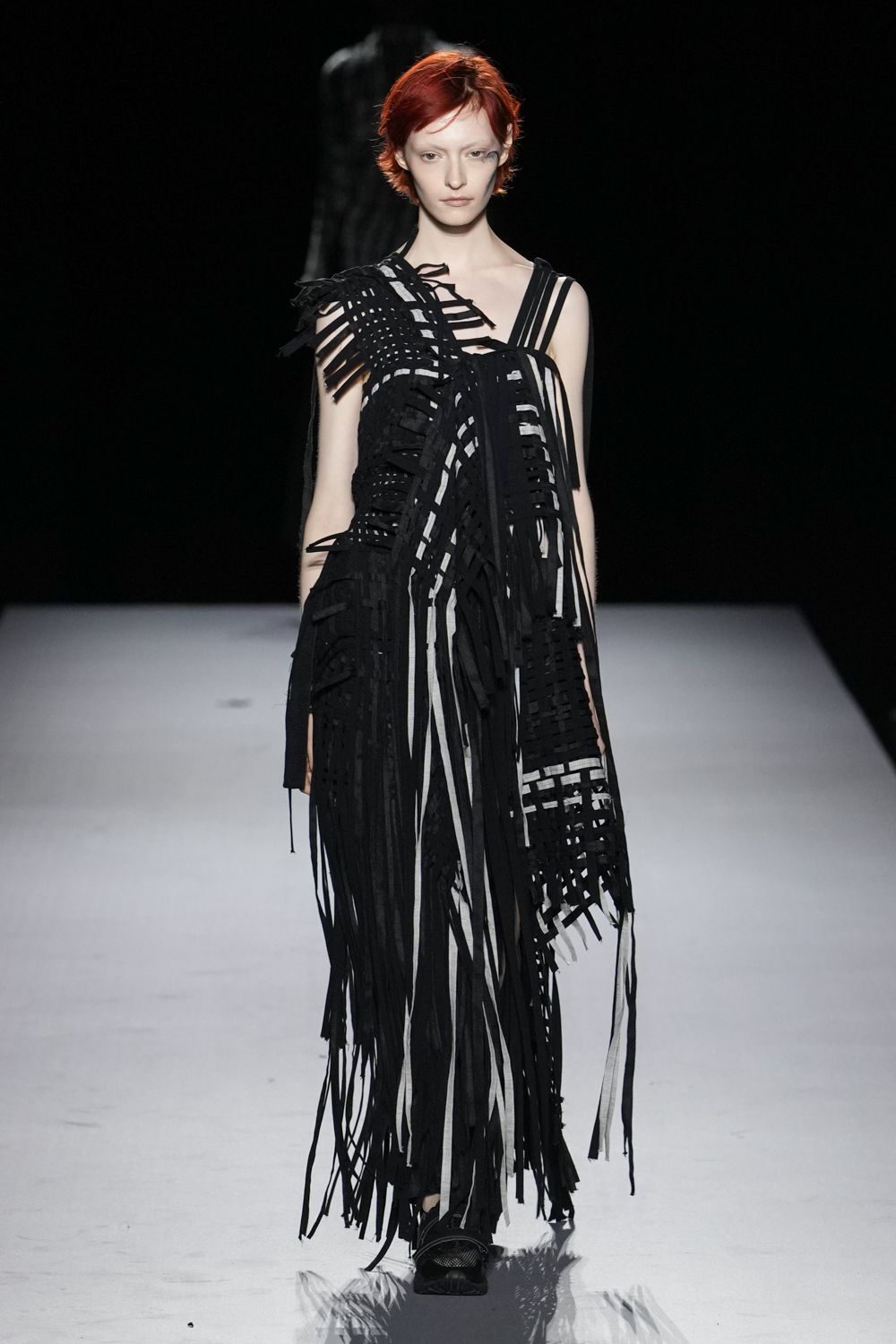
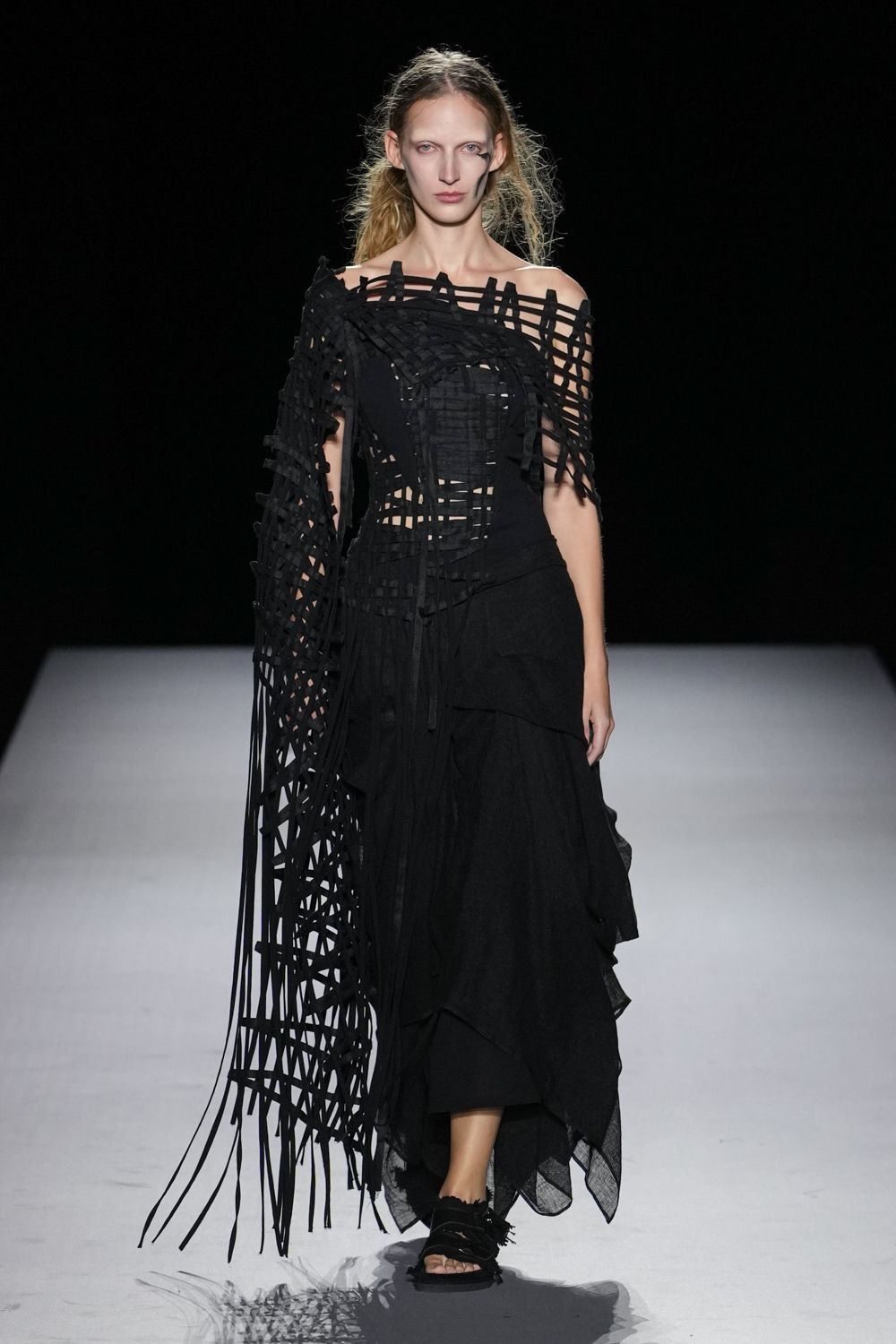
The collection begins with sculptural black and charcoal silhouettes. Long dresses wrap around the body in generous volumes, while spiralling panels and irregular structures introduce movement into otherwise controlled forms. As the collection progresses, Yamamoto increasingly exposes the processes normally concealed inside a finished garment. Strips of fabric extend from dresses and coats, woven surfaces open into loose strands, cords cross black and white compositions, and delicate knits fall into elongated trains.
This is familiar Yamamoto territory, but the emphasis is important. Deconstruction has become such an established part of fashion vocabulary that the term itself has lost much of its critical force. Yamamoto does something more materially specific here. He does not simply make garments look unfinished. He makes the process of making visible.
Beneath the loose strips, open weaves and trailing threads, there remains a remarkably precise understanding of proportion. Shoulders are defined, draping is controlled and volume is carefully placed around the body. Even the garments that appear closest to collapse retain an internal architecture. What looks spontaneous is the result of construction; what looks incomplete is highly resolved.
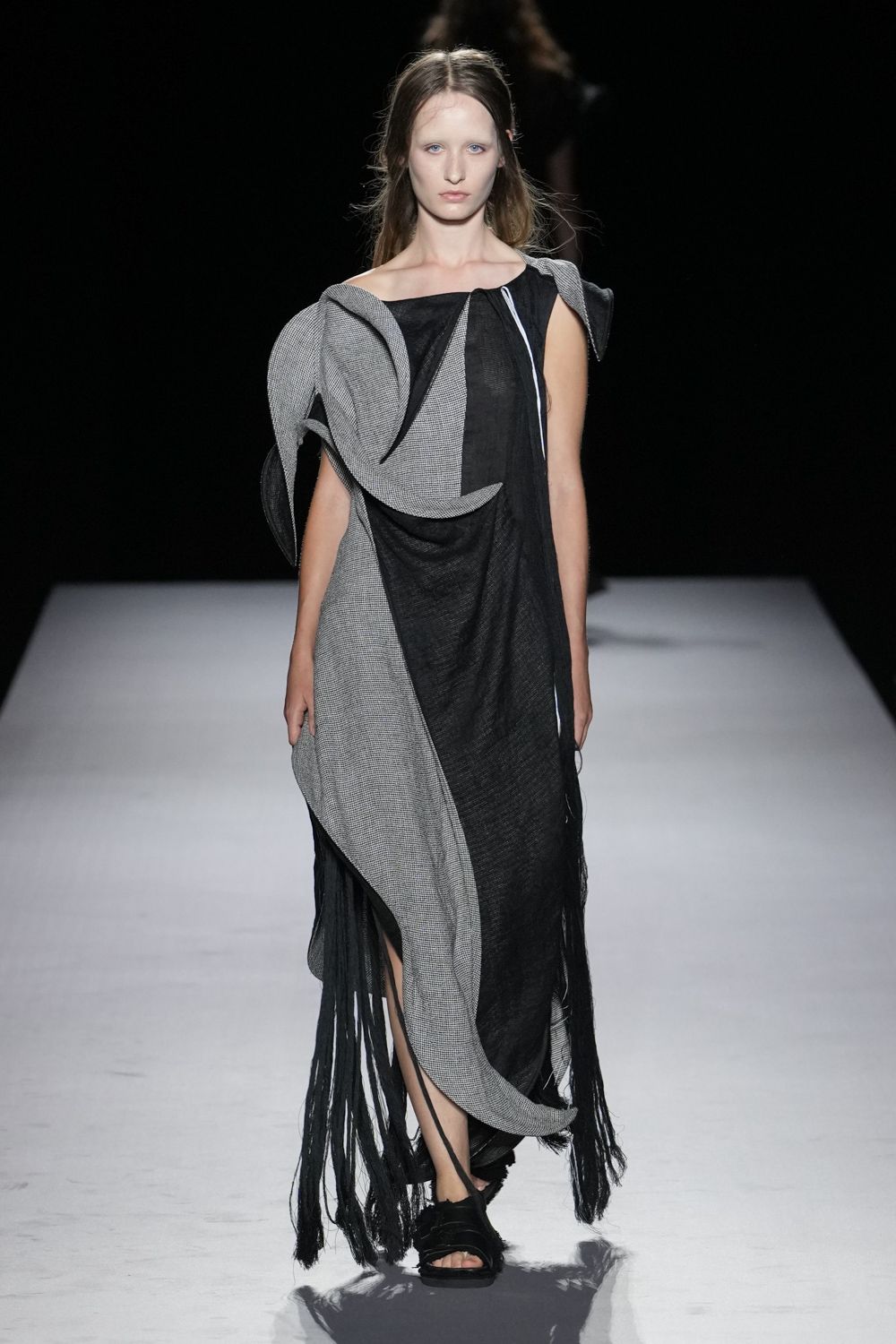
The body remains central to this process. The collection repeatedly works around rather than simply over the figure. Negative spaces interrupt dense surfaces, soft knits trace the body before extending beyond it, and woven structures reveal fragments of skin without making exposure their primary purpose.
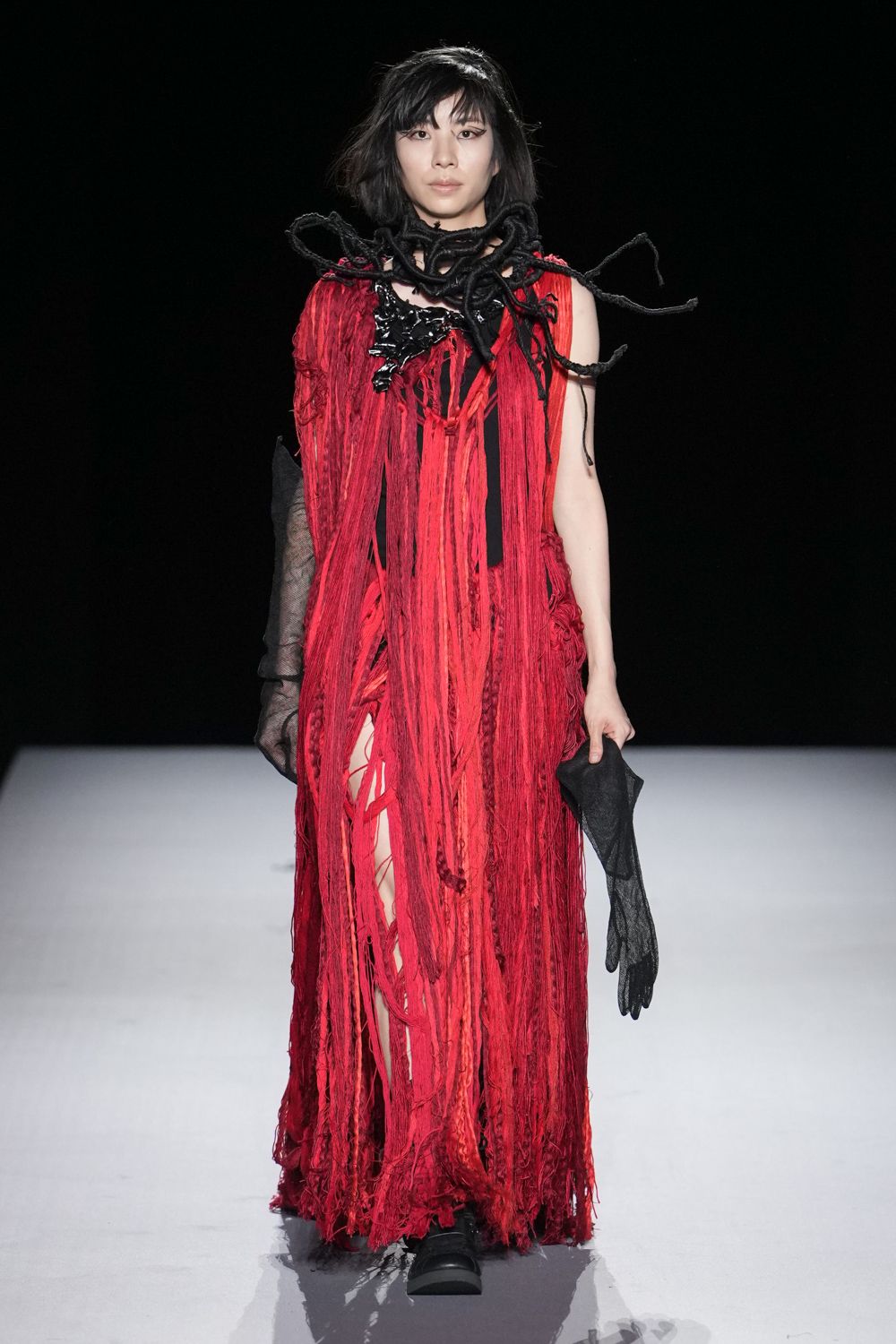
Black remains the collection’s principal language, accompanied by white, grey and red. The colour is less a seasonal palette than another way of articulating texture and density. Toward the end, red becomes more pronounced, culminating in a final look where extensive red fringe falls over black, almost transforming the material into an independent surface.
There is something distinctly tactile about the collection. In a fashion culture increasingly experienced through photographs and screens, Yamamoto continues to make clothes whose meaning depends upon physical behaviour: the weight of the material, the movement of the fringe, the transparency of the knit and the way woven surfaces respond to the body.
Perhaps this is what makes Spring/Summer 2027 feel less like a repetition of Yamamoto’s established codes than an examination of where those codes come from. Black, asymmetry, draping and deconstruction are all present, but they are treated as materials rather than signatures.
The garment is not simply made and then worn. It remains visibly in the process of becoming. And even when the clothes appear to be coming apart, they never lose their form.
Photos: Vogue / Go Runway
www.yohjiyamamoto.co.jp
@yohjiyamamotoofficial
Highlights from the Collection
Comments are closed.