

For Fall/Winter 2026, Rick Owens titled his women’s collection “Tower,” framing it as a quiet invocation: “Temple of Love, Tower of Light.” The phrase functions less as a slogan than as a proposition, an appeal for protection, hope, and collective endurance in an unstable moment. As often in Owens’ work, clothing becomes both metaphor and structure: garments that rise, encase, and shield the body while projecting an austere monumentalism.
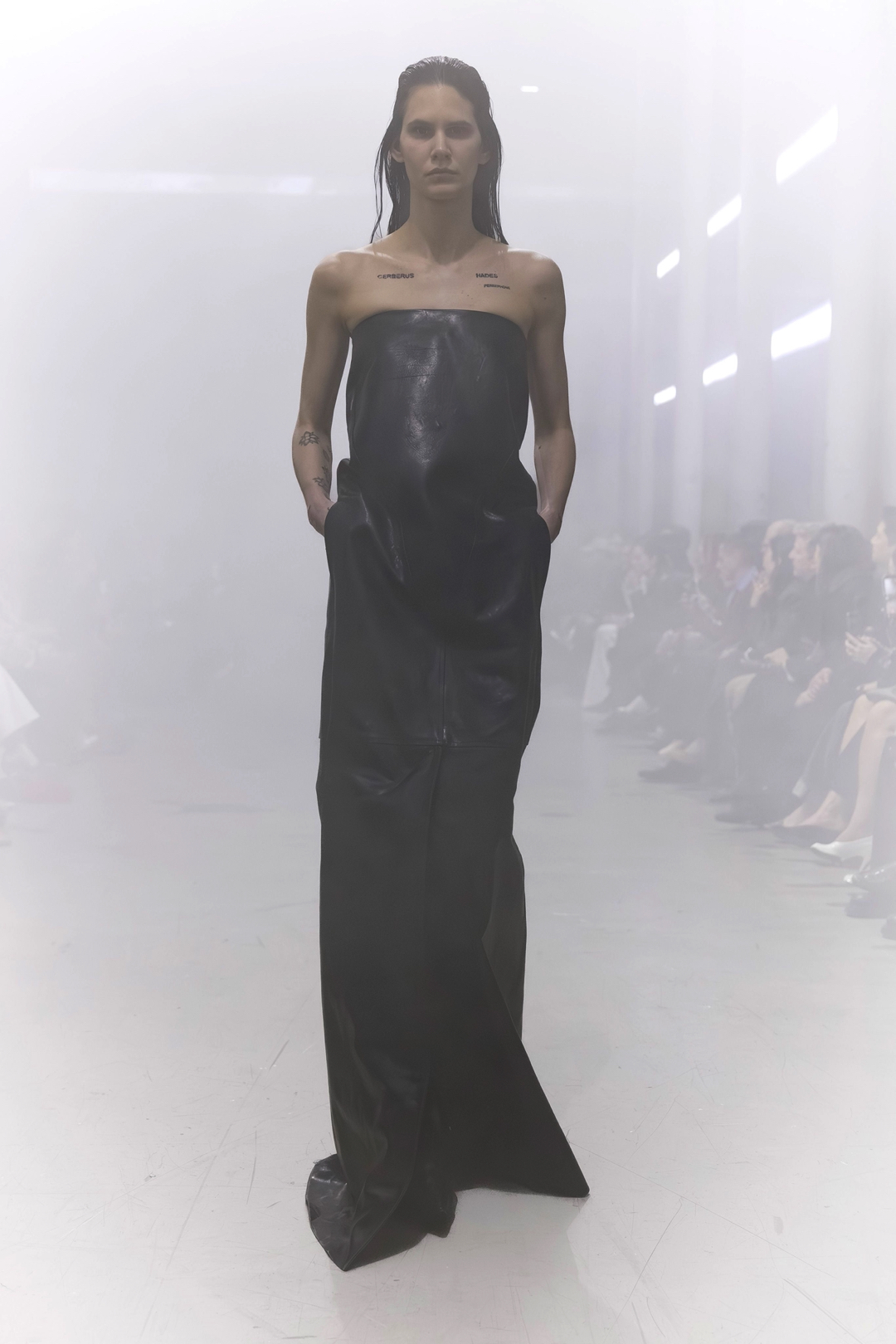
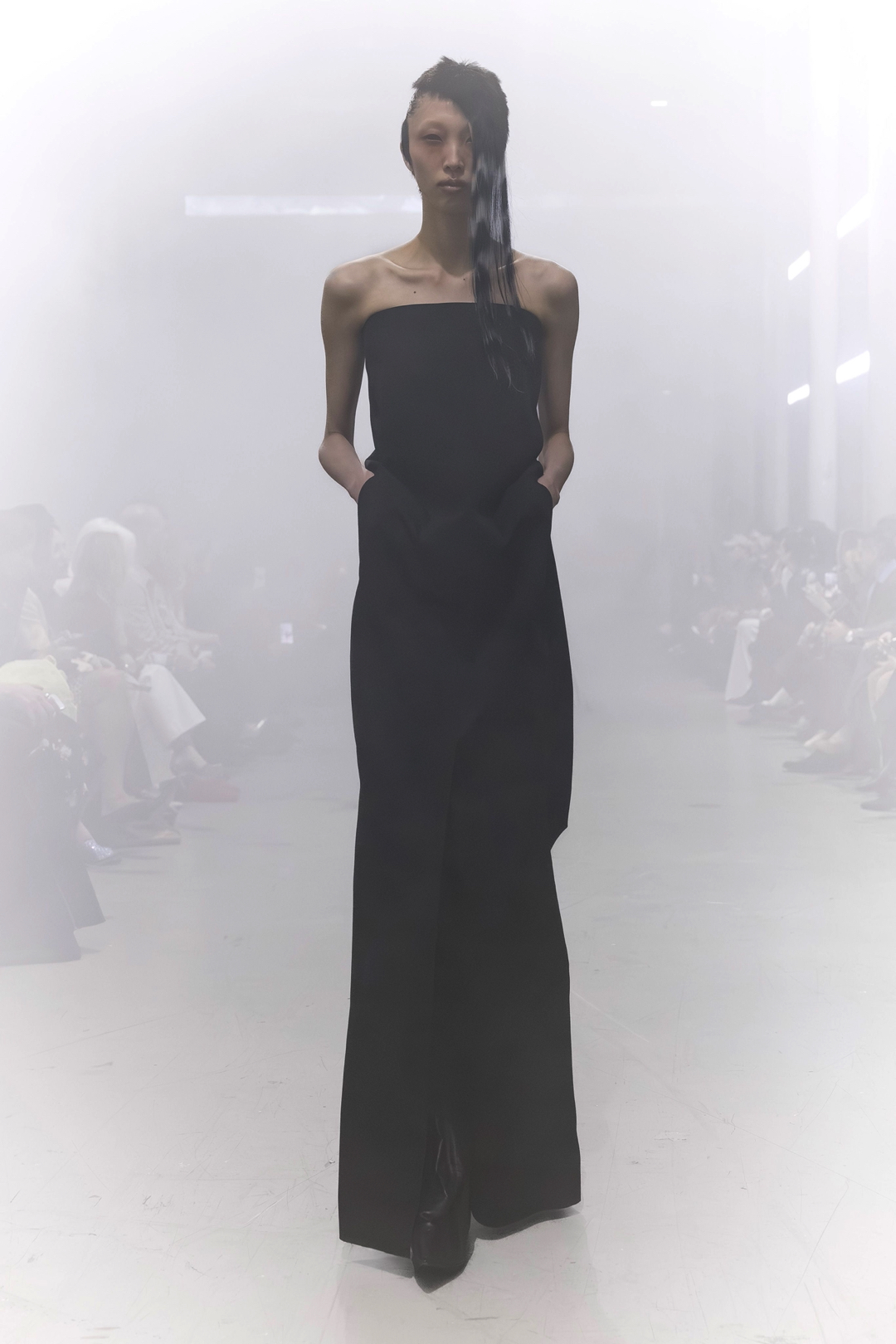
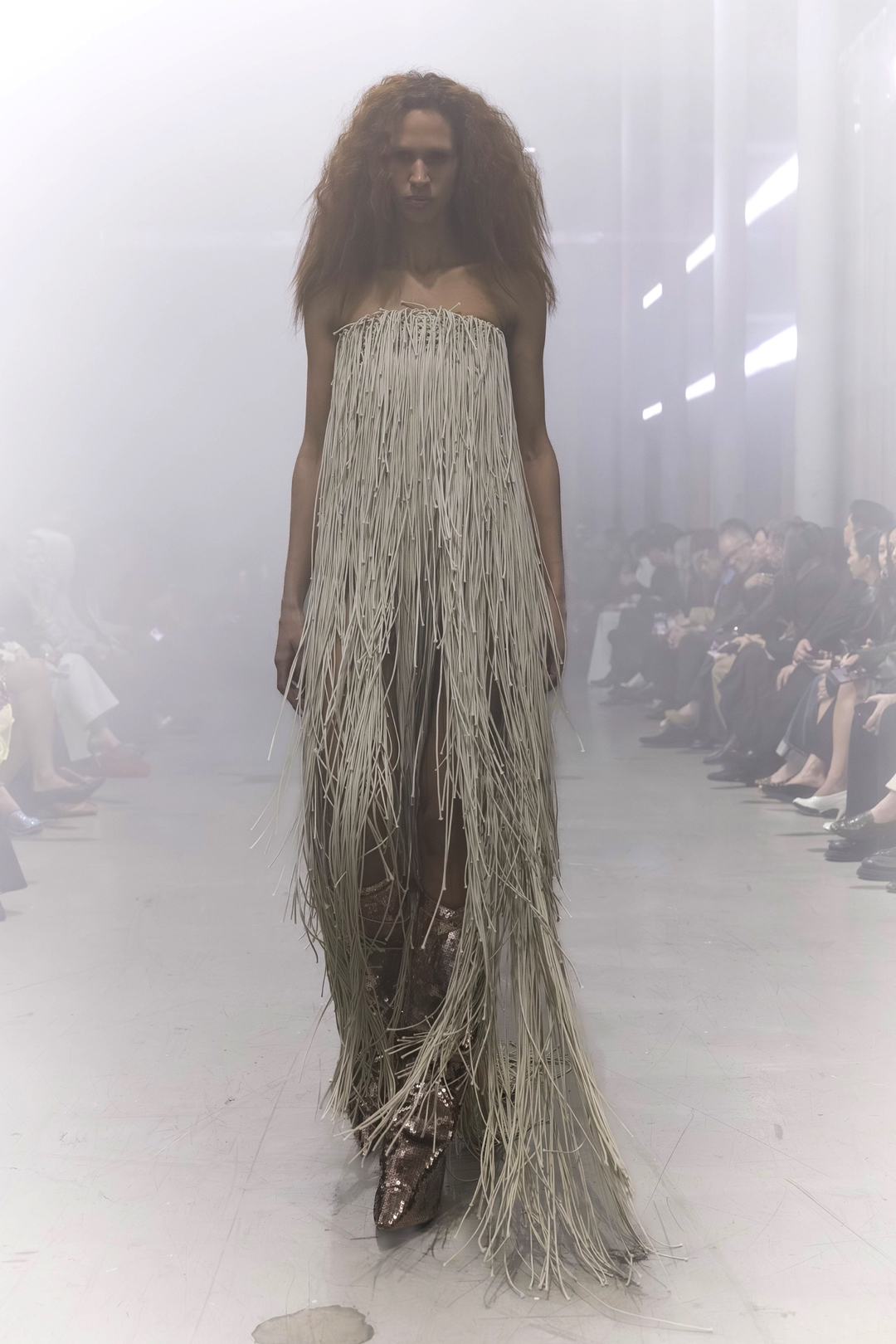
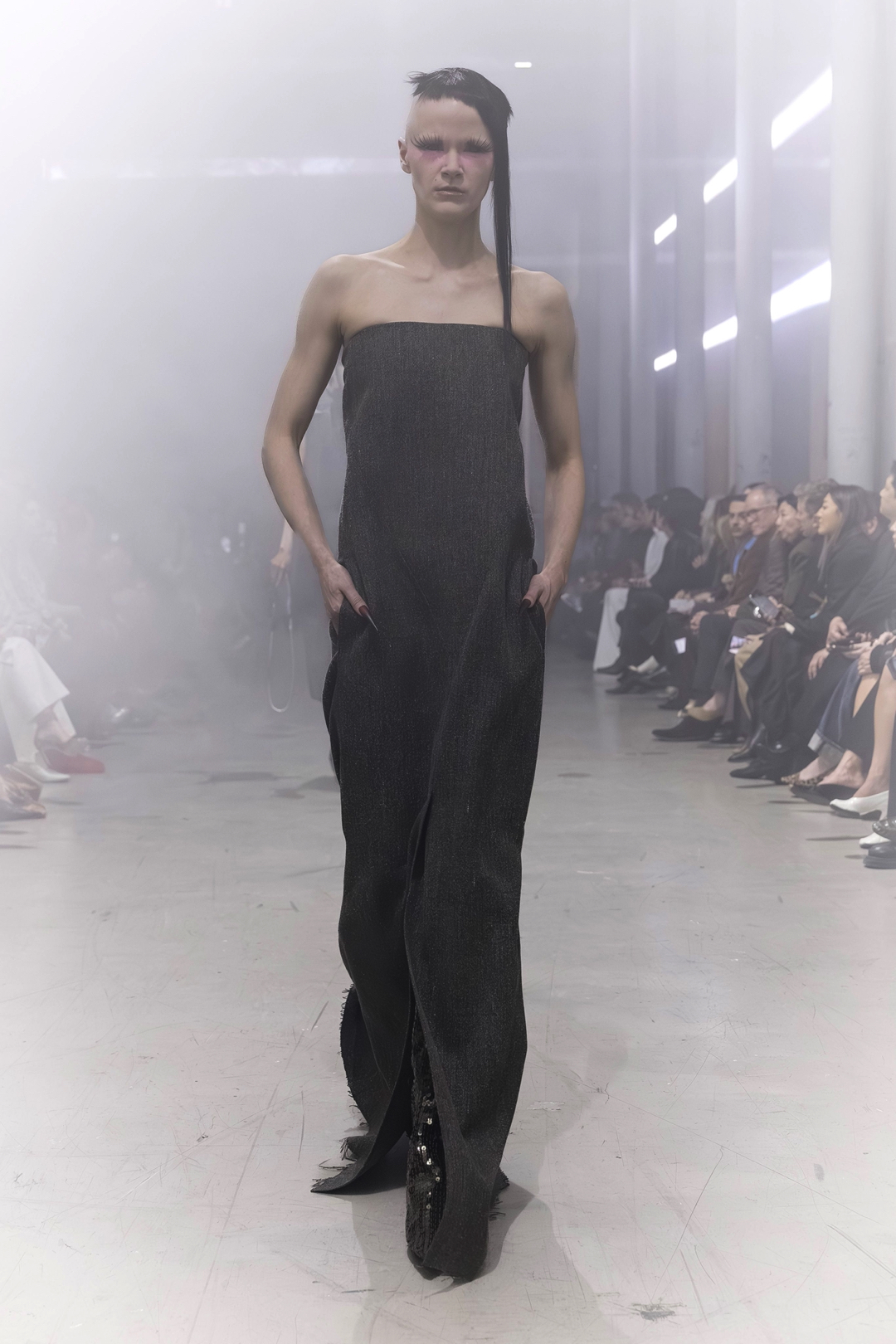
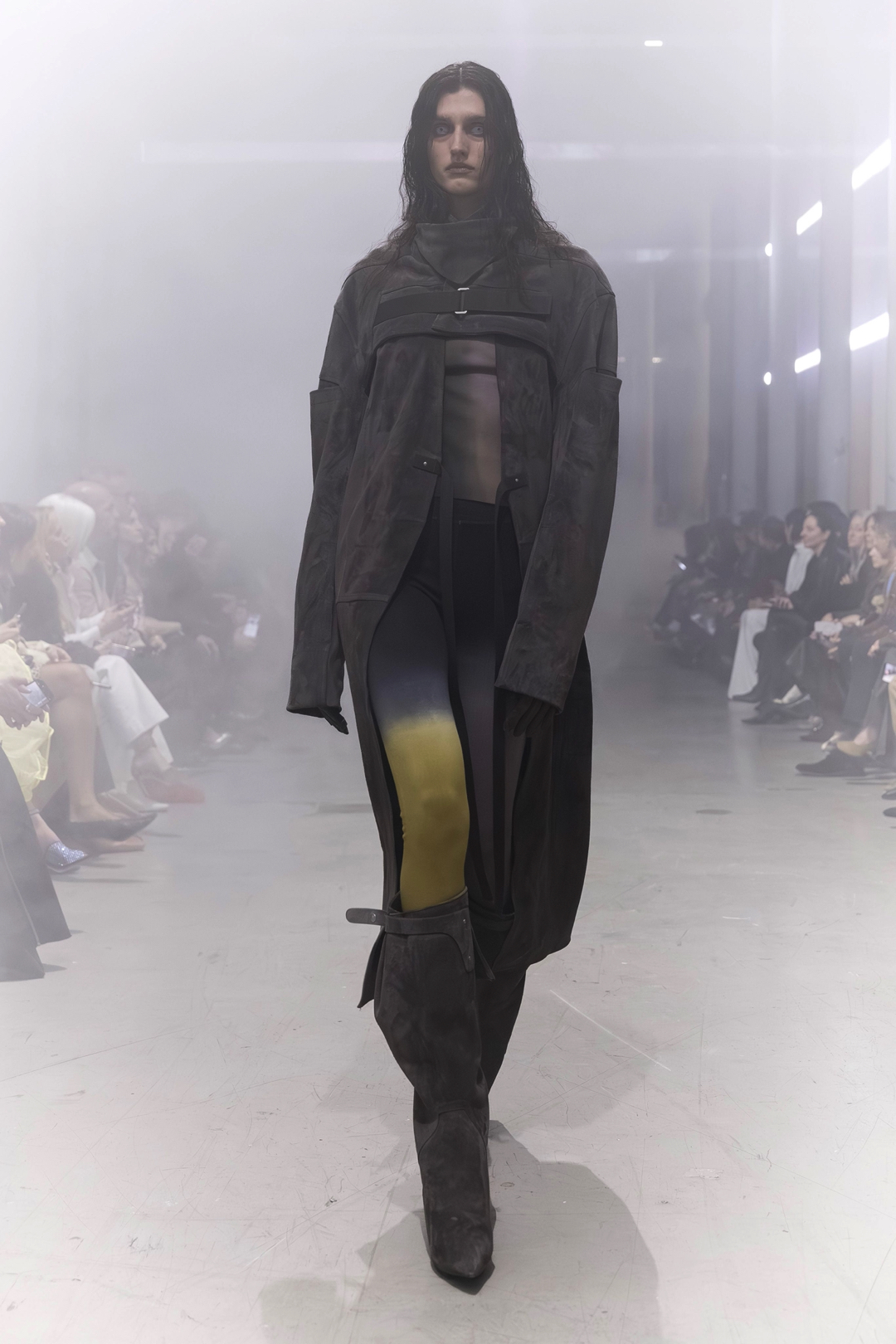
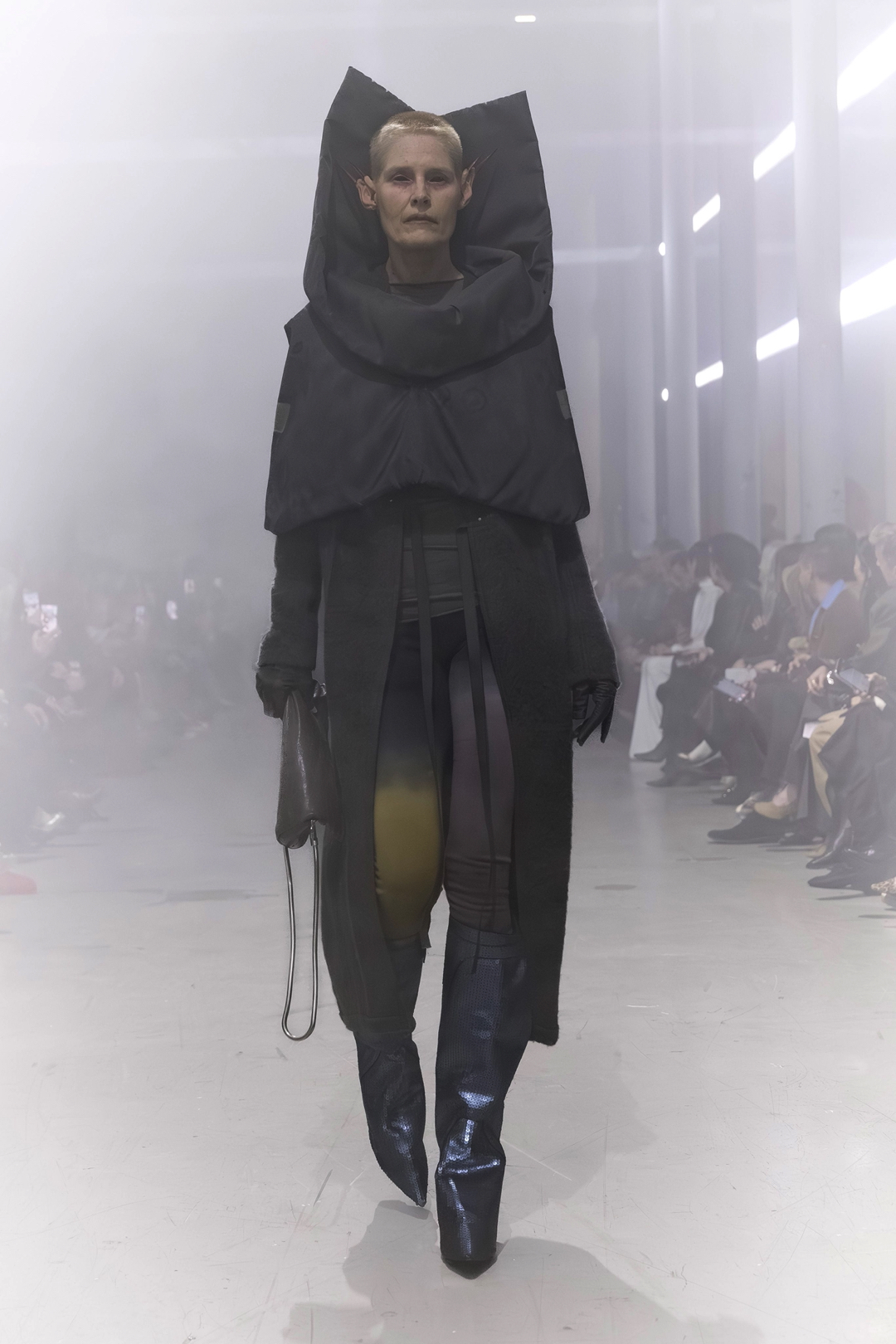
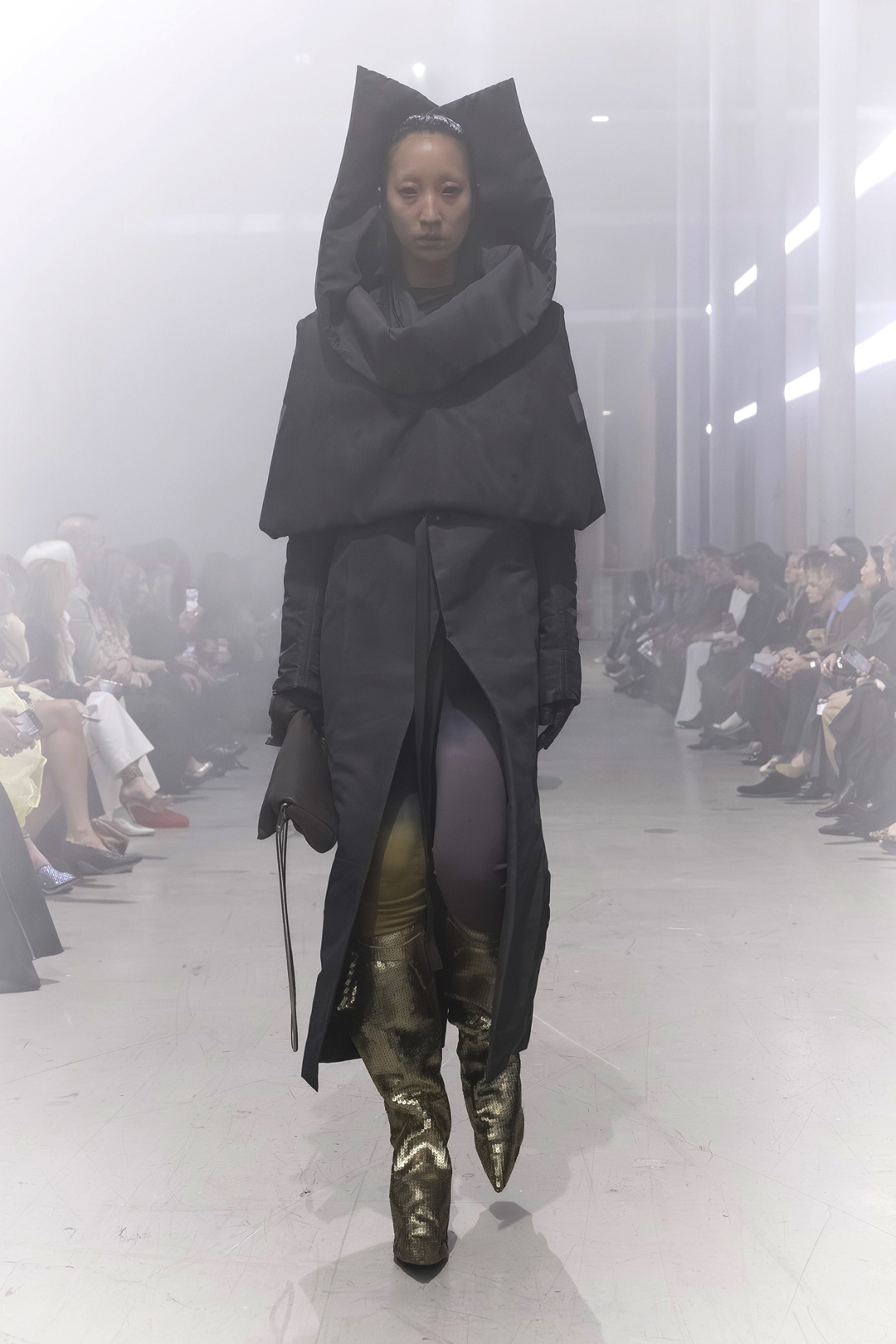
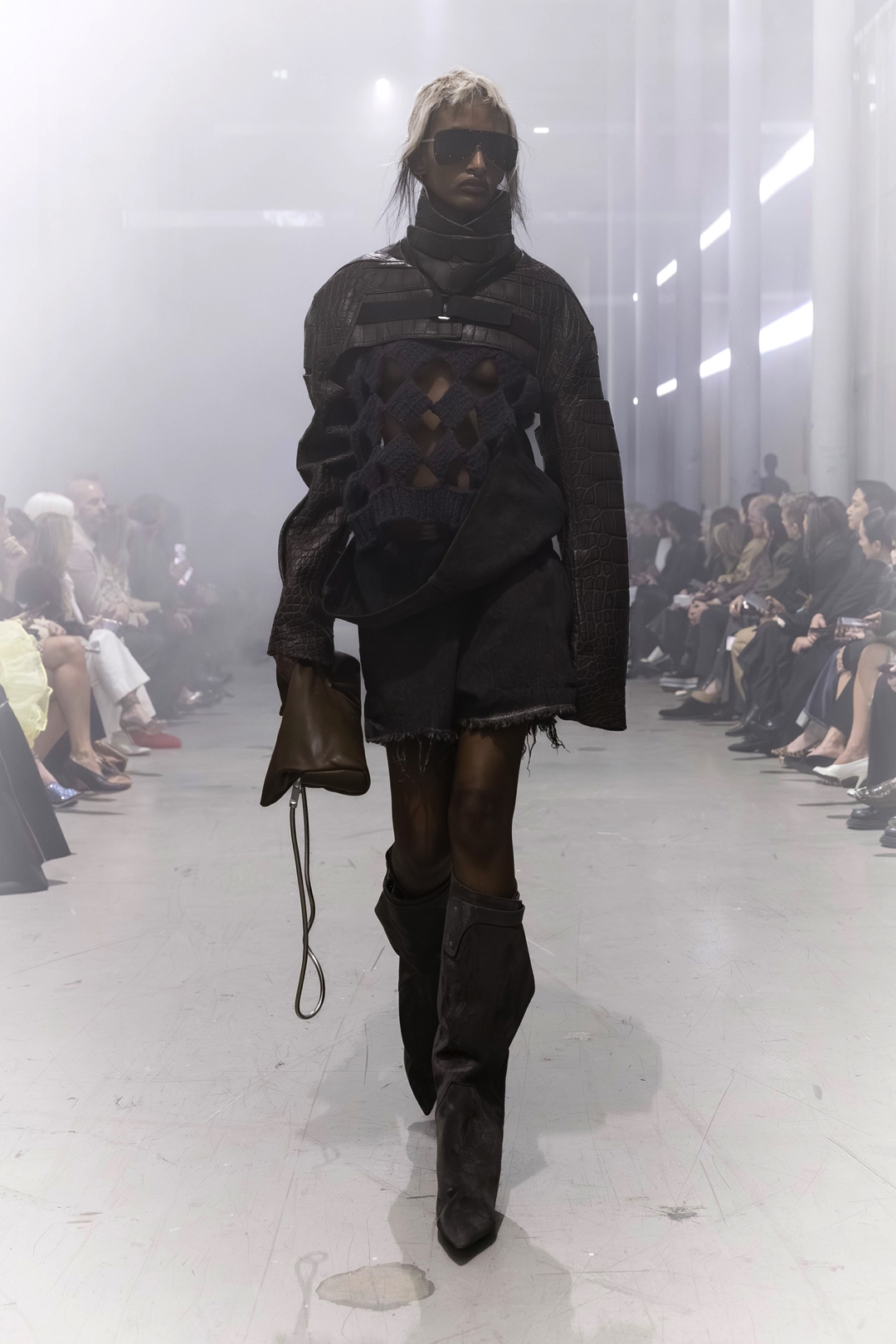
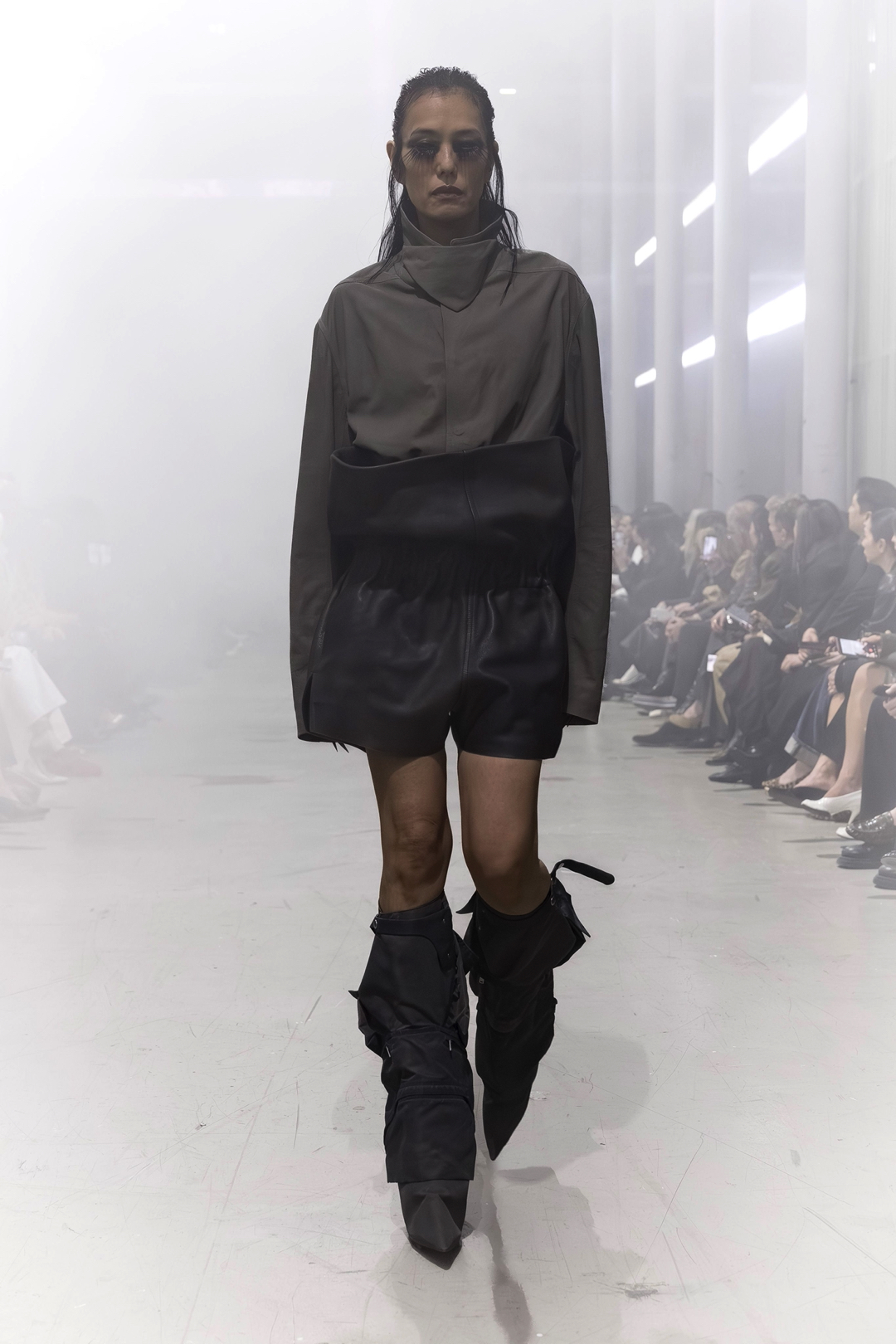
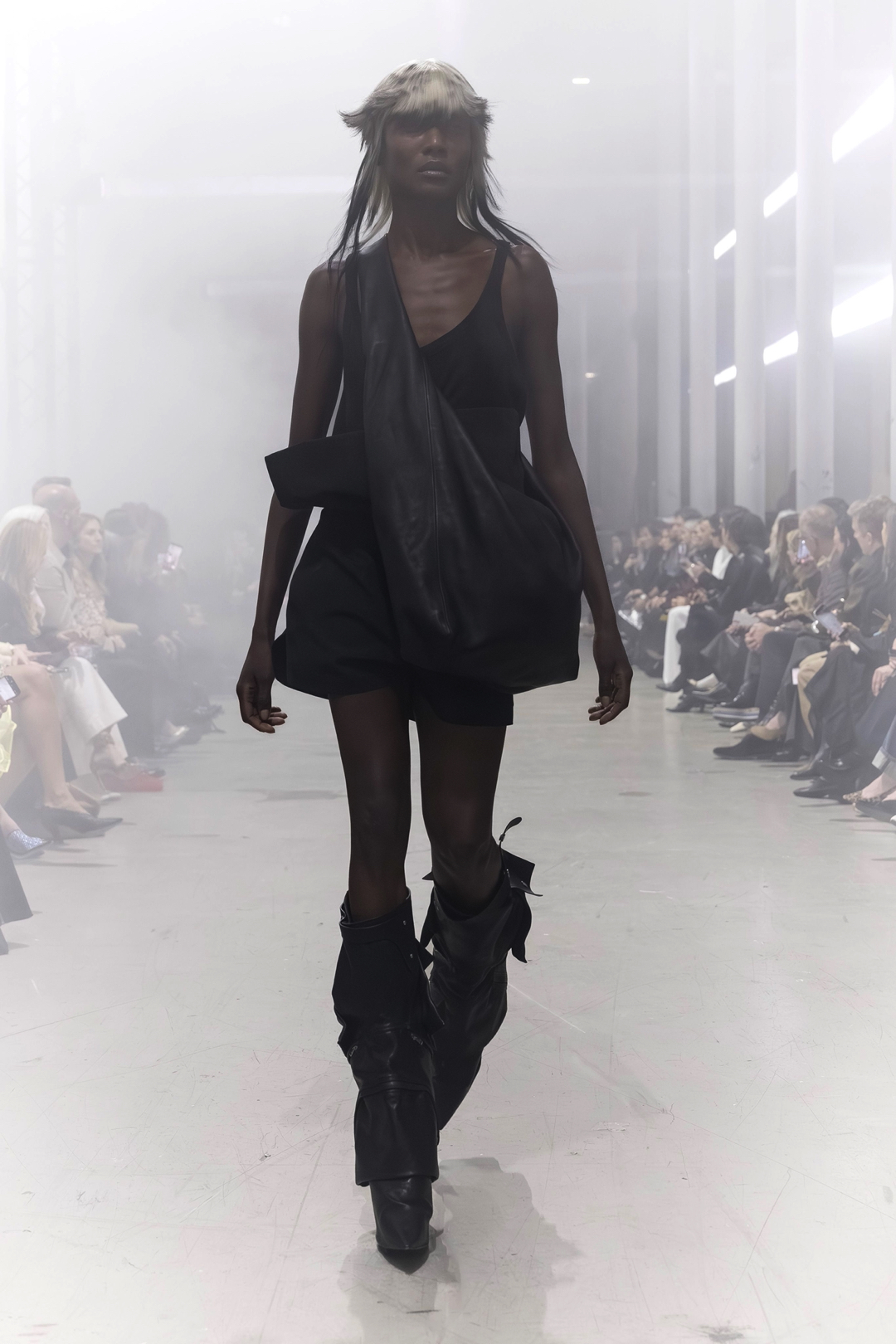
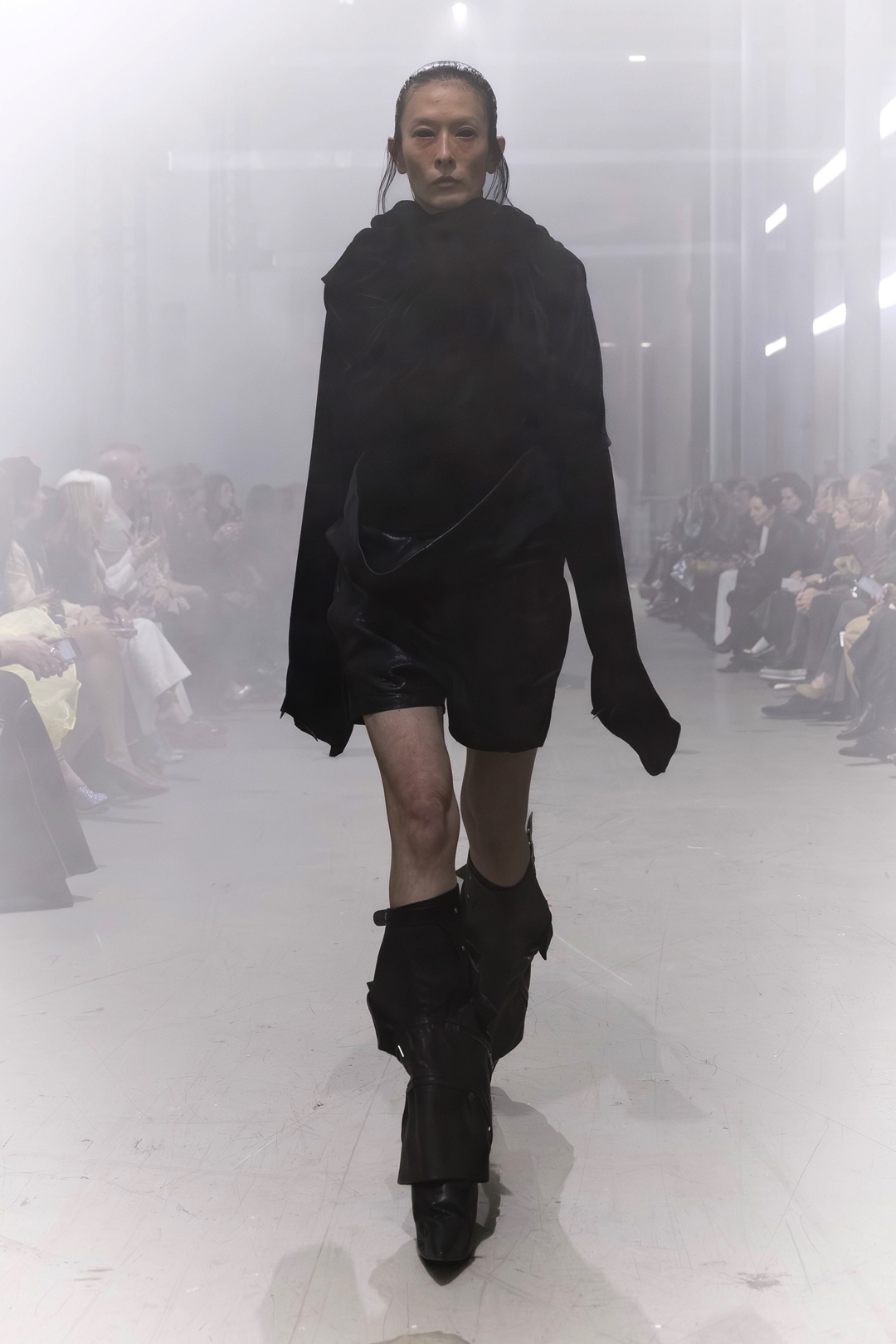
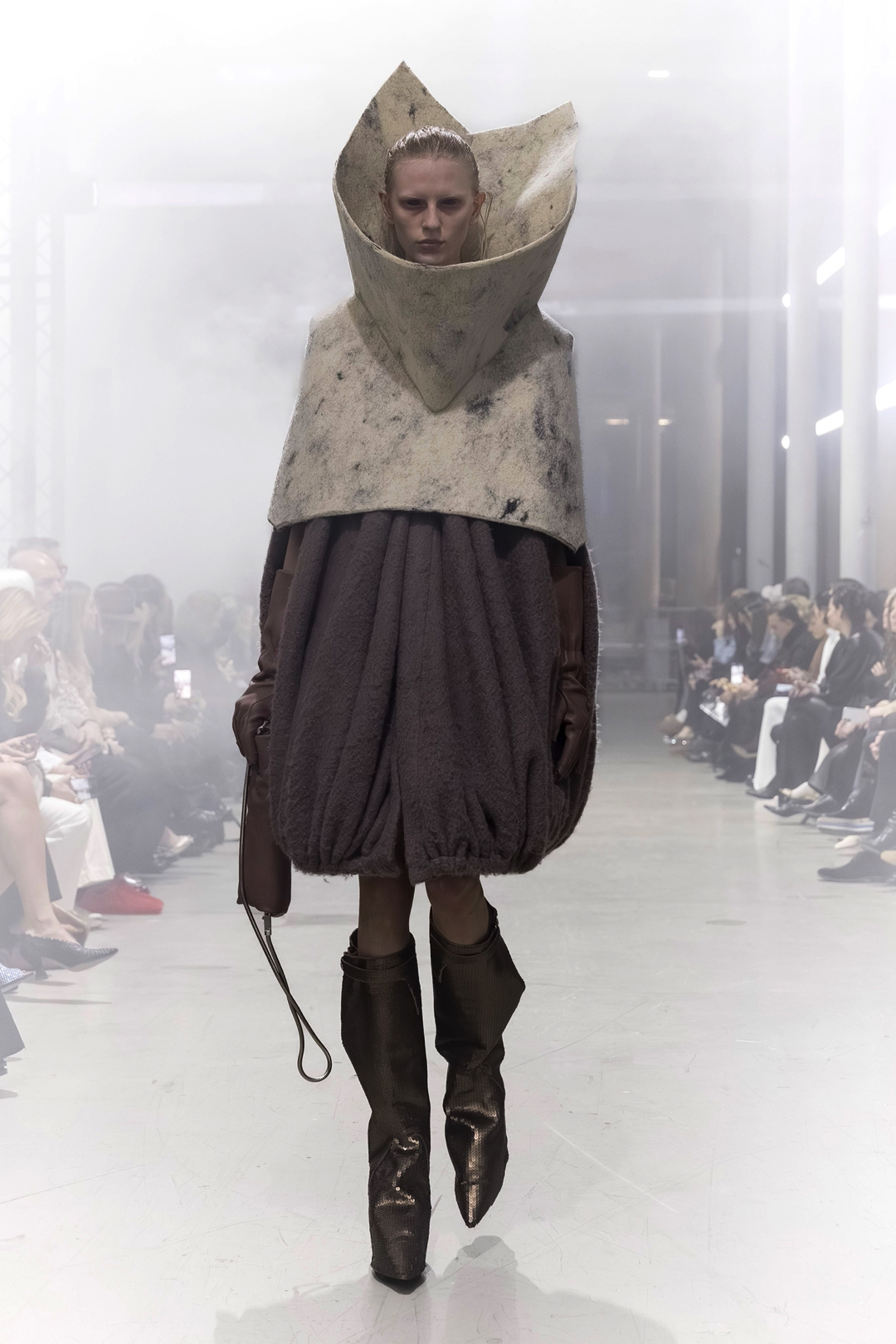
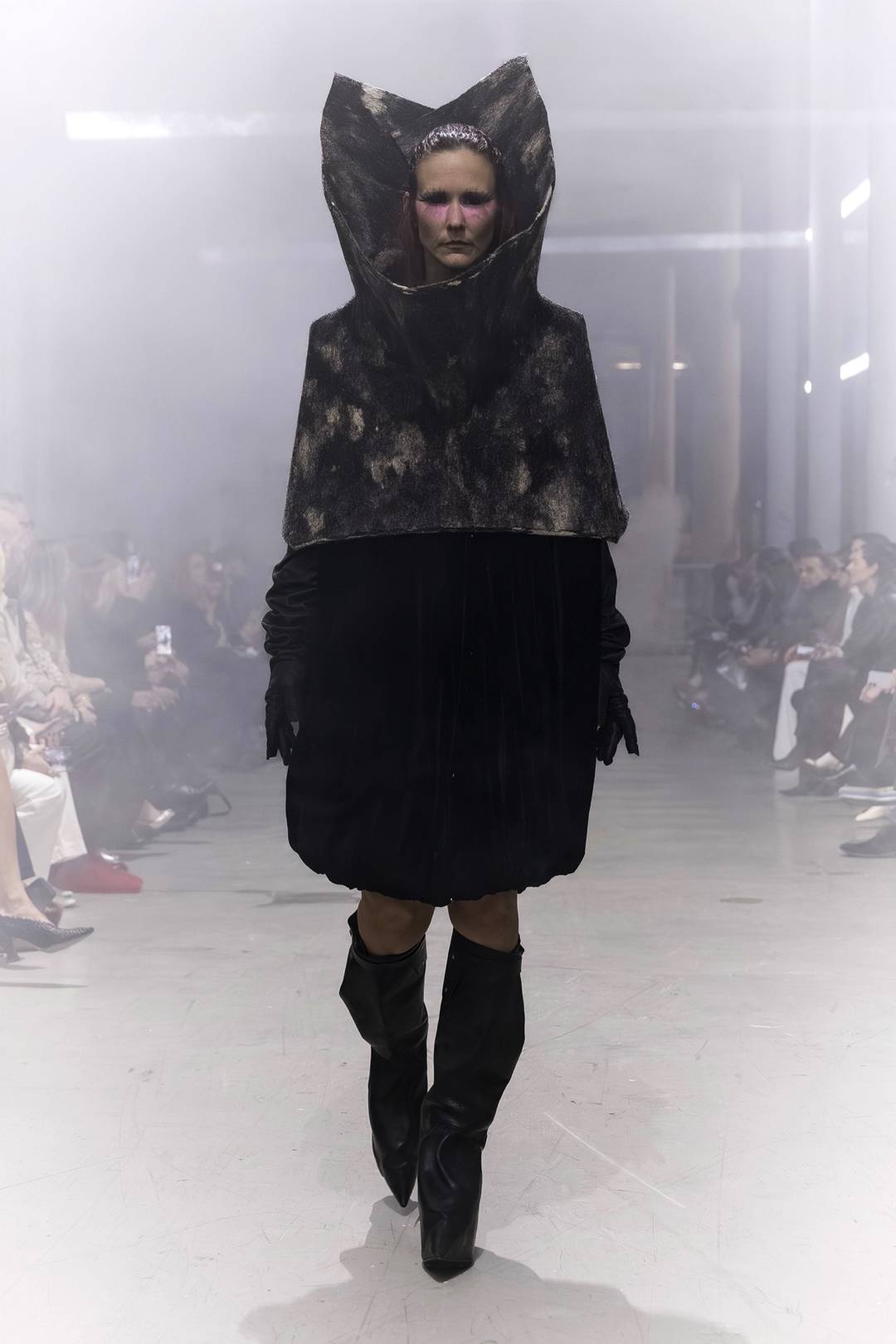
The show opened with a series of columnar “tower sheaths,” narrow silhouettes that extended the body vertically and set the tone for the collection’s architectural logic. Executed in glossy bull leather, boiled wool, and Kevlar canvas, the pieces conveyed an unmistakable sense of protection. Kevlar, a fiber traditionally used in body armor and five times stronger than steel, introduced a technical severity rarely foregrounded so explicitly in Owens’ womenswear. The material, woven by a long-established performance textile mill in Como, was not presented as a futuristic novelty but integrated into the designer’s ongoing exploration of clothing as a form of armor.
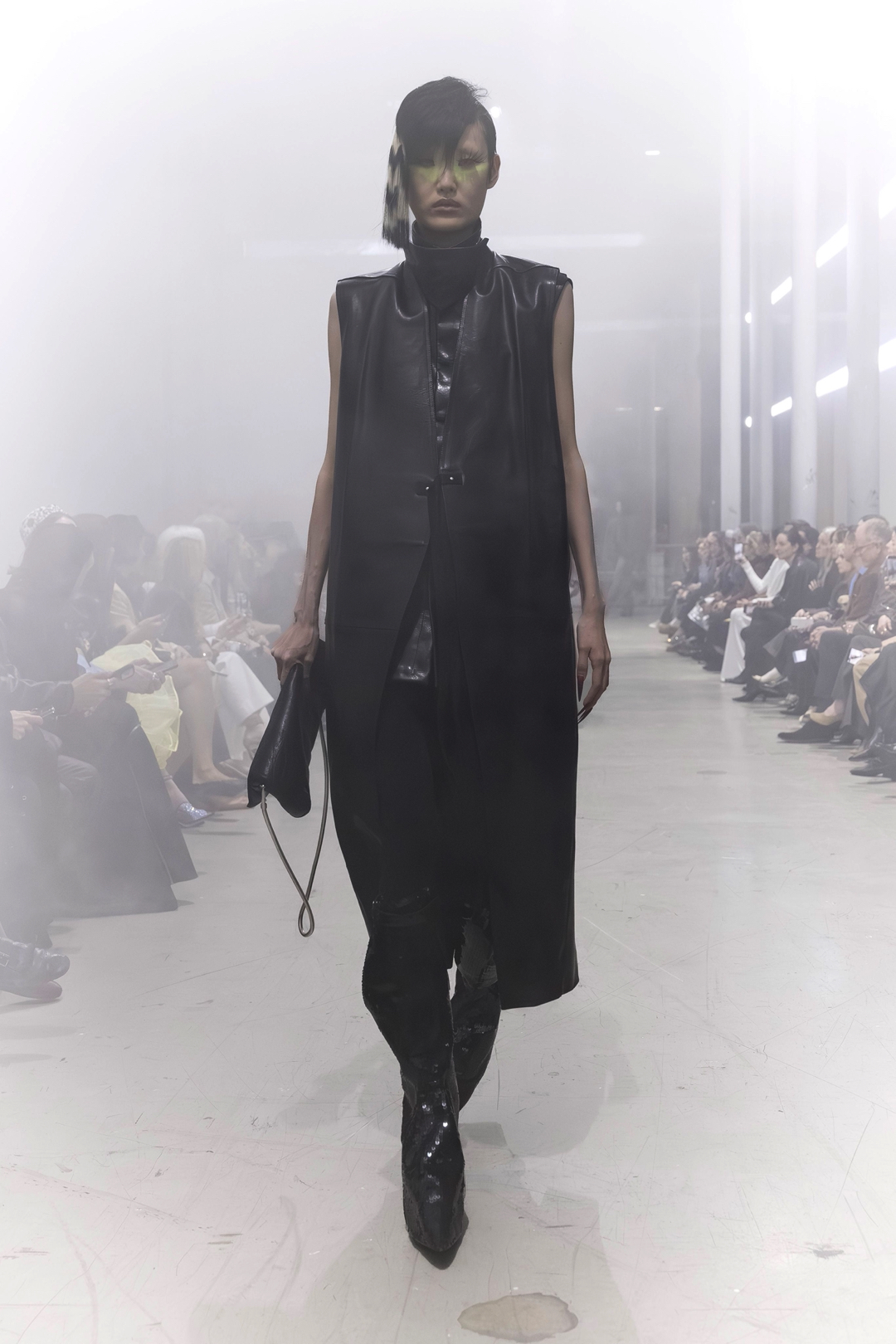
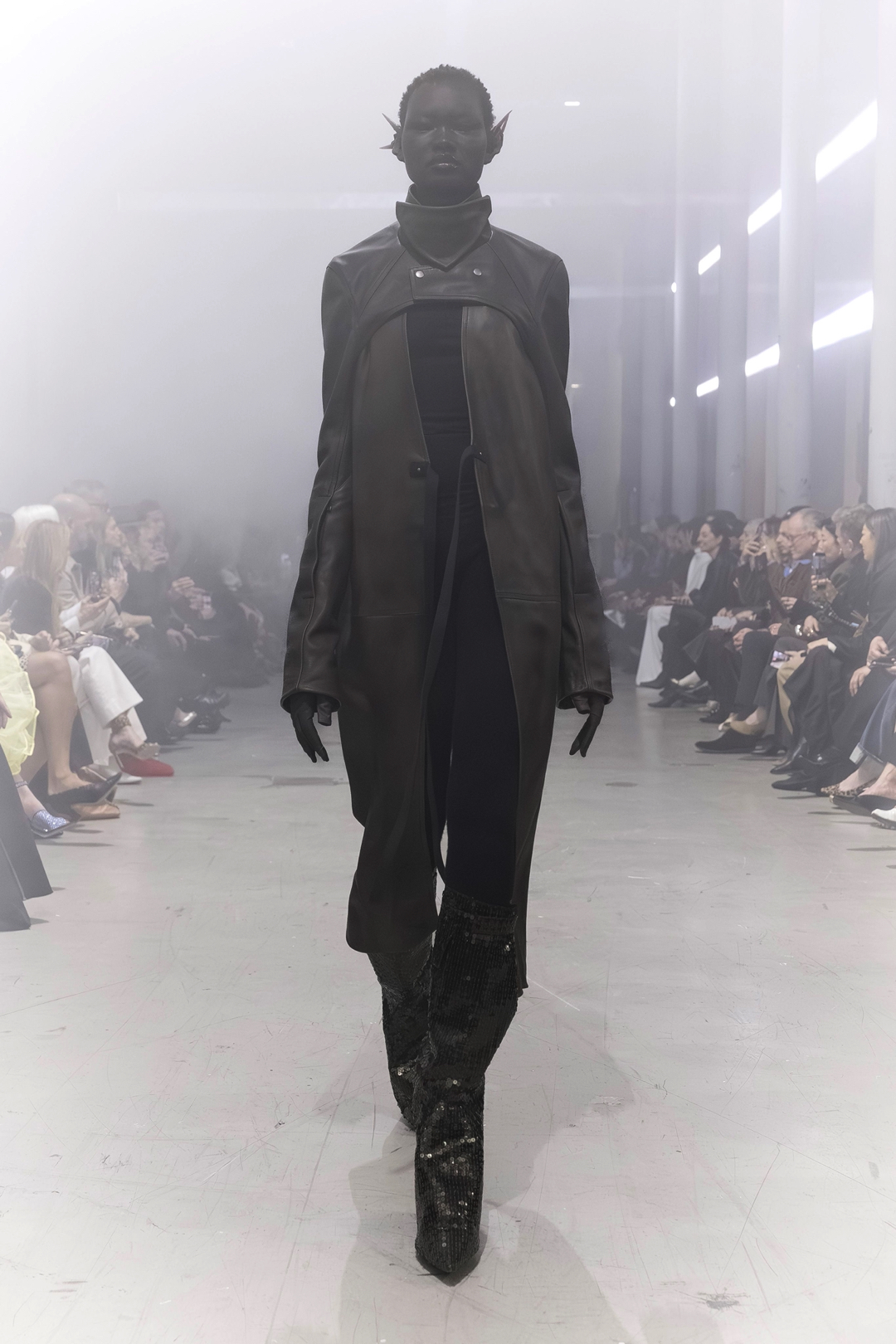
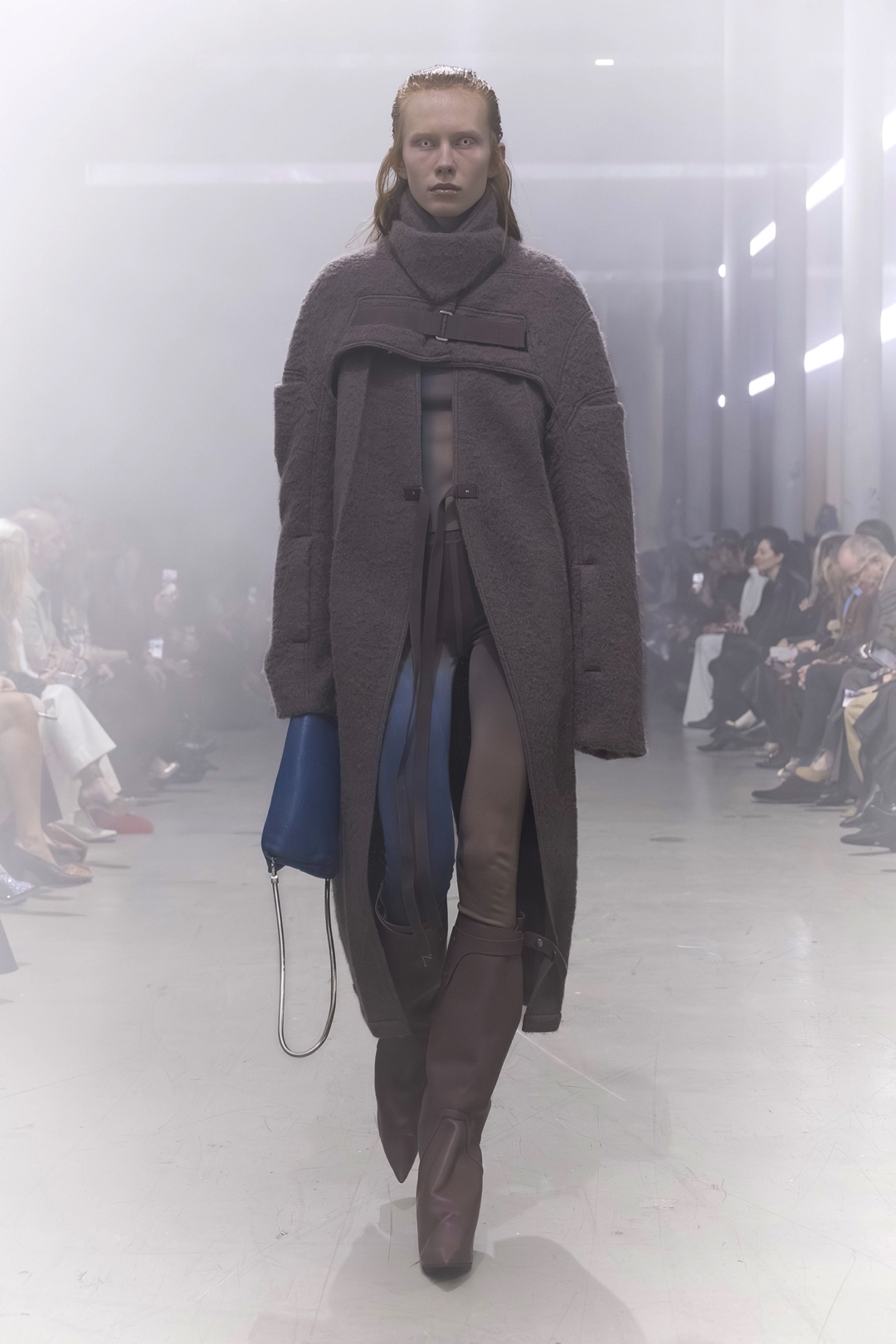
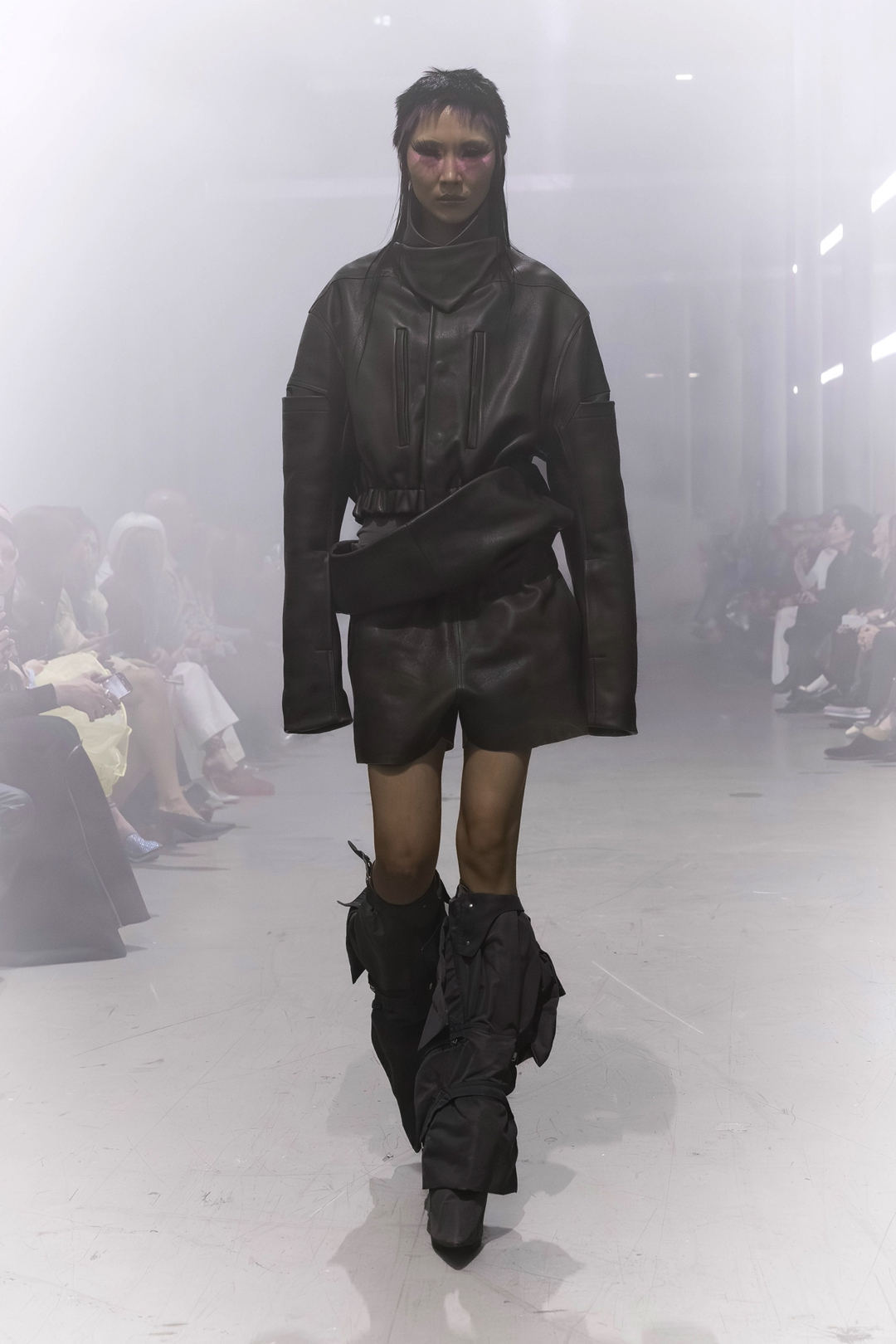
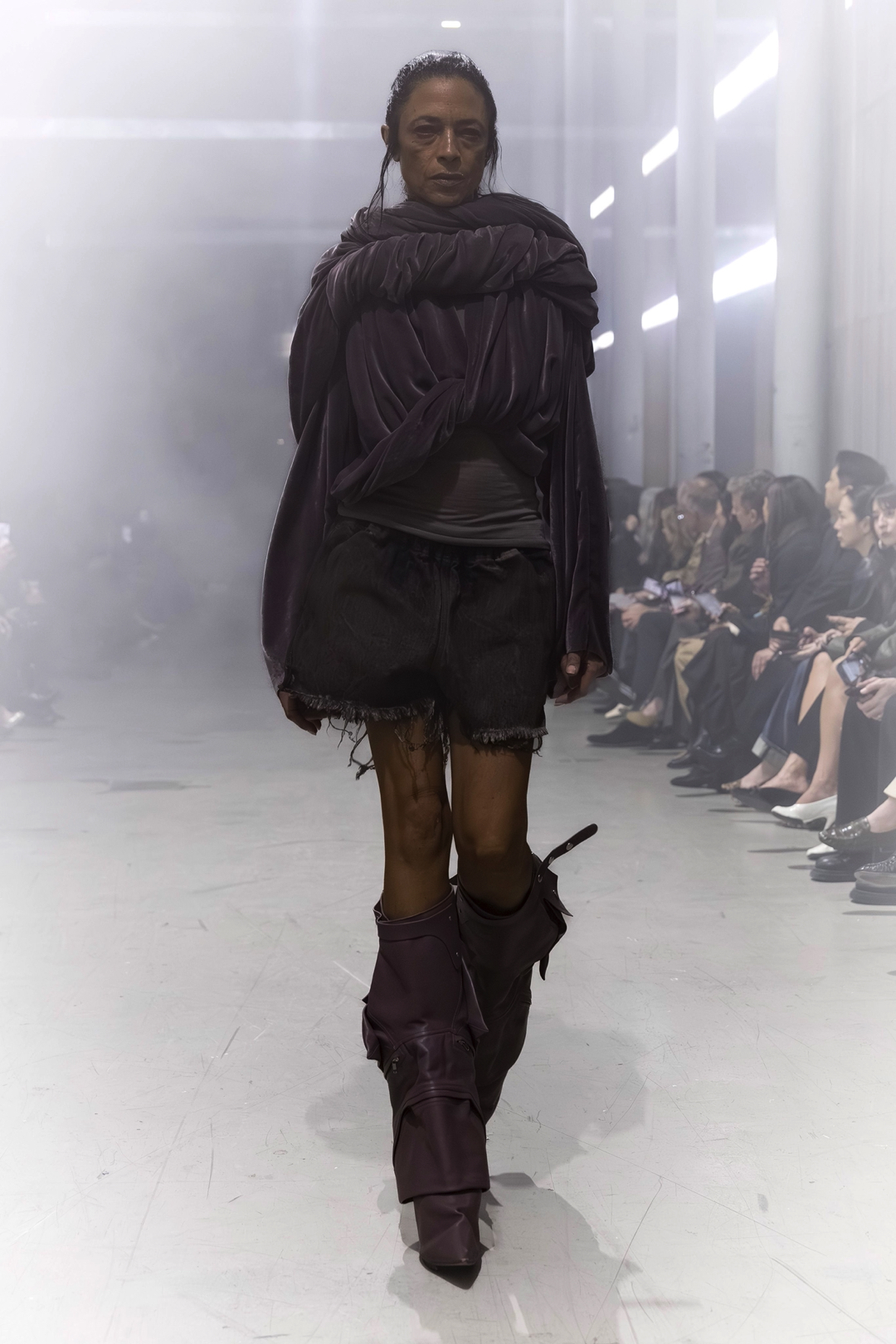
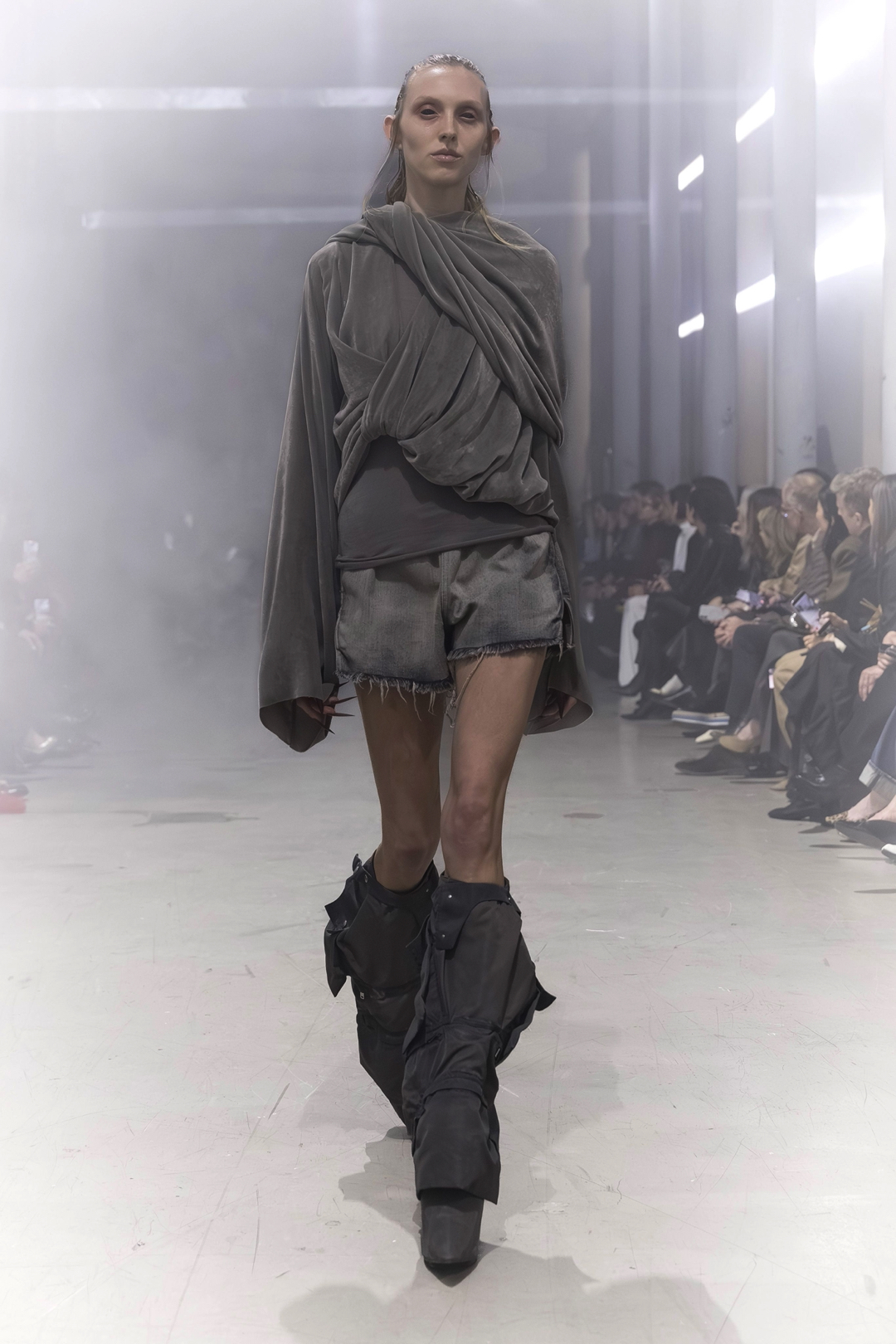
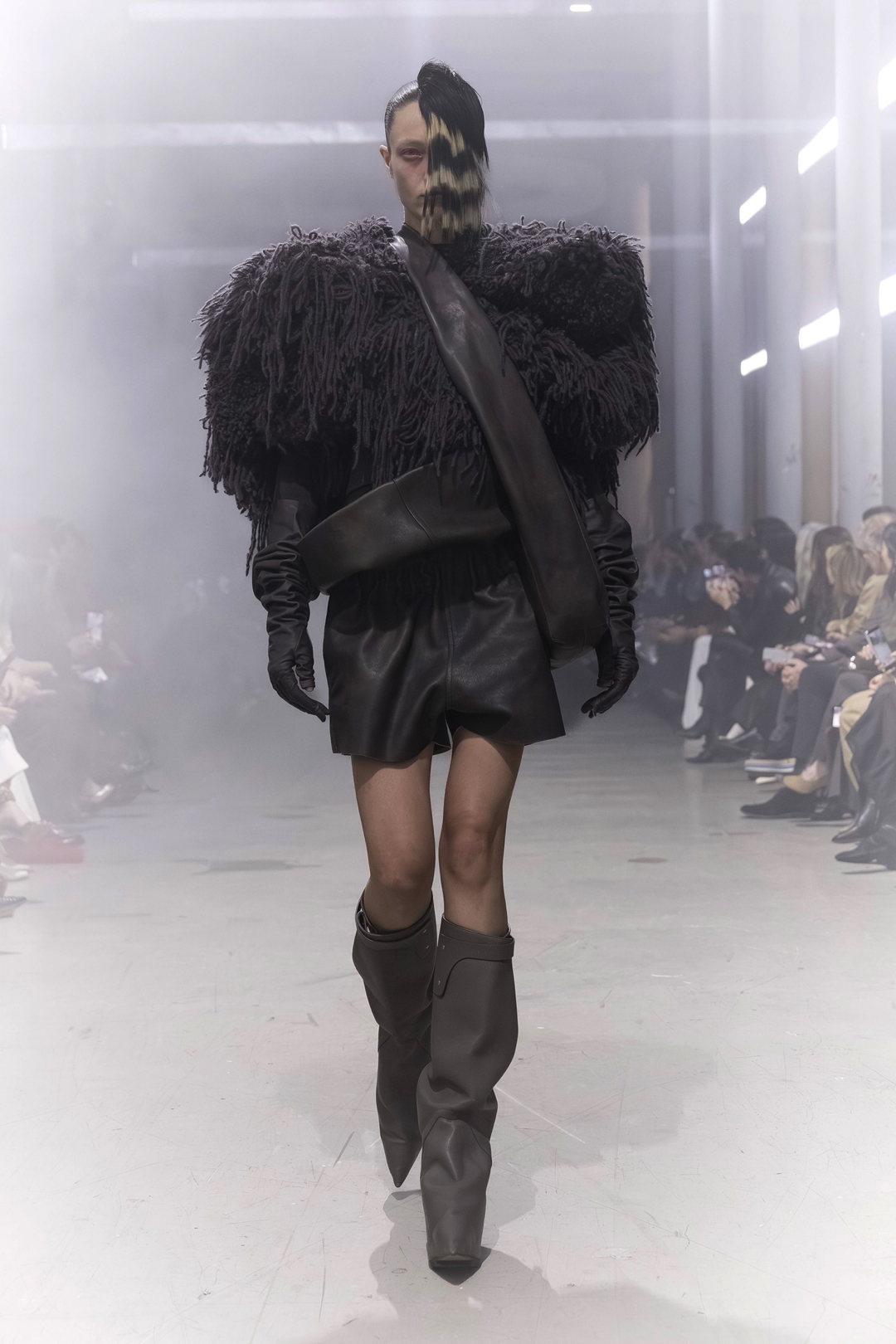
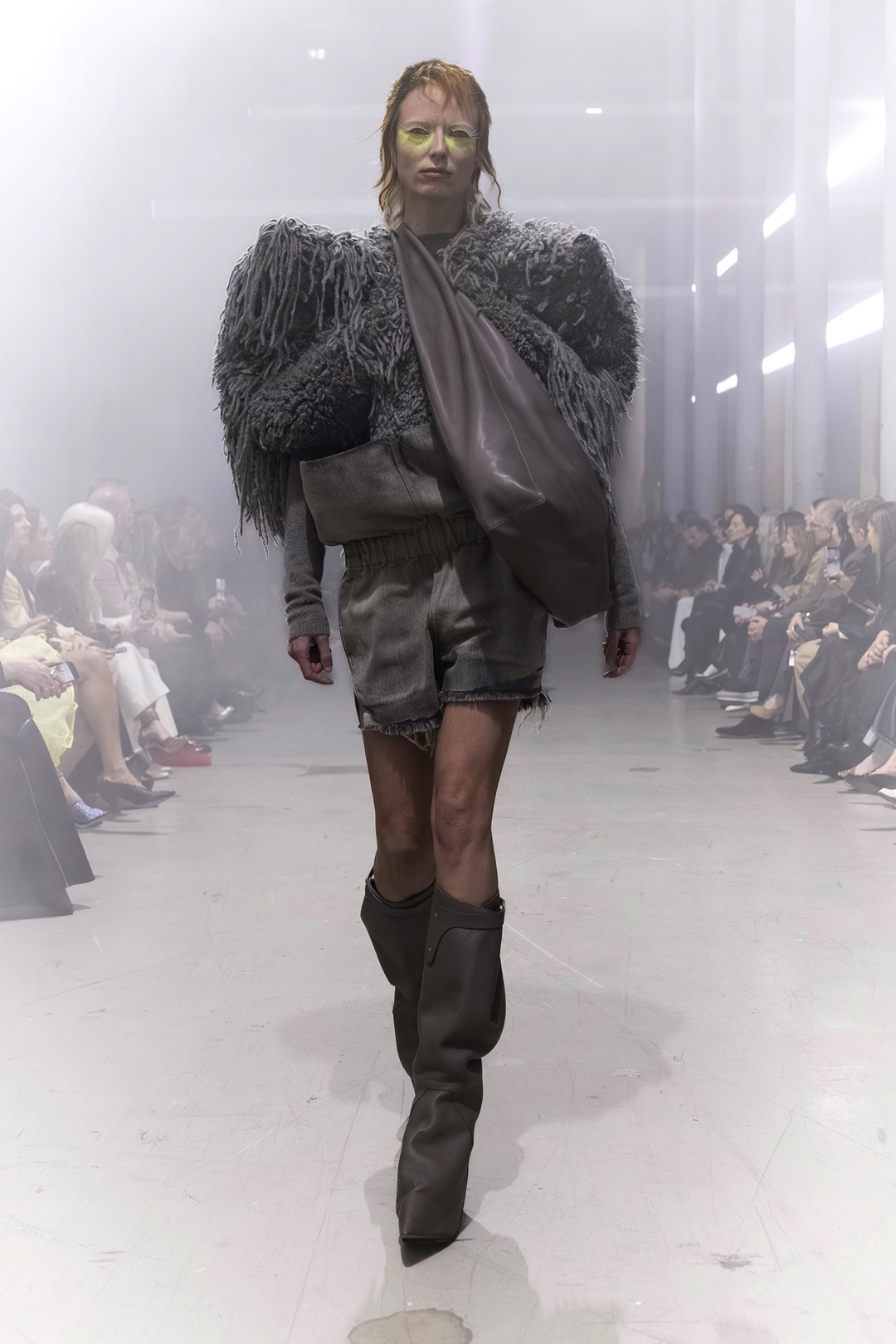
This sense of structural protection continued through the collection’s transformable outerwear. Cropped jackets were designed to be worn independently or layered over elongated vests, creating vertical silhouettes that literally built the “tower” around the wearer. The approach emphasized modularity rather than spectacle: garments assembled through layering rather than decorative excess. Heavy waxed cowhide, brushed alpaca, and RWS-certified boiled wool introduced a tactile density while maintaining a surprising malleability. The result was clothing that appeared weighty yet adaptable, reinforcing Owens’ recurring tension between rigidity and movement.
Material sourcing played a central role in the construction of the collection. Mélange wools came from heritage mills in Japan’s Bishū region and from Bonotto in Veneto, both known for generations of expertise in tailored textiles. Industrial indigo canvas from Japan was washed in small treatment baths in Veneto using processes designed to reduce water waste, while all denim treatments followed ZDHC standards. Rather than presenting sustainability as a separate narrative, Owens folded these practices into the technical and historical depth of the garments themselves.
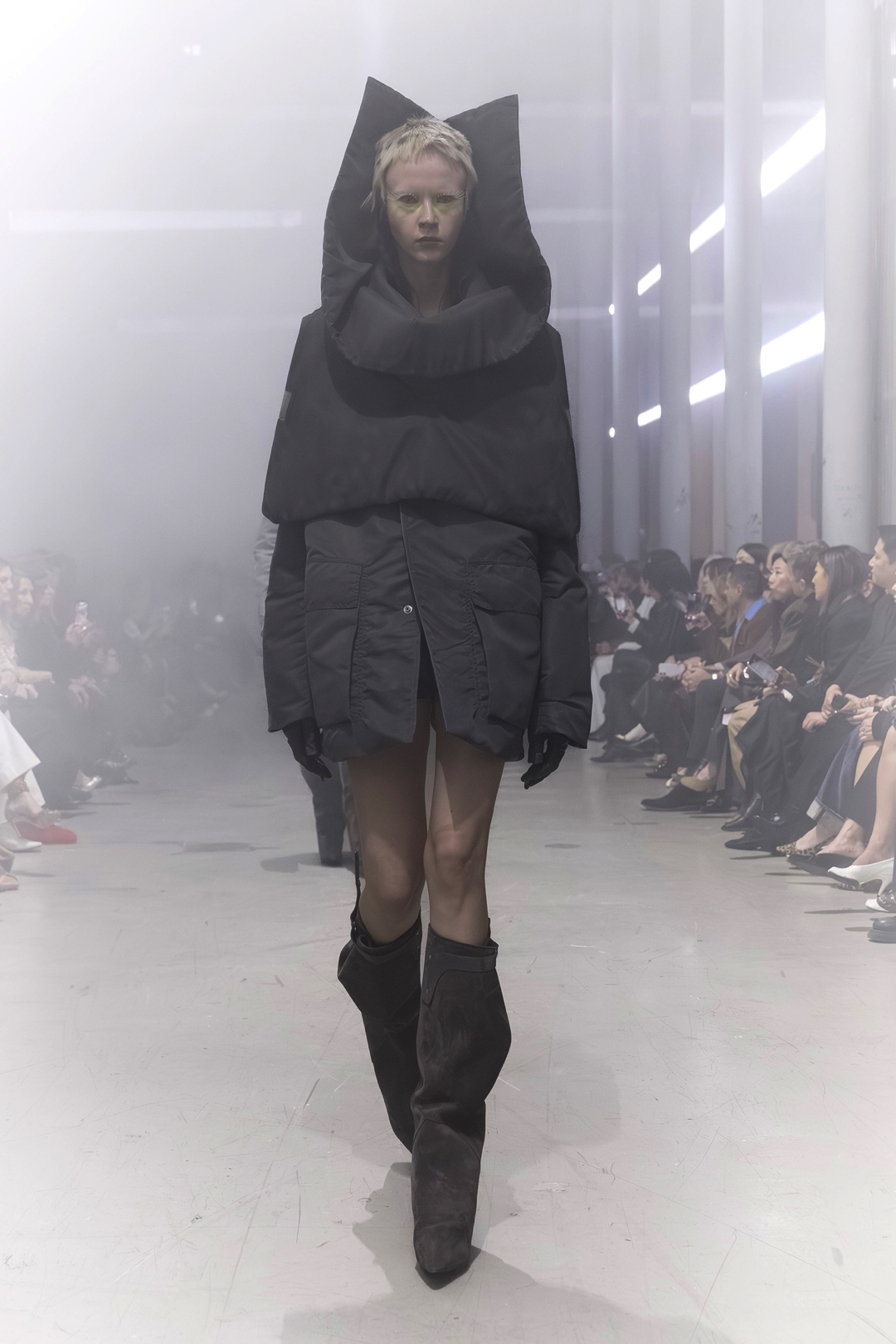
Several pieces introduced handcrafted interventions that complicated the collection’s otherwise austere architecture. Thick felt flight jackets and miniature mantles were produced in Rajasthan using untreated Himalayan wool, whose natural tonal variations created vein-like patterns across the surface. Silk-cashmere yarns appeared in hand-crocheted knits created with long-time collaborator Saruta Nya, and in tufted jackets developed with Paris-based textile artist Julia Trofimova, who previously interned in Owens’ Concordia factory before establishing her own practice.
Owens’ long-standing fascination with Marlene Dietrich surfaced in one of the collection’s most striking gestures. Cotton-candy colored goat hides were water-jet cut into netted structures, forming an exaggerated interpretation of the legendary swansdown coat Dietrich wore during her late cabaret performances. Owens has often cited the performer’s life as a model of evolving identity: from provocative star, to wartime figure of duty, to the disciplined minimalism of her final stage appearances. In this context, the coat functioned less as homage than as an exploration of theatrical control—the tension between spectacle and restraint.
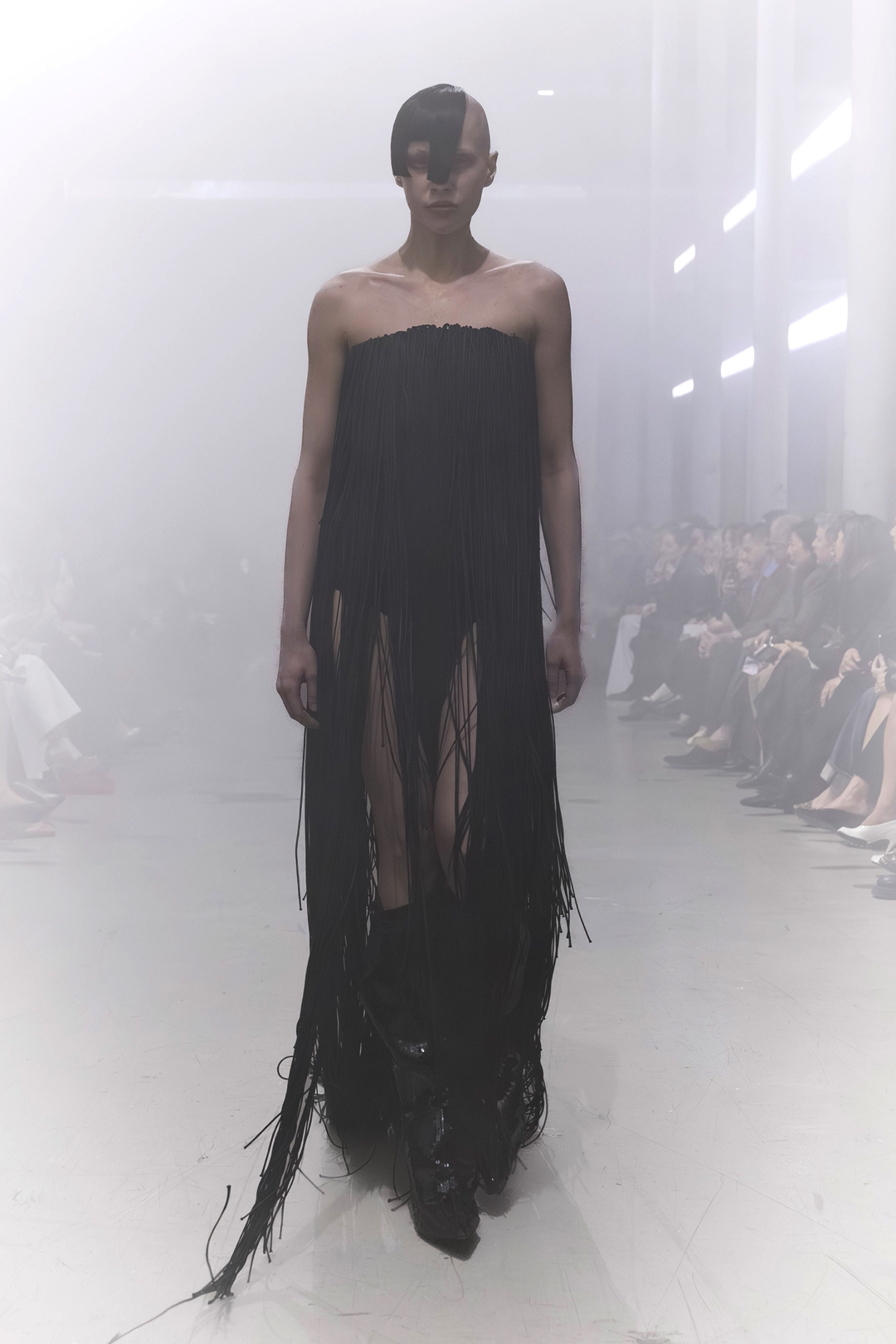
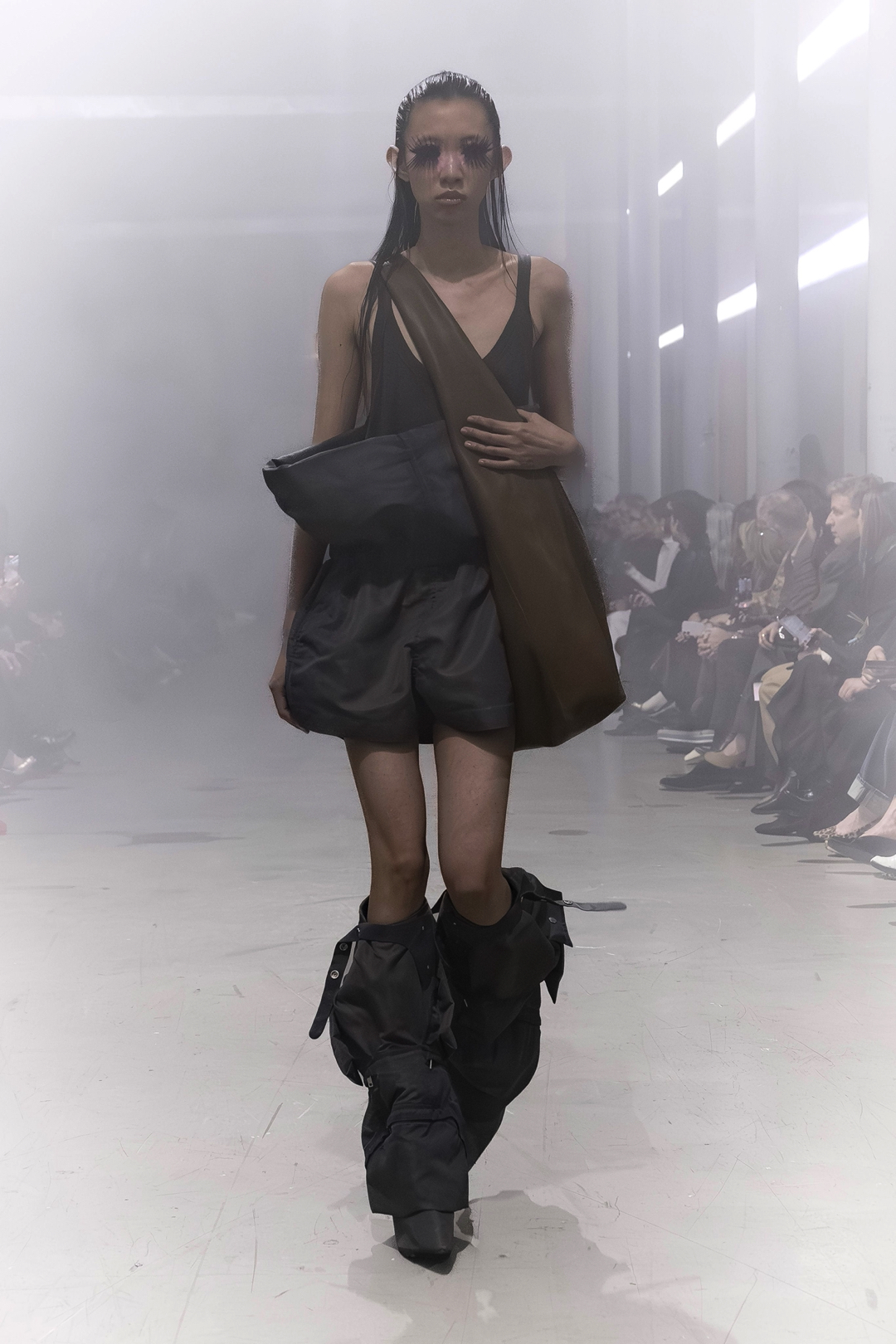
Hair and makeup, developed with Berlin-based digital creator Figa, reinforced the collection’s sense of reactive expression. Owens has often framed collaboration as a response to the cultural moment, and here the creative exchange suggested a shared search for forms capable of confronting present conditions.
Despite its monumental title, “Tower” ultimately returned to one of Owens’ most consistent themes: clothing as a site of resilience. The garments proposed protection without retreat, transforming materials associated with defense such as Kevlar, leather, and dense wool into sculptural silhouettes that extend the body upward. In Owens’ universe, the tower is not a fortress that isolates. It is a structure built collectively, layer by layer, through craft, collaboration, and the persistent act of dressing.
Photos: Owenscorp / Courtesy of Rick Owens
Casting: Angus Munro (AMC Casting)
Styling: Tyrone Dylan Susman
Hair: Duffy (Streeters)
Makeup: Daniel Sallstrom (MA World Group)
Nails: Christina Conrad
Prosthetics: Sandrine Denis
Production: La Mode en Images
Music: “Luxus 1-3” by Ryoji Ikeda
Mixed by: Jeff Judd
www.rickowens.eu
@rickowensonline
Highlights from the Collection
Comments are closed.