

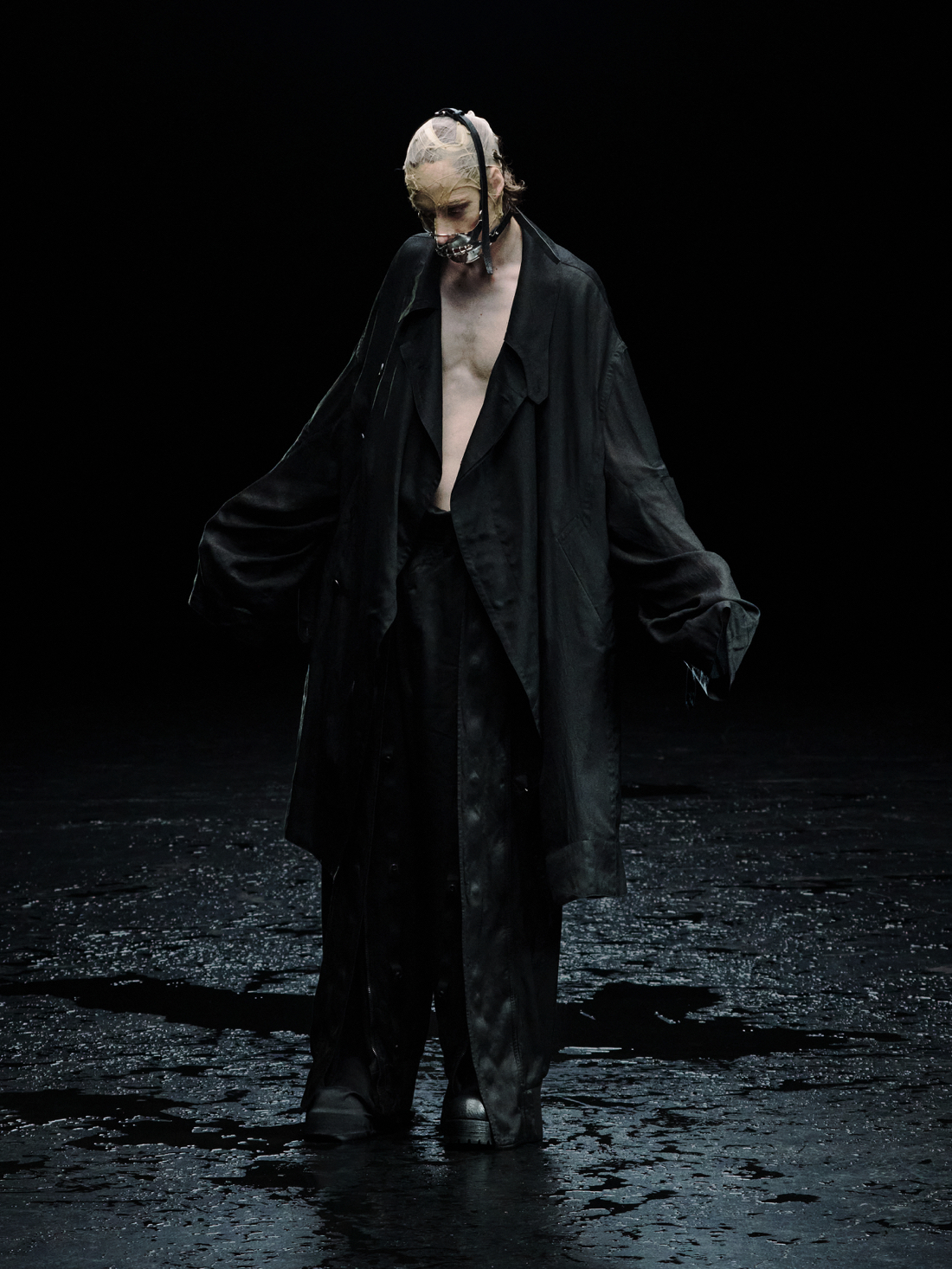
For Spring/Summer 2027, Julius presents “[liminal;]”, a collection that examines the tension between an expanding sense of freedom and the increasingly rigid systems that define contemporary existence. Rather than proposing escape, the collection inhabits the uncertain territory between established categories, where identity, form, and meaning remain deliberately unresolved.
The collection begins with a contradiction. While modern life often appears to offer greater freedom, it is simultaneously structured by explicit classifications and fragmented boundaries. Julius approaches this paradox not through opposition but through ambiguity, suggesting that fixed definitions become less absolute when their edges are softened rather than erased.
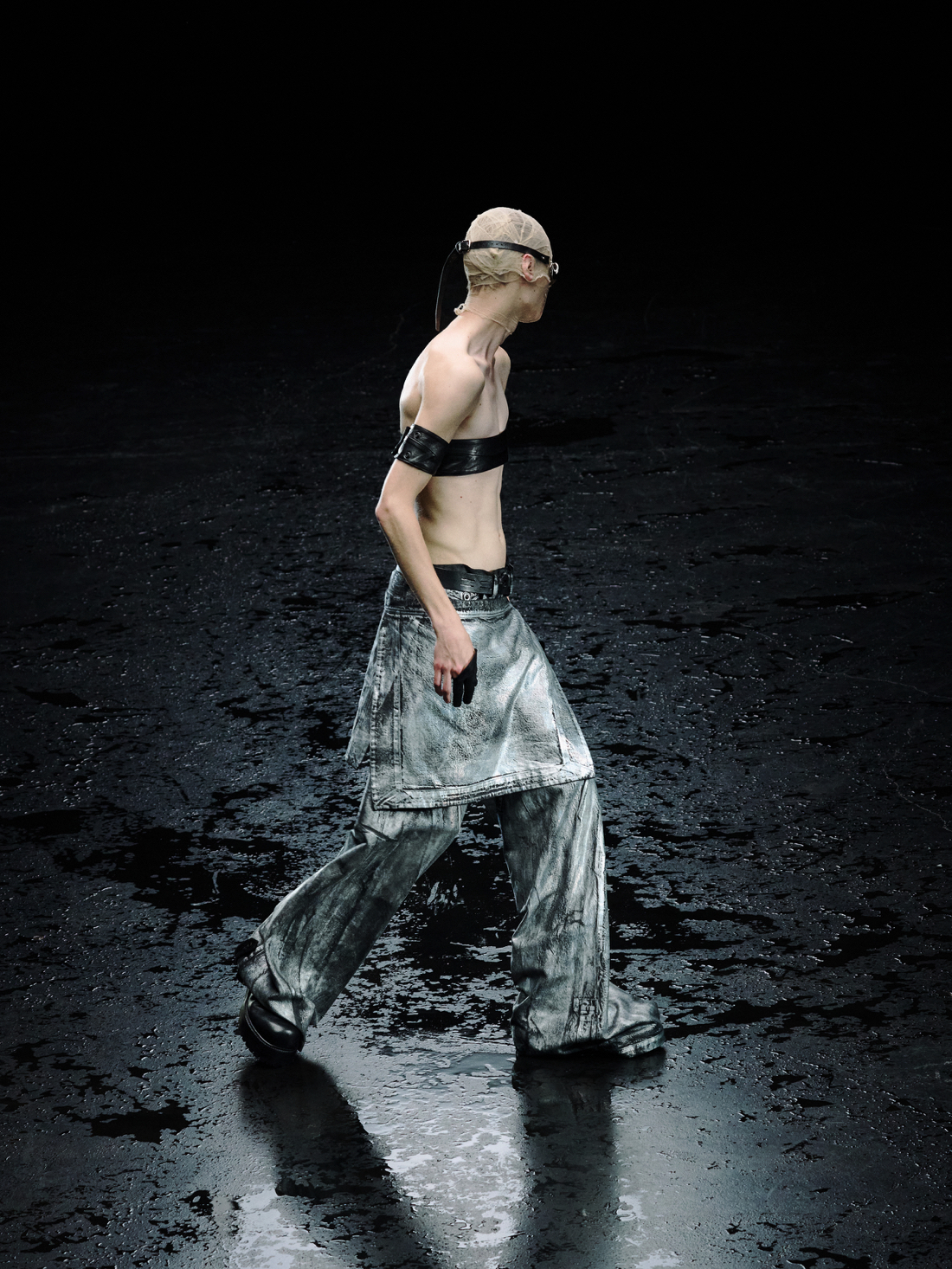
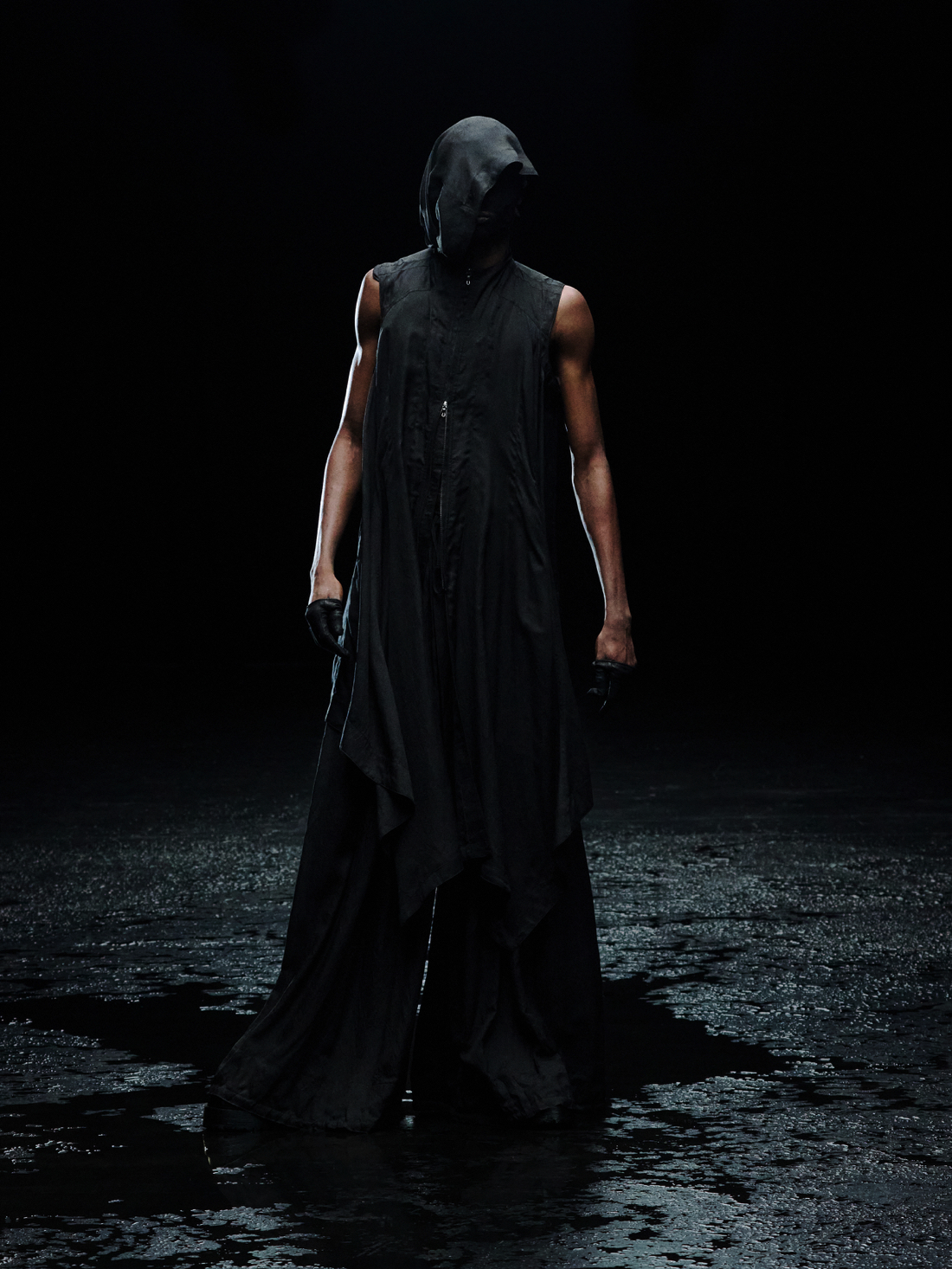
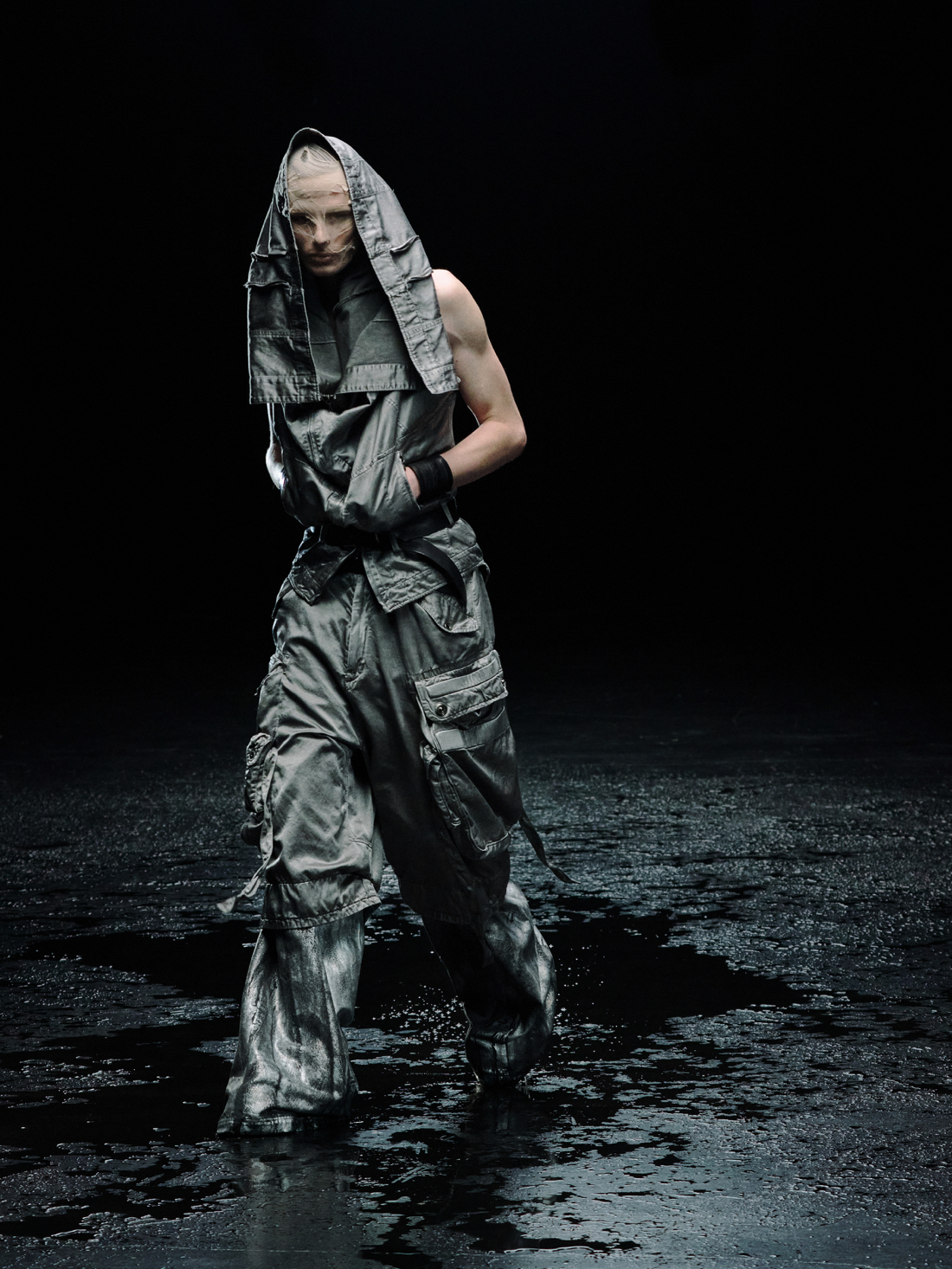
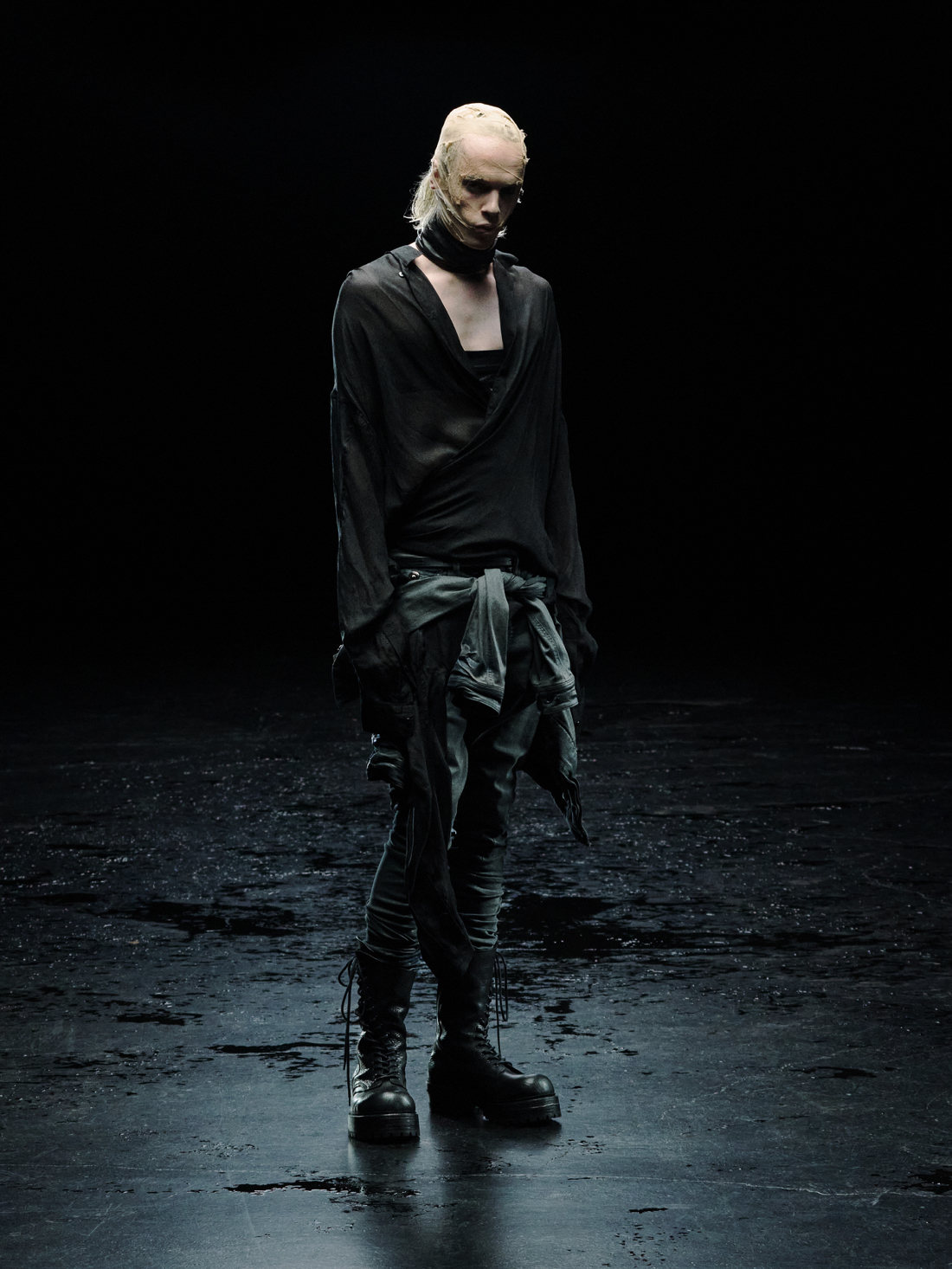
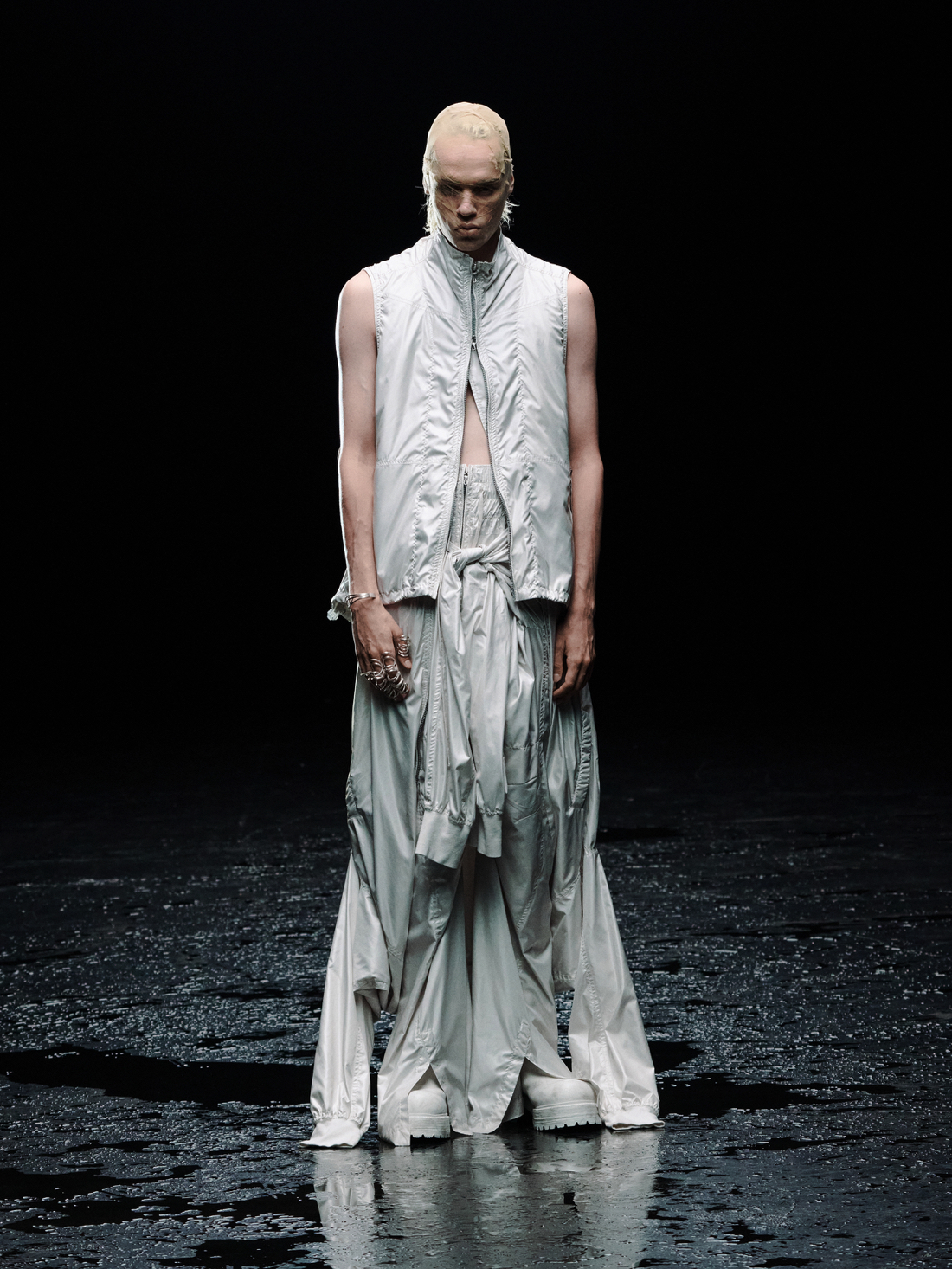
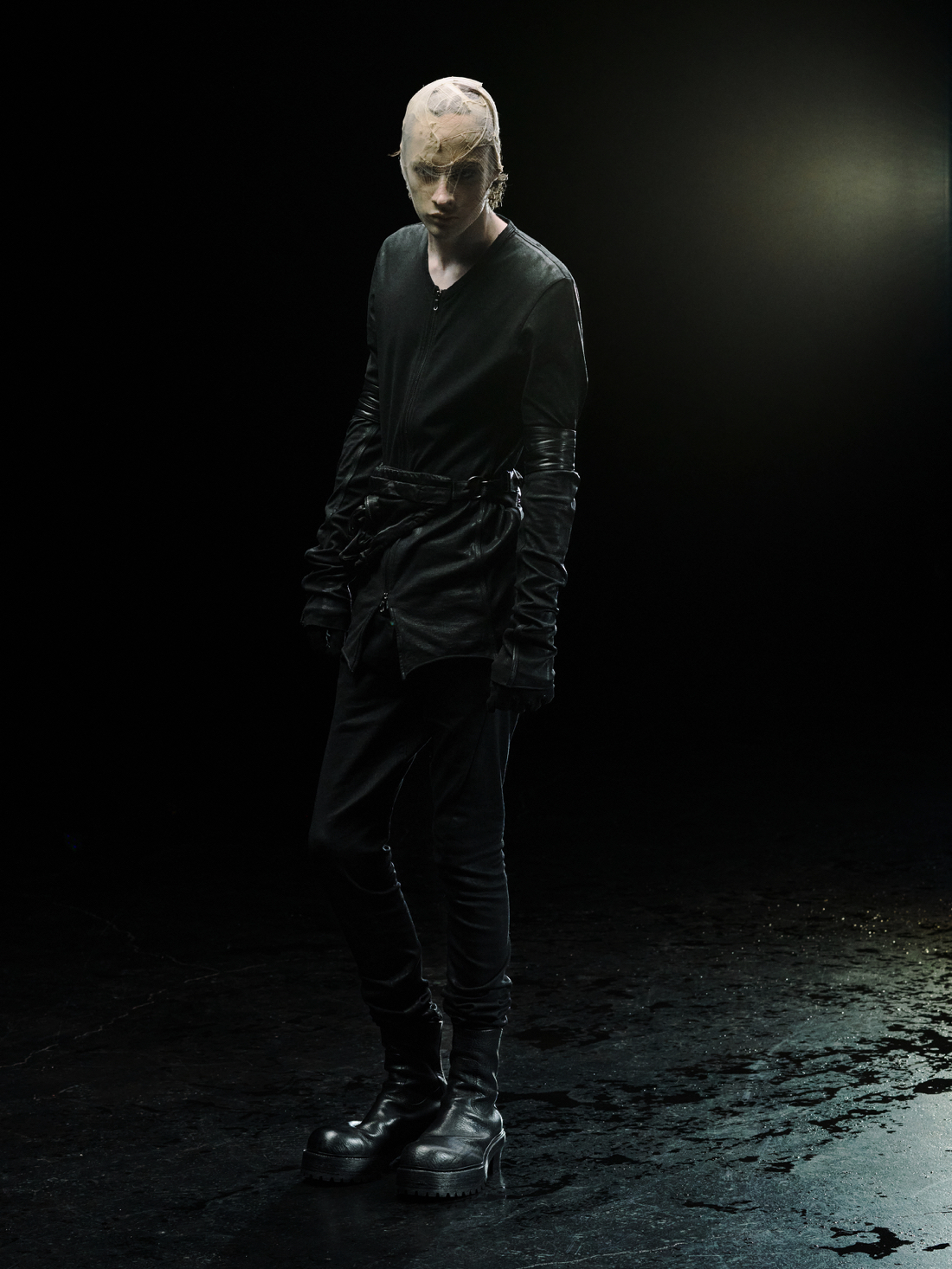
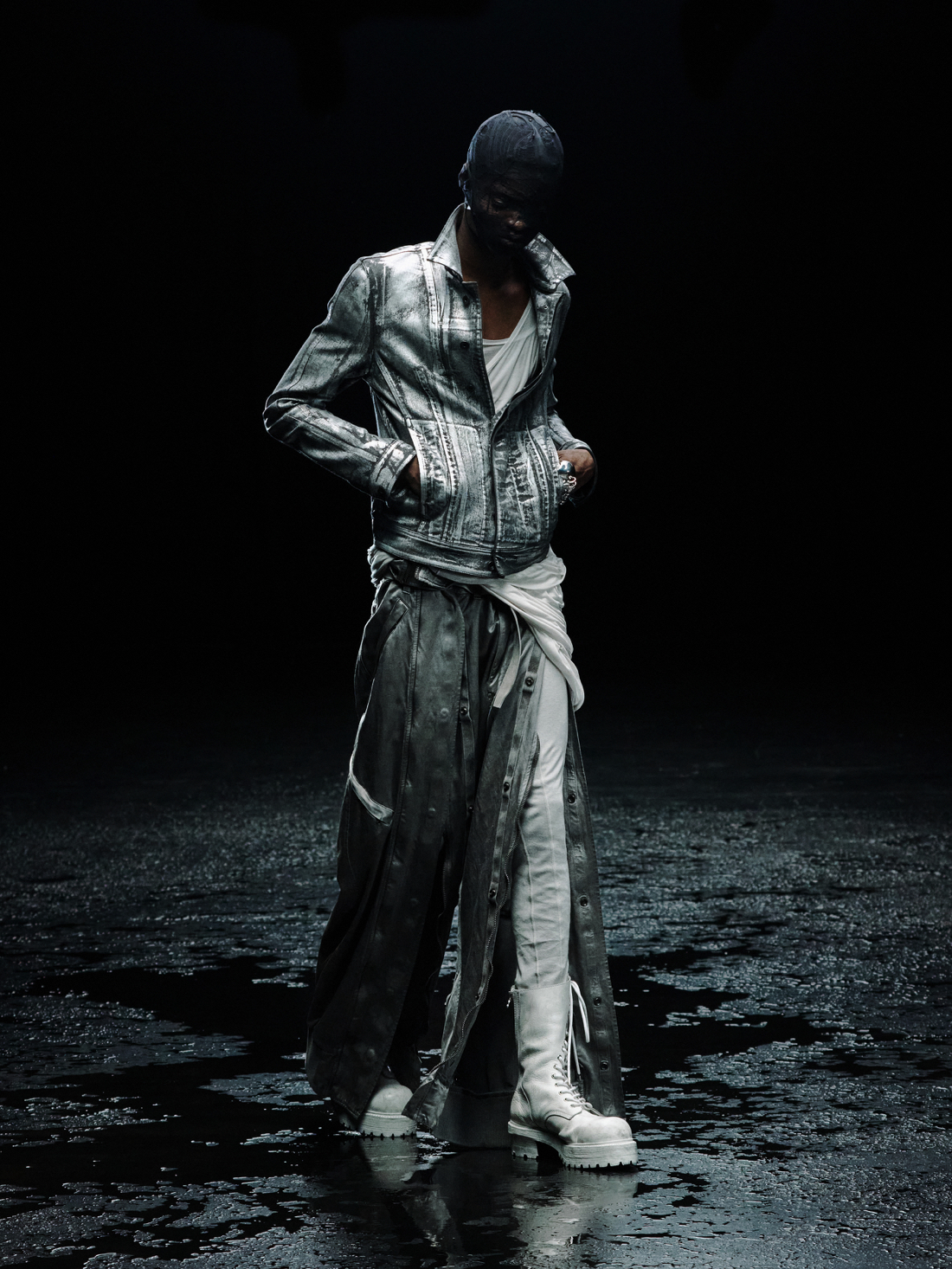
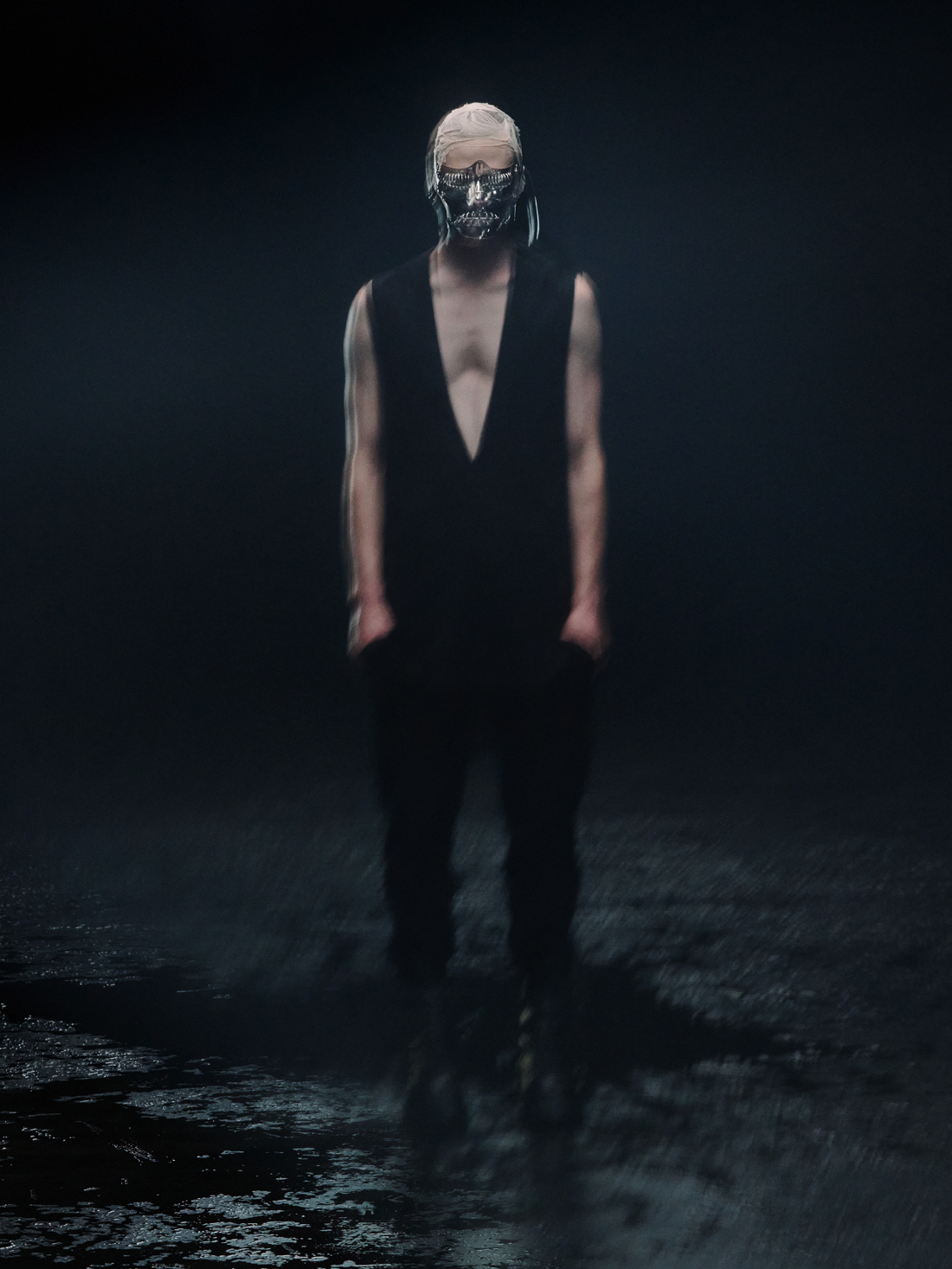
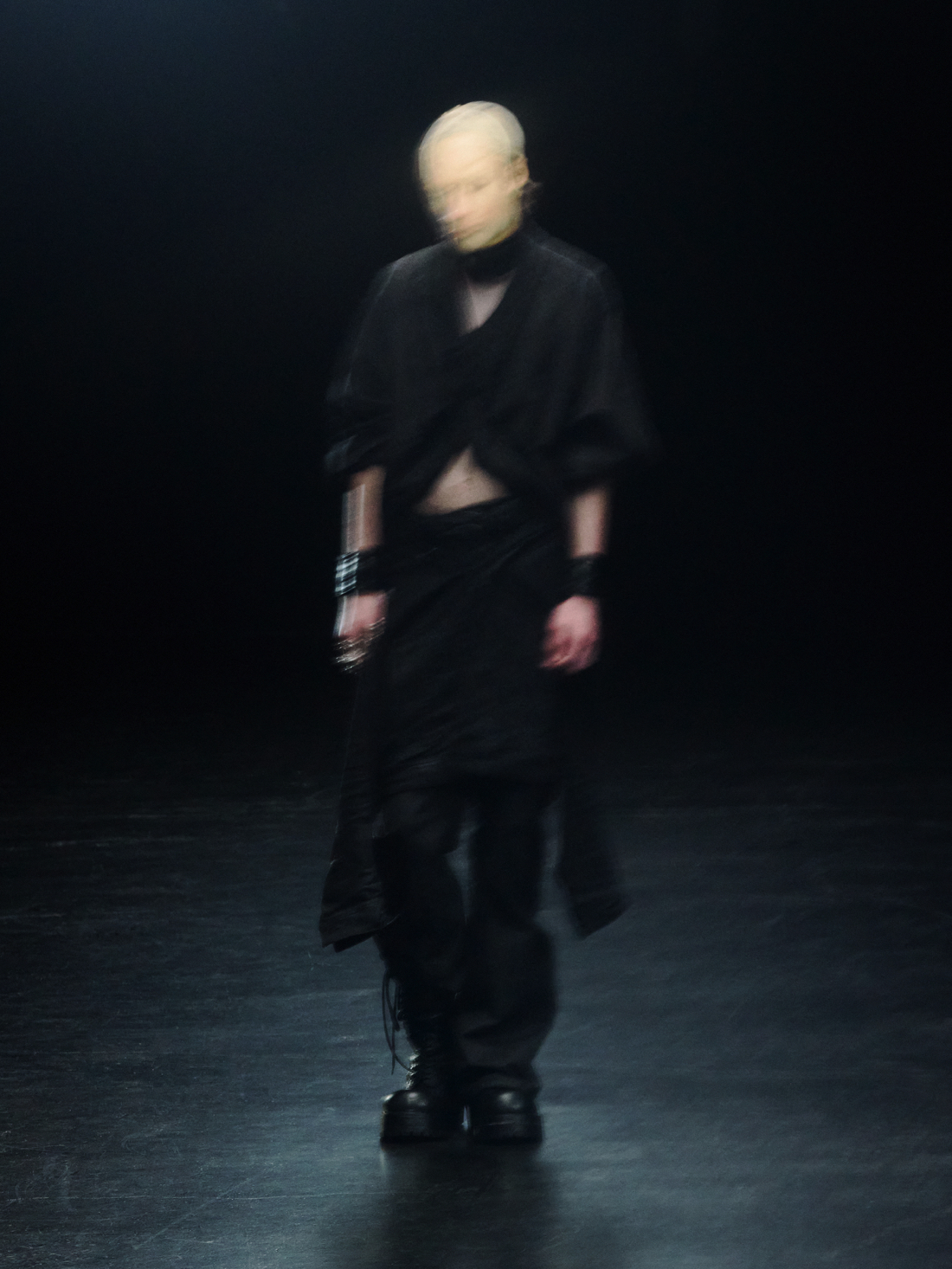
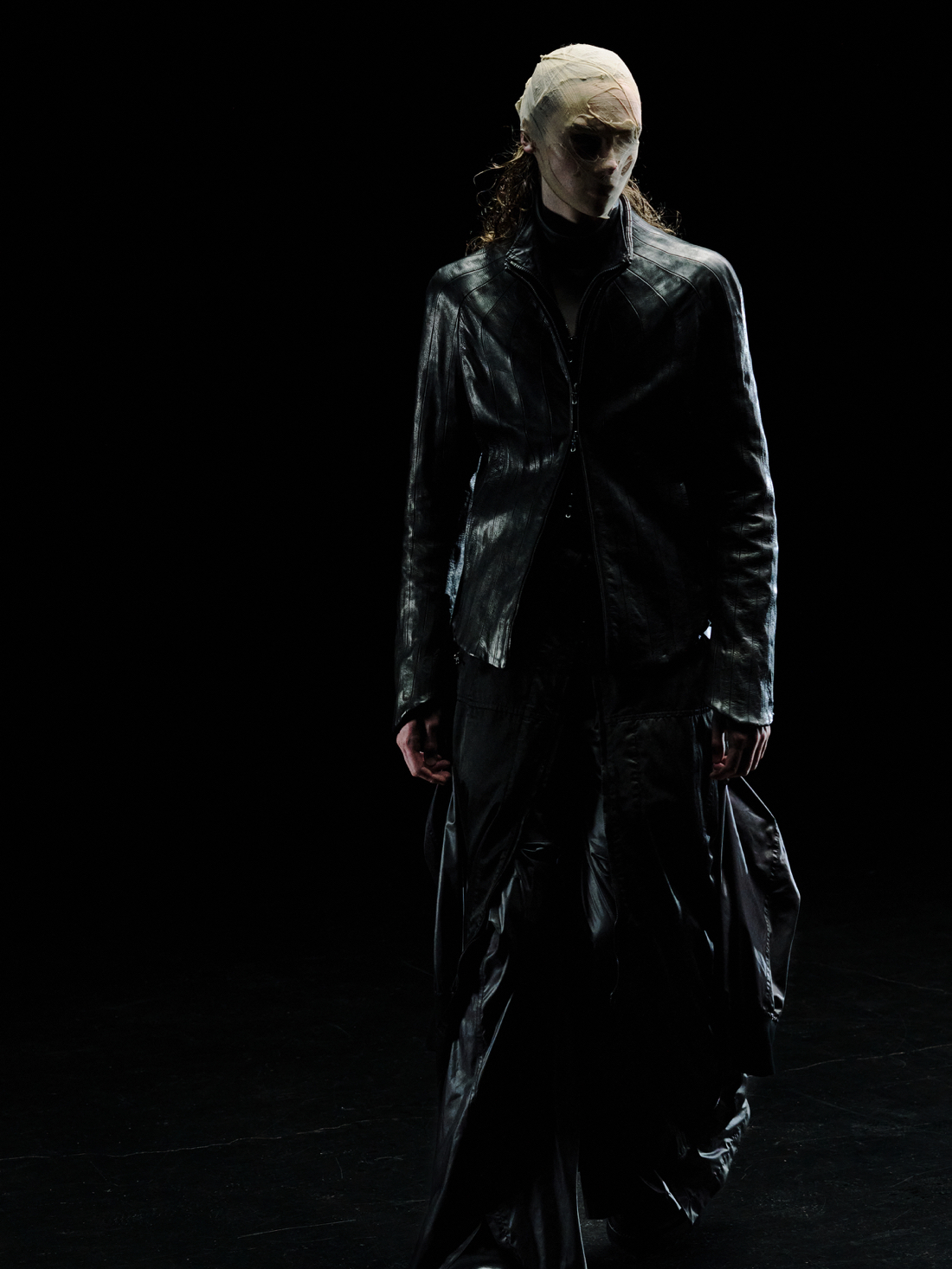
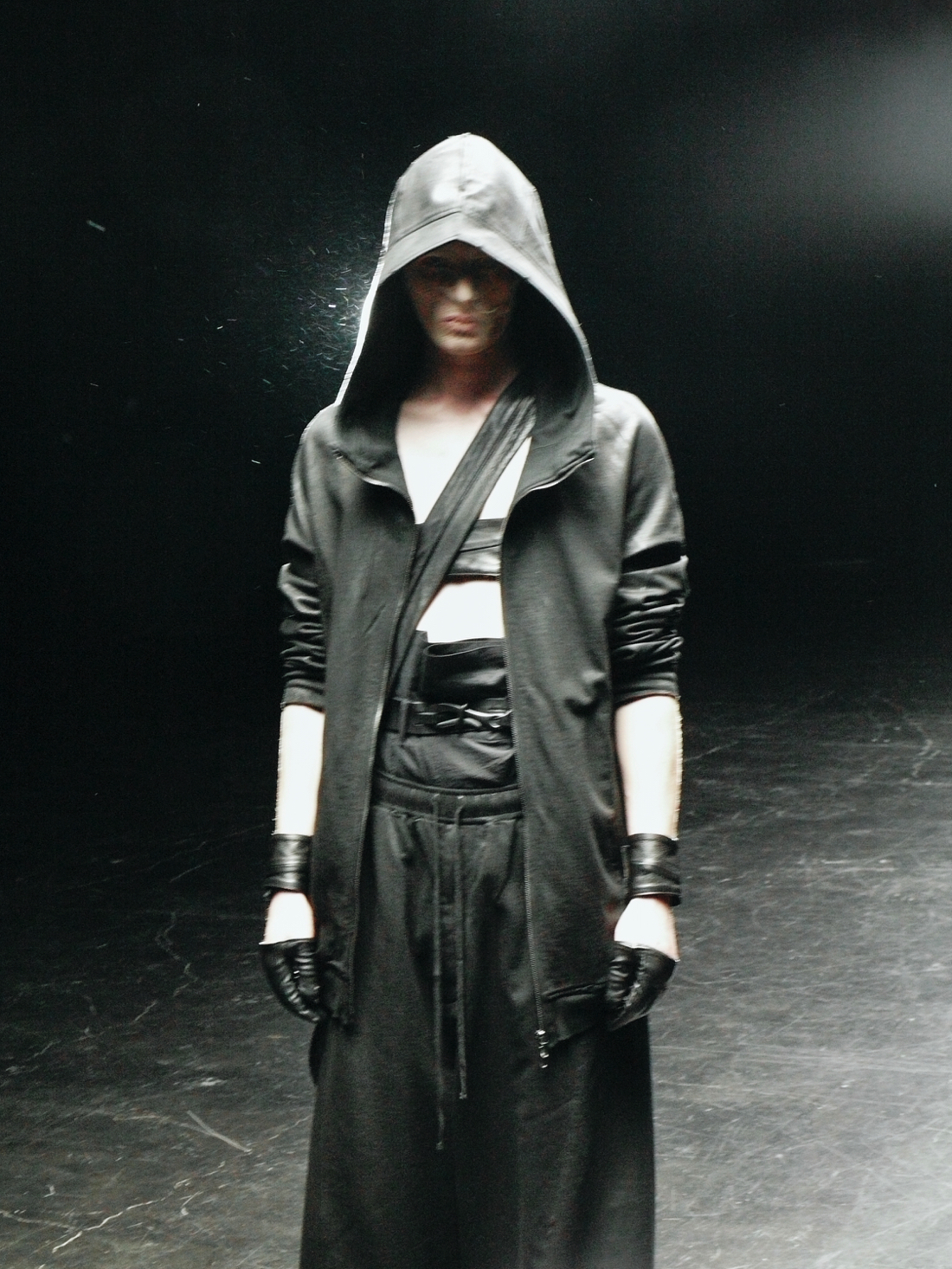
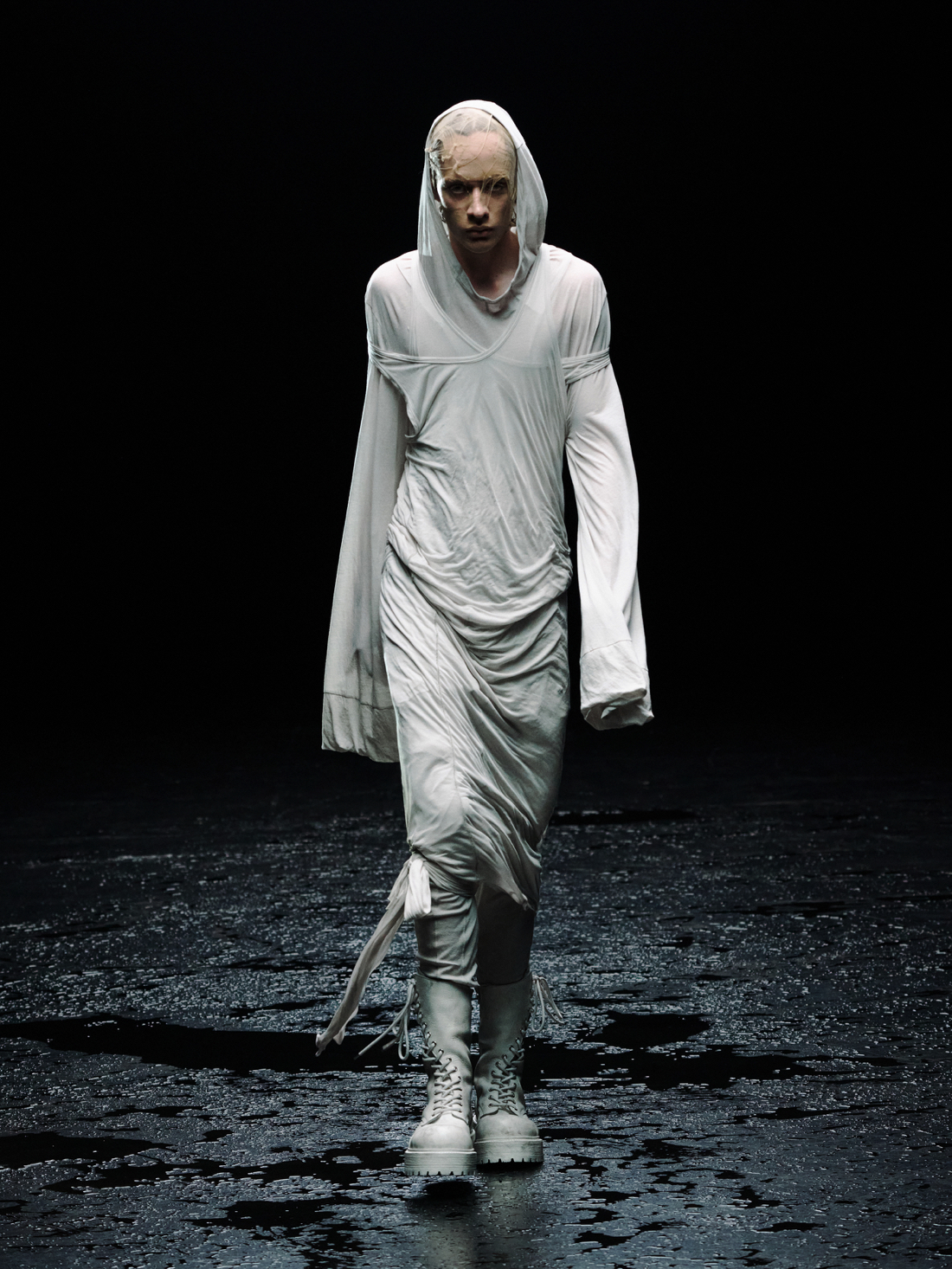
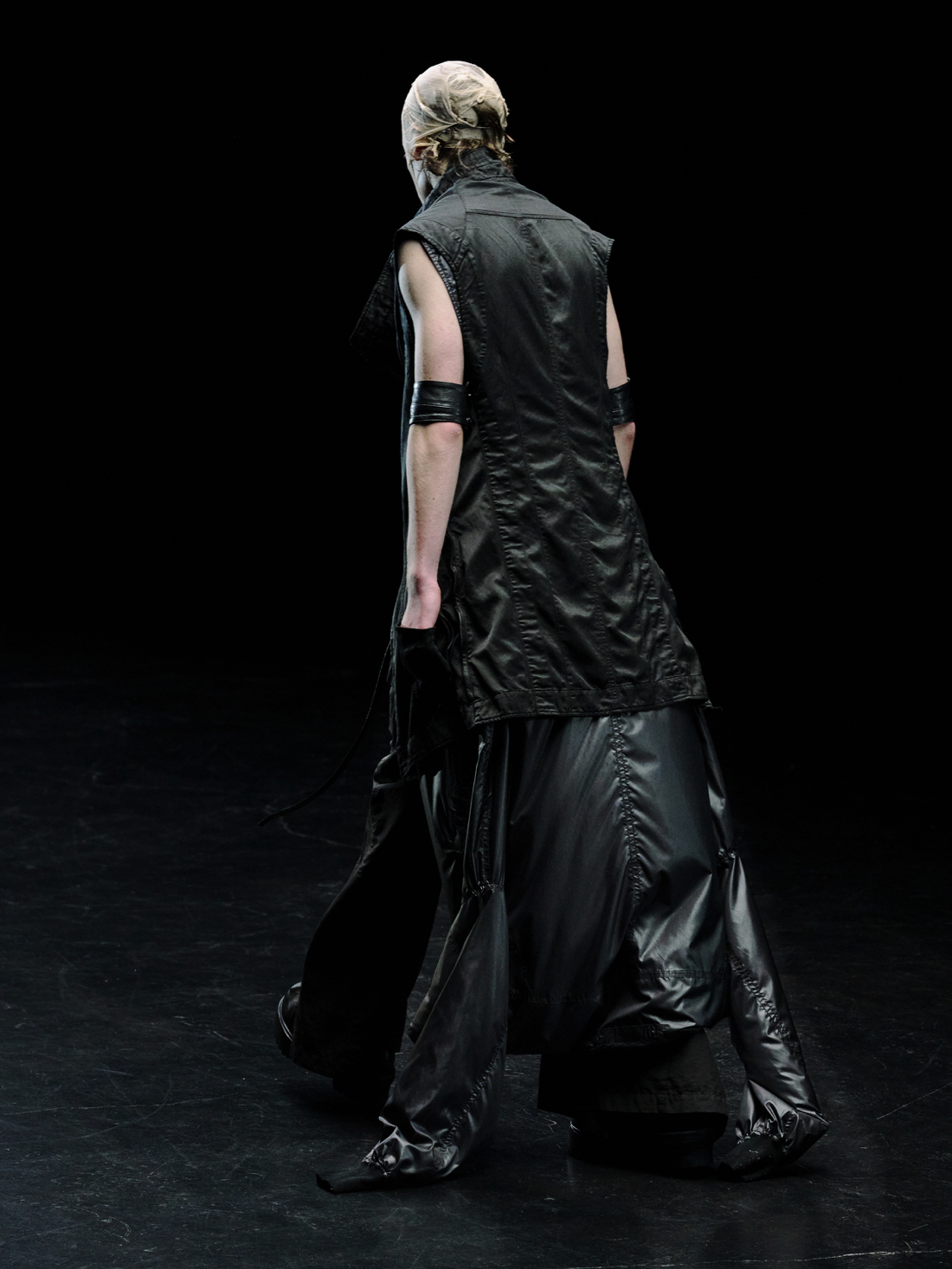
This philosophy is translated directly into the garments. Draped constructions disrupt clear silhouettes, allowing each piece to shift in response to the movement of the body rather than imposing a predetermined form. Transparent and translucent textiles create overlapping layers that reveal and conceal simultaneously, while holographic surfaces transform with changing light and perspective, ensuring that no single appearance remains fixed.
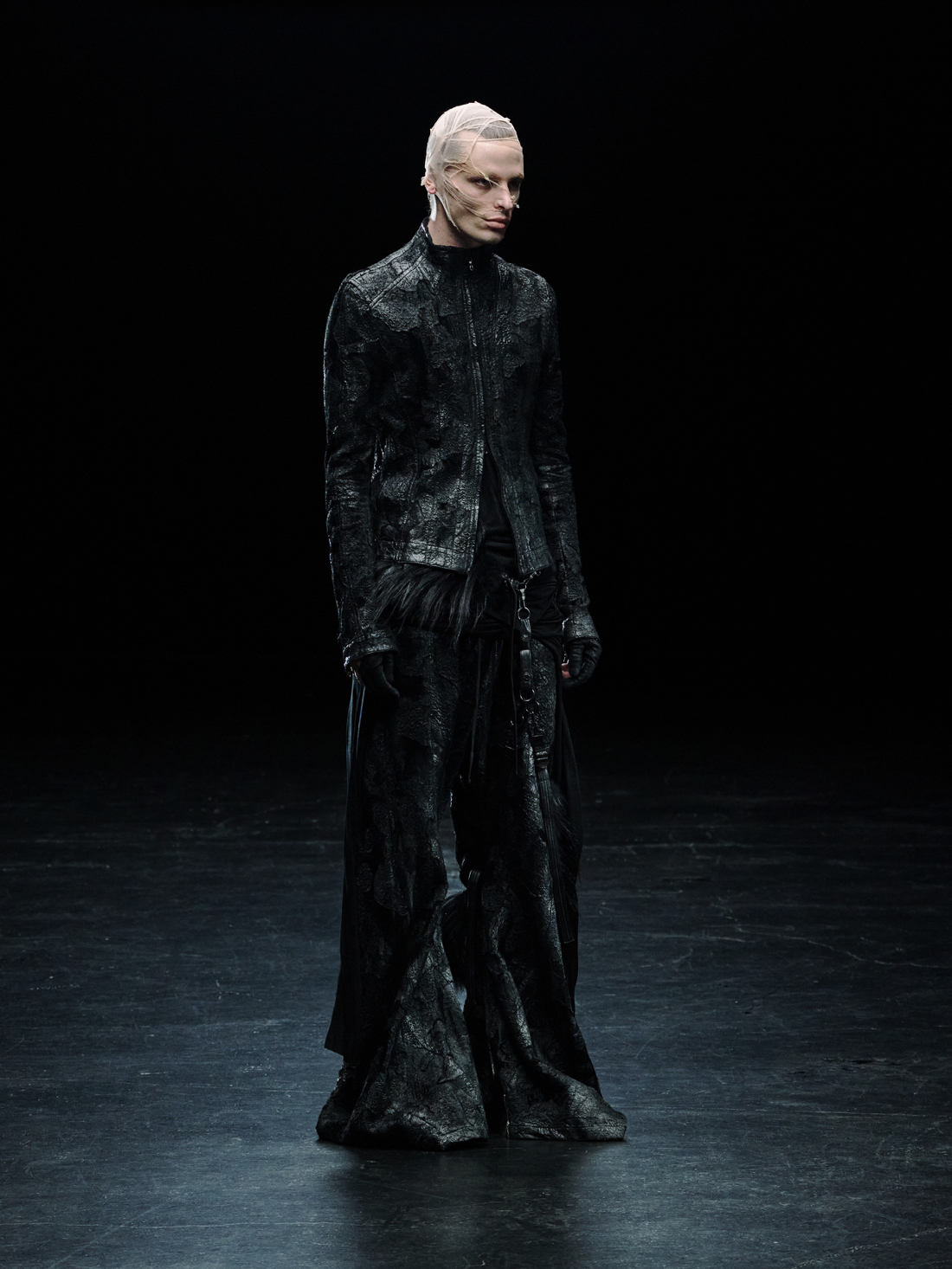
Instead of presenting clothing as static objects, the collection treats garments as mutable structures whose identity depends on movement, context, and perception. Forms continuously evolve, reinforcing the idea that existence itself cannot be fully contained within predetermined boundaries.
This approach has long informed Julius design language. Architectural tailoring, monochromatic restraint, and experimental materiality remain central to the brand’s visual vocabulary, yet here they are directed toward a more philosophical inquiry. The garments question not only how clothing occupies space but also how systems of classification shape our understanding of identity itself.
The accompanying statement reinforces this perspective through poetic fragments describing figures that resist stable definition—simultaneously spies and saboteurs, children and barbarians, accessible yet elusive. These contradictory identities mirror the collection’s refusal to settle into a singular interpretation, extending its exploration of ambiguity beyond the garments and into narrative.
ABOUT JULIUS
Founded in Tokyo in 2001 by Tatsuro Horikawa as a means to presenting film projects, the Julius label eventually developed its clothing line in 2004. Using black and grey as the main components of every collection – symbols of madness and pain, respectively – the label centers around Horikawa’s love of art and architecture, which were integral to the brand’s initial formation as an art project.
Photos: Courtesy of Julius
Creative Direction / Production: @_julius7official
Photographer: @decompositionfiles (@s_________c_____, @colinledorlot)
Stylist: @tatsuyashimada1984
Hair: @pyuuuuuu
Make-up: @dash.0627
Collaboration: @dualflow, @fangophilia
Casting: @alter_casting (@takaresaka, @inoyums)
Models: @alvarlambert, @nathan_gai, @ridx5j, @iliasloopmans, @f_.xr.vc
www.julius-garden.online
@_julius7official
HIGHLIGHTS FROM THE COLLECTION
Comments are closed.