

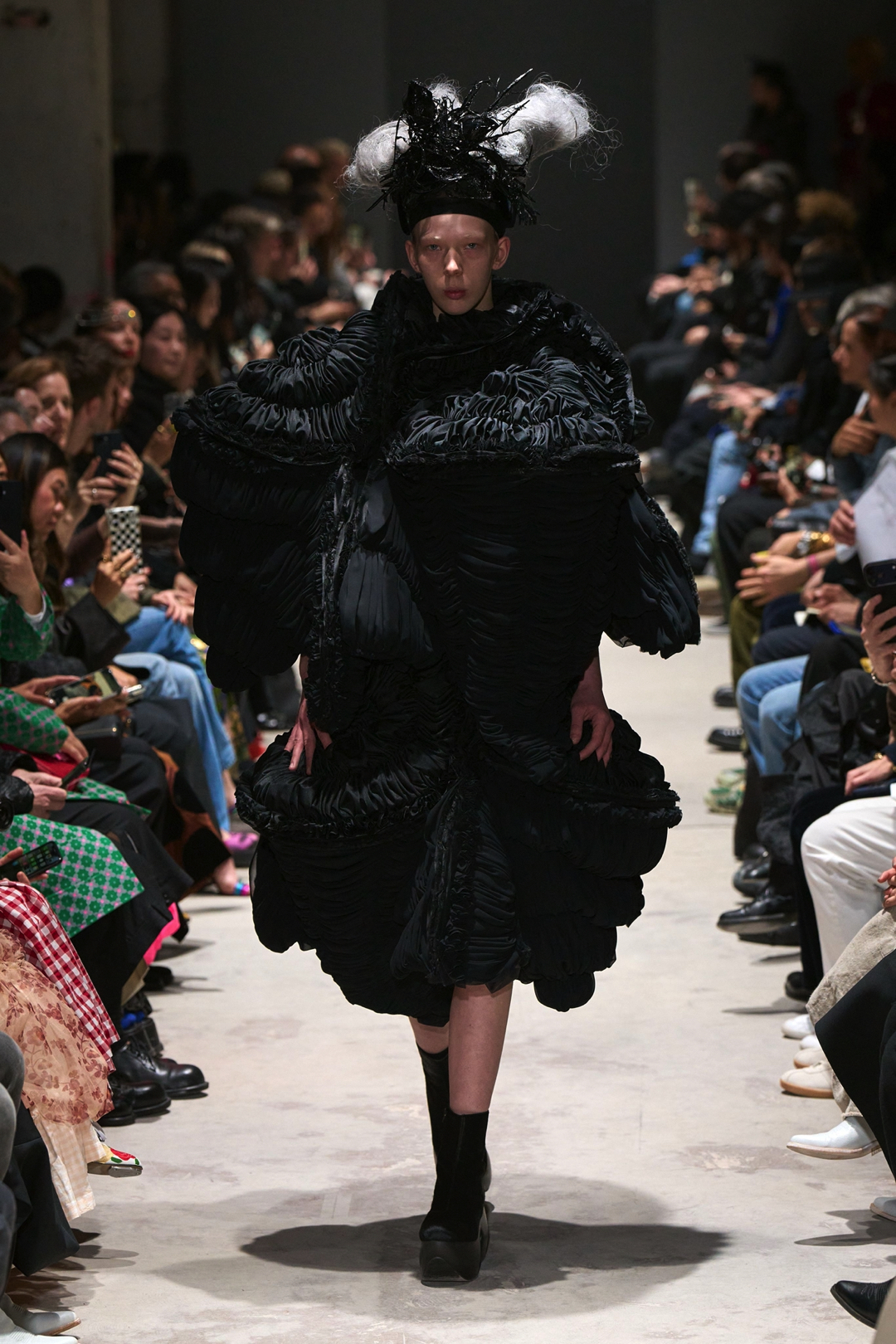
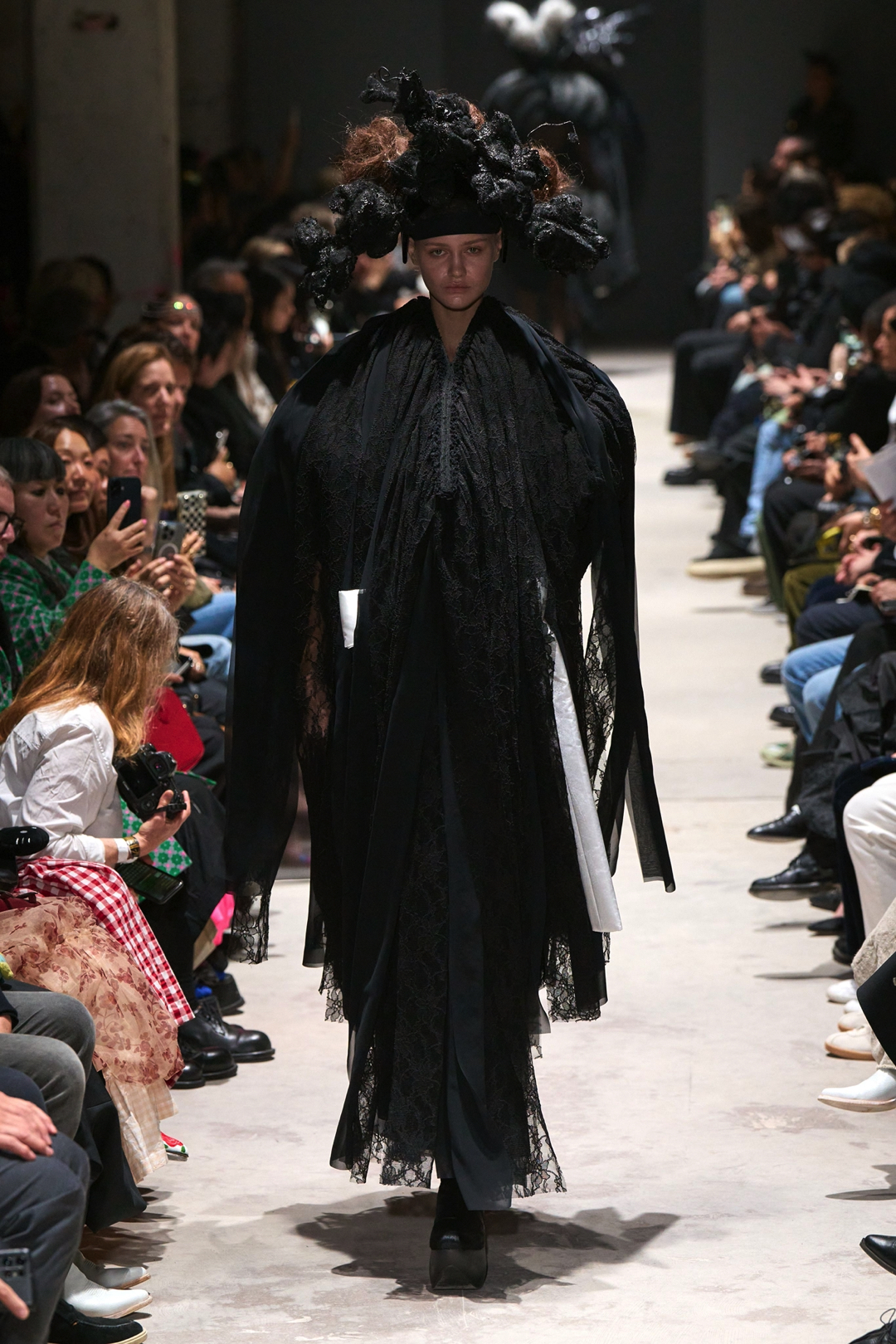
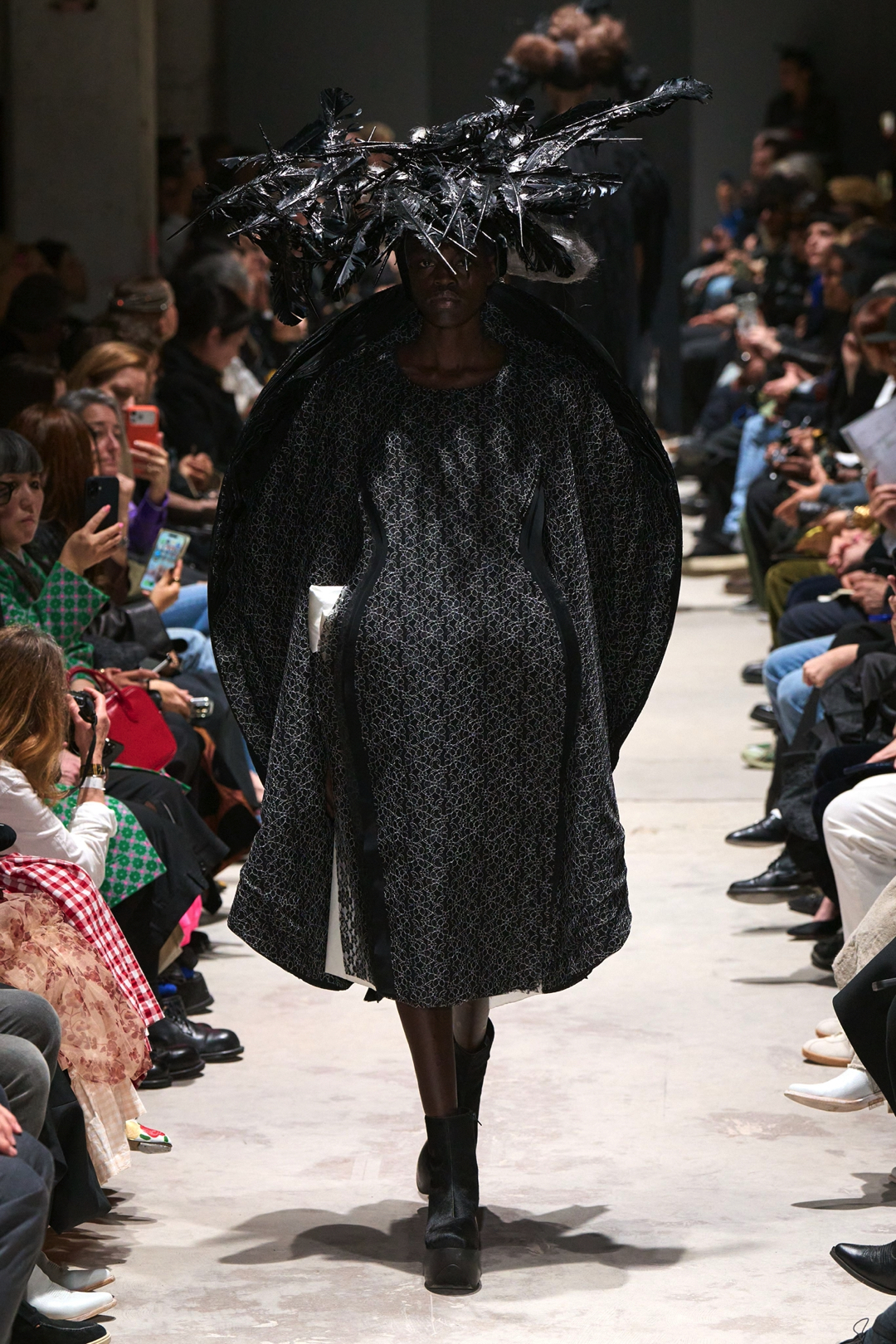
The show began with an uncompromising proposition: black. One after another, sixteen silhouettes appeared in absolute darkness, establishing the conceptual ground of the collection before any variation could intervene. For Rei Kawakubo, black has long functioned not simply as a color but as a territory, one capable of absorbing contradiction, density, and abstraction. This season approached it with renewed concentration.
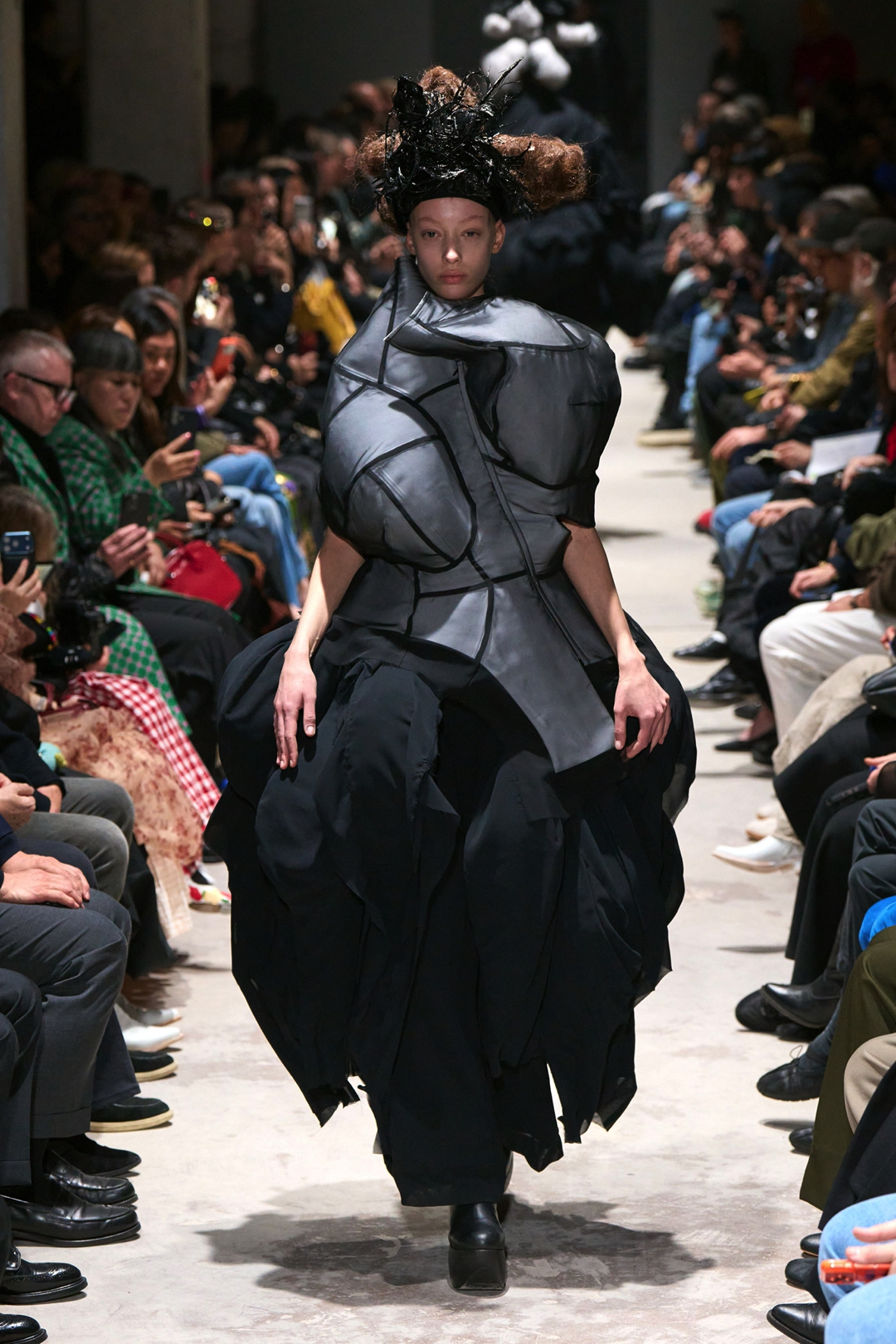
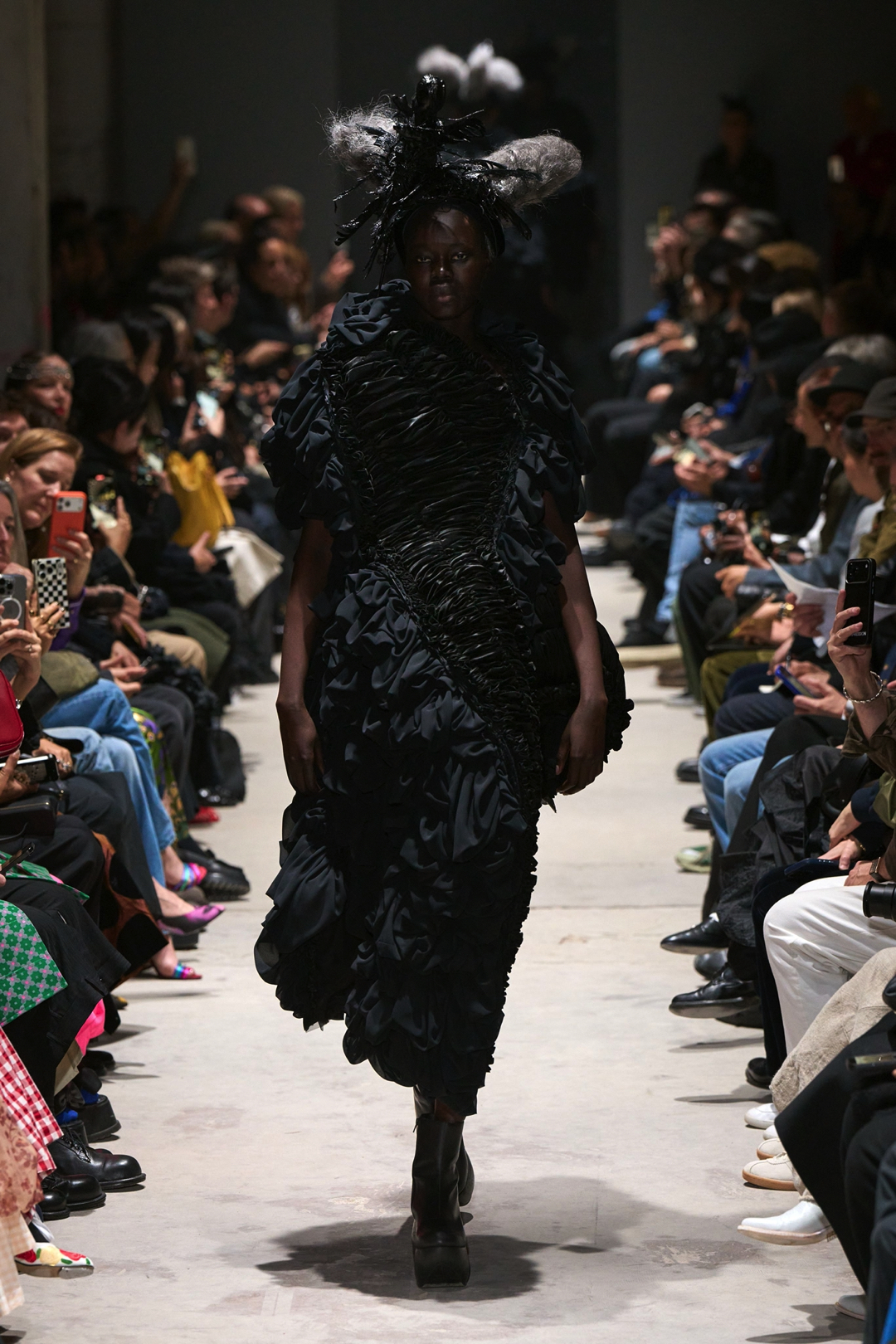
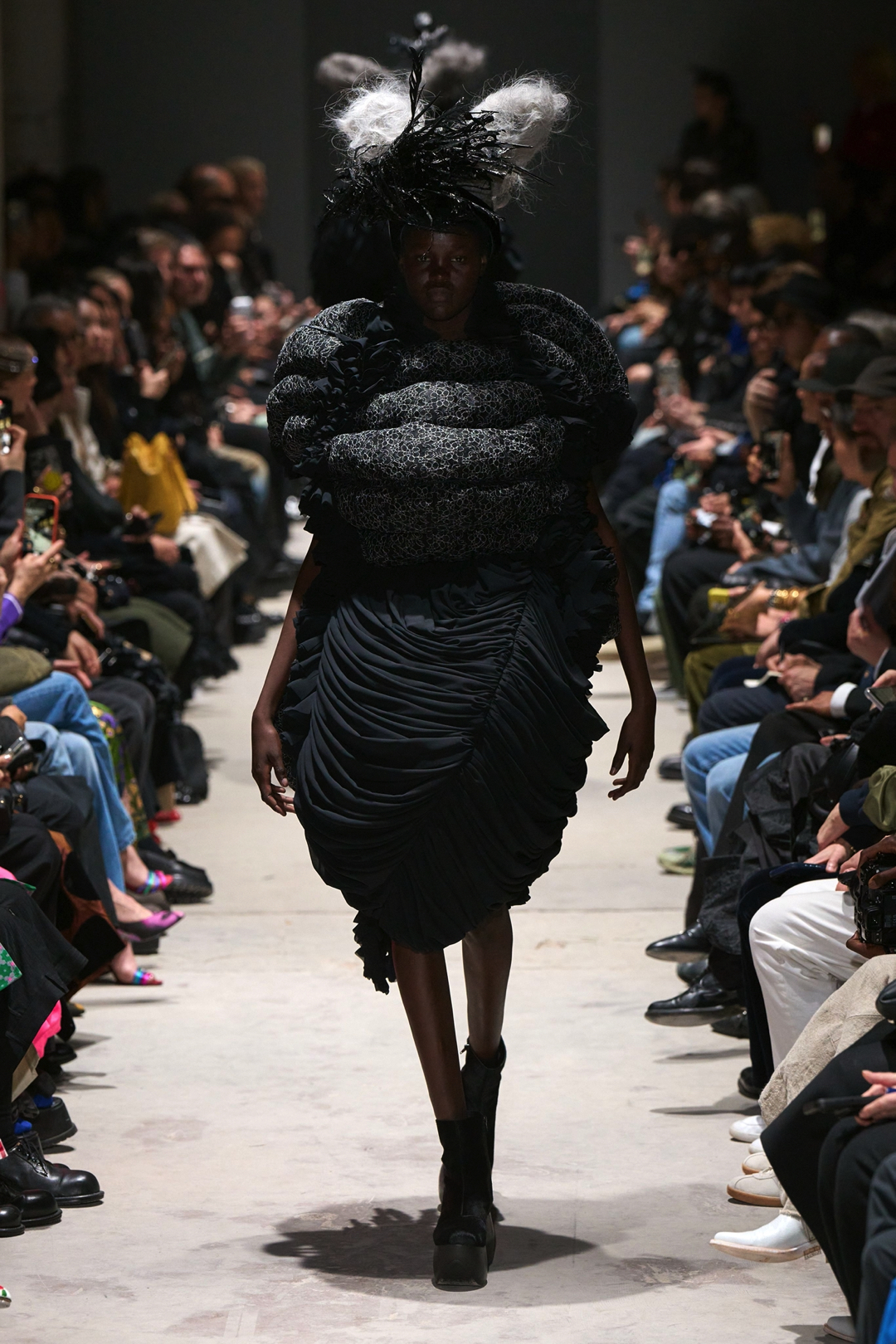
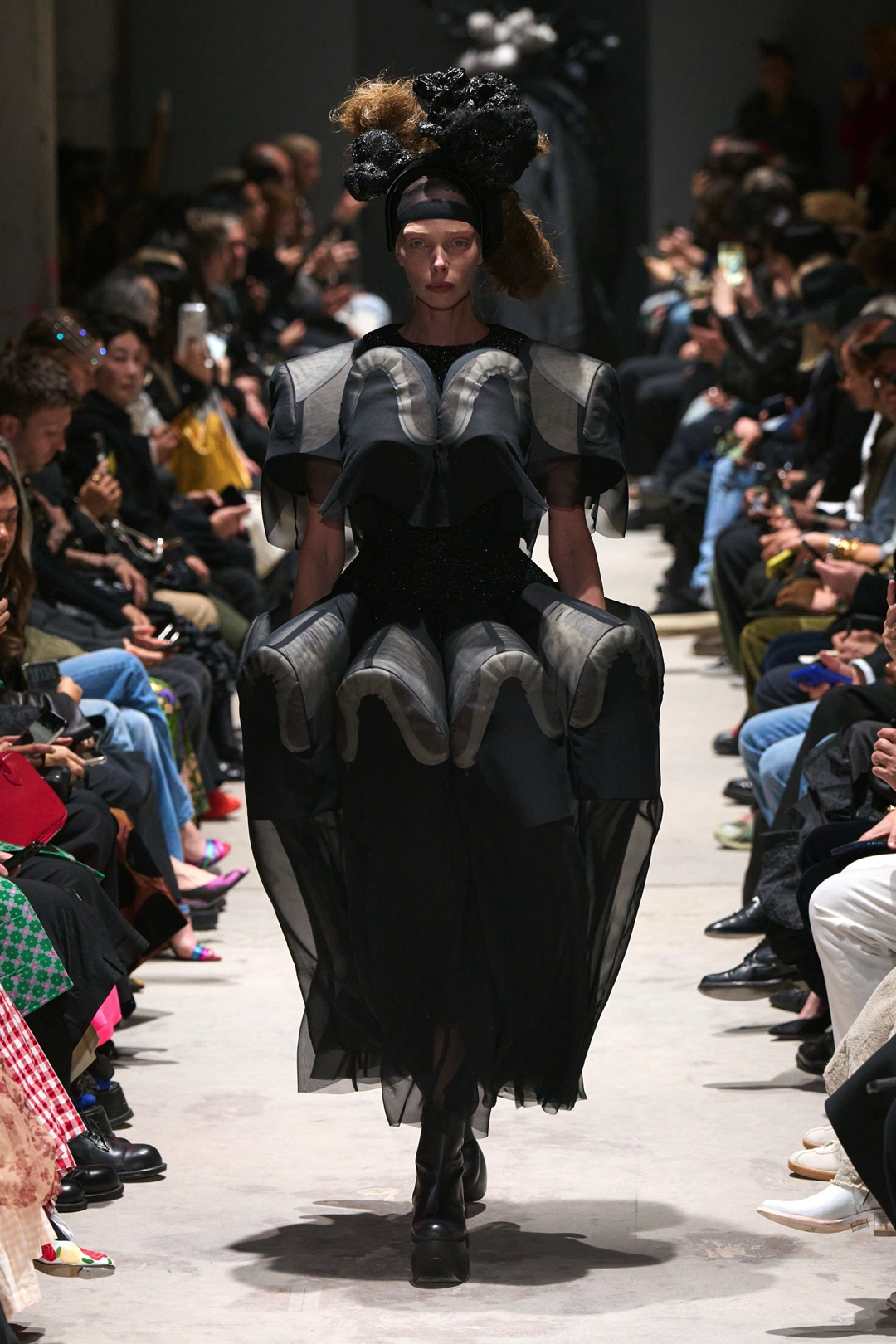
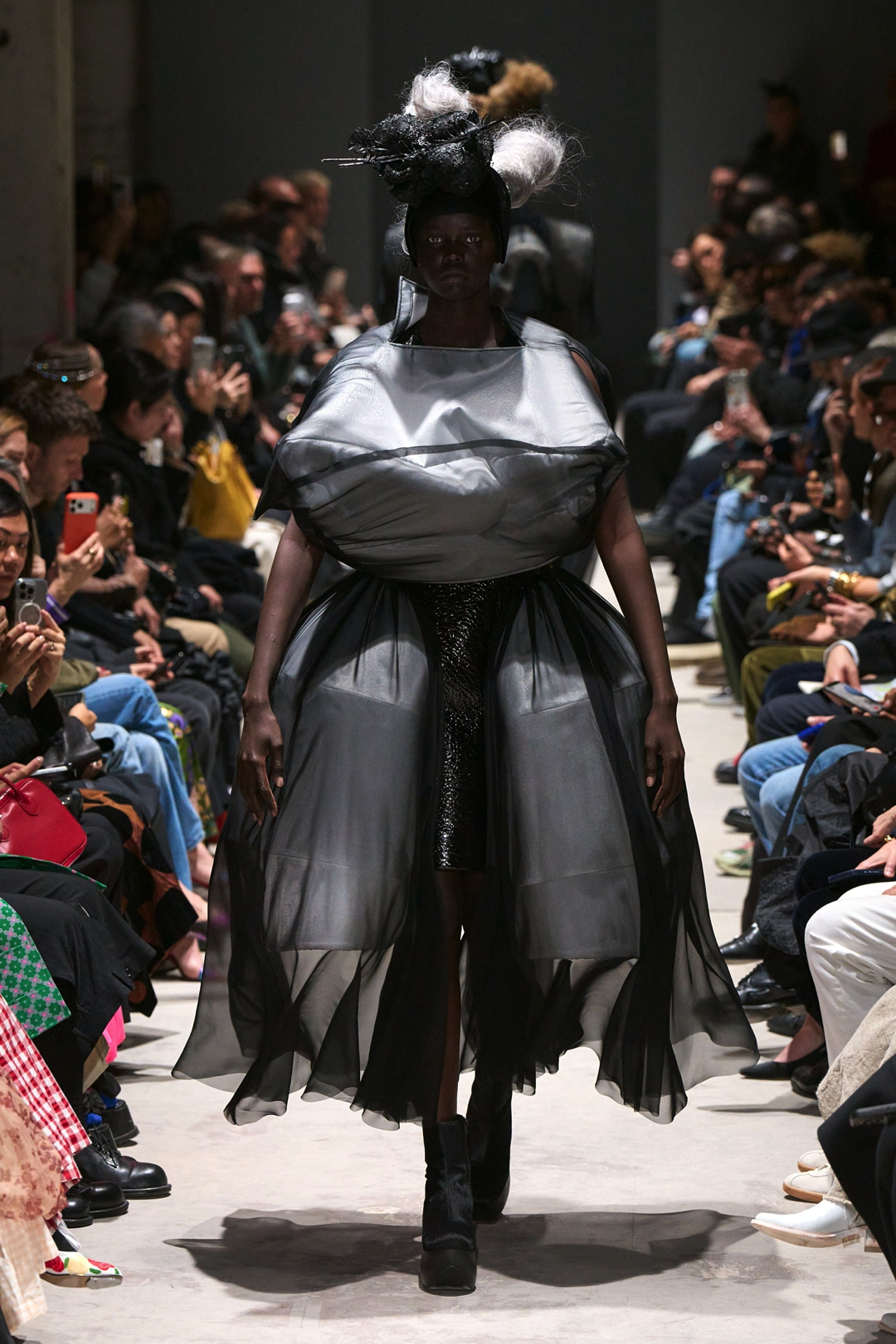
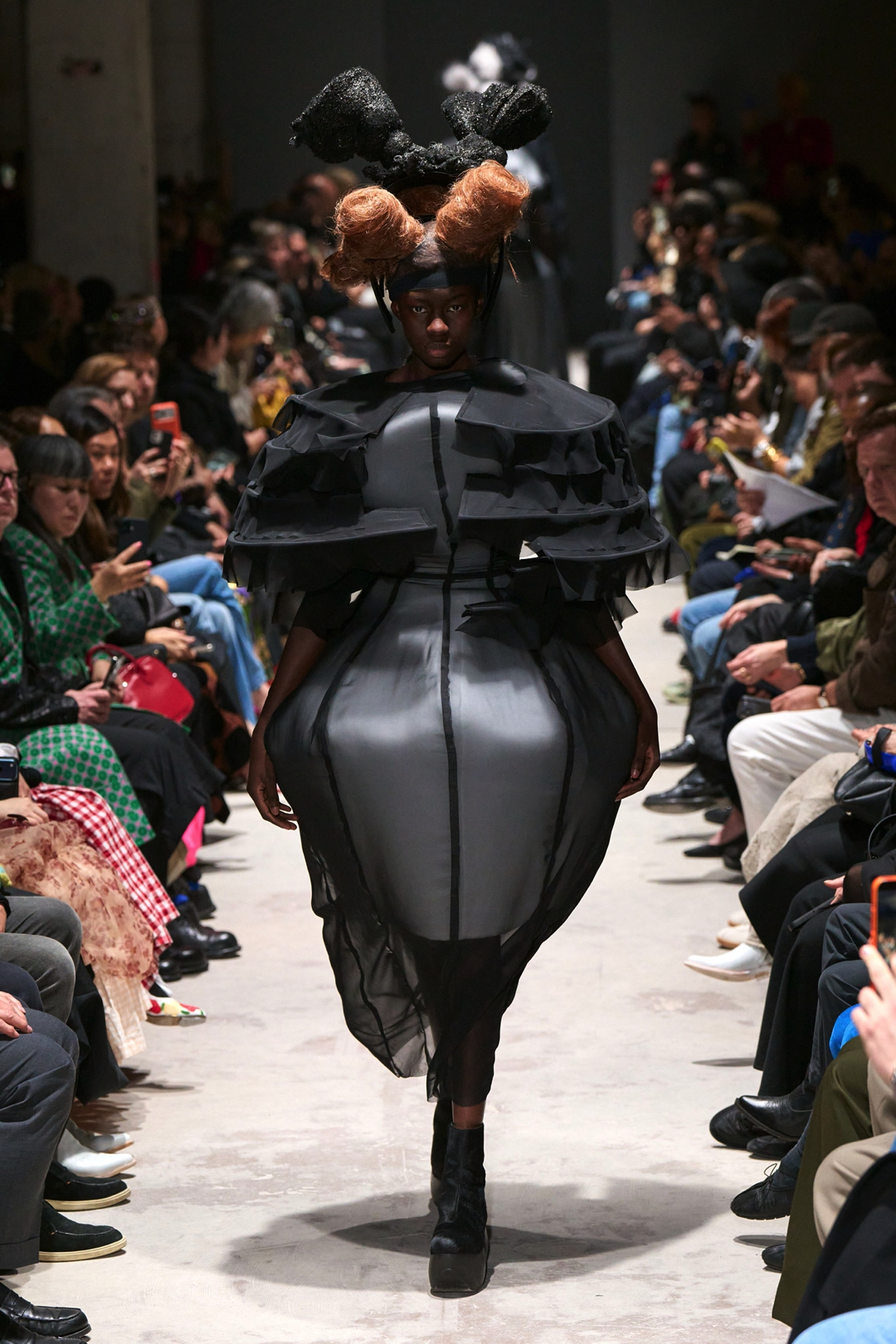
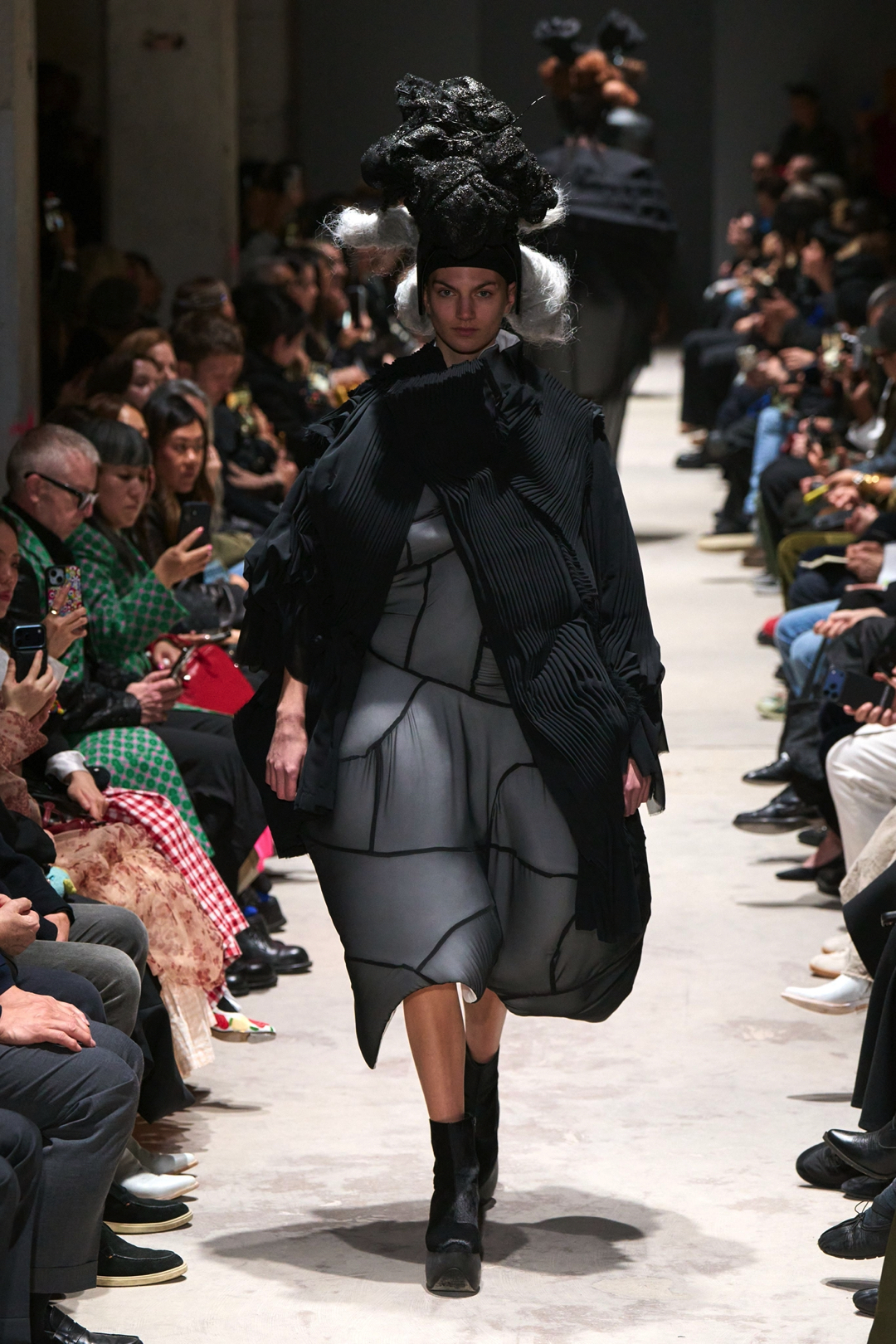
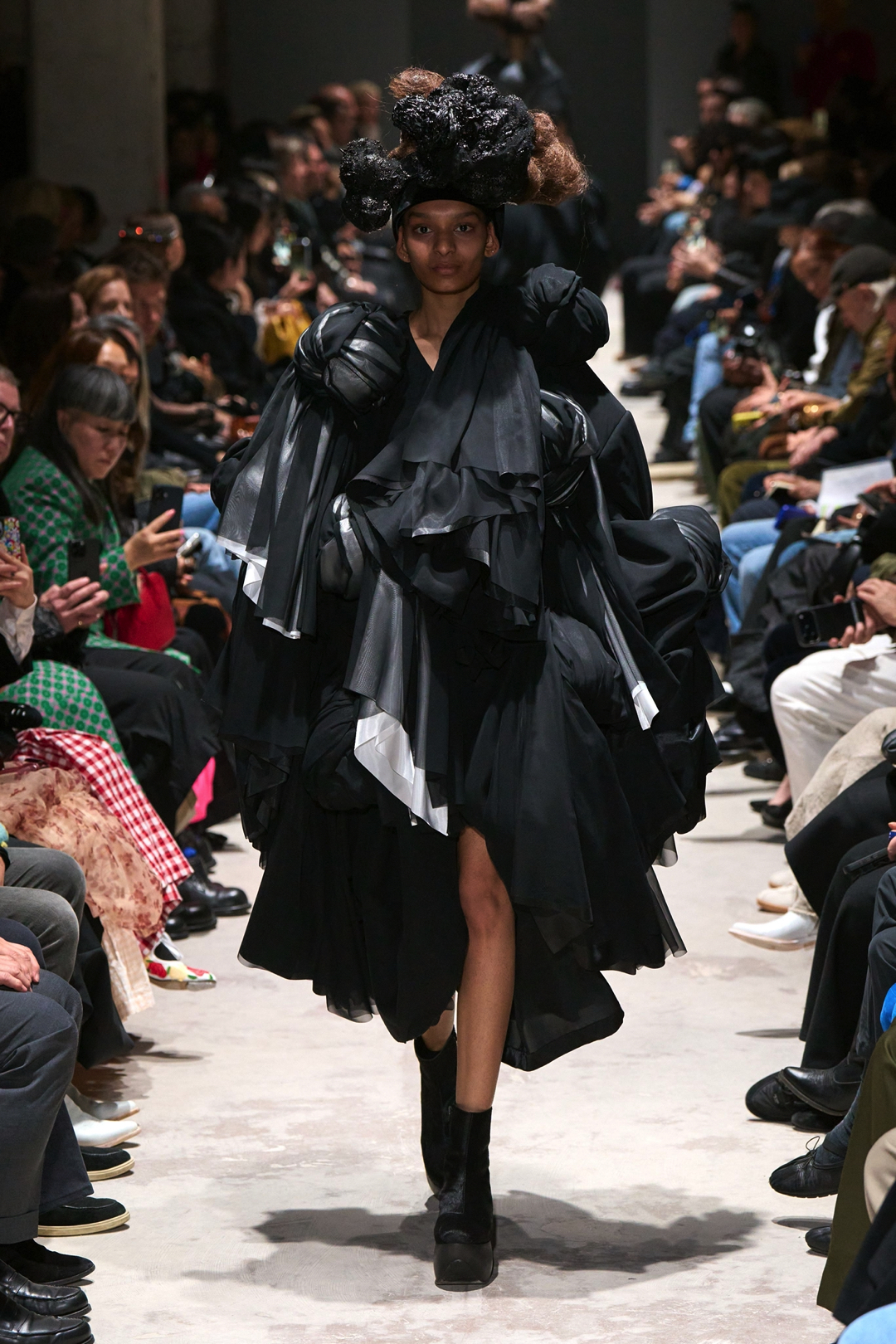
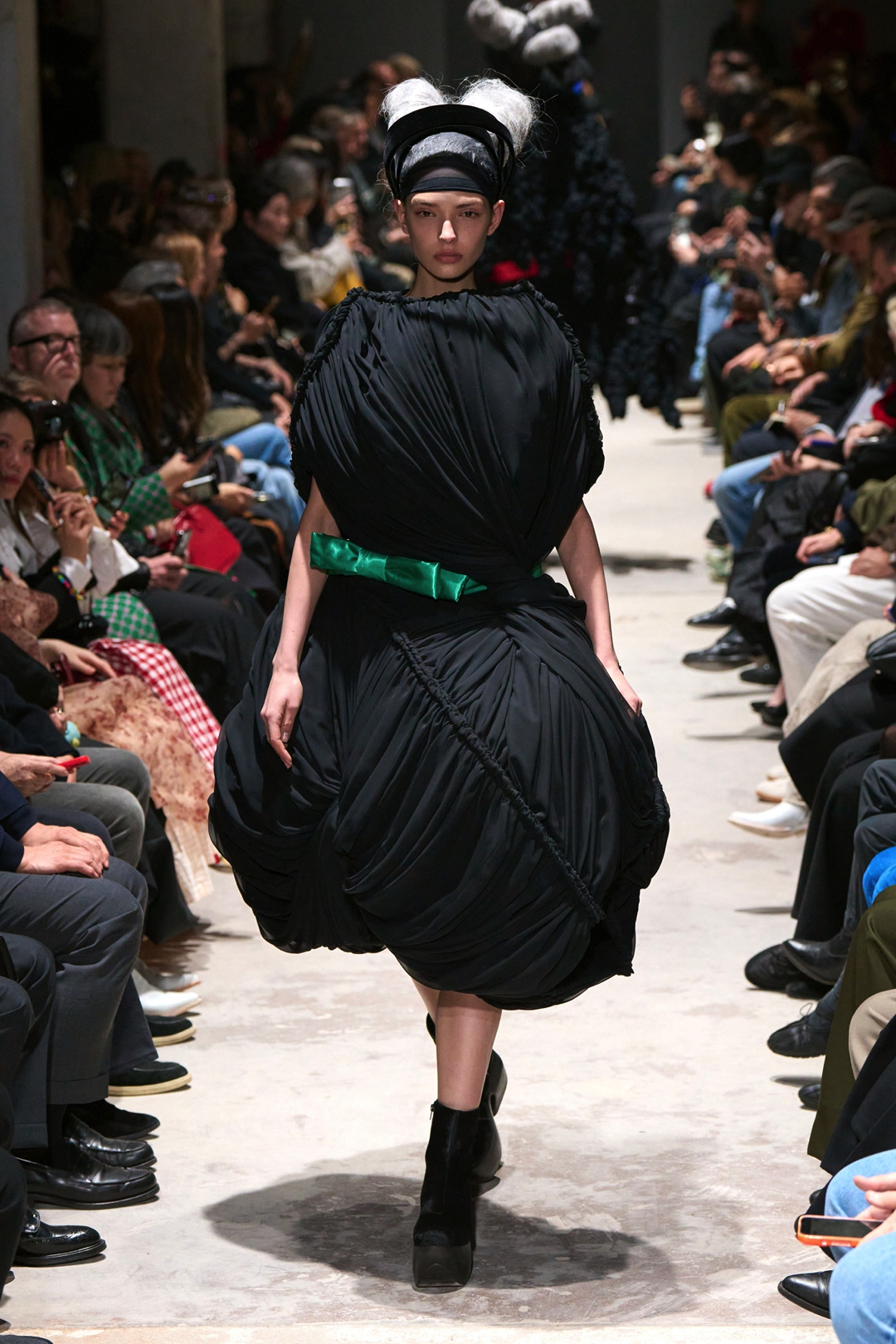
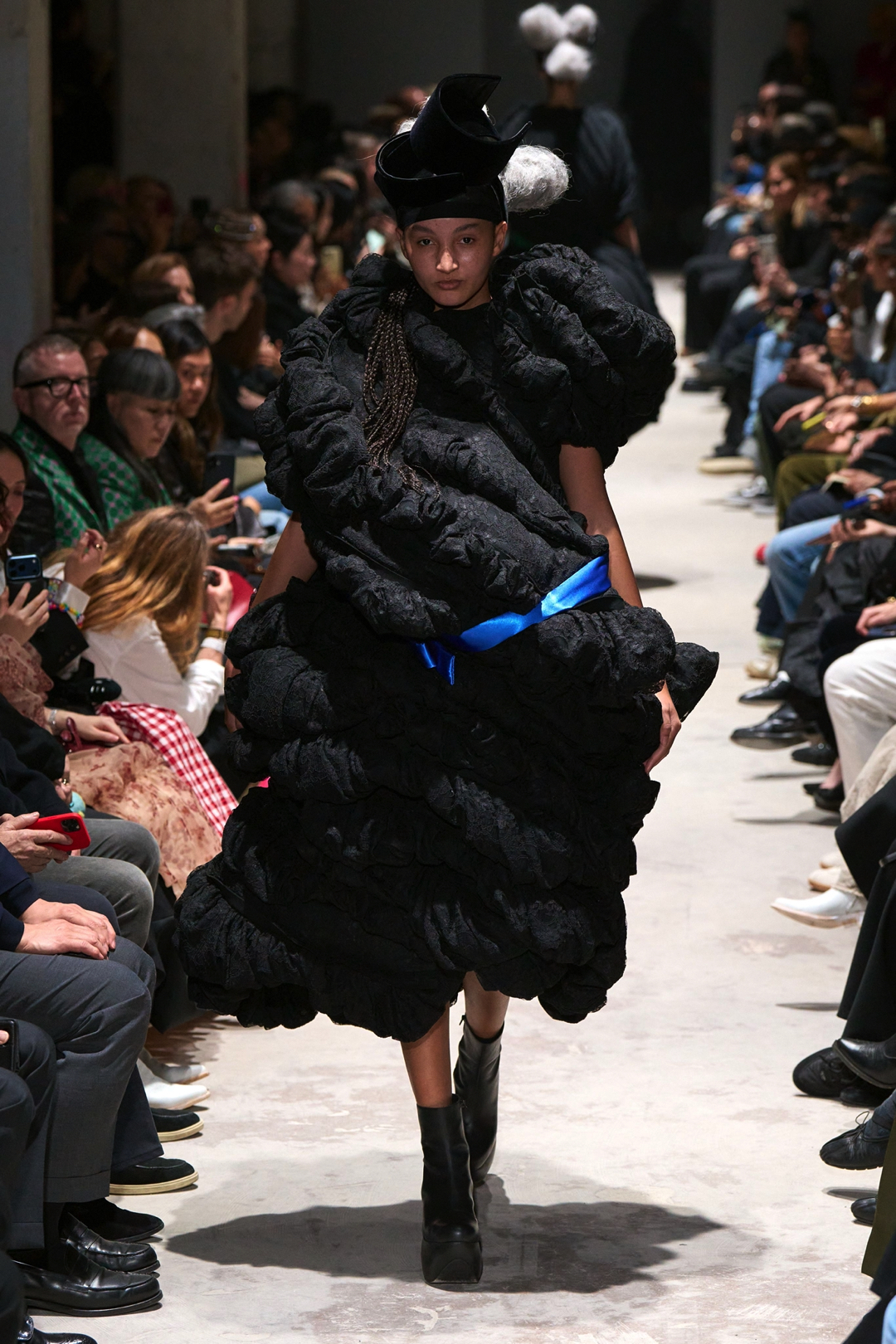
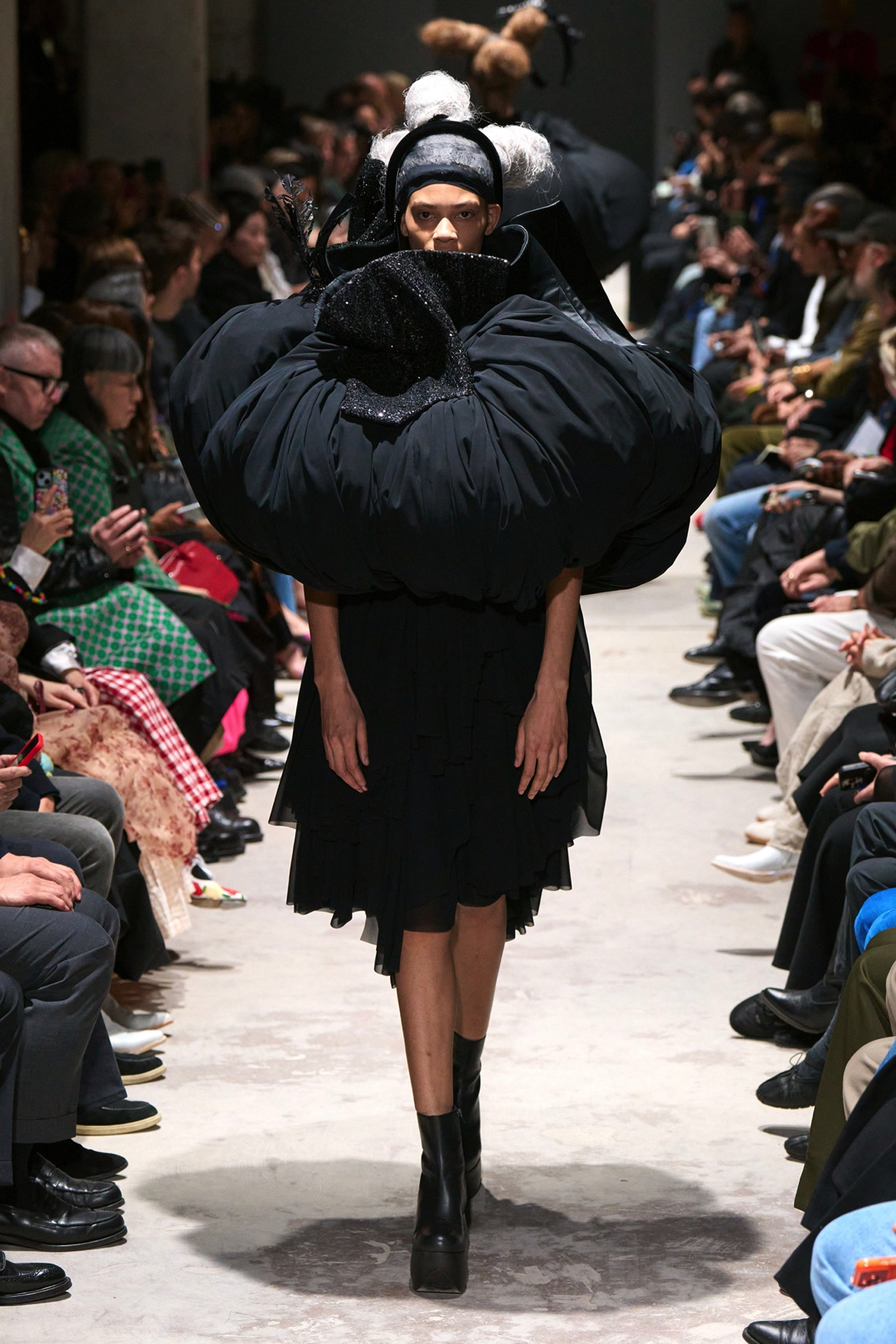
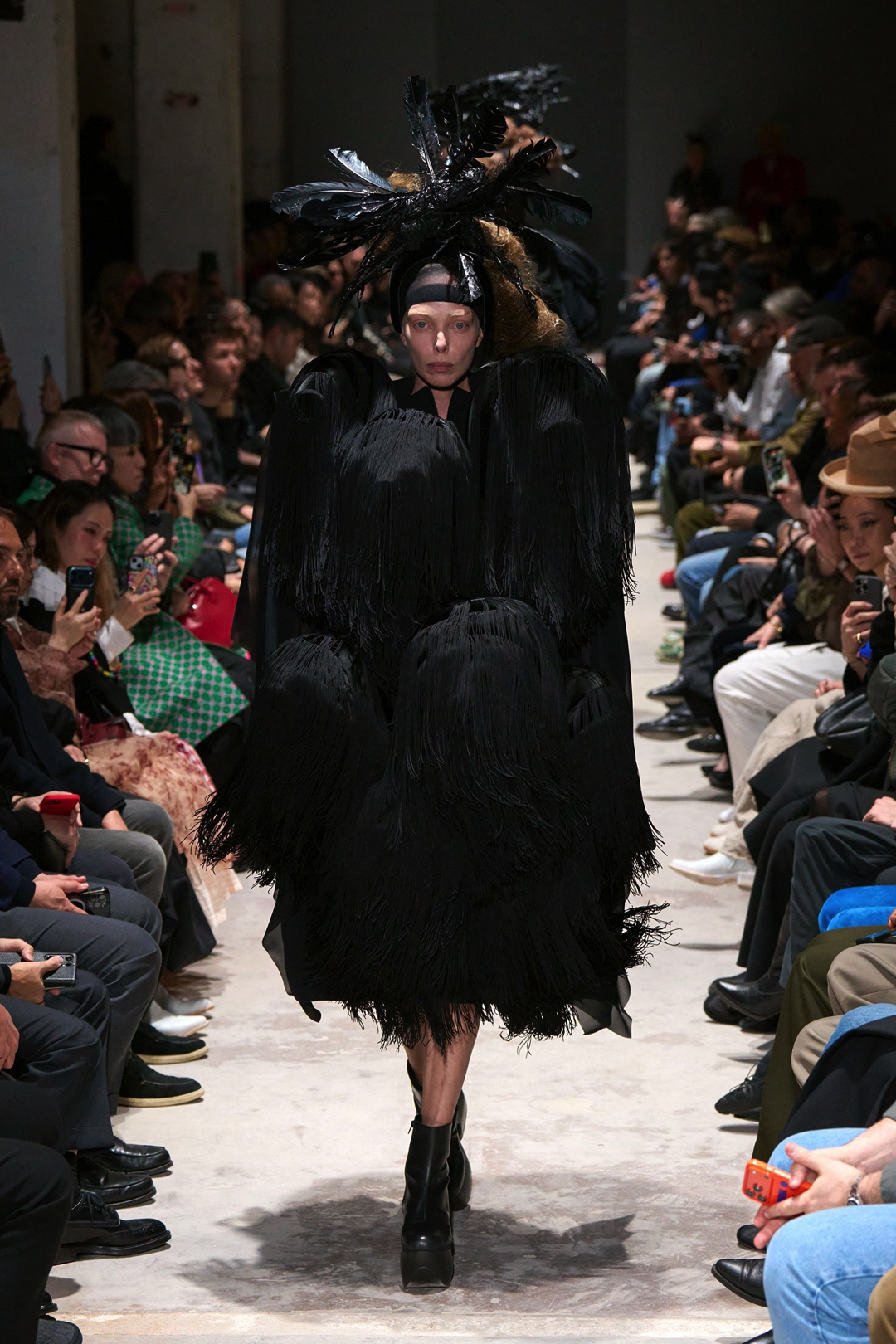
The garments expanded outward in monumental volumes. Dresses and coats unfolded as large sculptural envelopes, their breadth sometimes so exaggerated that the runway itself seemed barely wide enough to contain them. Yet within this mass the surfaces were far from uniform. Kawakubo inserted intricate disruptions. Shirring gathered fabric into irregular topographies, ruched seams distorted the geometry of the silhouettes, and layered tulle introduced fragile textures against the severity of black wool and structured textiles.
Rather than presenting darkness as emptiness, the collection treated it as a field of accumulation. Each piece carried a surprising amount of visual information. Embroidery traced thin lines across surfaces, folds collapsed into dense knots of fabric, and volumes appeared to grow outward from the body like architectural extensions. The garments did not reveal the body beneath them. They constructed an alternate one.
Then the sequence broke. After the initial procession of black, the runway paused before a cluster of nearly identical silhouettes returned, this time rendered in bright, almost childlike pink. The forms remained monumental, but the color altered their emotional register completely. What had felt severe in black became strangely playful in pink. The interruption lasted only a few looks before the show returned to darkness, yet the contrast lingered and reframed the earlier pieces through memory.
Kawakubo’s note for the season reflected on black as the color that holds the greatest meaning. It evokes the rebellious spirit, the universe, and the black hole. Within that framework the collection suggested garments pulled by an invisible gravity. Their weight, density, and exaggerated scale created the impression of matter collapsing inward while simultaneously expanding outward.
Compared with the more overtly monumental silhouettes of previous seasons, Fall/Winter 2026 introduced a quieter complexity. Detail operated beneath the surface rather than dominating it. Small gestures such as an embroidered line, a gathered seam, or a compressed cluster of tulle shifted the reading of otherwise imposing forms.
In the end, the collection reaffirmed a principle that has long defined Comme des Garçons. Clothing becomes a form of abstraction. Kawakubo does not design garments simply to frame the body. She constructs objects that question the boundaries between fashion, sculpture, and thought. Black becomes the medium through which those questions continue to unfold.
Photos: Vogue / Go Runway
www.comme-des-garcons.com
@commedesgarcons
Highlights from the Collection
Comments are closed.