

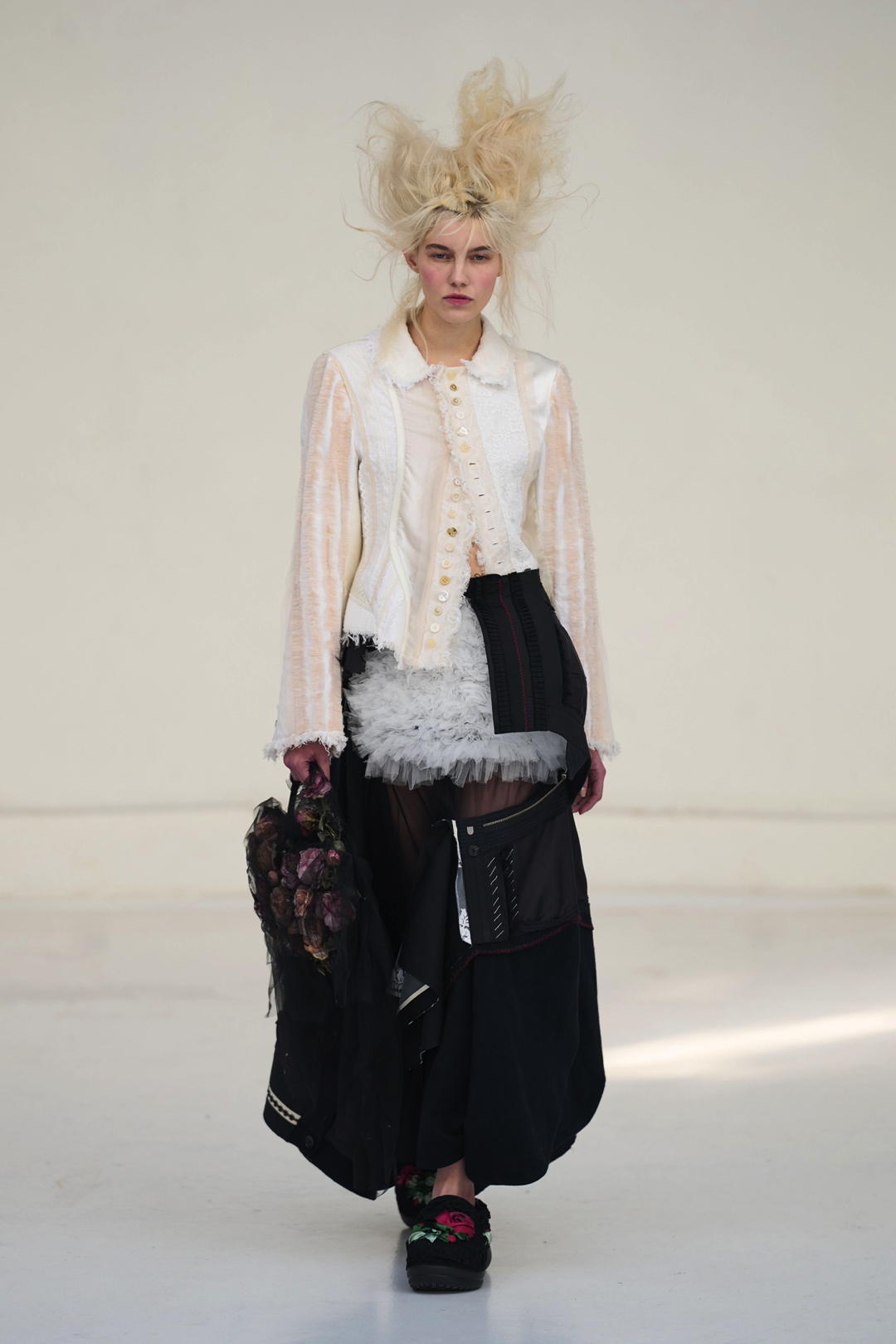
At the center of Caroline Hu’s latest collection, presented during Paris Fashion Week, lies an intimate point of departure. “Reverie” did not emerge from a grand historical narrative or overt conceptual framework, but from a private object: a towel the designer had kept since childhood, worn soft over years of use until it became almost translucent. This humble starting point shaped a collection concerned less with spectacle than with the quiet accumulation of memory, how materials carry traces of time and how garments can hold emotional residue.
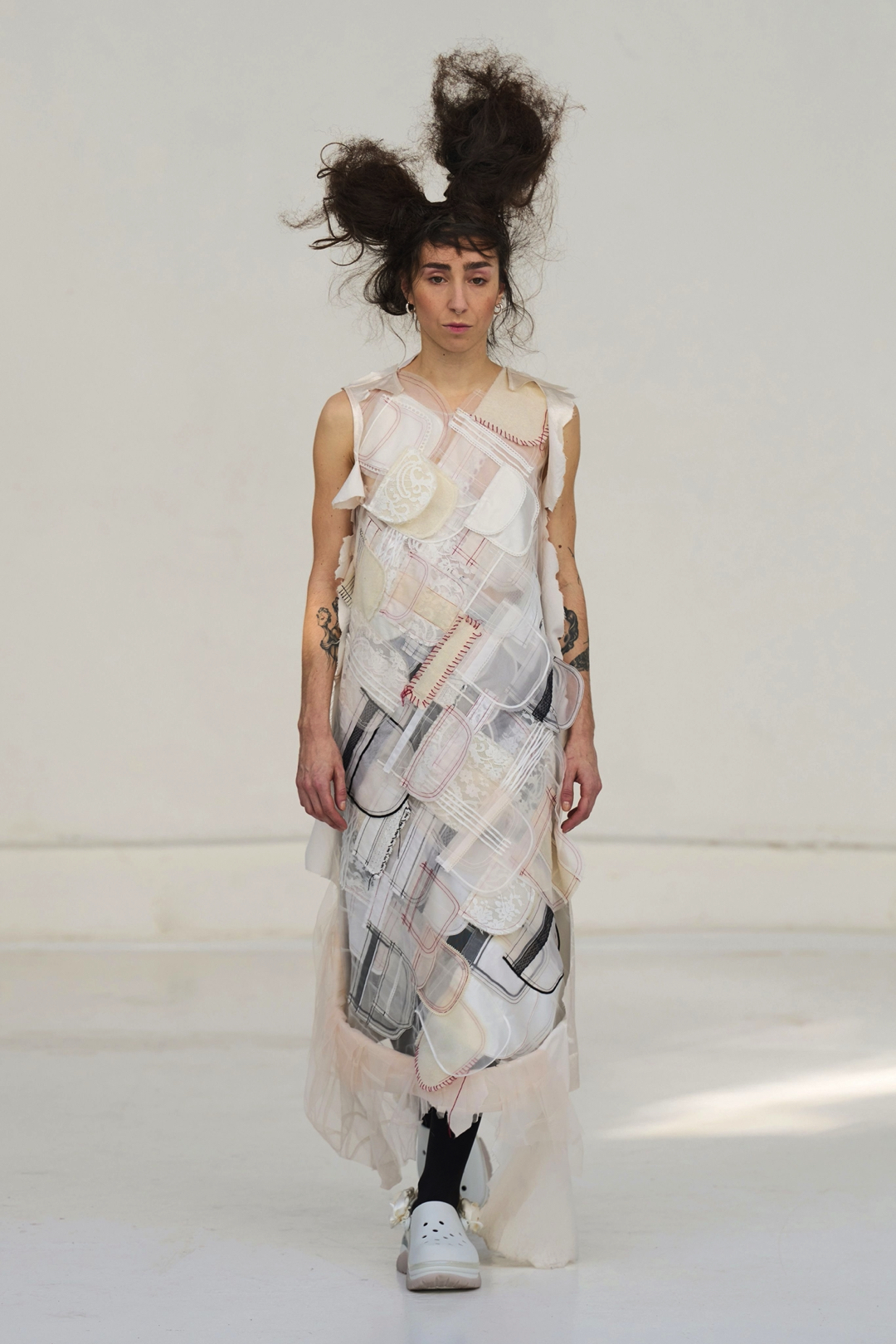
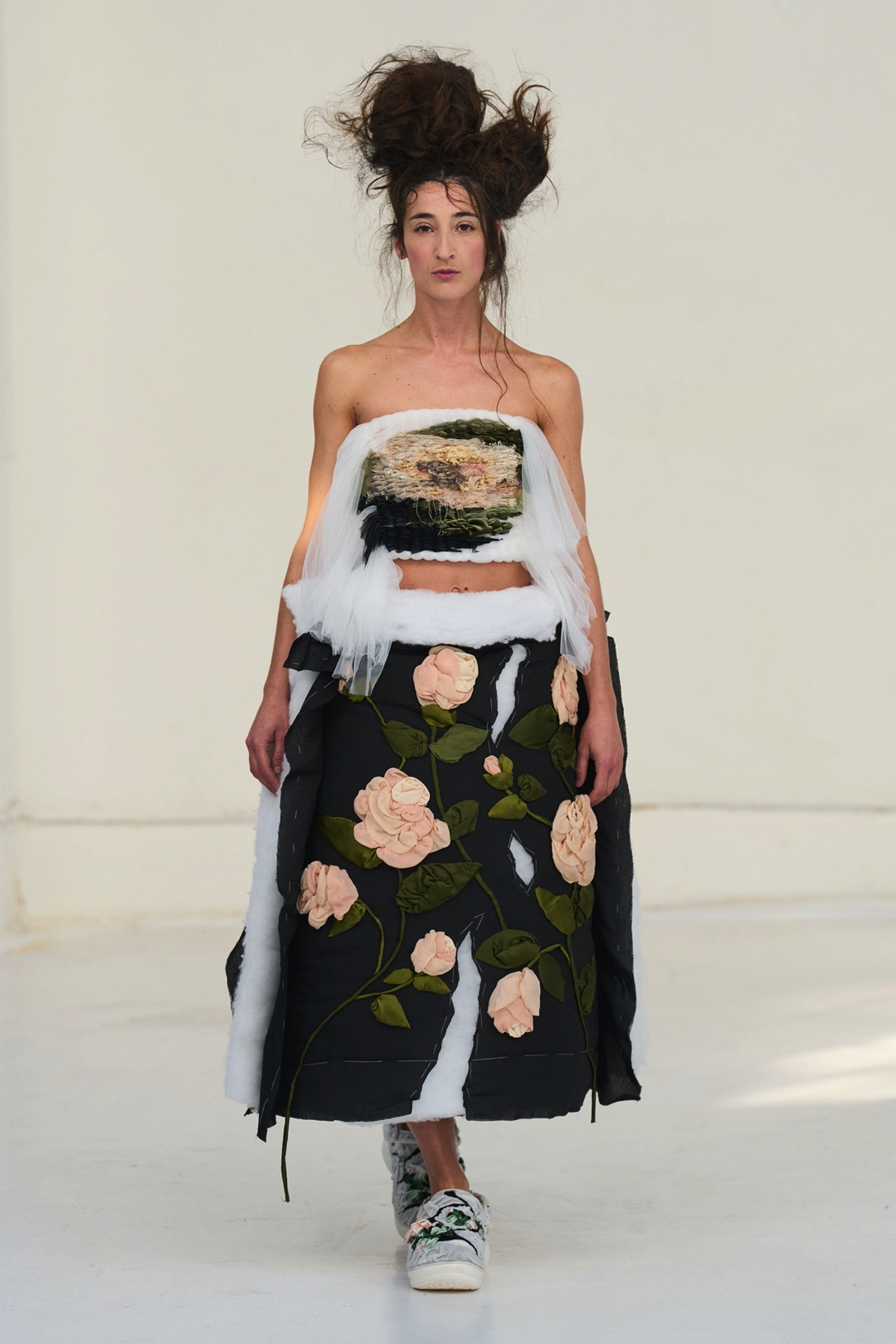
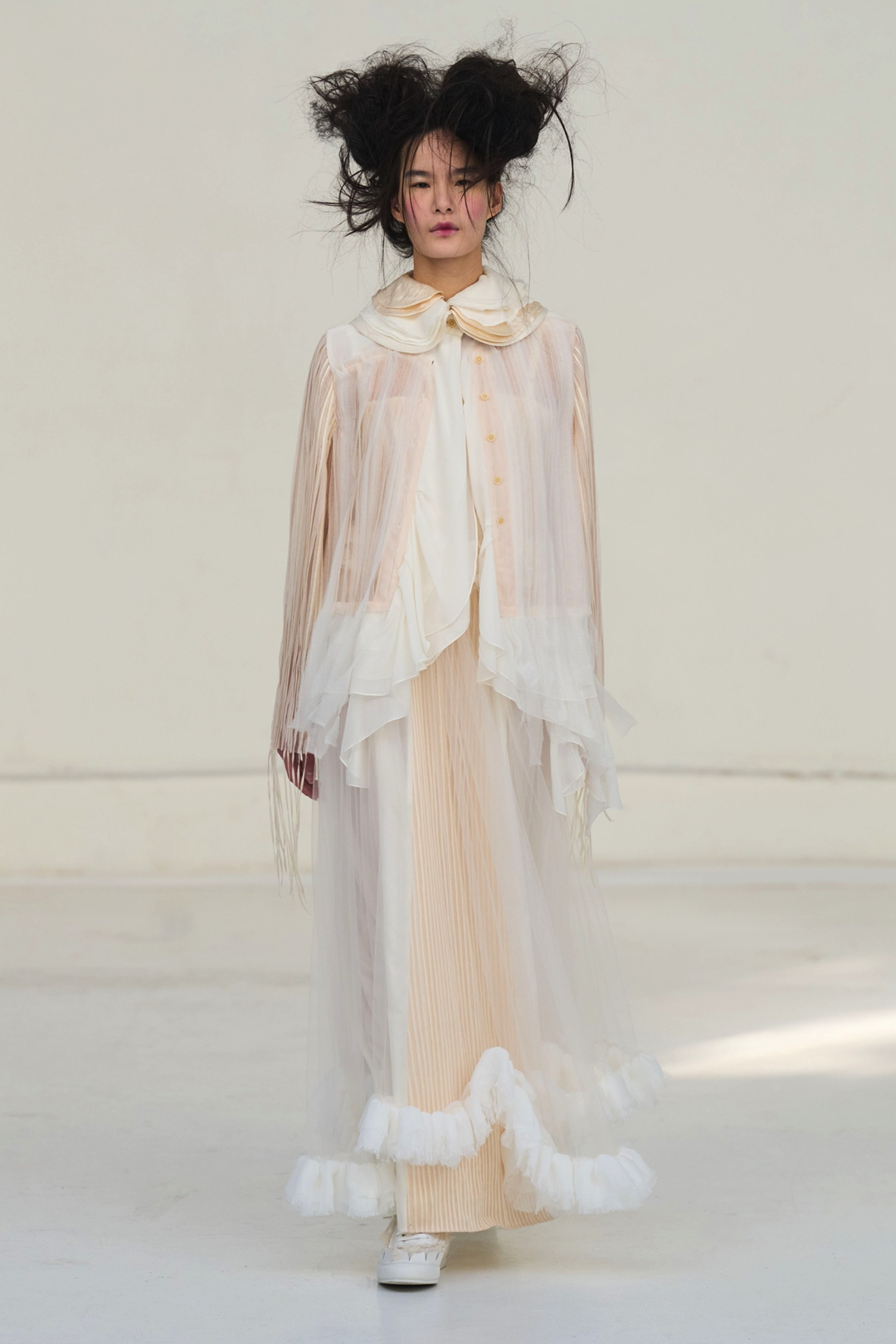
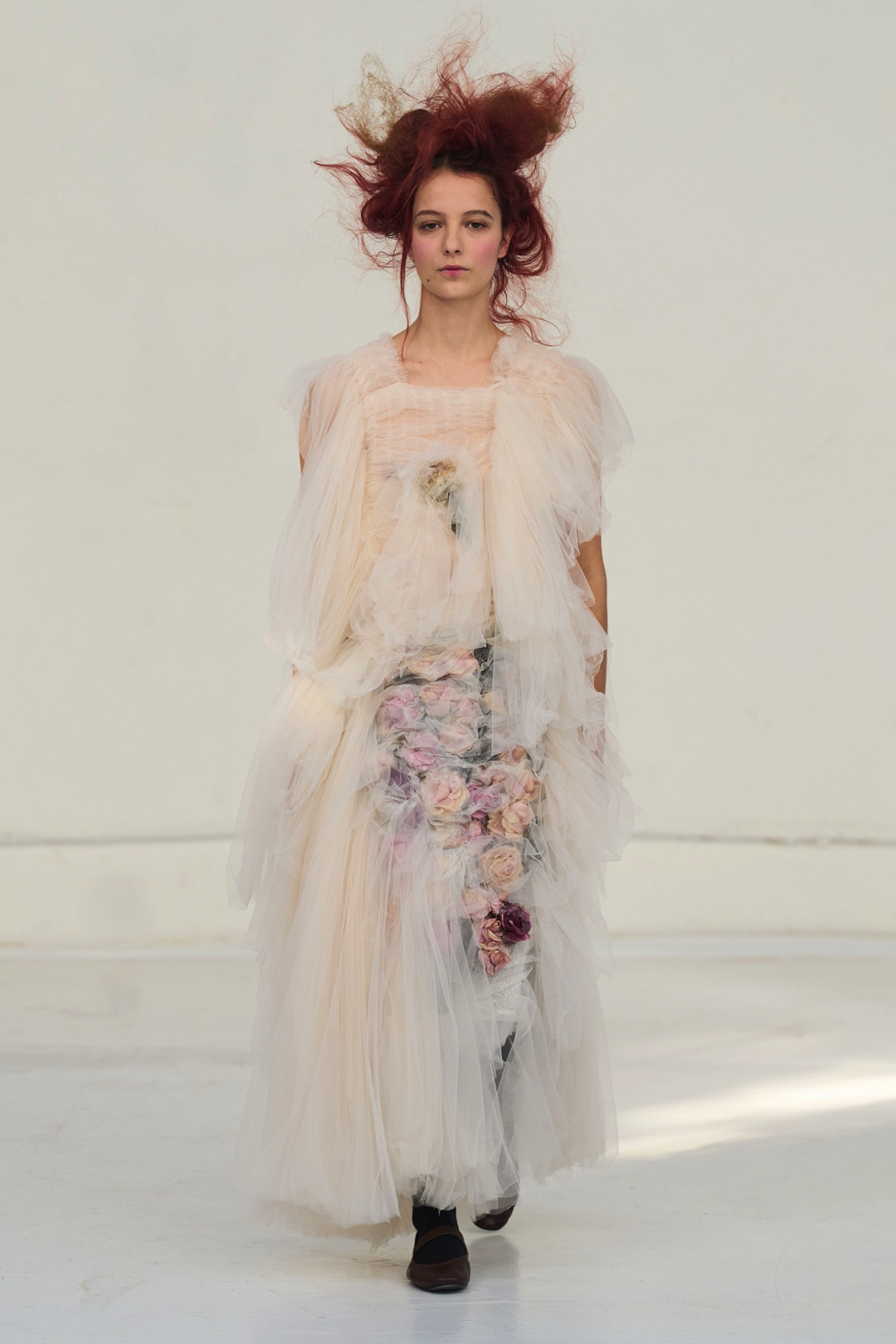
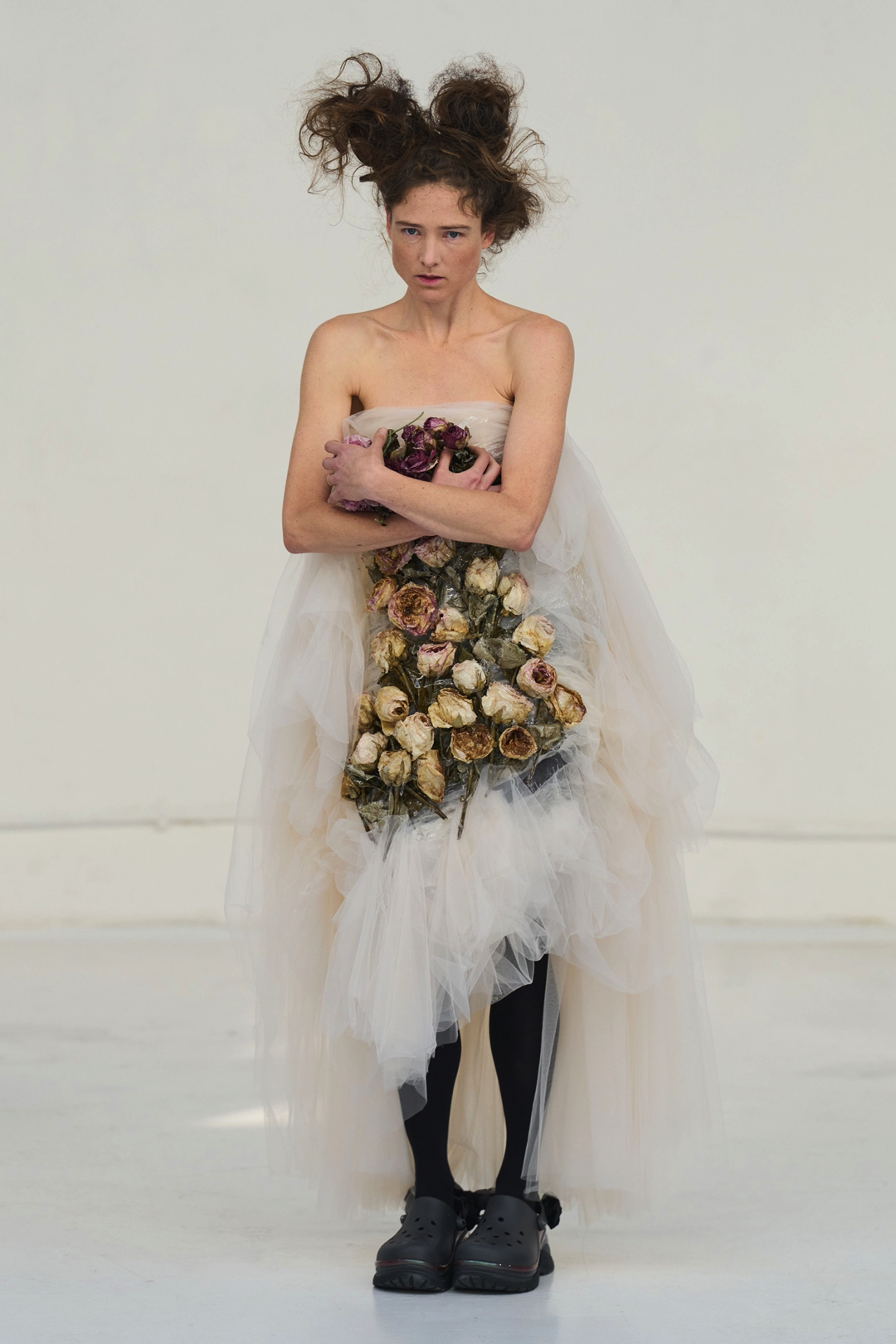
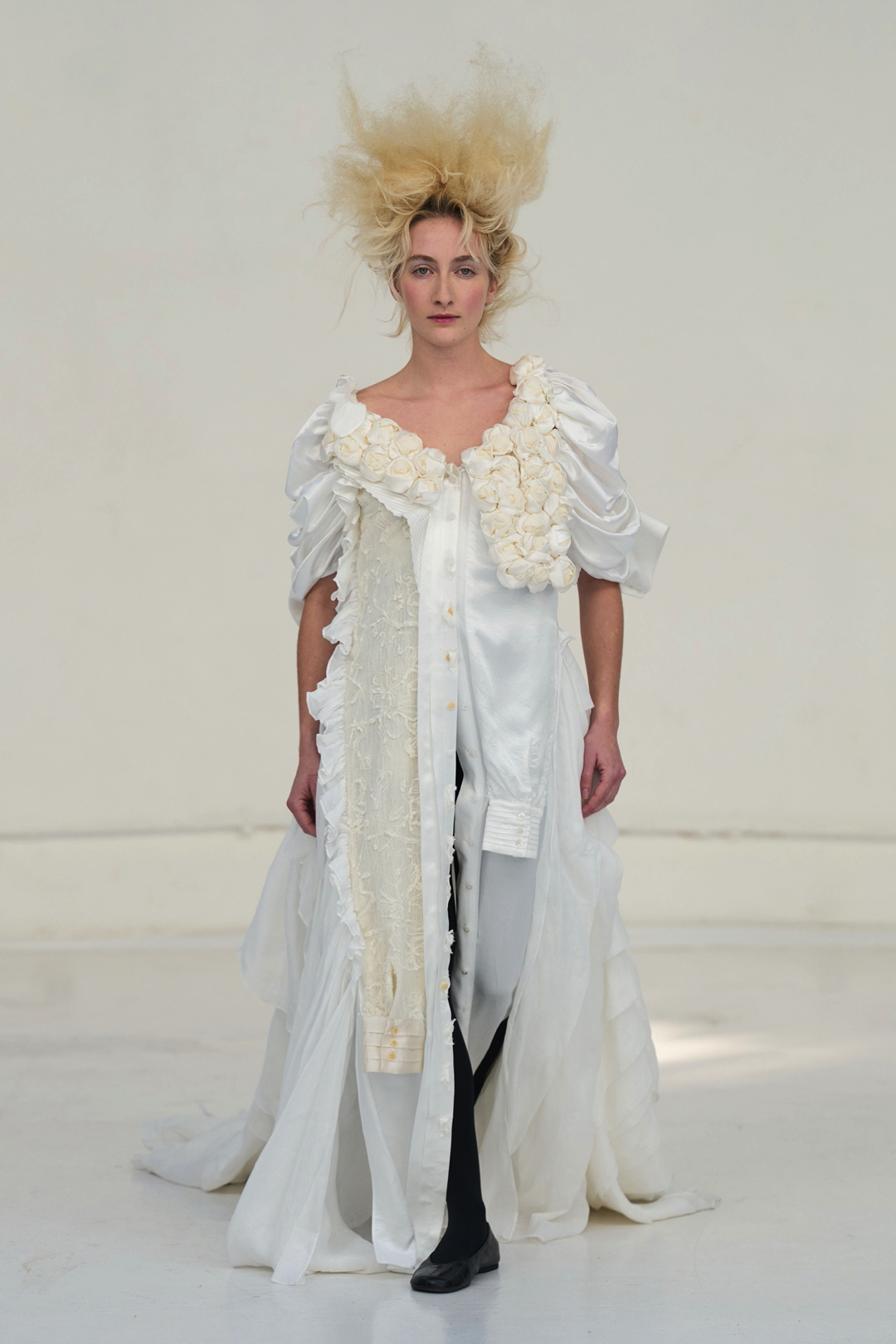
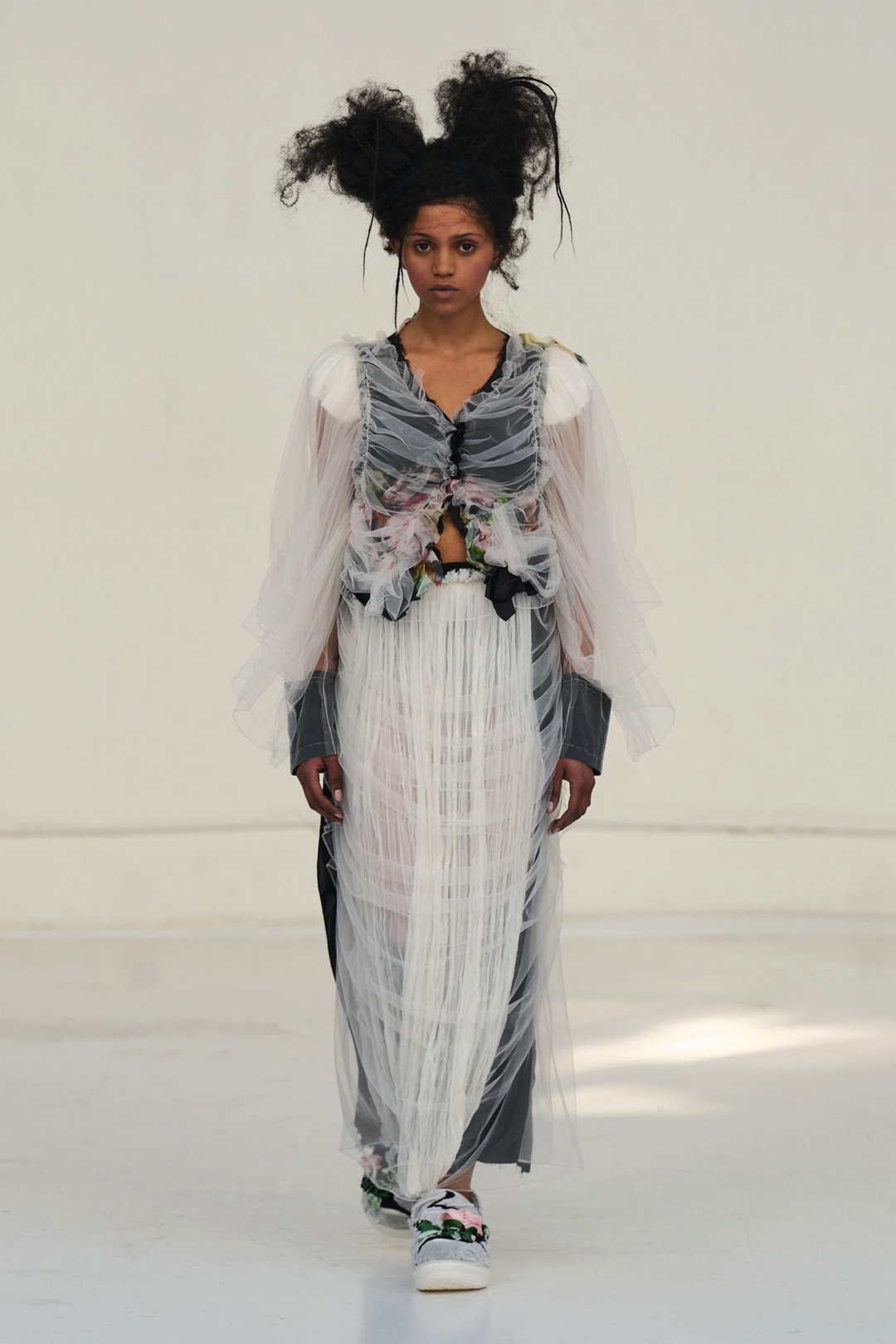
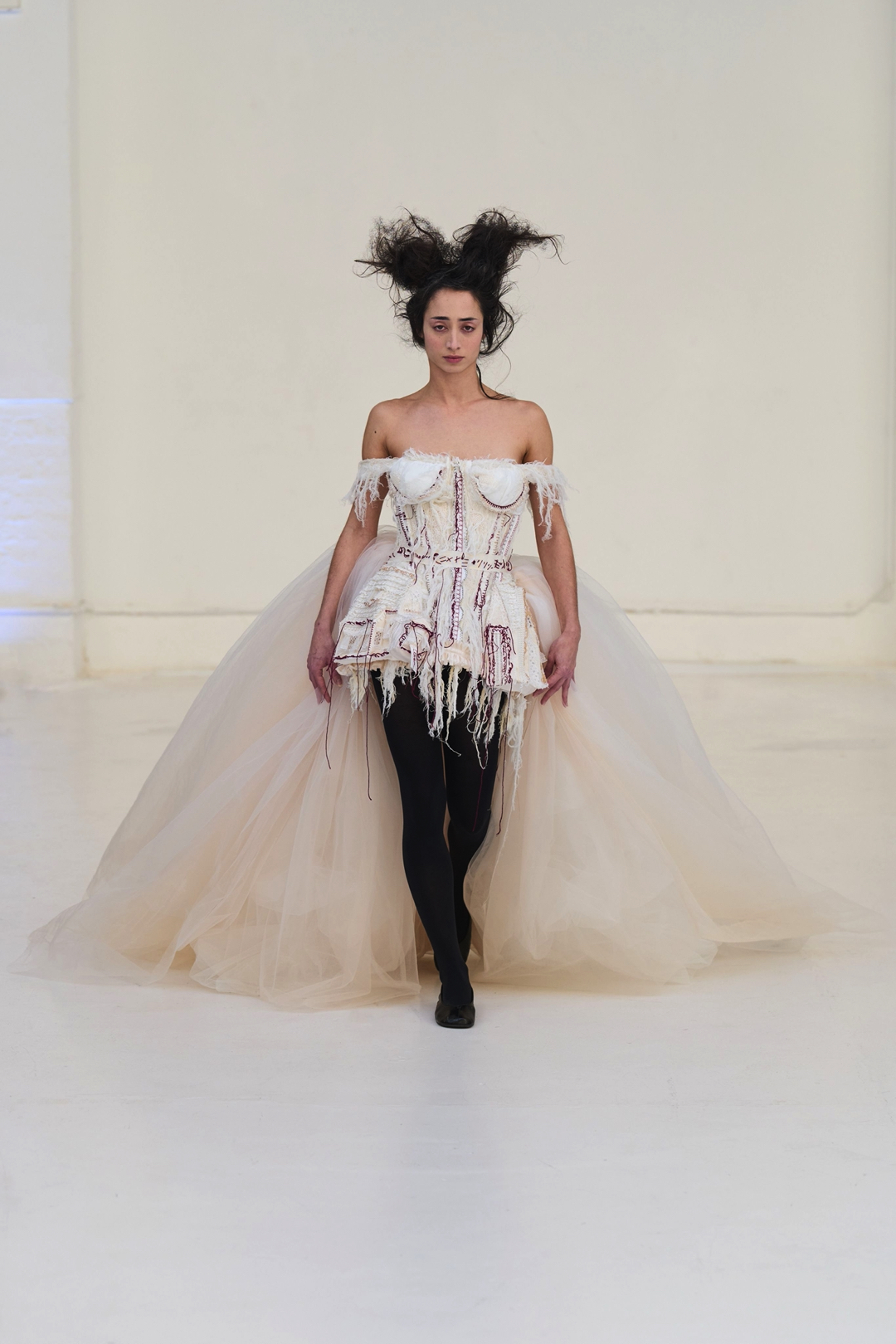
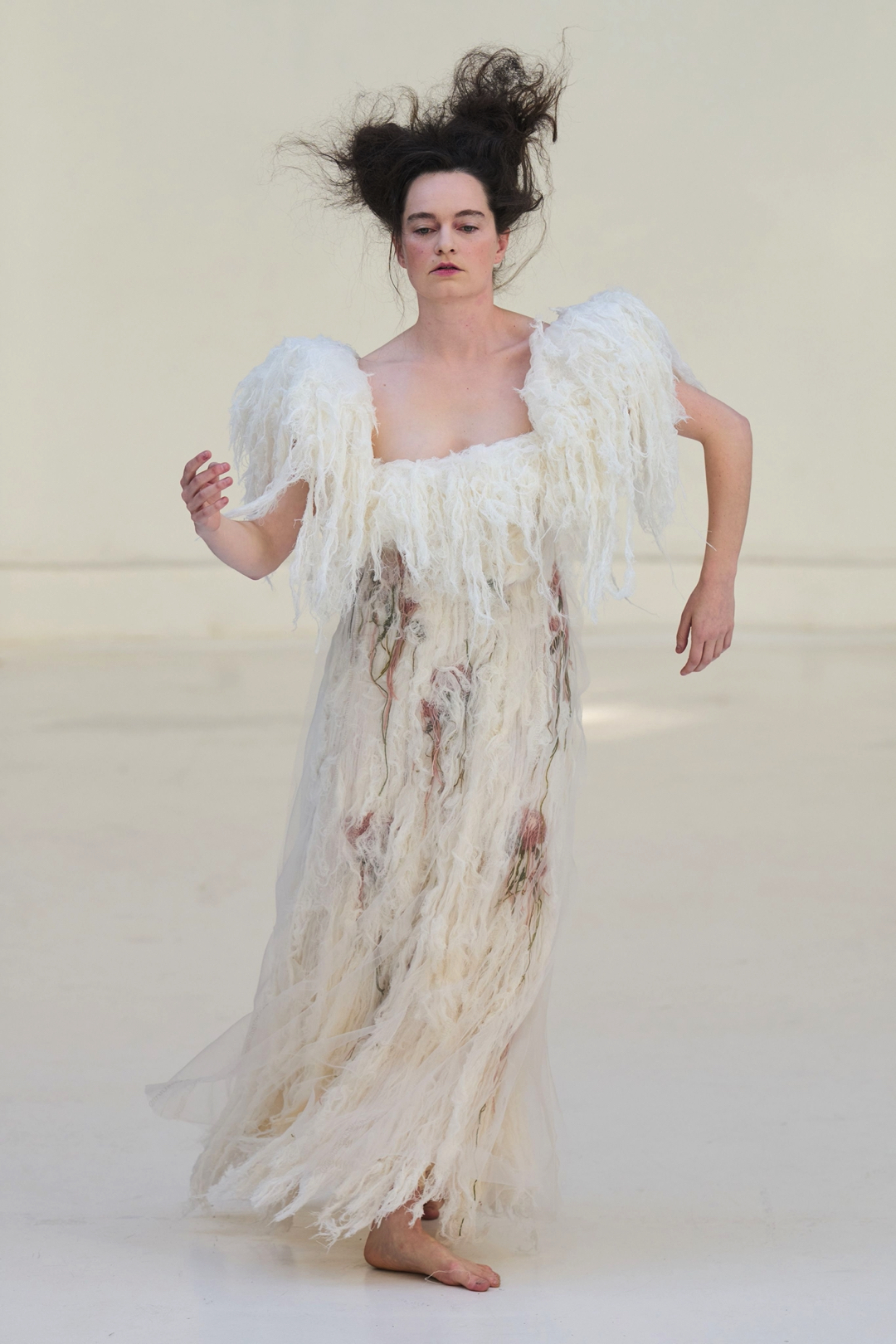
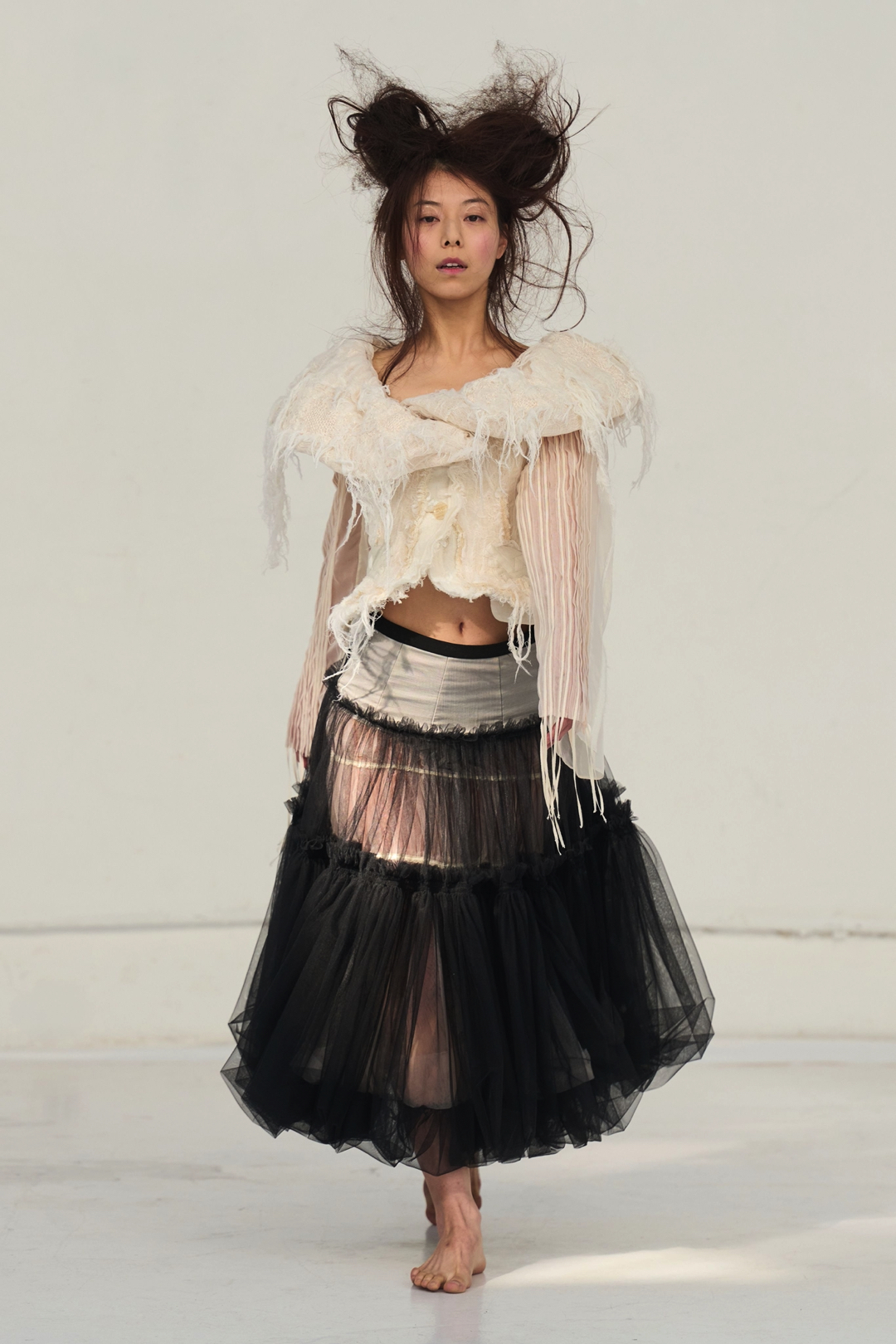
The collection unfolded as a meditation on attachment and fragility. Hu described its atmosphere as something close to nostalgia, yet the sentiment was not expressed through literal historicism. Instead, the garments suggested memory through construction. Delicate cotton meshes appeared hand-frayed, surfaces were layered with silicone-coated faux flowers shrouded in tulle, and multiple fabrics coexisted within single garments in intricate textile collages. Lace, silk, and cotton were assembled into compositions that evoked historical dress, particularly the loosened intimacy of eighteenth-century French undress, without becoming pastiche.
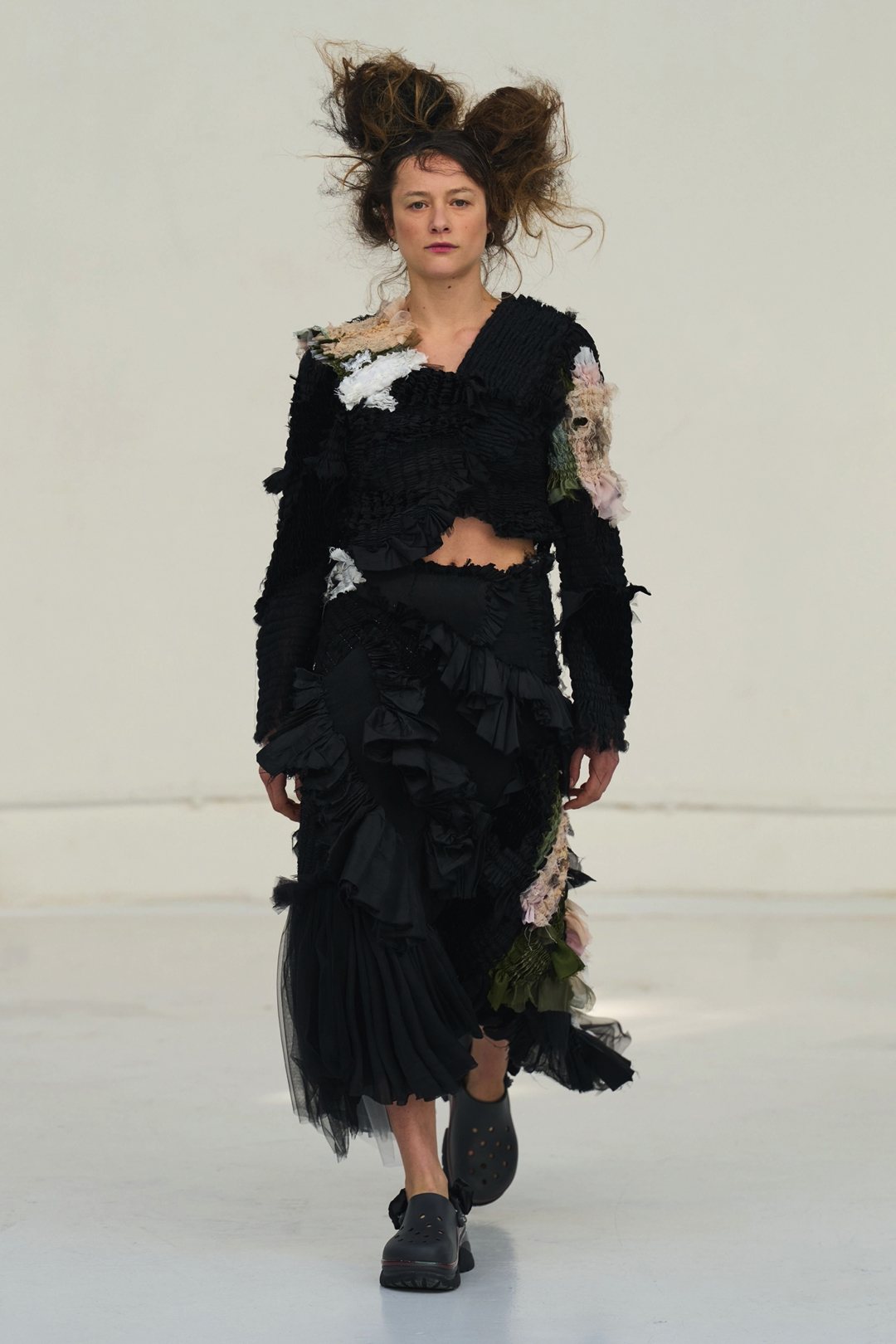
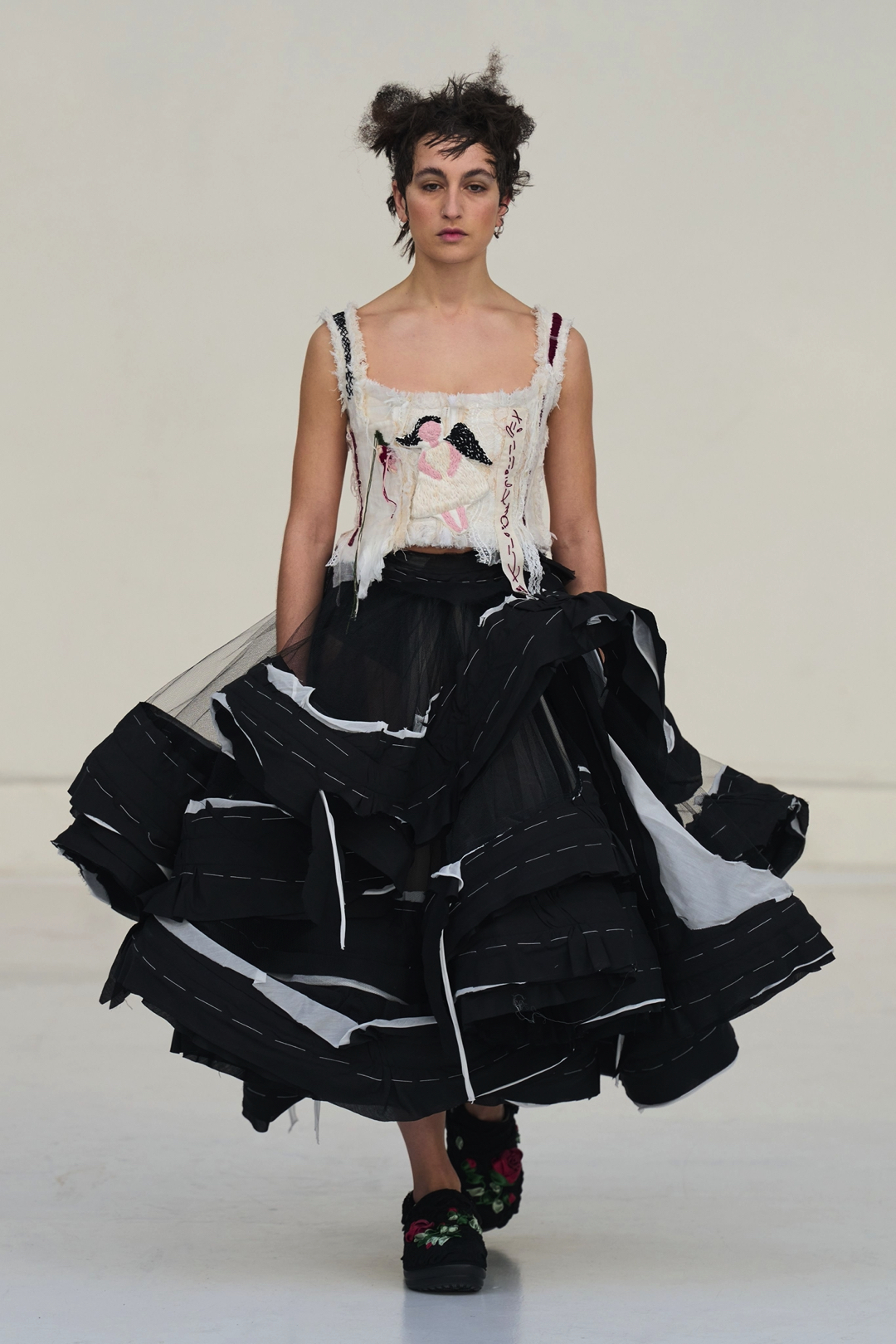
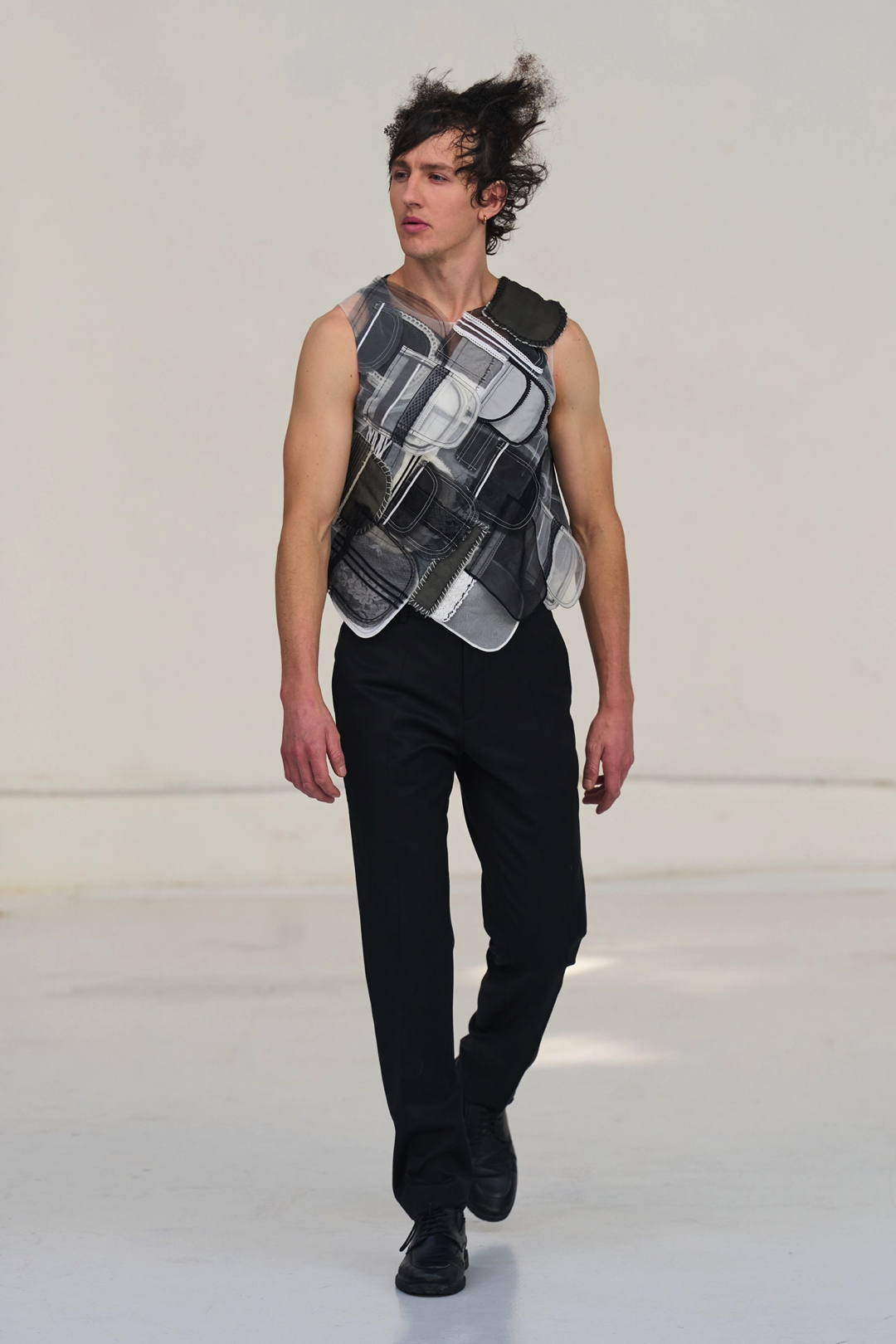
This tension between delicacy and structure has long defined Hu’s work, but in “Reverie” it reached a particularly refined articulation. Collars expanded into exaggerated, almost portrait-like frames around the body, while tuck-strip techniques layered with woven tapes created surfaces that felt simultaneously fragile and architectural. Elsewhere, tailoring was inverted and reassembled. Suiting structures were turned inside out and reconfigured into swaying, multi-layered skirts, suggesting garments caught in a state of transformation rather than completion.
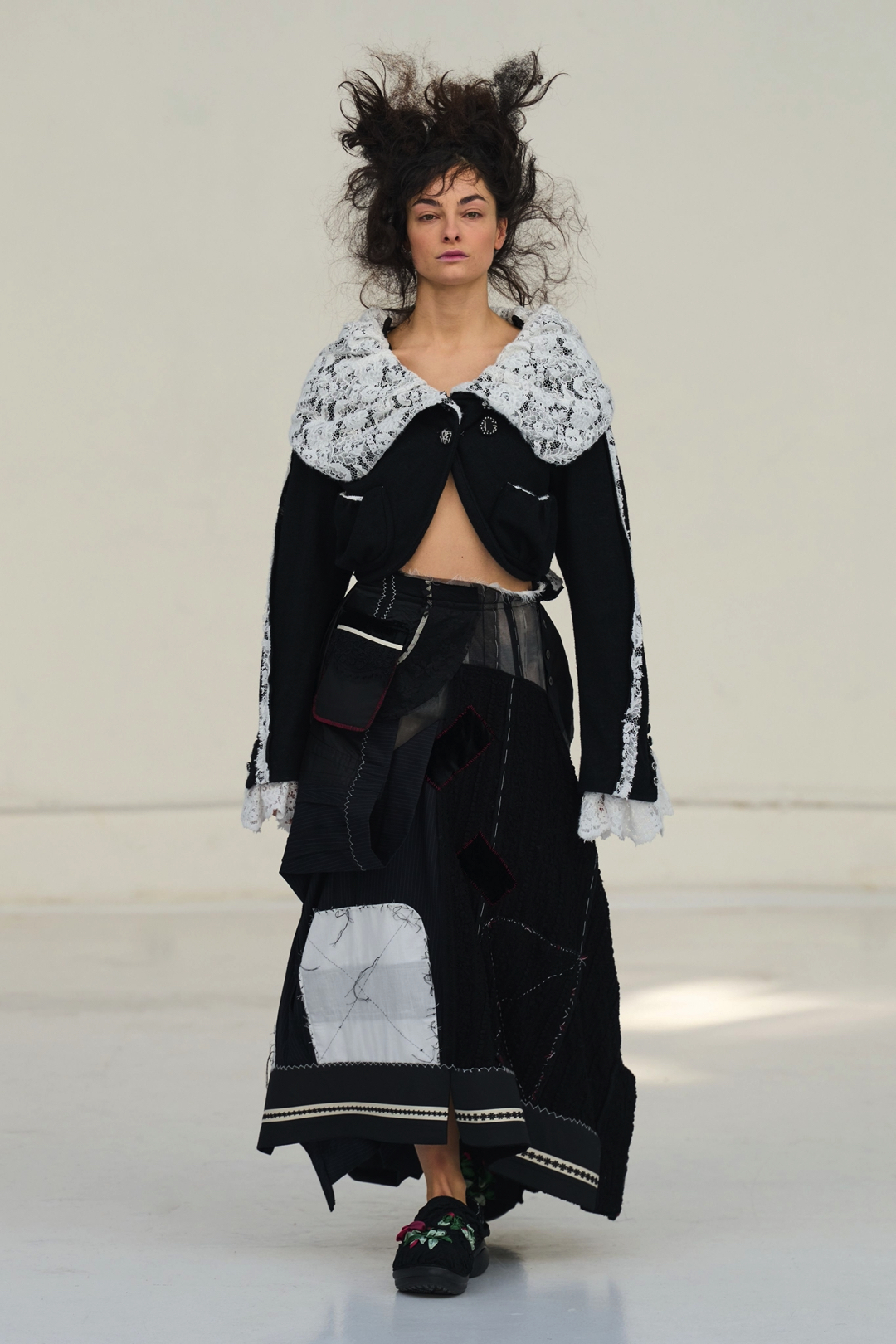
The collection’s material language reinforced this sense of accumulation. Elements appeared as though gathered over time rather than designed in a single gesture. Pockets multiplied, fabrics overlapped, and layers built gradually upon one another, producing garments that seemed to contain their own histories. What might otherwise appear ornamental instead read as emotional topography, an externalization of memory through texture and craft.
Even the footwear participated in this softening of conventions. Collaborating with Crocs, Hu reimagined the familiar Bae Clog with custom knitted uppers and silk ribbon flowers, transforming a form typically associated with casual utility into something unexpectedly romantic. The gesture encapsulated the collection’s broader strategy of taking ordinary objects and reframing them through tenderness and craft.
Presentation played an equally important role. Rather than a conventional runway populated by models, Hu invited dancers to inhabit the garments, guided by performances from Emma Porter and Matt McCreary. Their choreography moved fluidly through the space, allowing the layered fabrics to sway and shift in motion. The result blurred the boundary between fashion show and performance, emphasizing the garments as living forms activated by the body rather than static objects to be observed.
In “Reverie,” Hu continued to refine a language rooted in vulnerability and material intimacy. The collection proposed clothing not simply as adornment but as a vessel for memory, soft, layered, and quietly transformative.
Photos: Courtesy of Caroline Hú
Choreography: @emmaportner
Assistant choreographer: @itssdarlyn
Stylist: @kaisergrams
Casting: @nicola.kast
Hair: @eugenesouleiman, @kevin.murphy
Makeup: @uchiideafb, @shuuemura
Production: @sitdown_production
PR: @kaleidoscopenyc
Shoes: Crocs X Reverie by Caroline Hú
HIGHLIGHTS FROM THE COLLECTION
Comments are closed.