

Yohji Yamamoto’s Spring/Summer 2023 show drew an unusually large crowd, not for spectacle but for something more rare in fashion today: continuity. As younger designers revisit his 1990s archive and speculation about his future grows louder, Yamamoto’s quiet consistency stands apart. Days before his 79th birthday, he took his bow with energy and ease, brushing off the question of retirement without addressing it at all.
The collection was unhurried, unfolding with the deliberate pace that has come to define his practice. There was no bid for virality, no forced attempt to assert relevance. Instead, Yamamoto offered a reflective articulation of his design vocabulary, with tailoring as the foundation. Jackets featured folds and flaps reminiscent of origami, shaped with portrait collars, cinched waists, and flared hems. These were not revisions or reinventions, but refinements—work that sits within a long conversation rather than a seasonal one.

Though the palette remained centered on black, Yamamoto found complexity in construction. Oblique strapping, cut-outs, and asymmetrical layering offered structure without rigidity. The occasional flash of white emerged on the underside of draped shirting, while painterly prints and calligraphic graphics appeared later in the show, subdued and intentional. A pair of lace-trimmed hourglass silhouettes provided a rare gesture toward delicacy, but even these were grounded in control.
The soundtrack, which included Yamamoto singing in Japanese alongside tracks like Lou Reed’s “Walk on the Wild Side” and Crosby, Stills, Nash & Young’s “Four Dead in Ohio,” underscored the collection’s temporal undercurrent. These songs, more than five decades old, marked the passing of time, yet the clothes resisted nostalgia. Yamamoto remains inward-focused, designing in response not to trends but to the ongoing demands of his own methodology.
In an industry increasingly shaped by acceleration and exposure, this collection affirmed the value of longevity and introspection. Yamamoto’s work is not frozen in time, but it does not move to meet the present. It asks the present to come to it.
Produced by Yohji Yamamoto team
Scenography and lighting by Masao Nihei
Music by Jiro Amimoto
Hair styling by Eugene Souleiman
Make-up by Isamaya French
www.yohjiyamamoto.co.jp
@yohjiyamamotoofficial
Highlights from the Collection


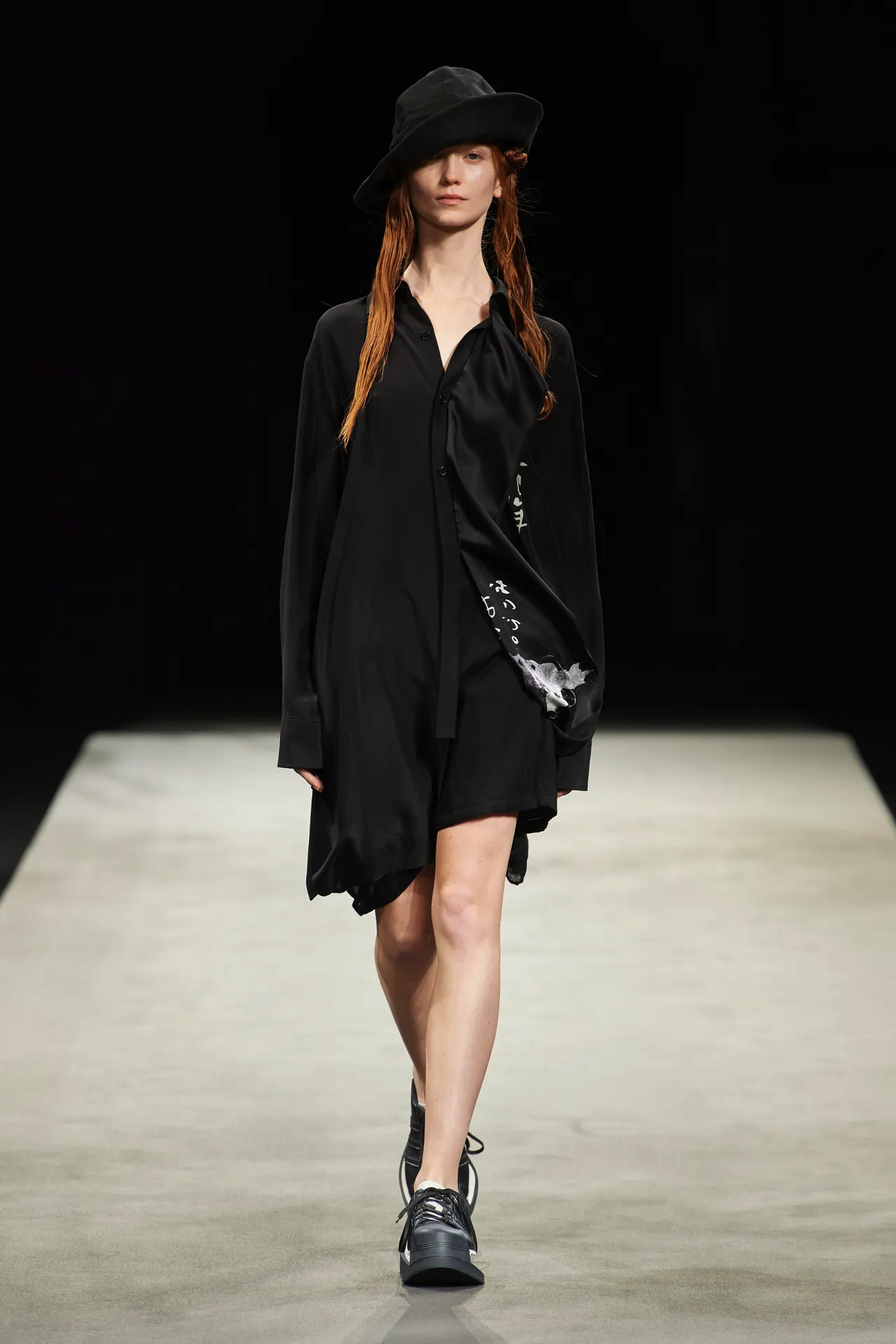


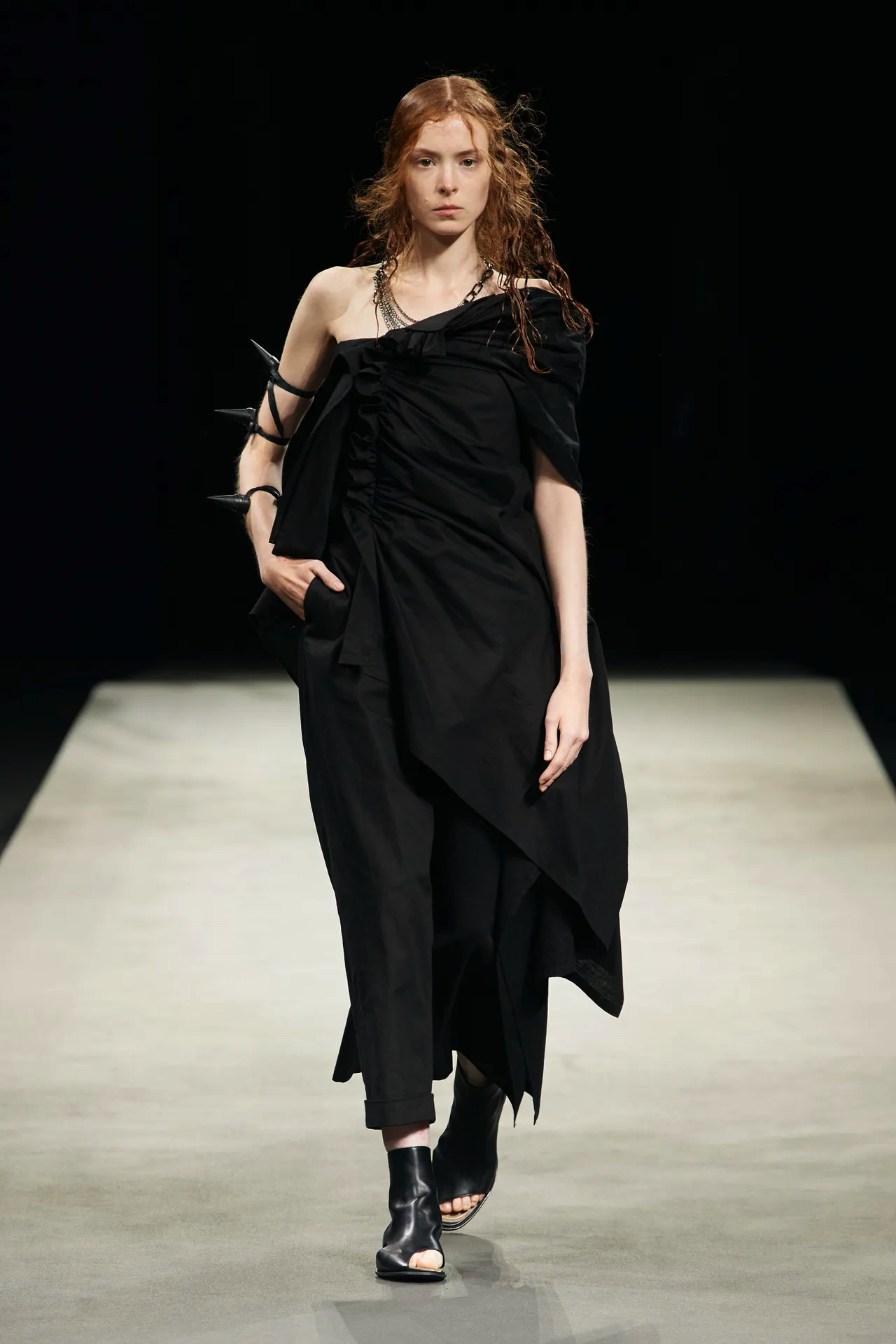
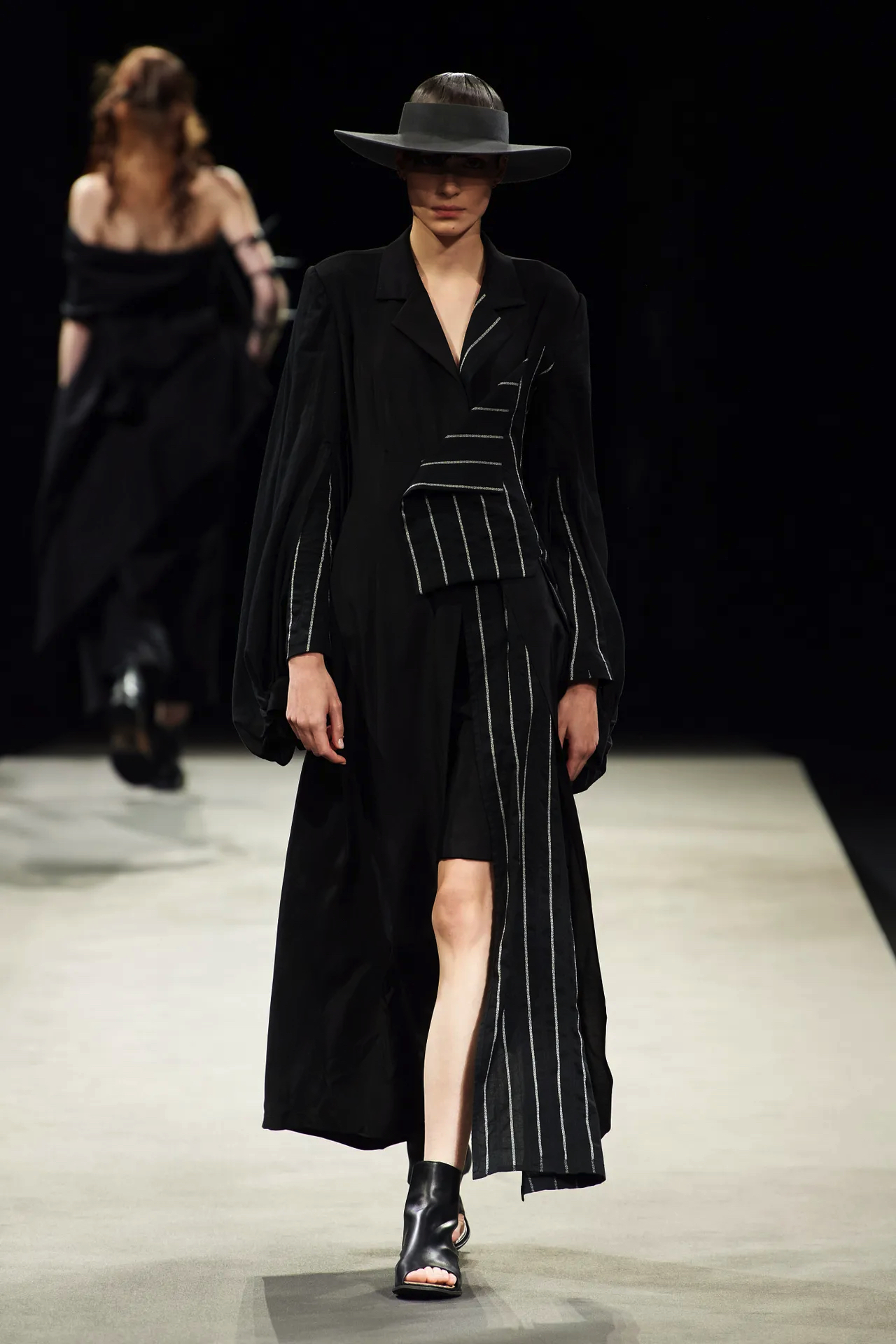

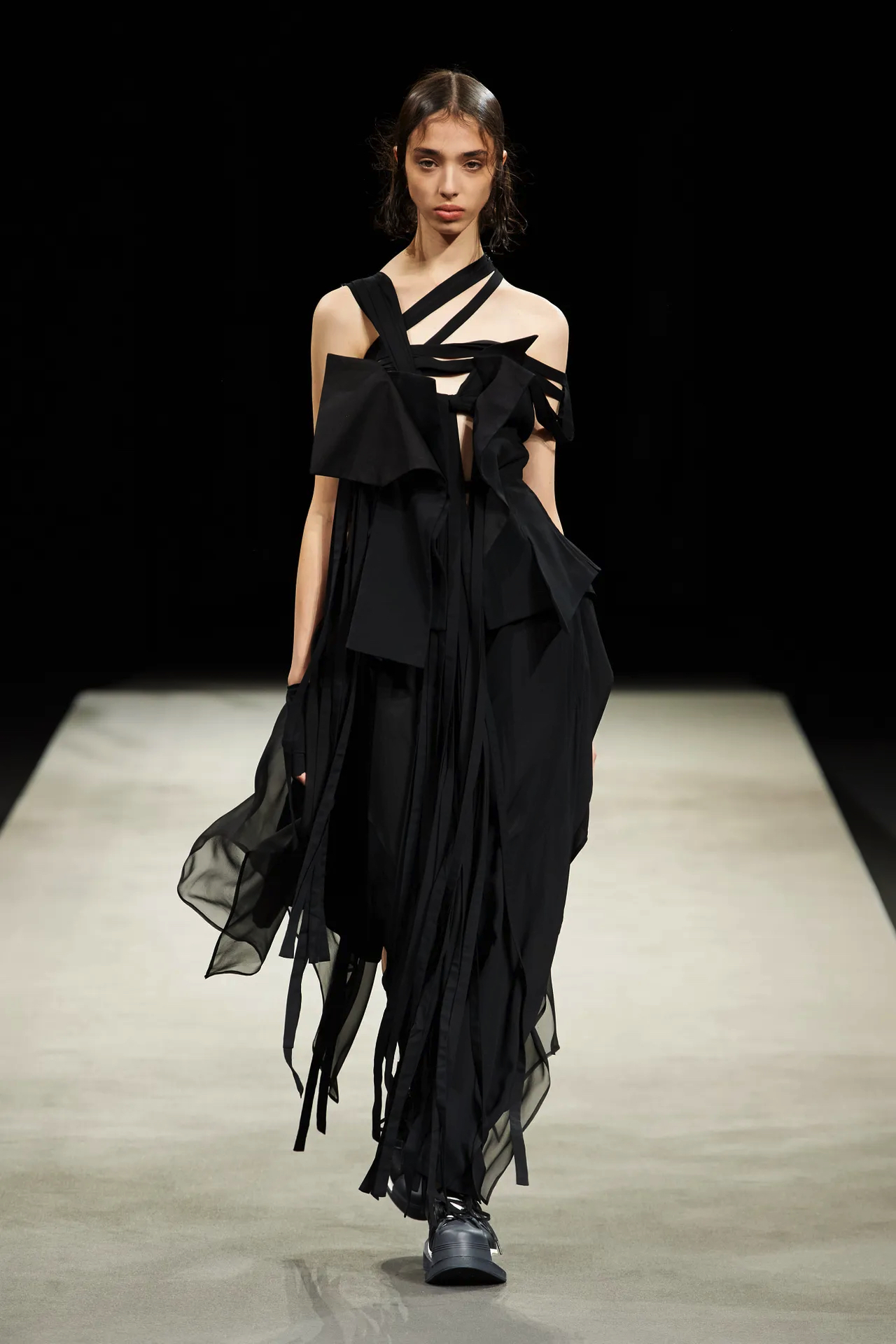
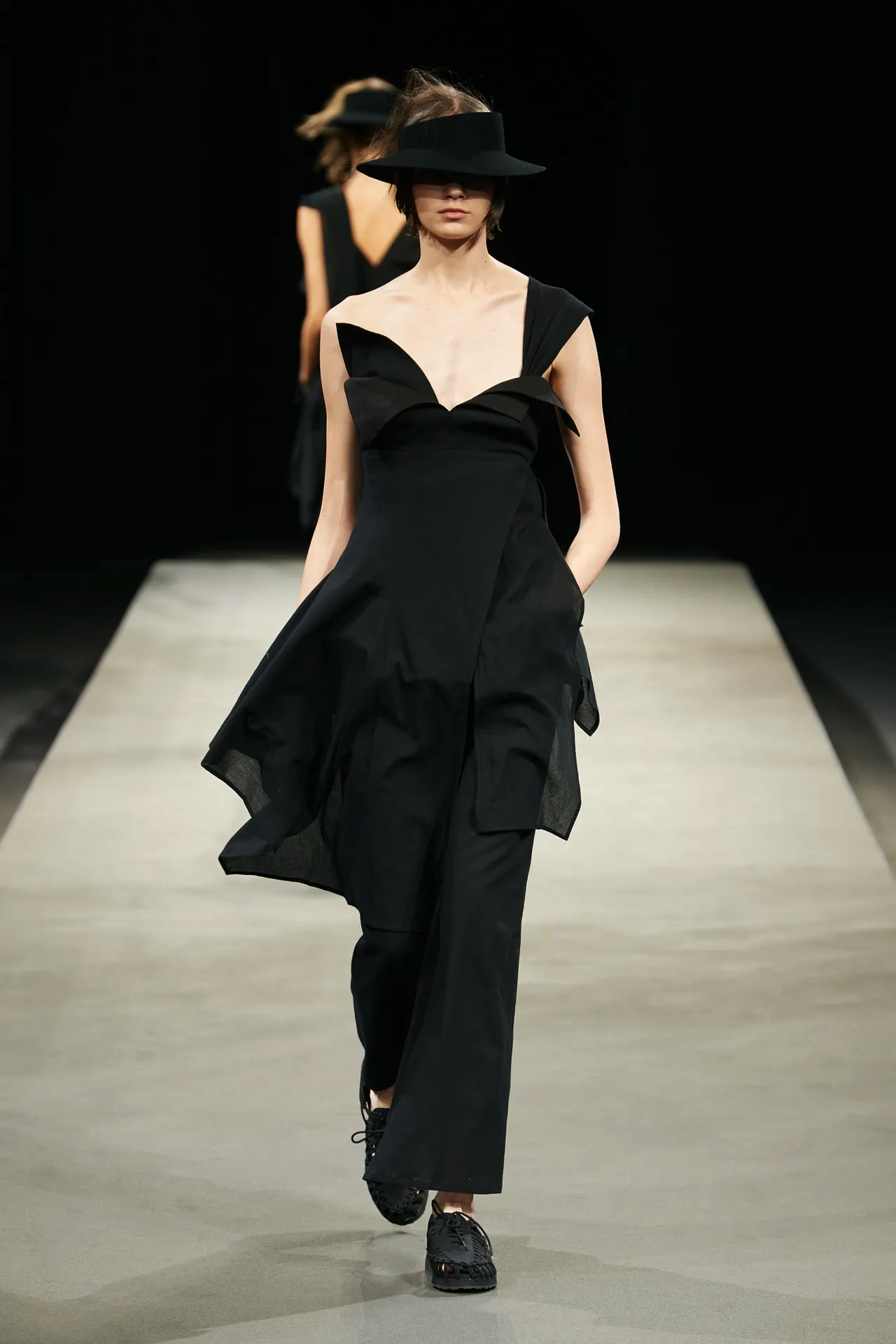


Photos courtesy of Yohji Yamamoto by TAKAY