

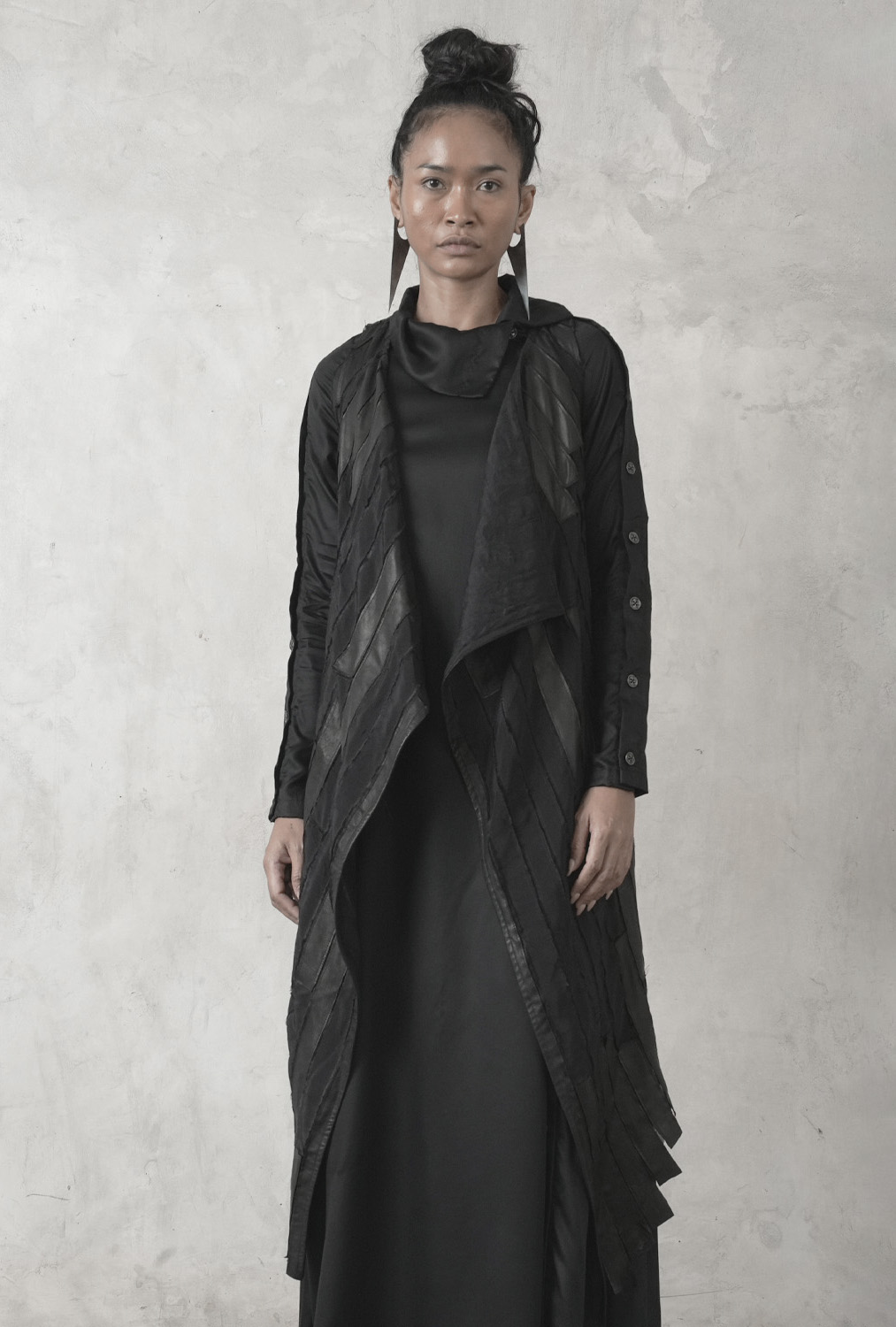
In “Mortuum”, the Fall/Winter 2026 collection by Mark Baigent, time is not treated as a linear progression but as a sequence of cycles, measured, reflected upon, and ultimately internalized. The collection begins from a personal meditation on Western numerology, where years unfold within a nine-step rhythm, each carrying its own charge. For Baigent, 2026 signals renewal, not as abstraction but as a demand for self-agency, for decisive movement, and for the construction of one’s own momentum. The designer situates this moment against a personal chronology, tracing back nine years to a relocation that quietly marked the beginning of an ongoing transformation. What emerges is not a narrative of belief, but of alignment, an intuitive structuring of experience through pattern, repetition, and duration.
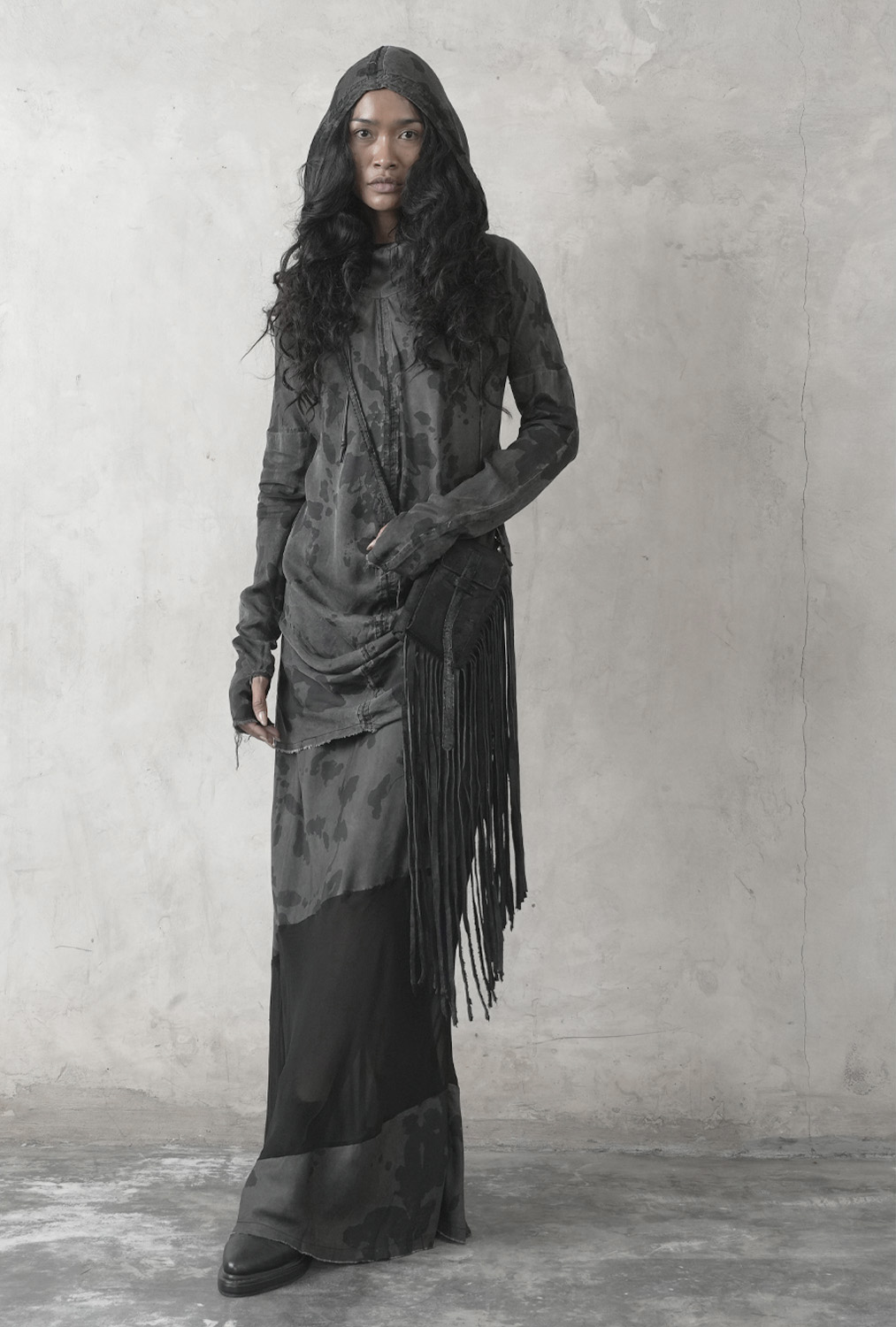
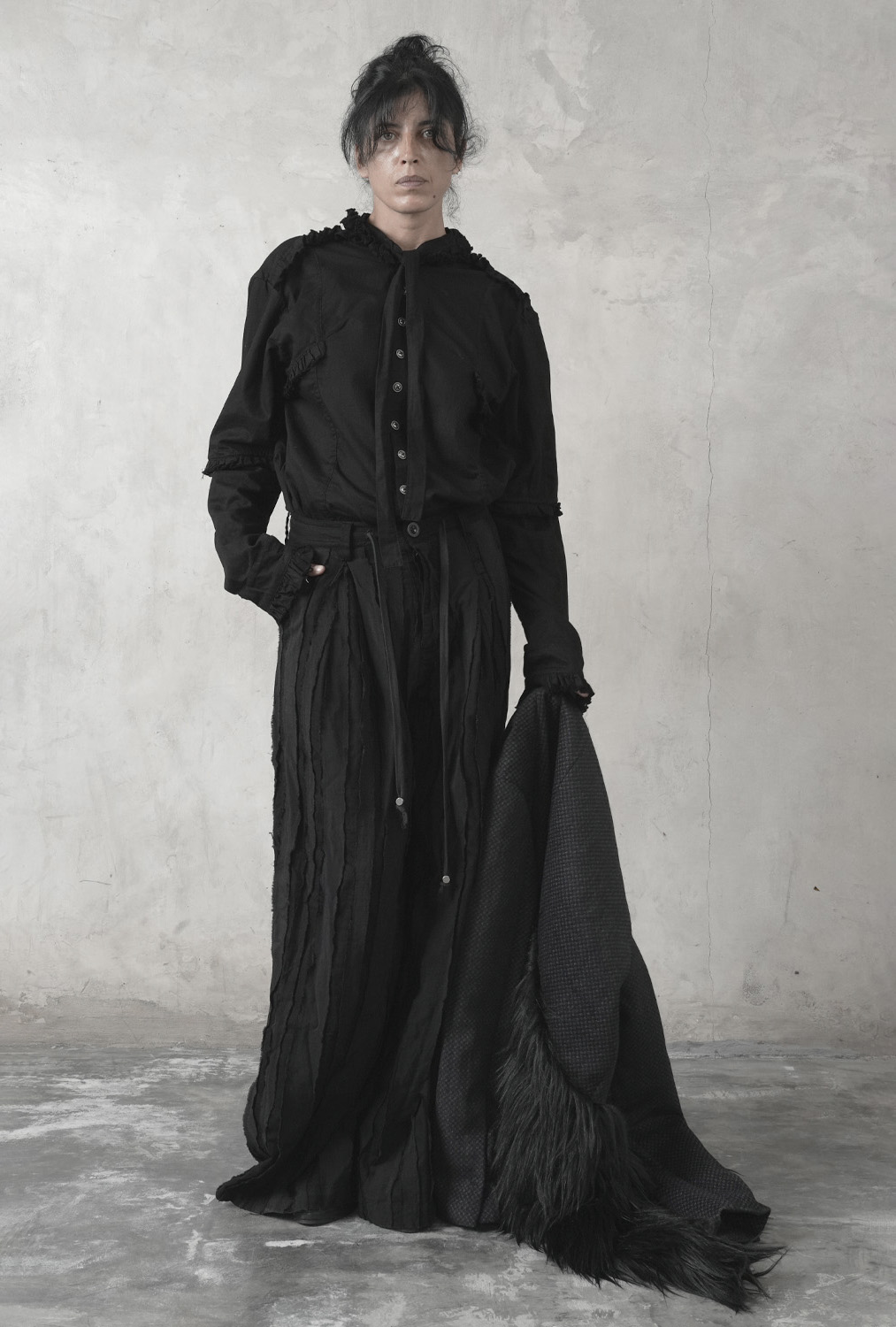
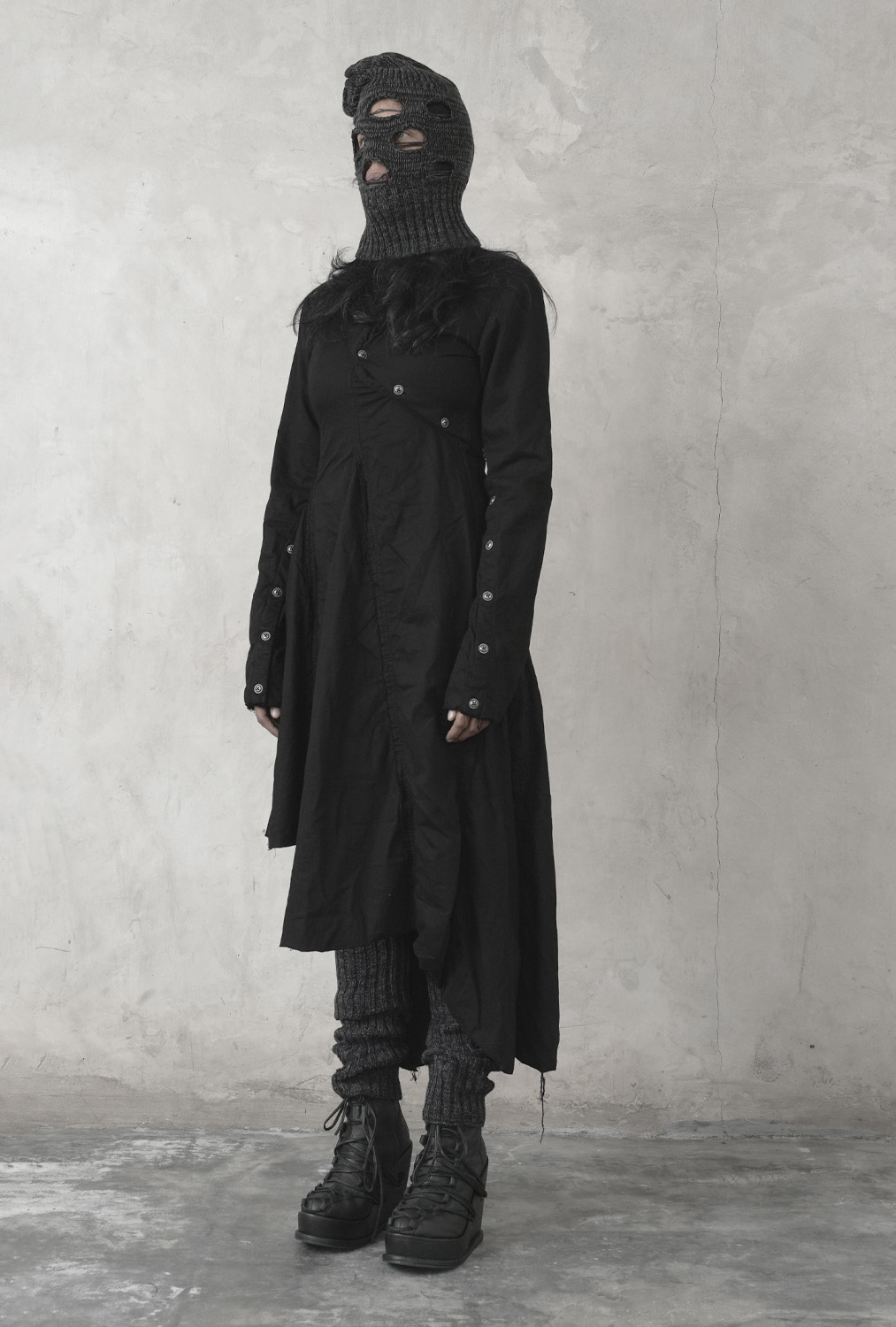
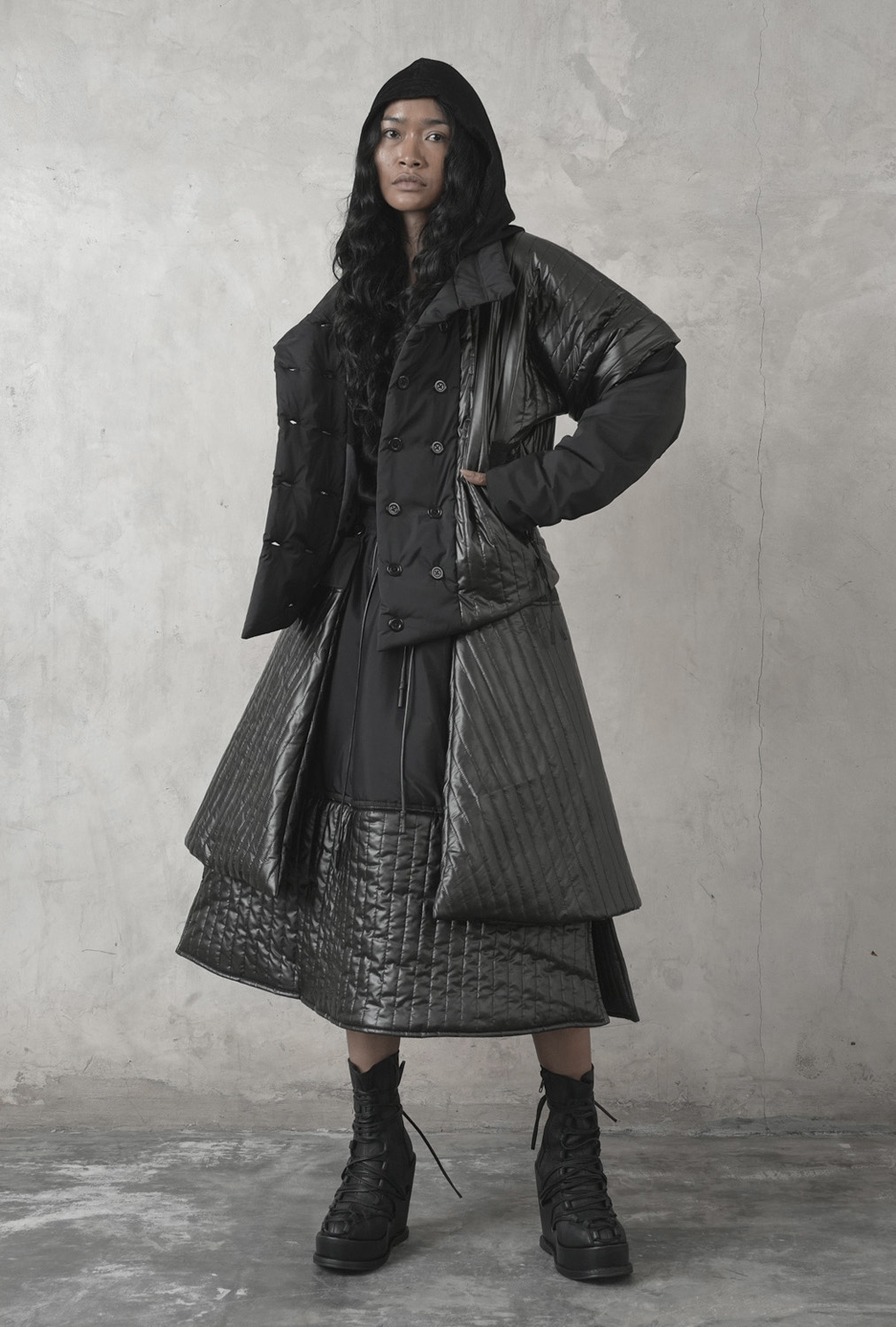
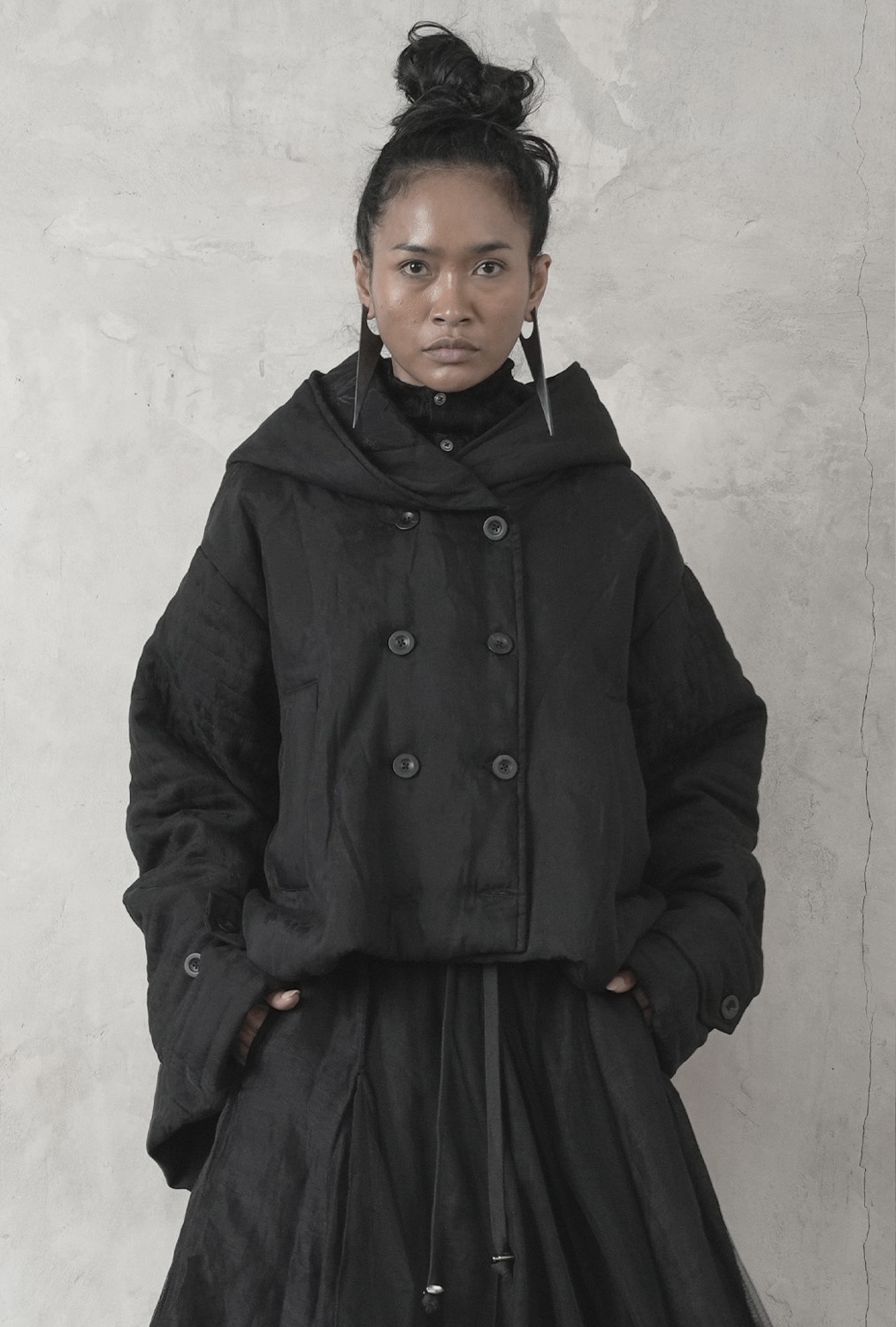
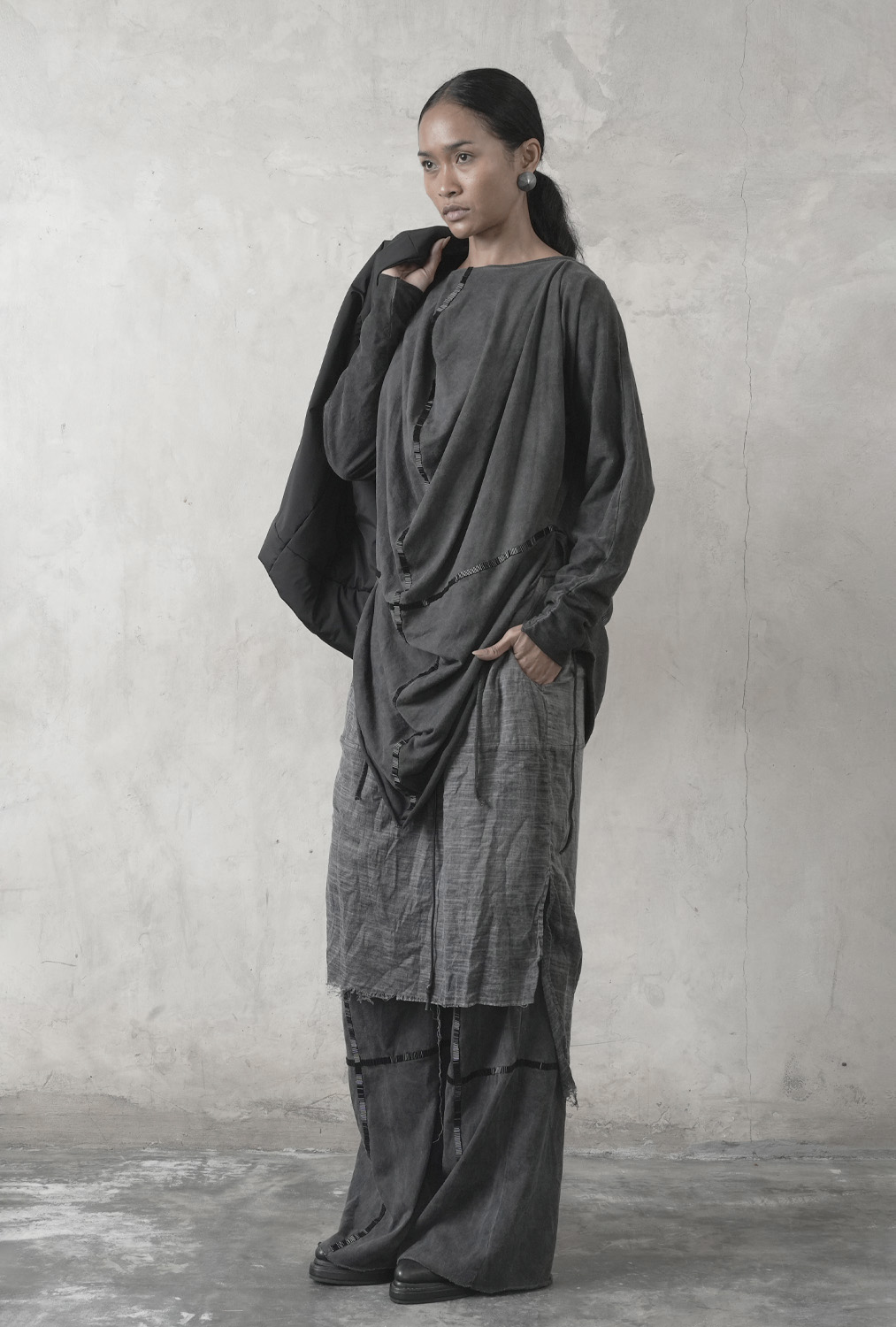
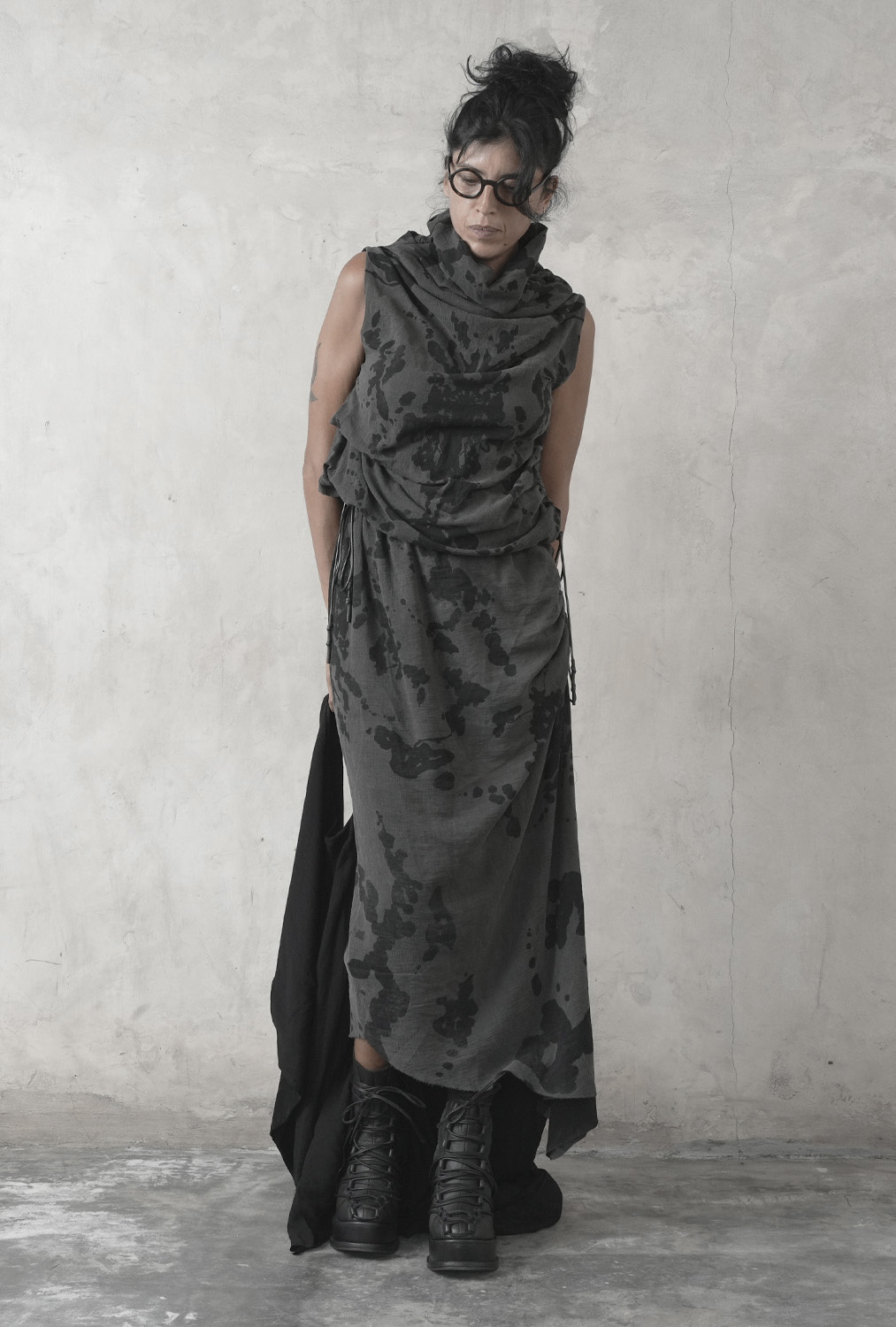
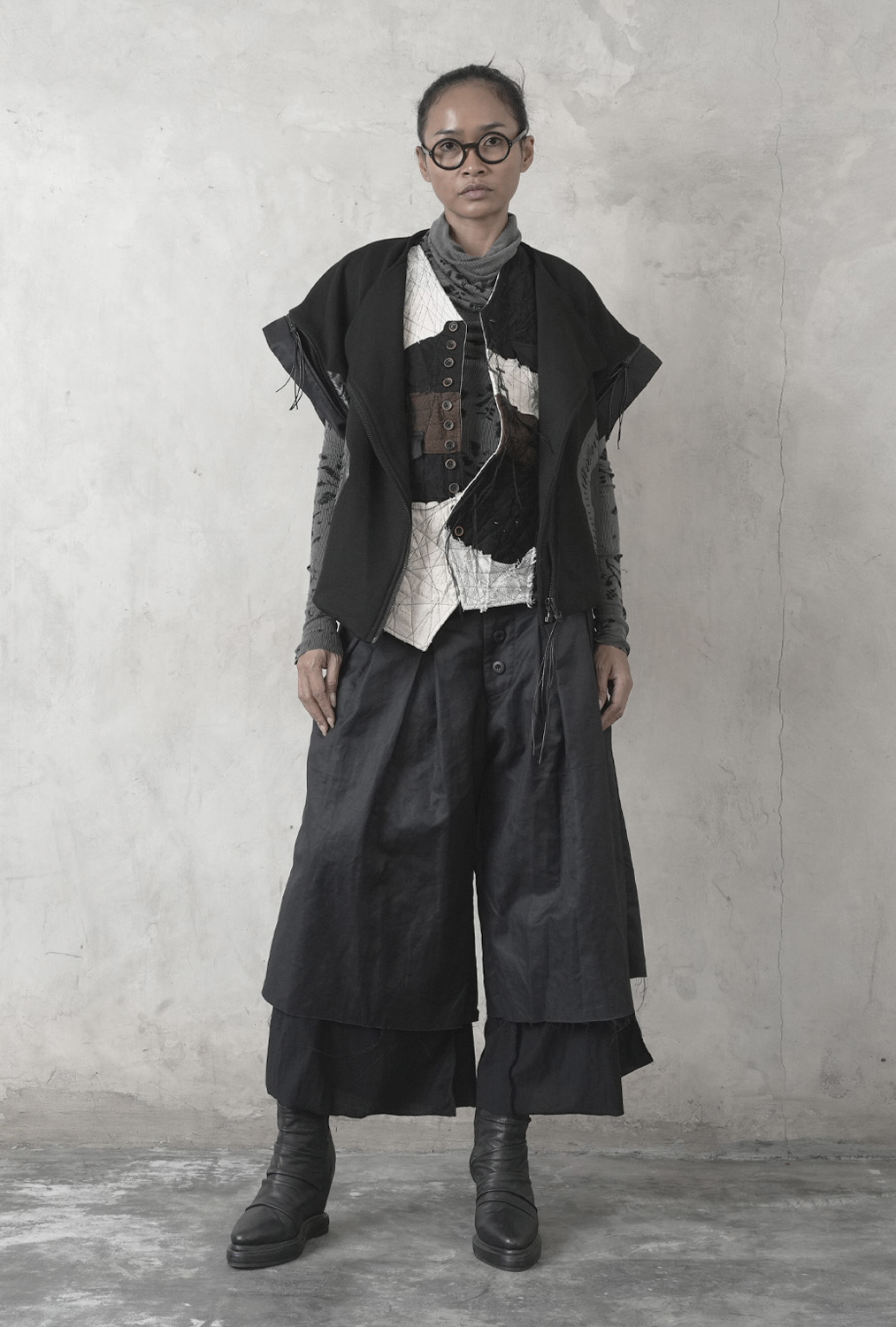
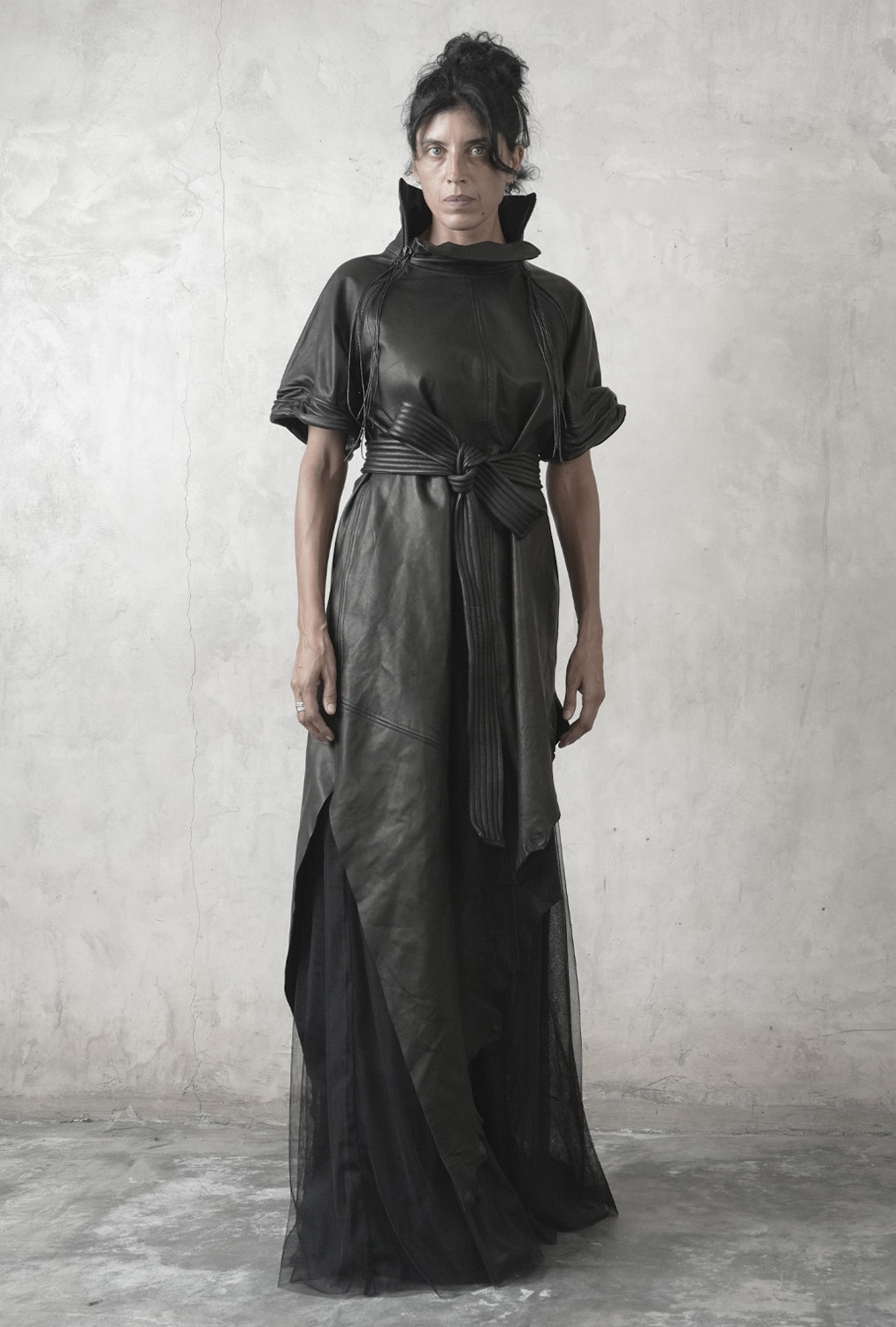
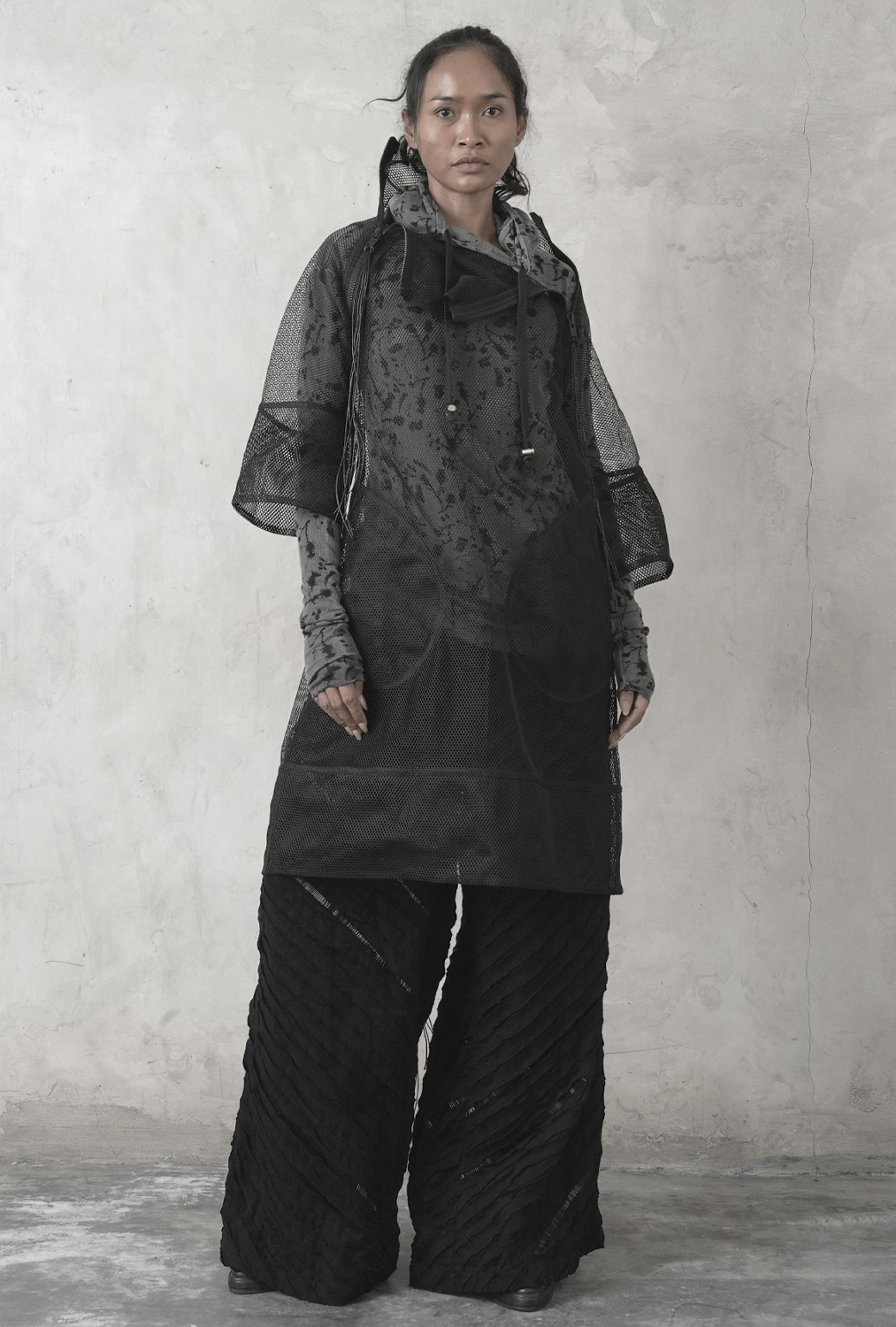
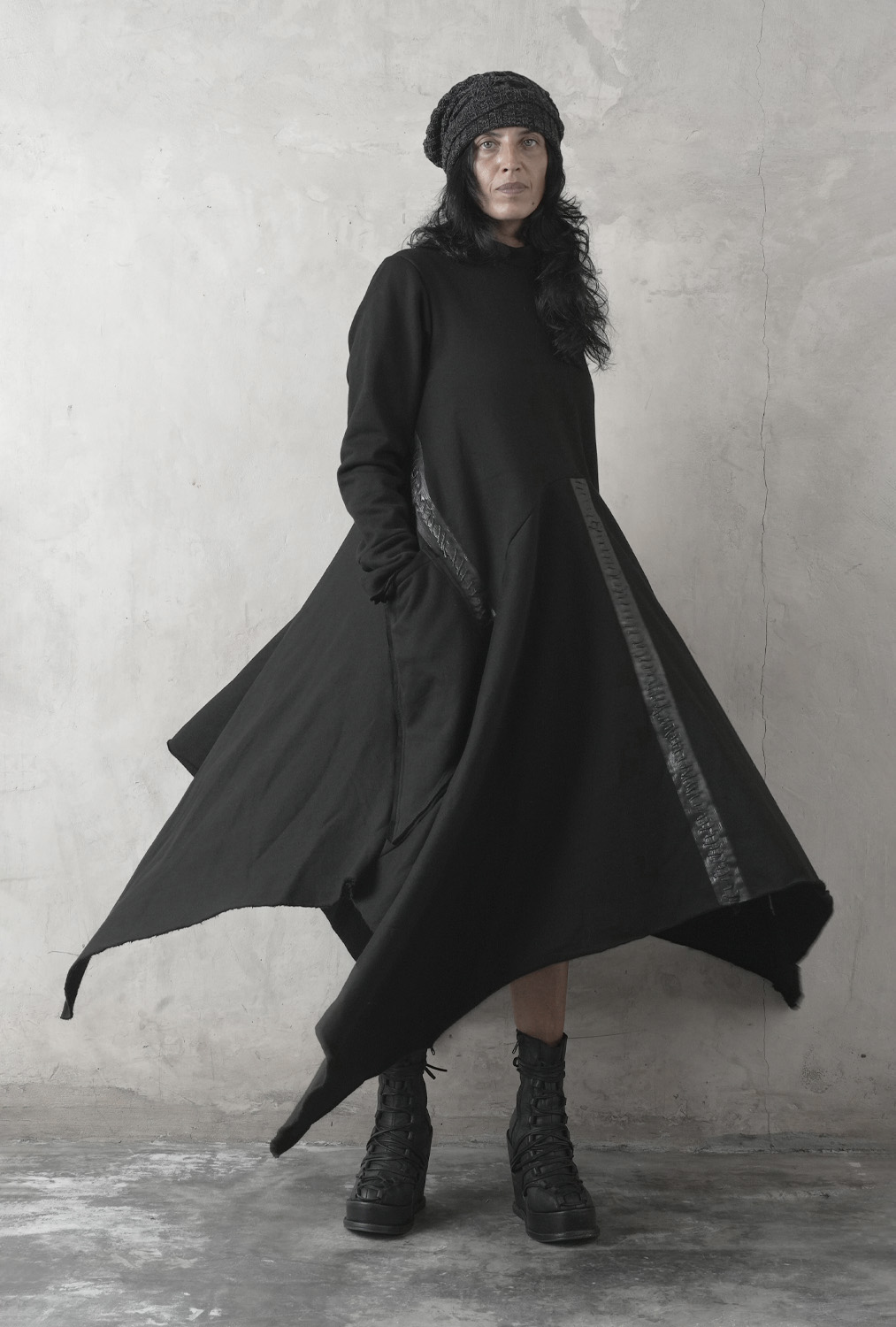
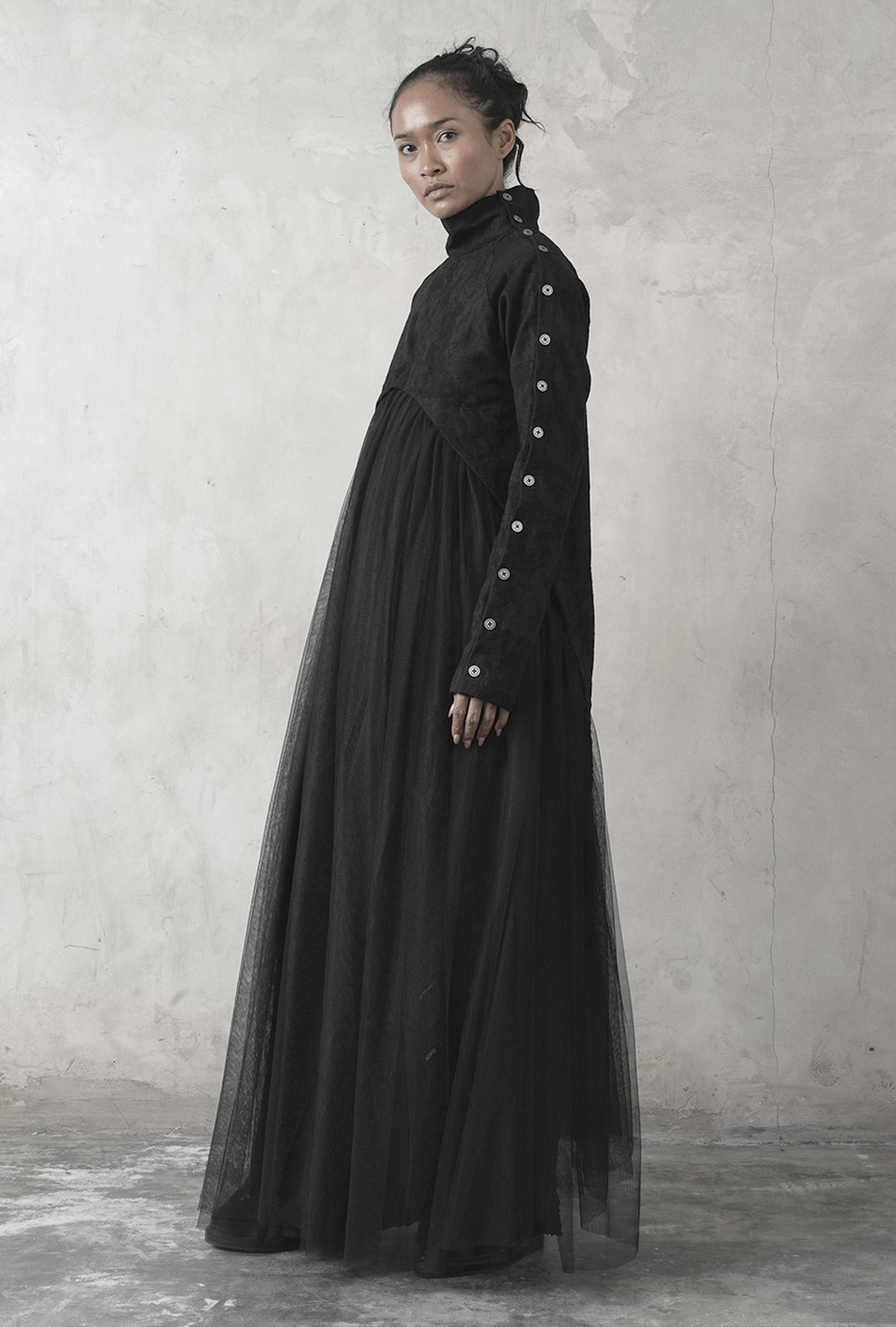
This framework extends into the material language of the collection. Resilience, a recurring motif, is rendered through the thistle, its symbolic associations with protection and endurance translated into textile form. Screen-printed across cotton thermals and viscose rib jersey, then submerged into dark tonalities through pigment dyeing, the motif resists decoration in favor of psychological weight. Baigent approaches print as a form of internal mapping, where nature operates less as reference than as a vocabulary of states. The garments themselves follow this logic. Wool coats retain the discipline of traditional craft, yet their raw-edge finishes, zero-waste considerations, and irregular closures introduce a deliberate instability. Precision is present, but it is unsettled.
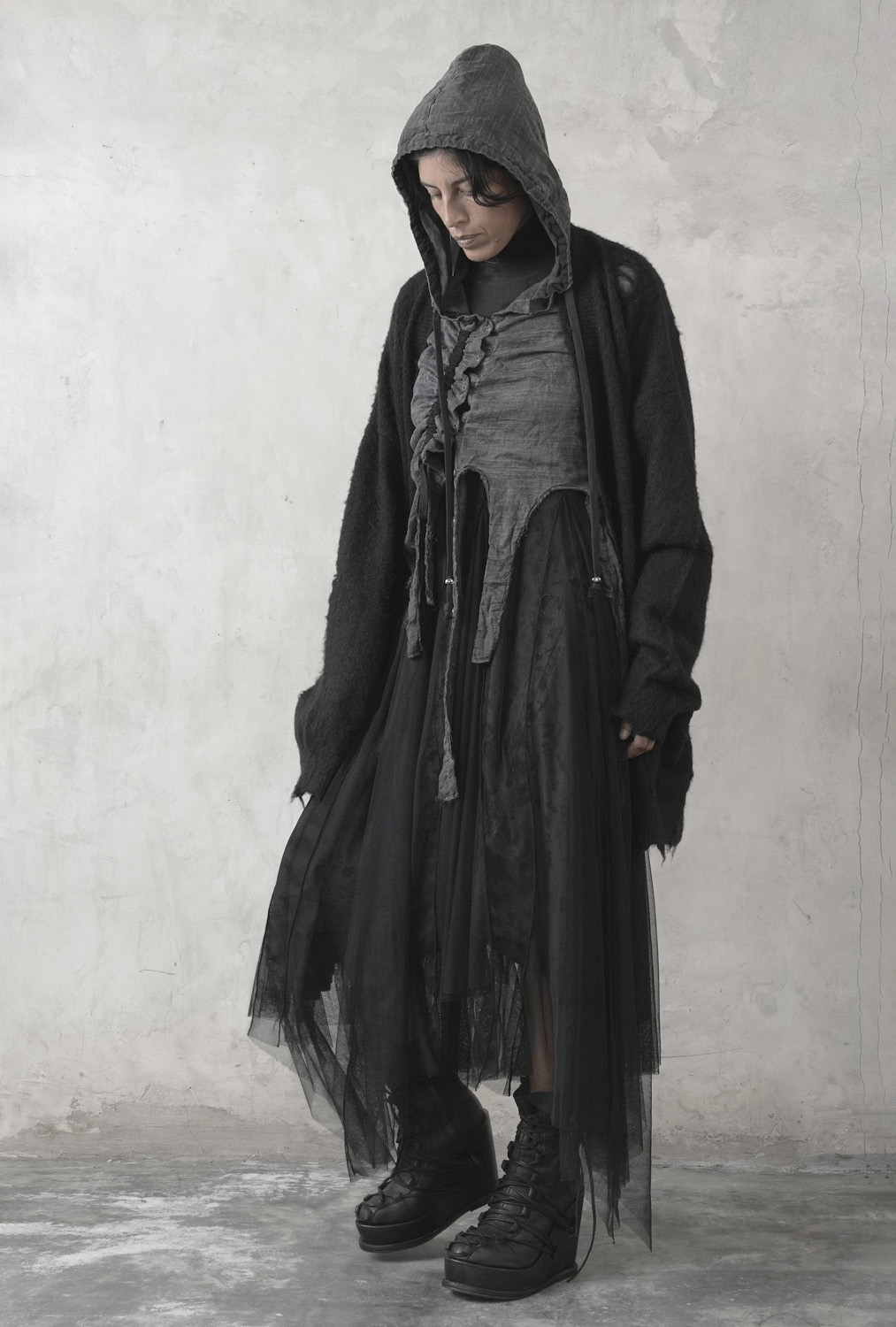
The collection’s engagement with perception is further articulated through references to Hermann Rorschach and his 1921 inkblot test. Here, meaning is neither fixed nor prescribed. It emerges through projection. By introducing Rorschach-inspired prints alongside the austerity of the thistle, Baigent constructs a visual dialectic between control and ambiguity. Clothing becomes a surface for interpretation, a site where memory, emotion, and individual experience are inscribed rather than dictated. This approach reframes garments as active participants in perception, rather than passive objects.
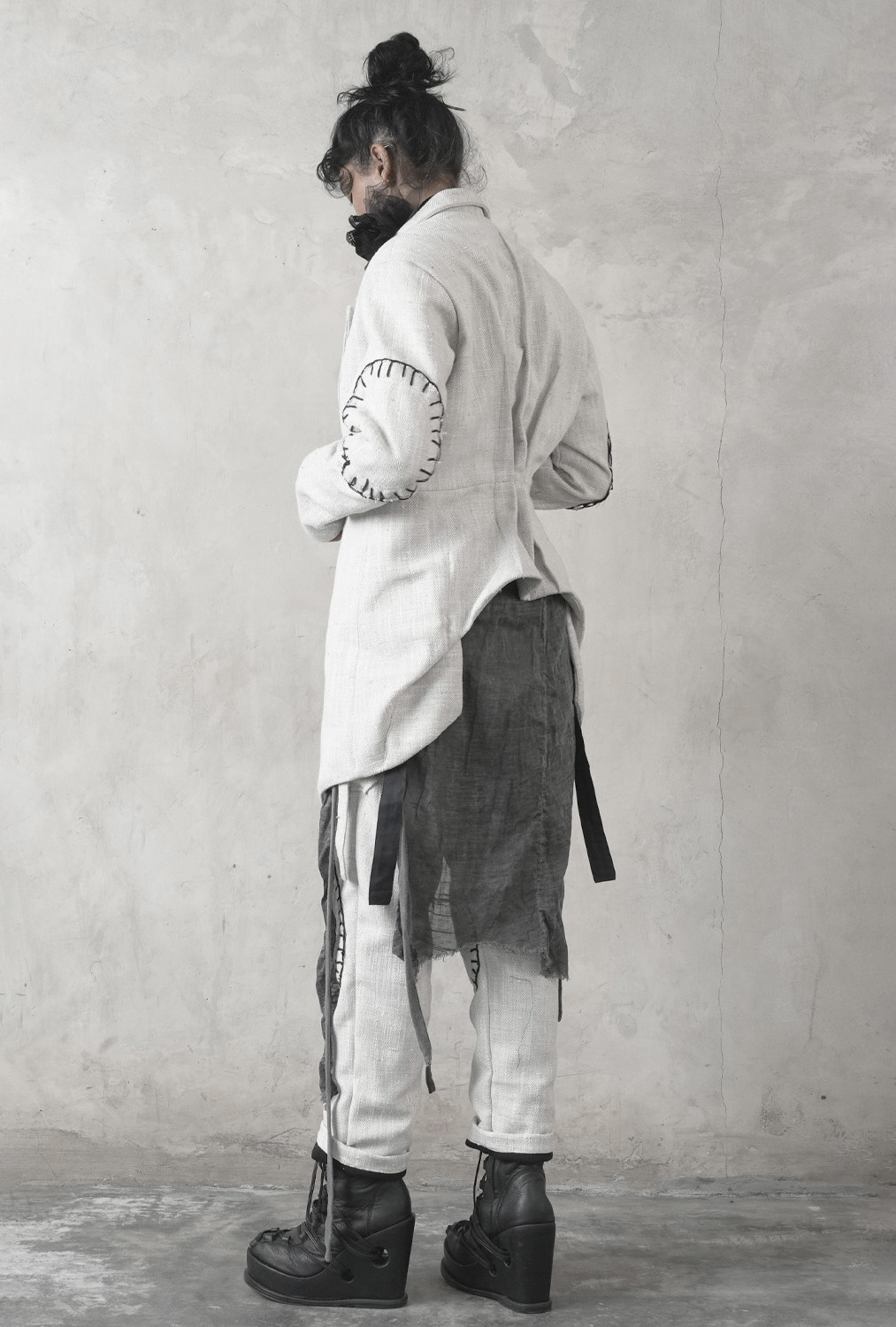
Construction follows a similar tension between effortlessness and labor. Deconstructed dresses, seemingly intuitive in their drape, reveal a dense underpinning of patternmaking upon closer inspection. Black-washed denim is softened through cotton jersey linings, recalibrating the relationship between structure and comfort. Outerwear in cotton fleece is hand-sutured with waxed threads and finished with plastisol rubber prints, foregrounding process as an essential component of meaning. These gestures resist anonymity. They insist on the visibility of time, of touch, and of persistence.
ABOUT MARK BAIGENT
Mark Baigent operates from a critical premise: that identity, and by extension gender, is constructed rather than innate. Grounded in this position, the brand develops gender-free clothing that resists fixed categorisation, proposing instead a wardrobe defined by adaptability and human universality. Deconstructed and geometric silhouettes are shaped through precise pattern-making and restrained detailing, balancing conceptual intent with material clarity. Each collection explores the tension between conventional dress codes and more experimental forms, where distinctions between masculine and feminine are deliberately destabilised.
Educated in Linz, Austria, Baigent developed their practice through a combination of traditional tailoring and exposure to progressive fashion environments, using clothing as a medium to articulate social and political concerns. Since 2016, the brand has operated internationally, with production rooted in Bali under fair trade principles and recognised by the World Fair Trade Organisation. This ethical framework extends beyond materials and manufacturing to encompass labour conditions, inclusivity, and a sustained commitment to responsible consumption.
Photos: Courtesy of Mark Baigent
Photography: Rizal Syaiful @rcreativeid
www.markbaigent.com
@markbaigent
Highlights from the Collection
Comments are closed.