

Yohji Yamamoto’s Fall/Winter 2021 womenswear collection was presented not on a runway but within the quiet of his Aoyama flagship in Tokyo. The setting, subdued and direct, mirrored the tone of a collection shaped by disconnection and ambiguity. Amid a global crisis that has disproportionately affected women, Yamamoto does not propose solutions. Instead, he explores tension, between past and present, construction and collapse, visibility and absence.
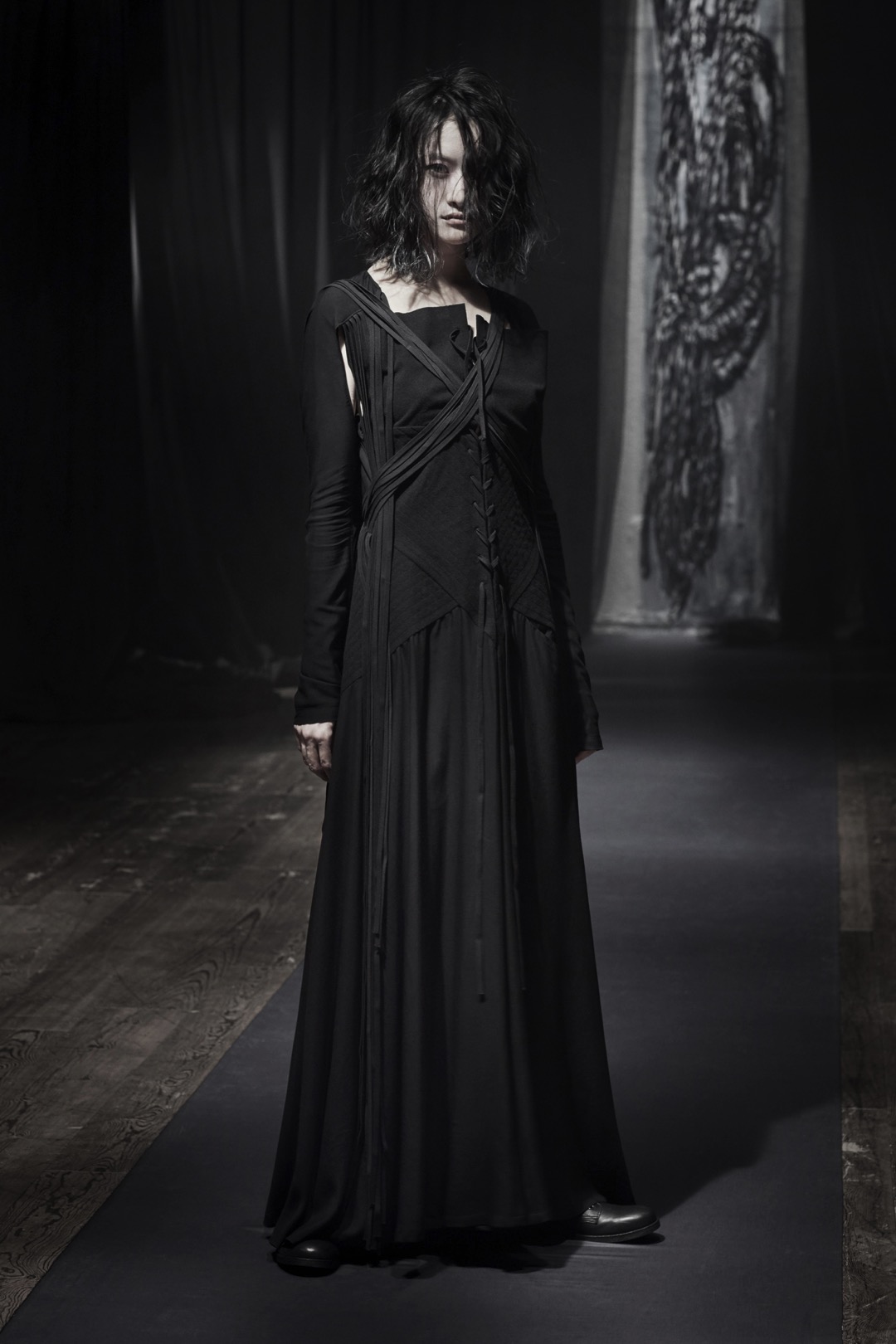
At 77, the designer offered no interviews this season. Instead, a recording of him reading from his 2010 autobiography My Dear Bomb played in the background, grounding the collection in reflection rather than proclamation. This is not a retreat, but a pause. Yamamoto’s garments remain rooted in his long-standing dialogue with the 19th century, evoking corsetry, bustles, and dressmaking traditions once used to sculpt the female form. But here, those references are unsettled. Threads dangle. Shapes shift. The clothes resist resolution.
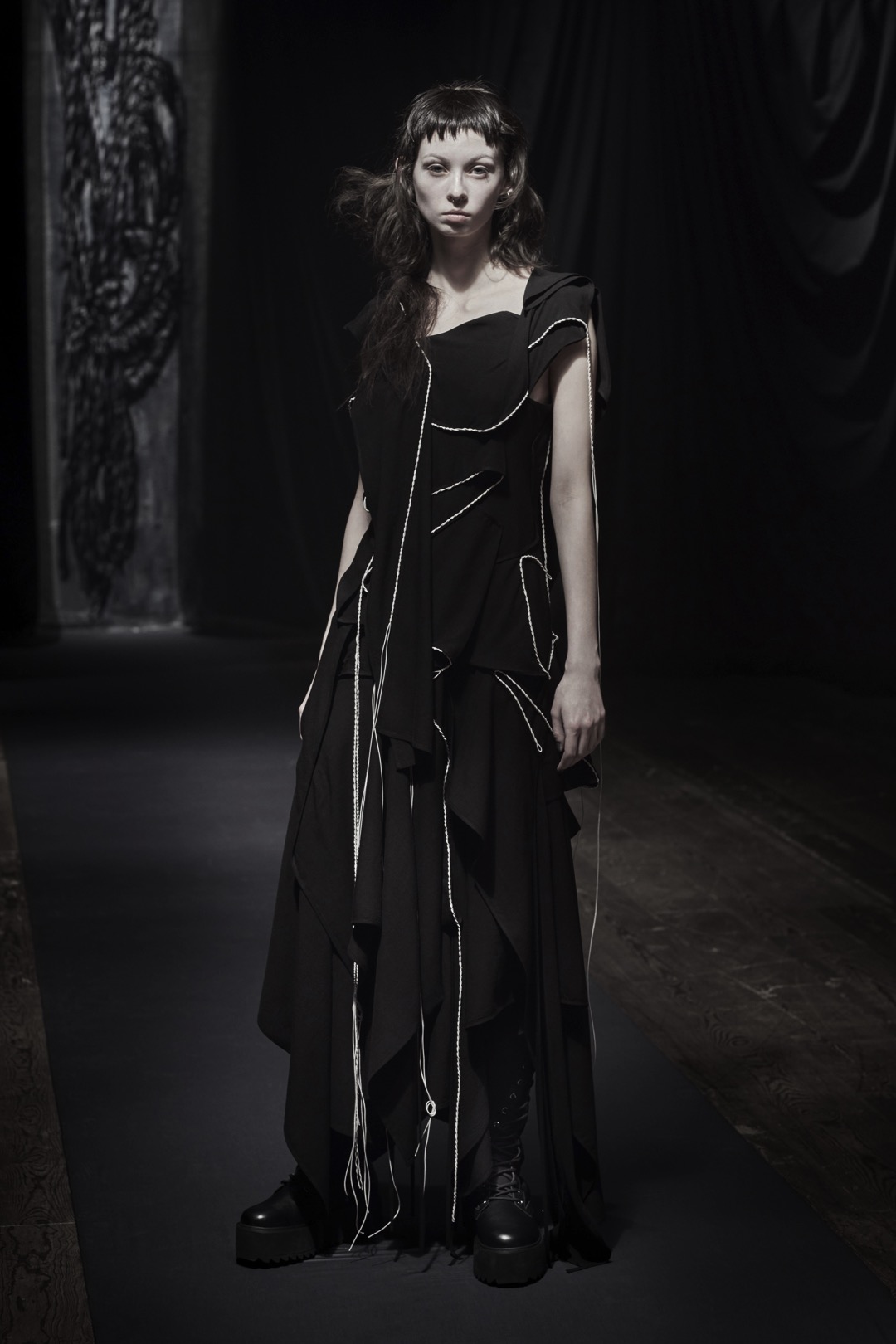
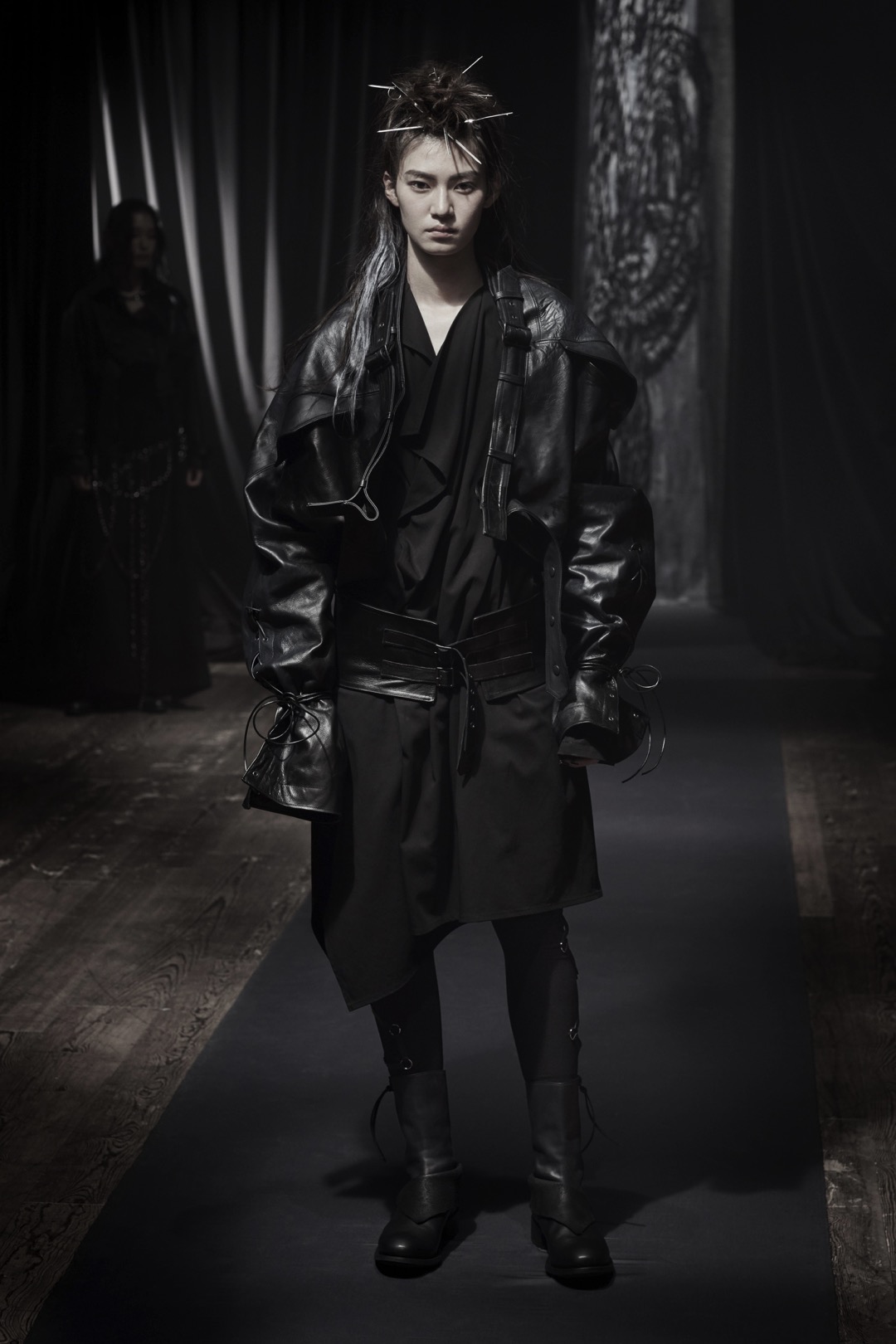
The palette, almost entirely black, serves less as a stylistic signature than a conceptual constant. Through it, Yamamoto builds a language of asymmetry and friction. Oversized peacoats, shrunken bombers, and floor-length dresses appear in loose sequence. Some silhouettes verge on the monastic, others lean toward the confrontational, cutout leggings, lace tops, and chains speak to a kind of post-punk defiance. These pieces are neither costume nor commentary. They are sketches in motion.

There is no clear narrative, but the references converge. Medieval armor. Pirate codes. Frankenstein’s hand. Beneath them lies a consistent inquiry into what clothes can express when they refuse to settle into completed form. Stitching, piping, and prints offer minimal relief from the monochrome, drawing attention to process rather than outcome. The garments appear intentionally unfinished, which in this context is not a technical flaw but a conceptual stance.
While Yamamoto’s recent men’s collection leaned outward, drawing on slogans and street imagery to confront political urgency, the women’s collection turns inward. It is concerned less with commentary than with embodiment, how ideals of femininity have been constructed and how they might be unraveled. The final look bears the words Femme Plus across its back. It is not a slogan. It is a closing thought in a collection that resists finality.
Yamamoto does not engage in deconstruction as surface effect. His garments do not simulate decay or nostalgia. Instead, they explore what it means to exist in a state of becoming, to hold tension without resolving it. In a season where fashion seeks certainty through repetition, this collection remains suspended, quiet, unresolved, and unafraid to stay that way.
Photographed, filmed and directed by TAKAY
Hair by Takuya Takagi (Ocean Tokyo)
Make-up by Yuka Washizu
Music by Jiro Amimoto
www.yohjiyamamoto.co.jp
@yohjiyamamotoofficial
Highlights from the Collection






Photos courtesy Yohji Yamamoto by TAKAY