Italian composer and sound artist Elvio Seta, known as Neuf Voix, has developed a practice that merges electronic and instrumental composition, sound installation, and live performance into a singular field of exploration. His work is grounded in the legacy of 20th-century avant-garde music, drawing from microtonality, dodecaphony, spectralism, musique concrète, and orchestral traditions, yet expands these theories into immersive environments where sound is not only heard but experienced spatially. At the core of his practice lies a sustained investigation into acoustic perception and spatial diffusion, often realized through multichannel projection systems of his own design.
His compositional language reflects a wide range of influences, from experimental electronic methods to orchestral and instrumental traditions. Microtonality, dodecaphony, spectralism, and concrete sound are recurring elements, often combined with sound synthesis and reworked samples. What distinguishes his approach is not allegiance to a single school but the coexistence of multiple techniques within the same frame, an openness that allows sound to be constantly redefined.
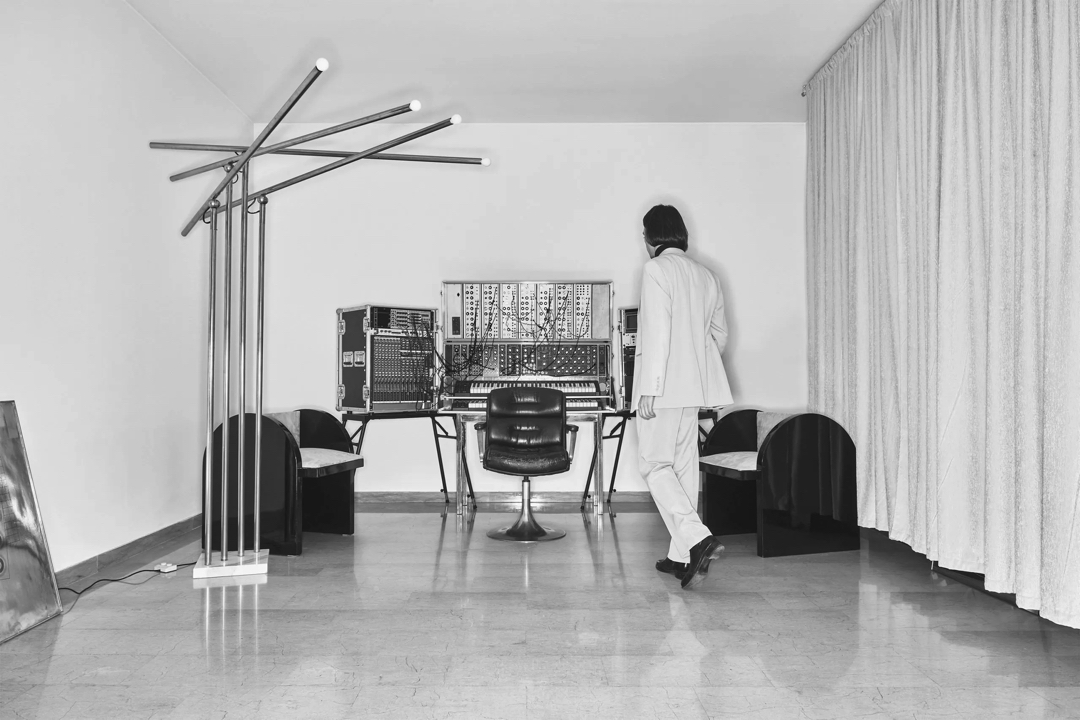
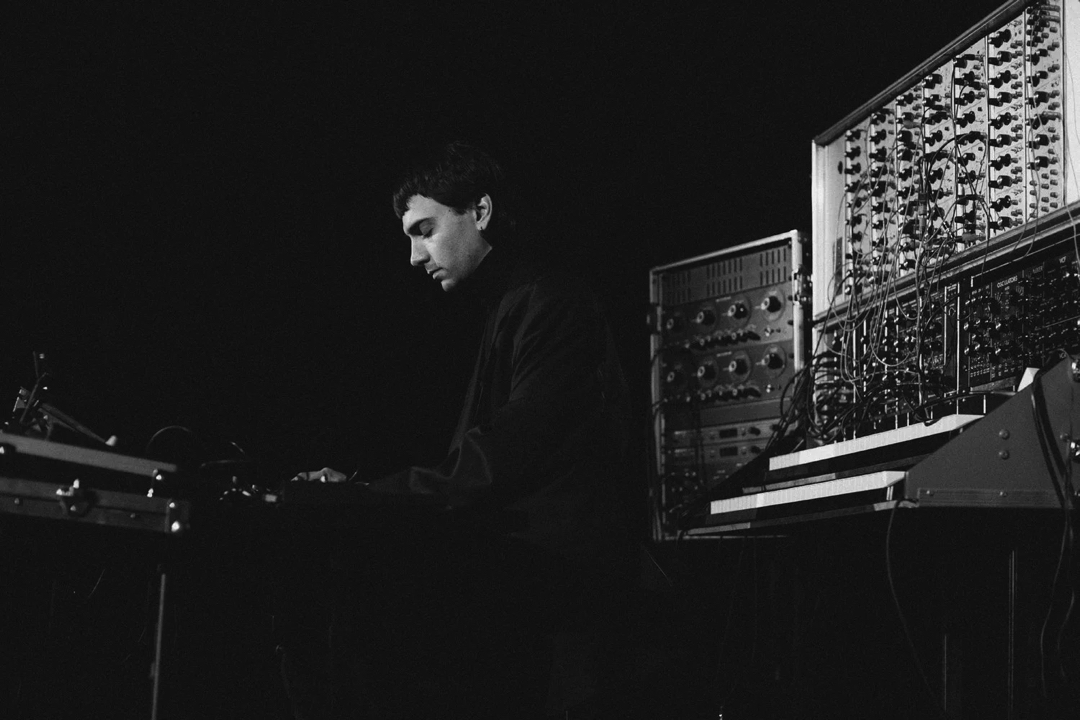
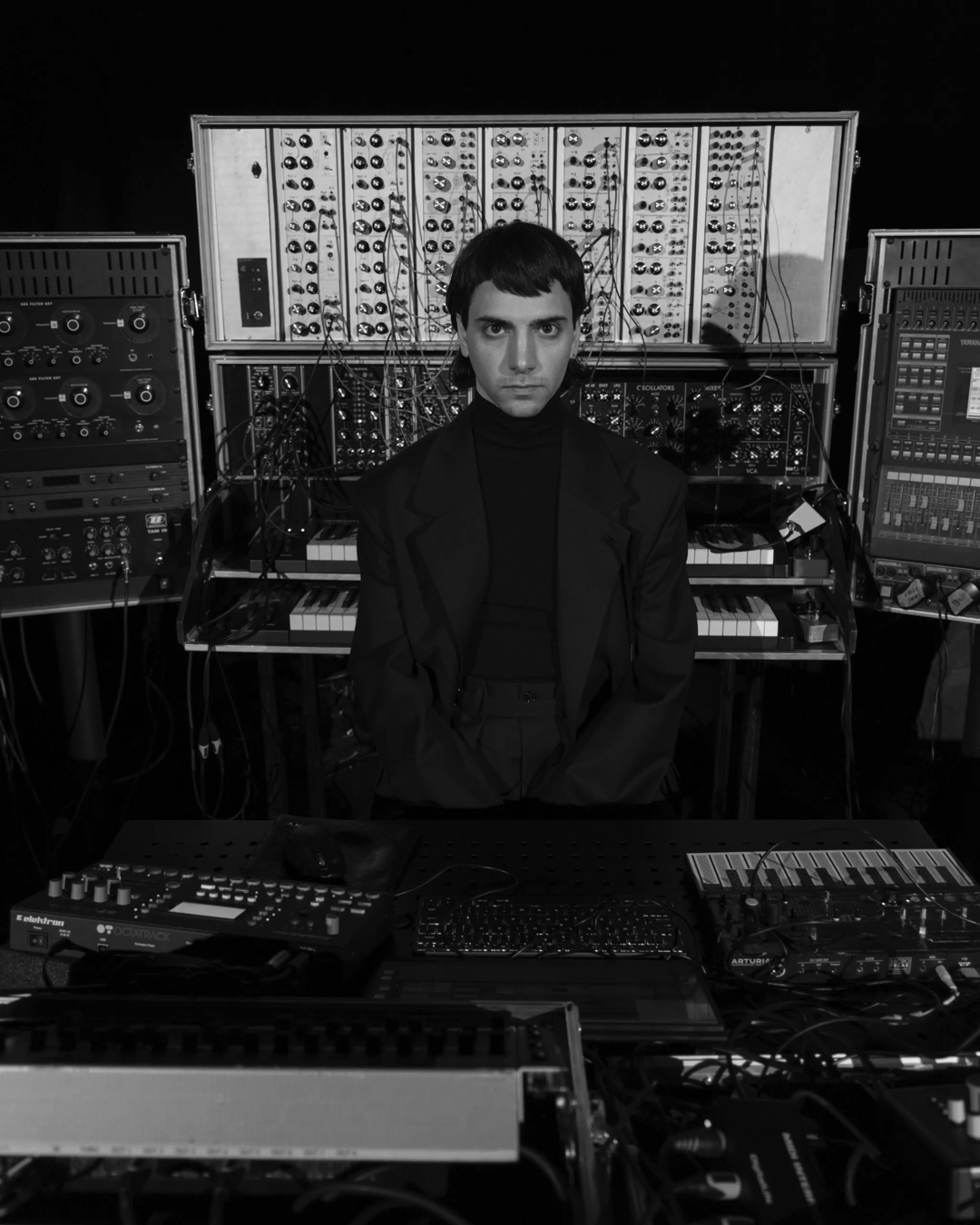
After completing composition studies in Italy in 2012, Seta moved to Germany, immersing himself in contemporary German experimentalism. Two years later he returned to Rome, where he studied advanced sound synthesis under Maestro Enrico Cosimi, completing two master’s degrees. From there, he began composing for European film and theater projects while developing live performances that combined analog machines, synthesizers, and electronic direction, concerts as much orchestrations as they were improvisations.
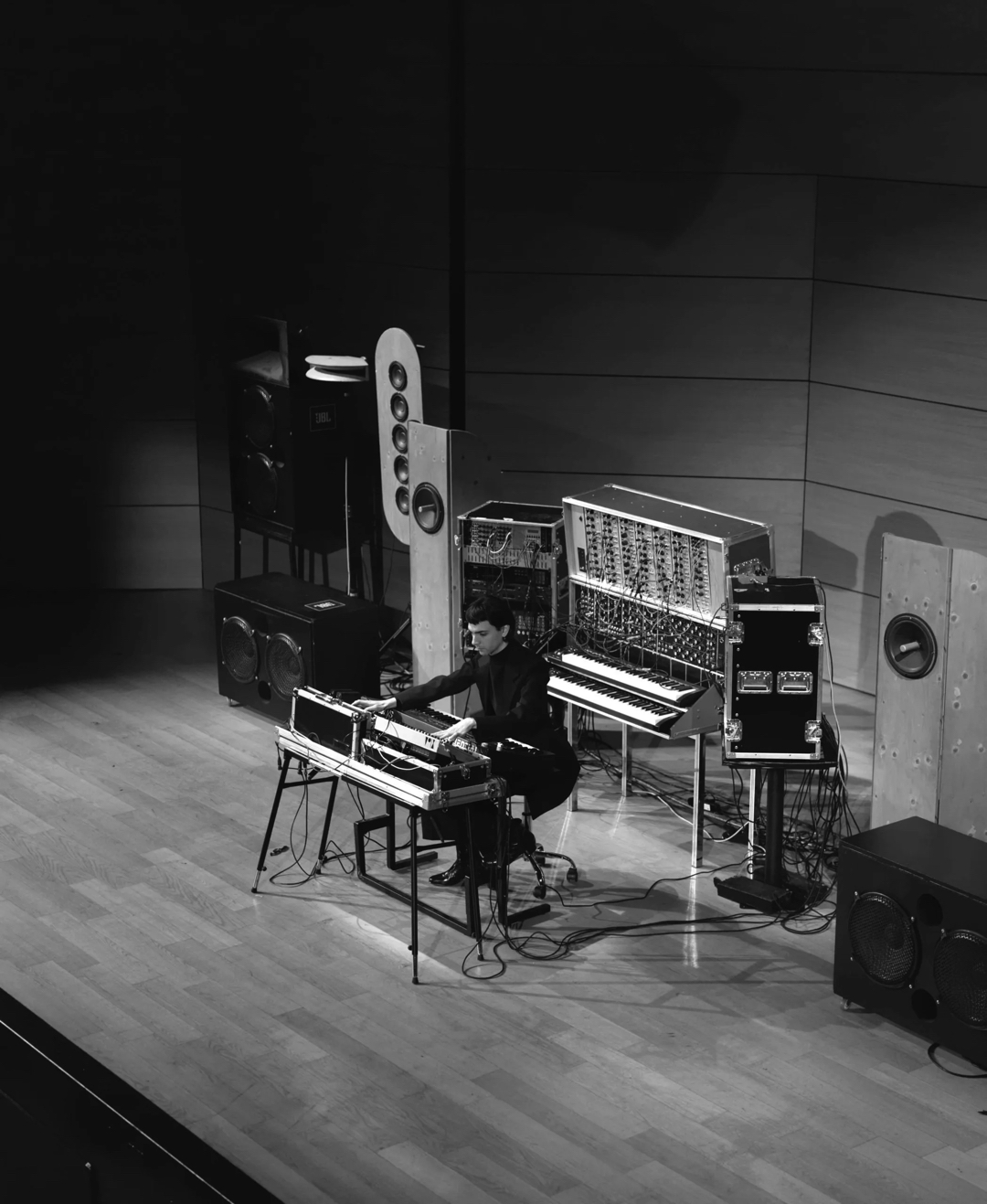
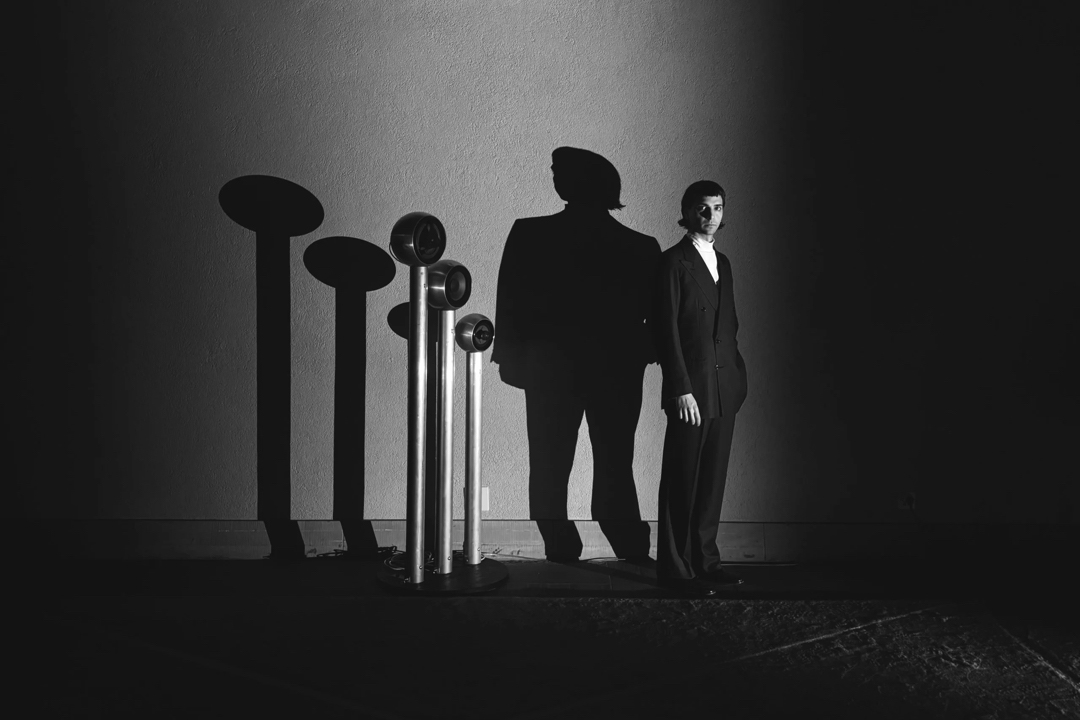
Central to his practice is an obsession with the architecture of listening. Inspired by François Bayle’s Acusmonium of the 1970s, Neuf Voix designed and assembled his own sound diffusion system, the Acousmonium Odae. Built from over thirty handcrafted speakers and components dating back to the 1970s and 80s, the structure is as much an installation as an instrument. Each speaker is tailored to a specific frequency range, allowing sound to move, collide, and refract across the performance space.
The Acousmonium Odae transforms concerts into spatial events. The system’s visual presence, its wooden horns, vintage housings, and sculptural arrangement, interacts with the sonic composition, creating what Neuf Voix describes as a Gesamtkunstwerk, a total artwork where sound, architecture, and performance converge.
Works such as Secessioni exemplify this multidimensional approach. A 37-minute composition for chamber orchestra, piano, percussion, synthesizers, and electronics, it merges dodecaphony and microtonality with tonal and pantonal elements, each layer distributed across a spatial grid.
In contrast, Stanze Cinetiche – Live in Berlin 2024, recorded at the KINDL Center, reimagines avant-garde tape compositions through quadriphonic and acousmatic systems of Neuf Voix’s own design. Vintage instruments like the Buchla 200 and Synclavier 3200 coexist with contemporary spatialization tools, blurring the line between archival and futuristic sound.
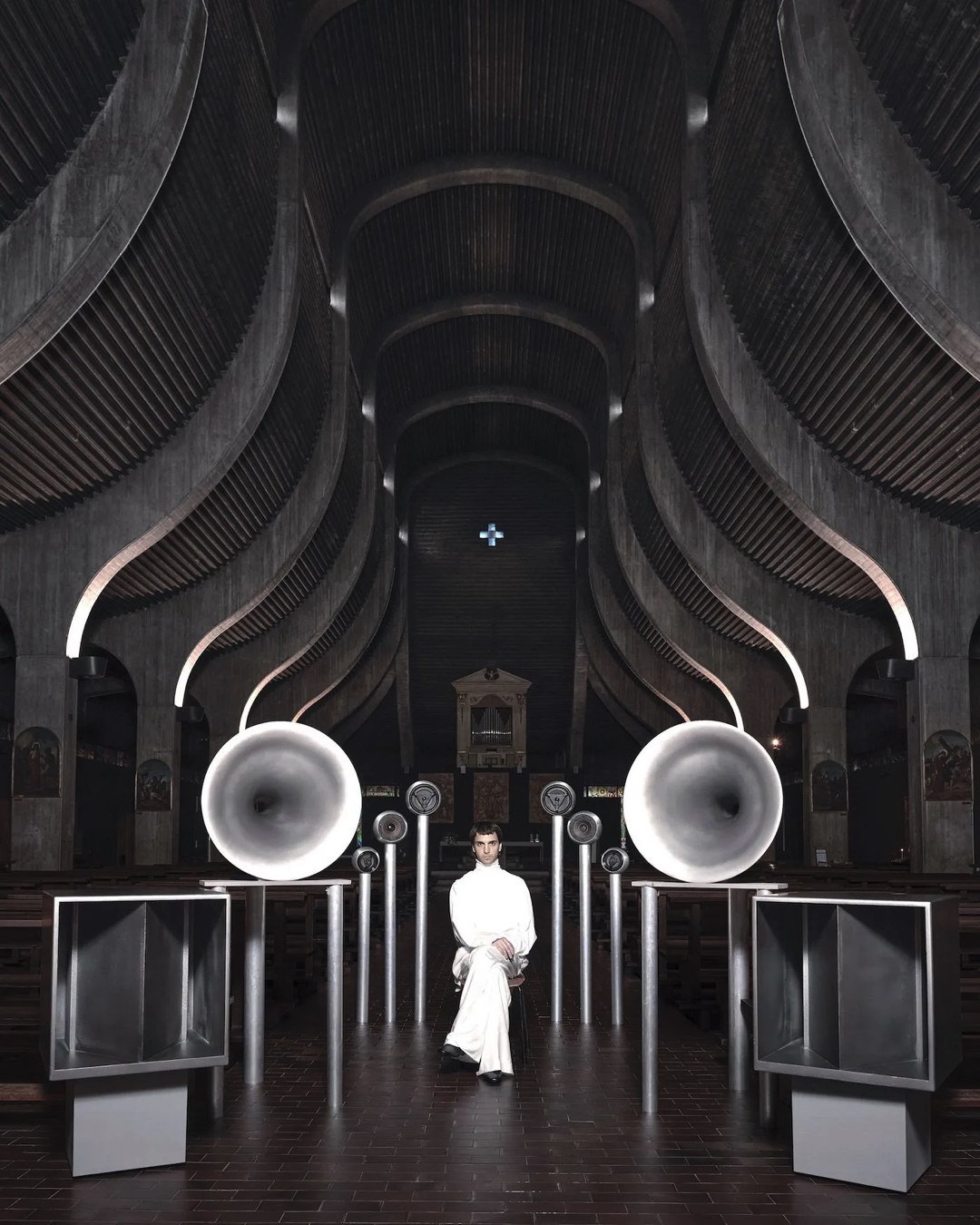
Over the past decade, Neuf Voix has presented his work at some of Europe’s most significant venues: the Triennale di Milano, Auditorium San Fedele in Milan, the Venice Biennale Musica, the Paris Philharmonic, and Palazzo Brancaccio in Rome. In each setting, his performances adapt to the architecture, making the venue itself part of the composition.
This sensitivity to site also extends beyond music. At Pitti Immagine Uomo, he created a live sonic backdrop that merged urban and natural soundscapes, accompanying choreography and photography in an exploration of how environments shape emotional perception. He also composed and performed the live soundscape for an Ann Demeulemeester Fall / Winter 2025 runway show, where his immersive approach to spatial sound became part of the brand’s atmosphere of dark romanticism, demonstrating how his practice can intersect with fashion as seamlessly as with contemporary art.
Neuf Voix’s work resists categorization. It is neither purely electronic nor strictly orchestral, neither installation nor performance, but something that traverses all of these. His practice is less about producing discrete works than about sculpting experiences of listening, immersive environments where sound becomes material, architecture becomes instrument, and perception itself becomes the subject of composition.
For audiences accustomed to music as linear time, his performances propose another mode: sound as a space to inhabit, as a structure to move within, as a field where the boundaries between listening and seeing, performer and environment, dissolve.
In this way, Neuf Voix does not simply compose music; he constructs worlds of sound.
Photos & Videos: Courtesy of Neuf Voix
Gallery