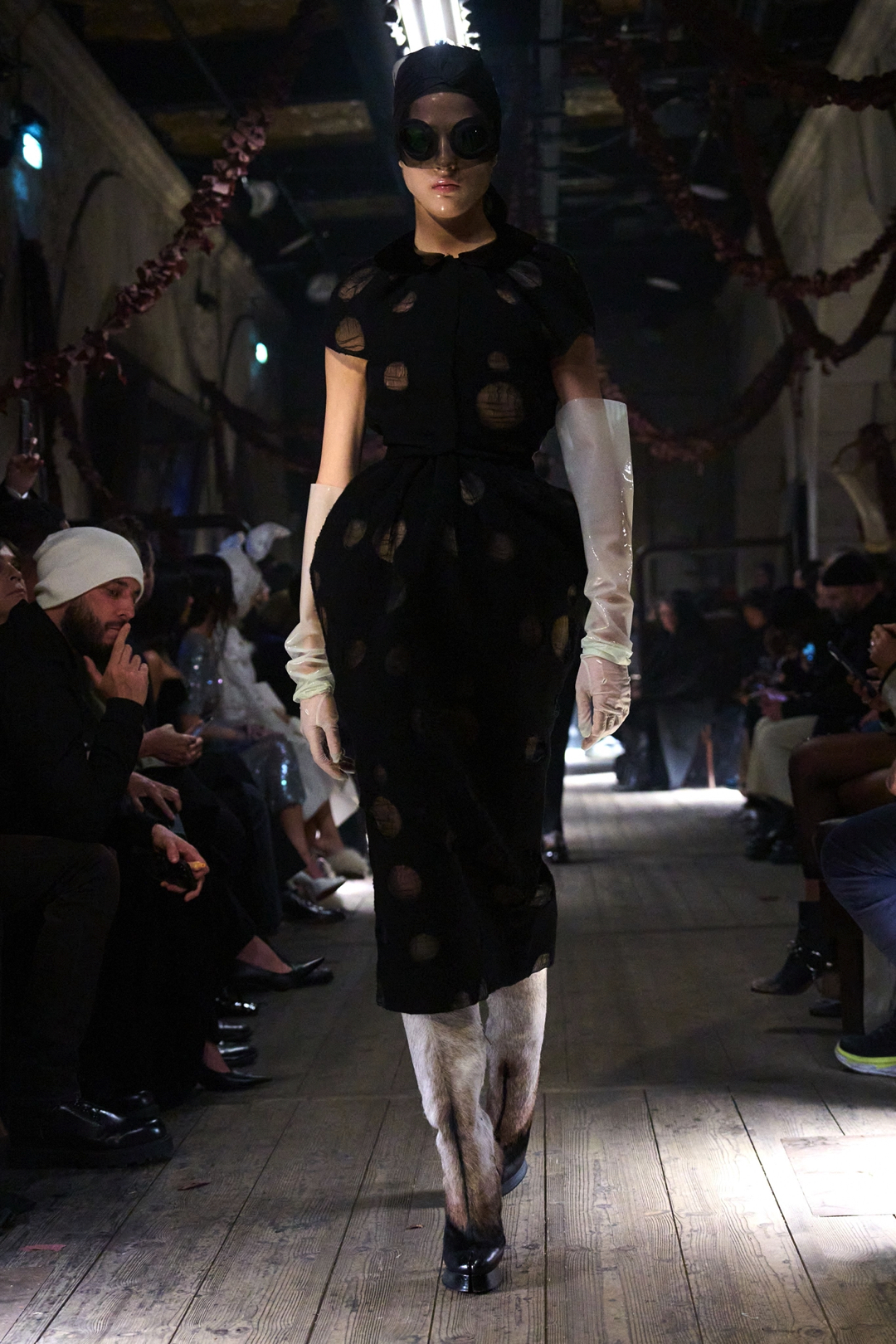
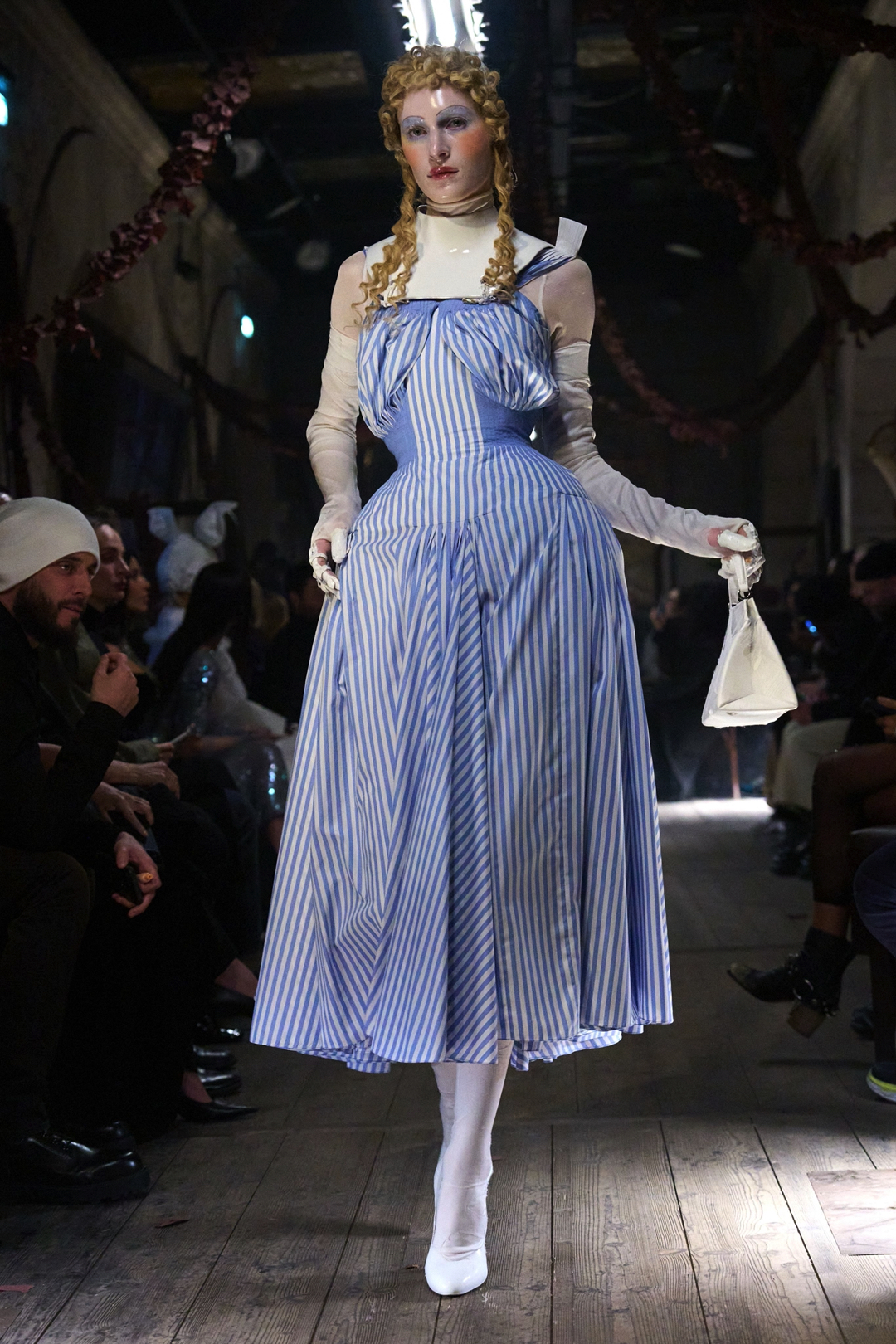
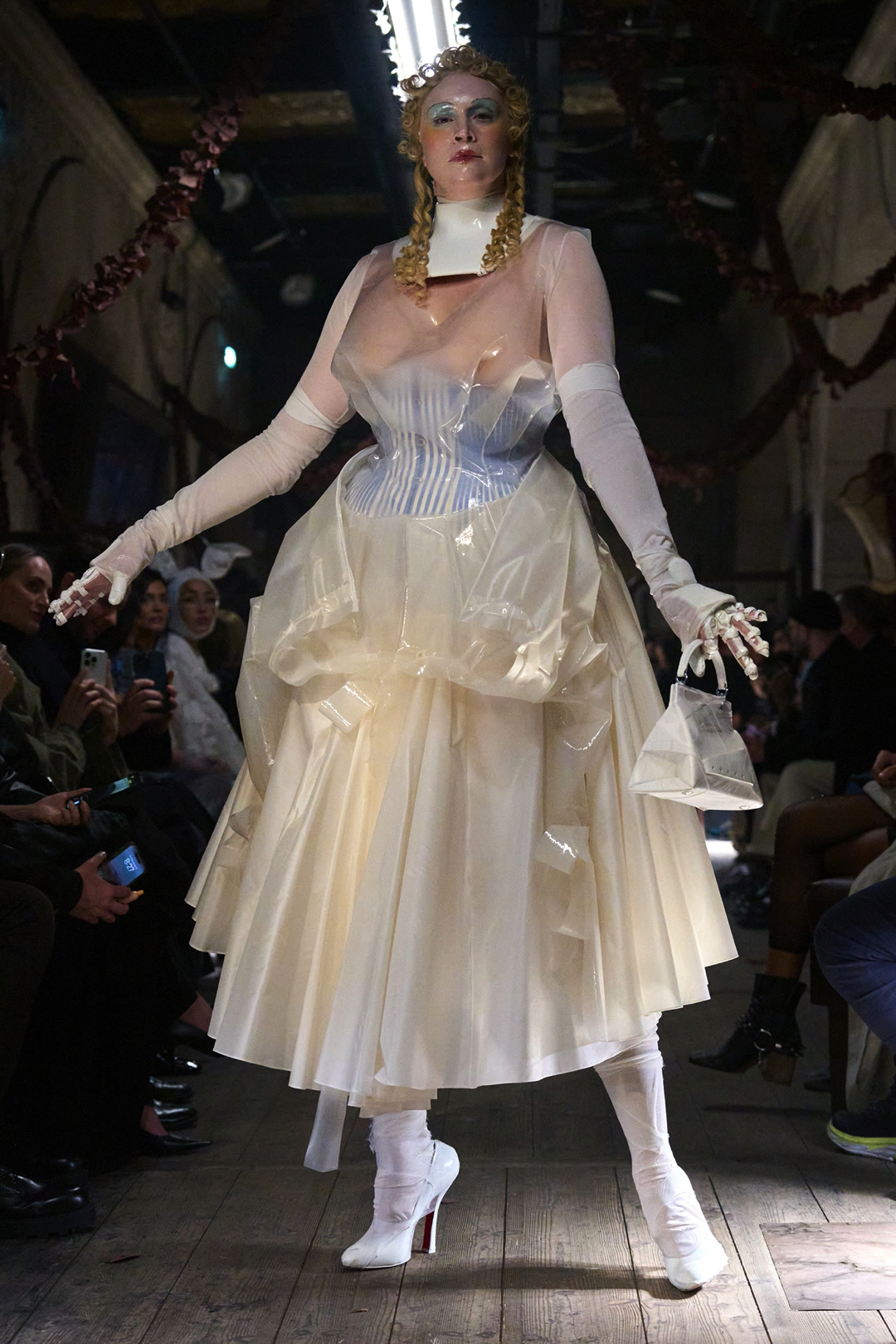
John Galliano’s Spring 2024 Artisanal collection for Maison Margiela was not designed for passive viewing. Staged in the cavernous vaults beneath Paris’s Pont Alexandre III, the show invited its audience into a fully constructed world: atmospheric, surreal, and emotionally charged. What unfolded was not simply a presentation of garments, but an immersive performance that merged couture craftsmanship with choreographed narrative. In this setting, Galliano made a persuasive case for fashion as total theatre.
The environment itself felt like a lost club from another century. Smoke curled through cracked mirrors and gilded furnishings, while a live gospel choir swelled against the echo of heels on wet stone. The space was dressed with intention. Antique furniture, scattered light, and layered soundscapes transformed the vaulted chambers into something cinematic. This was not a backdrop but a collaborator, amplifying the emotional tone of the collection.
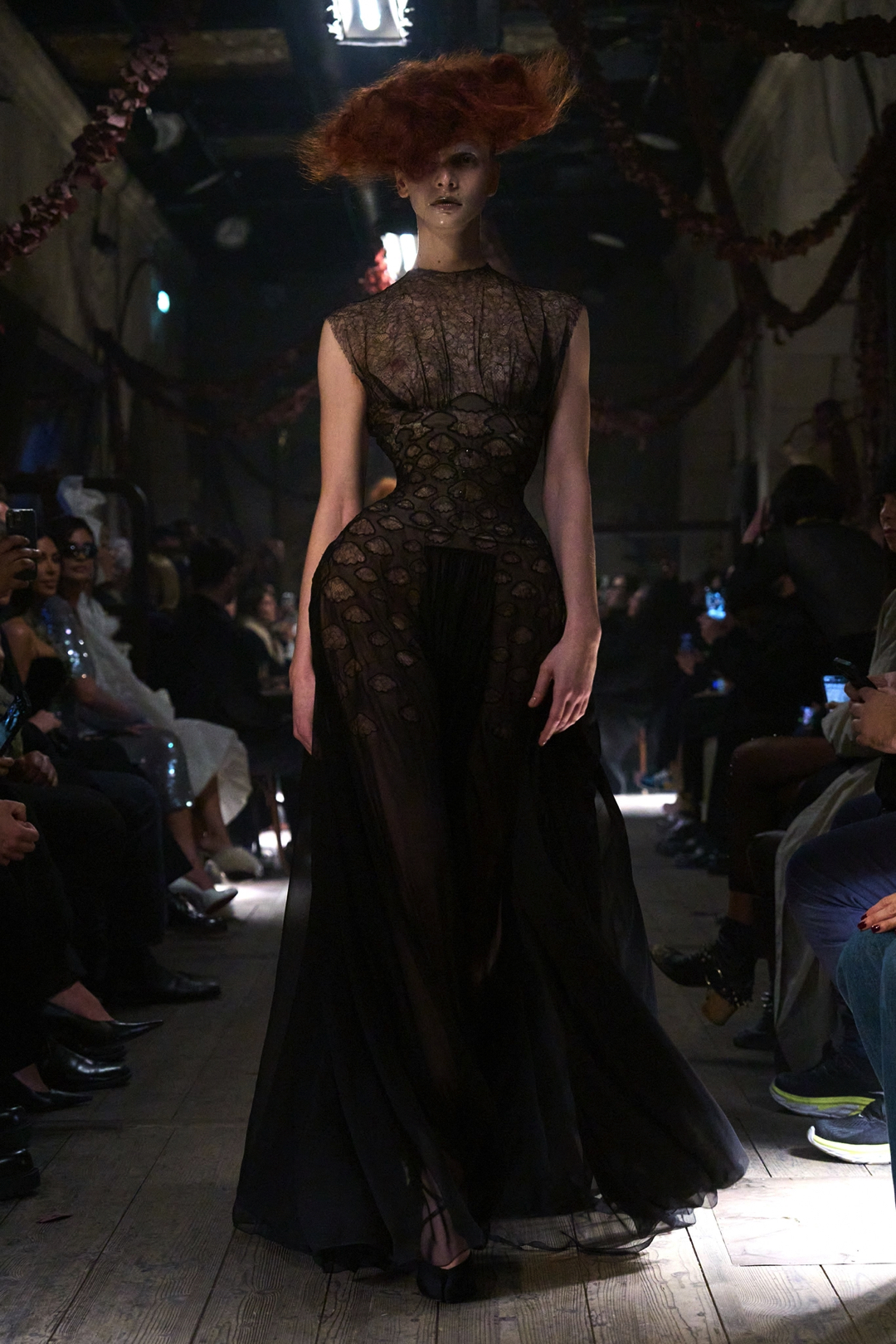
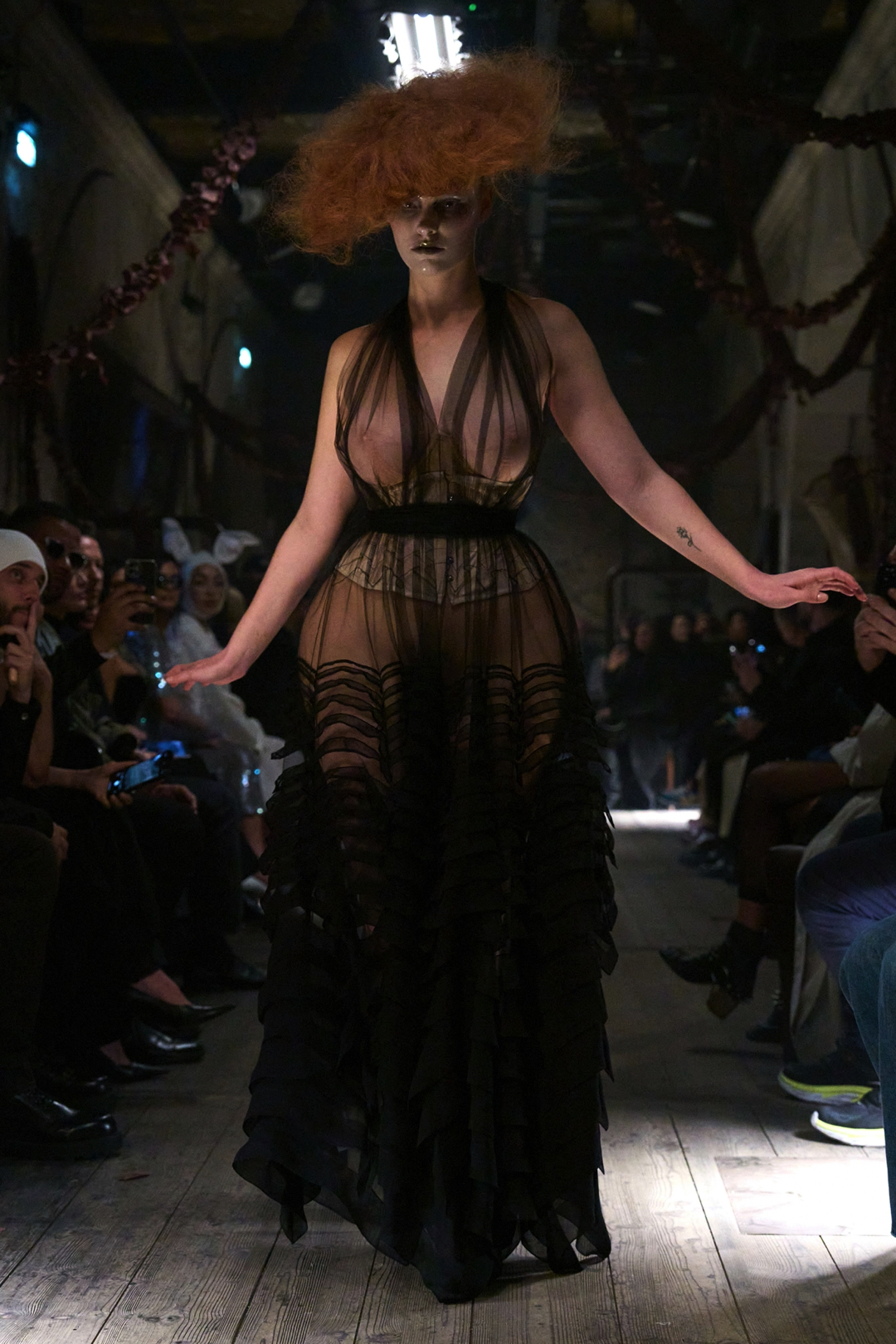
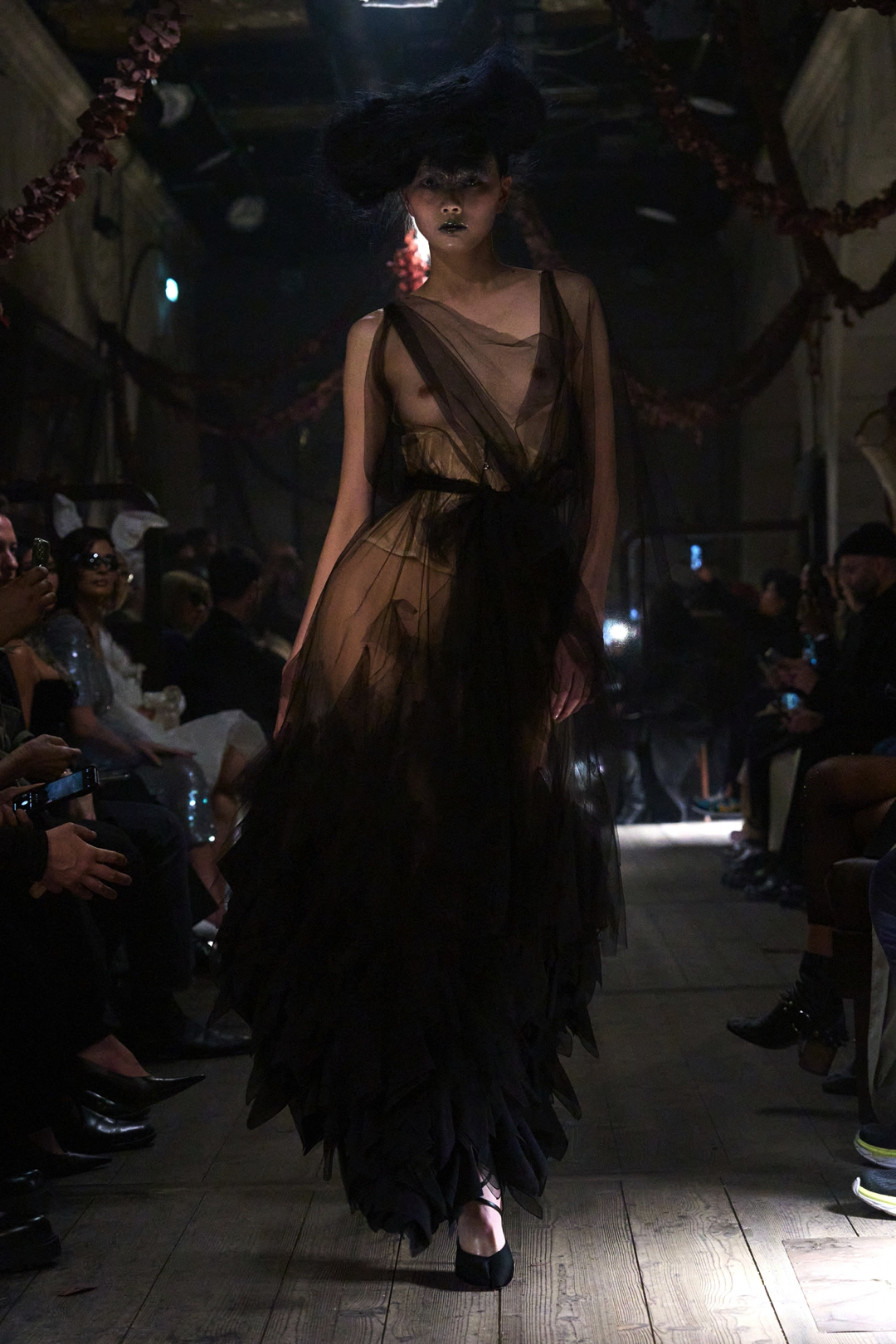
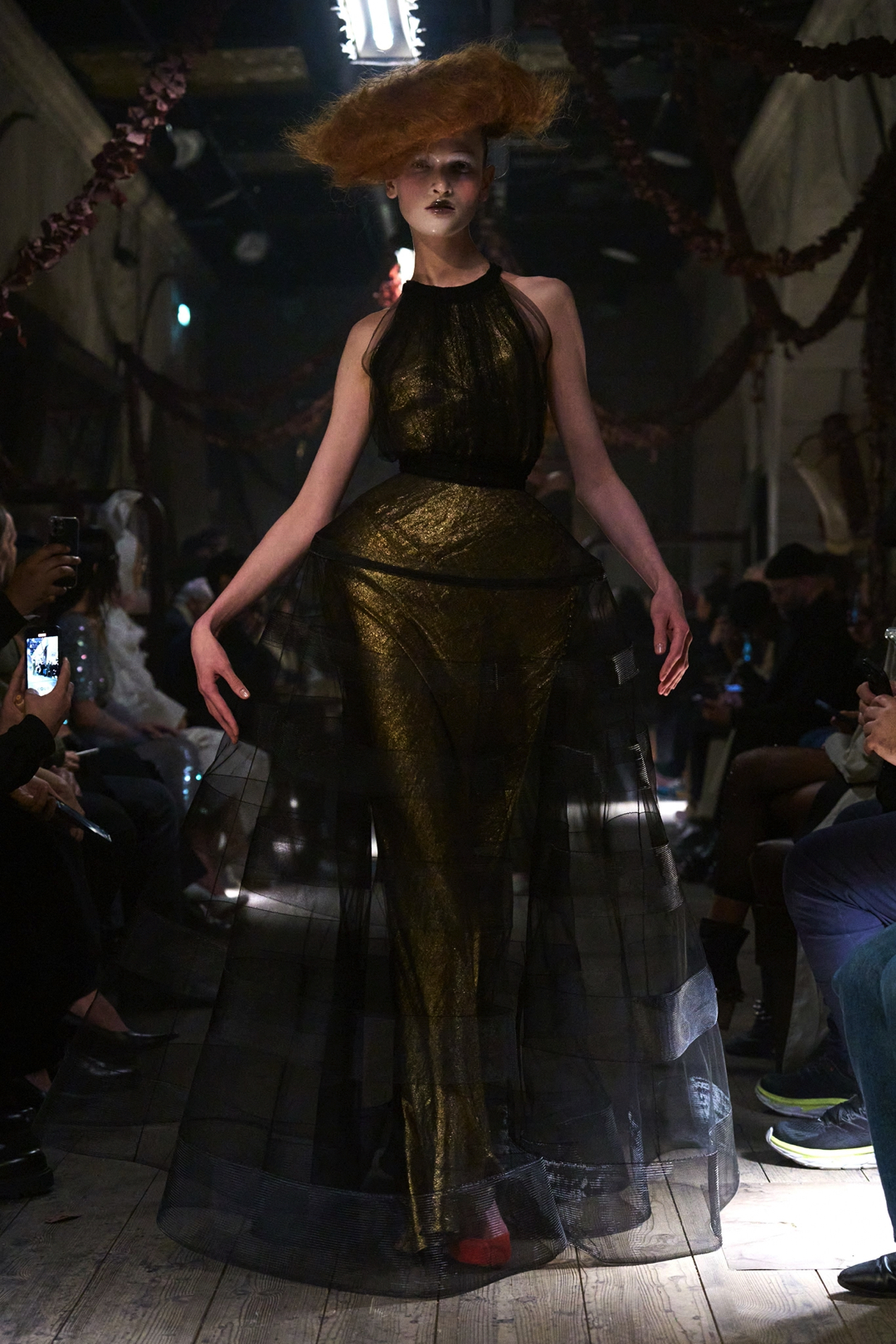
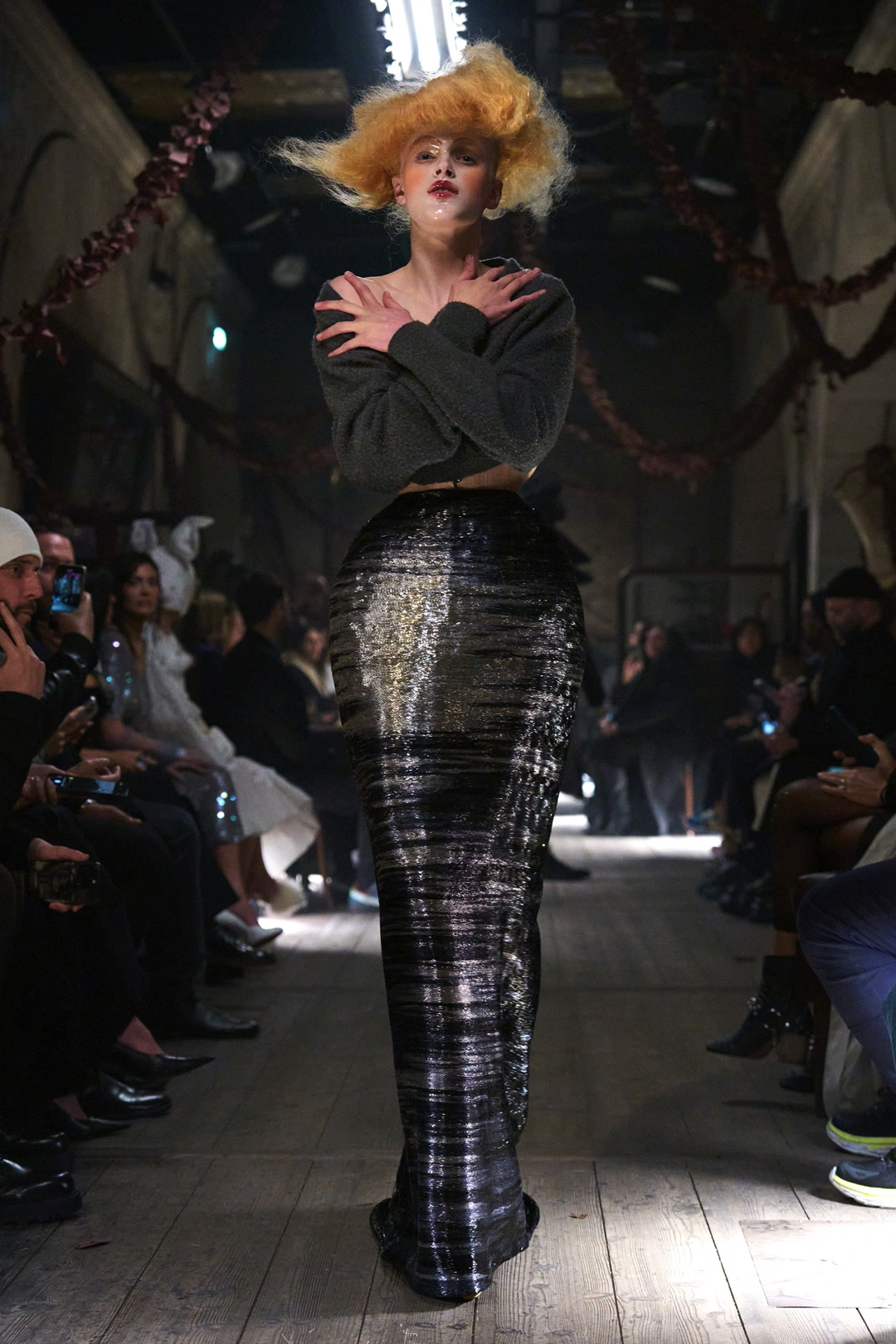
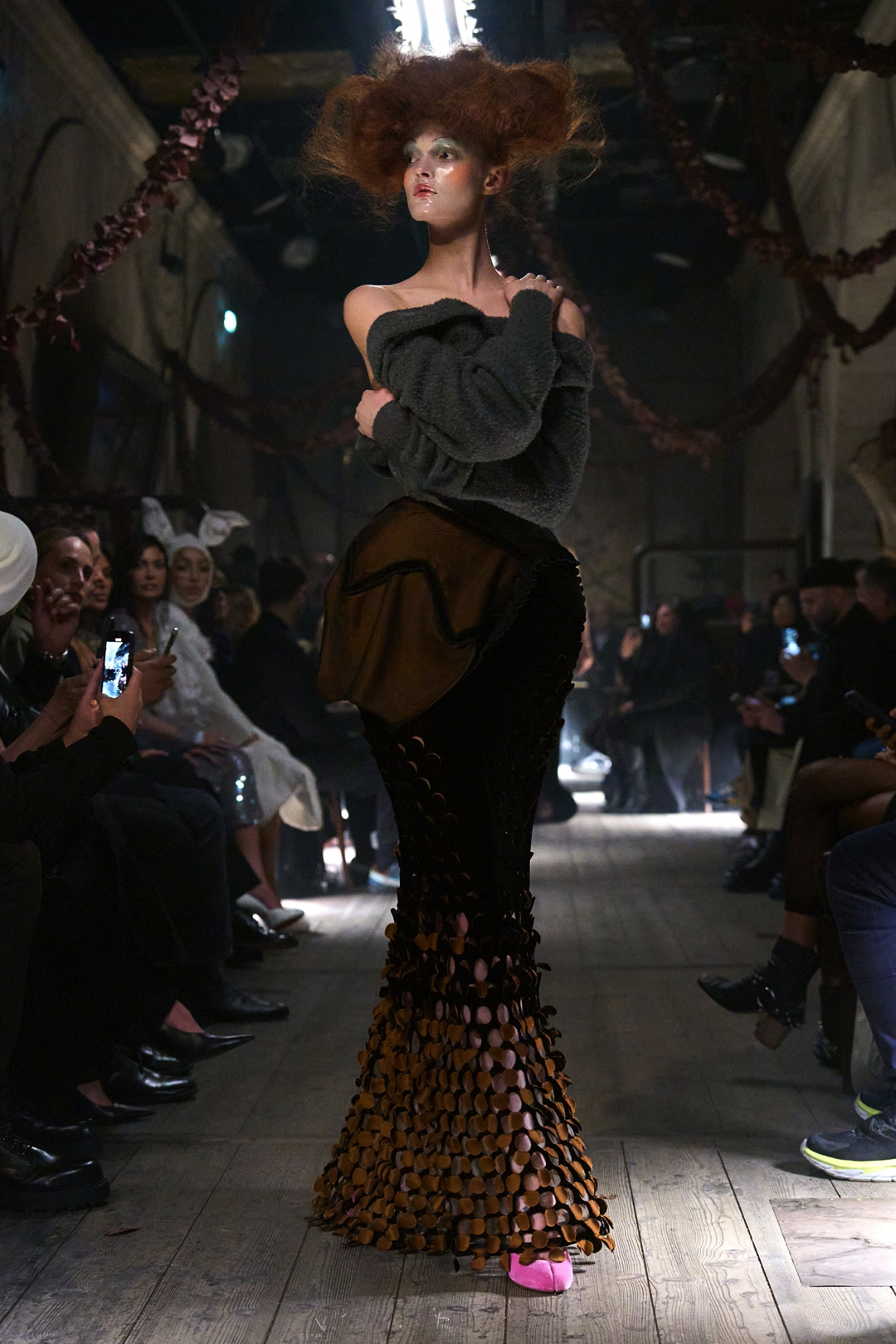
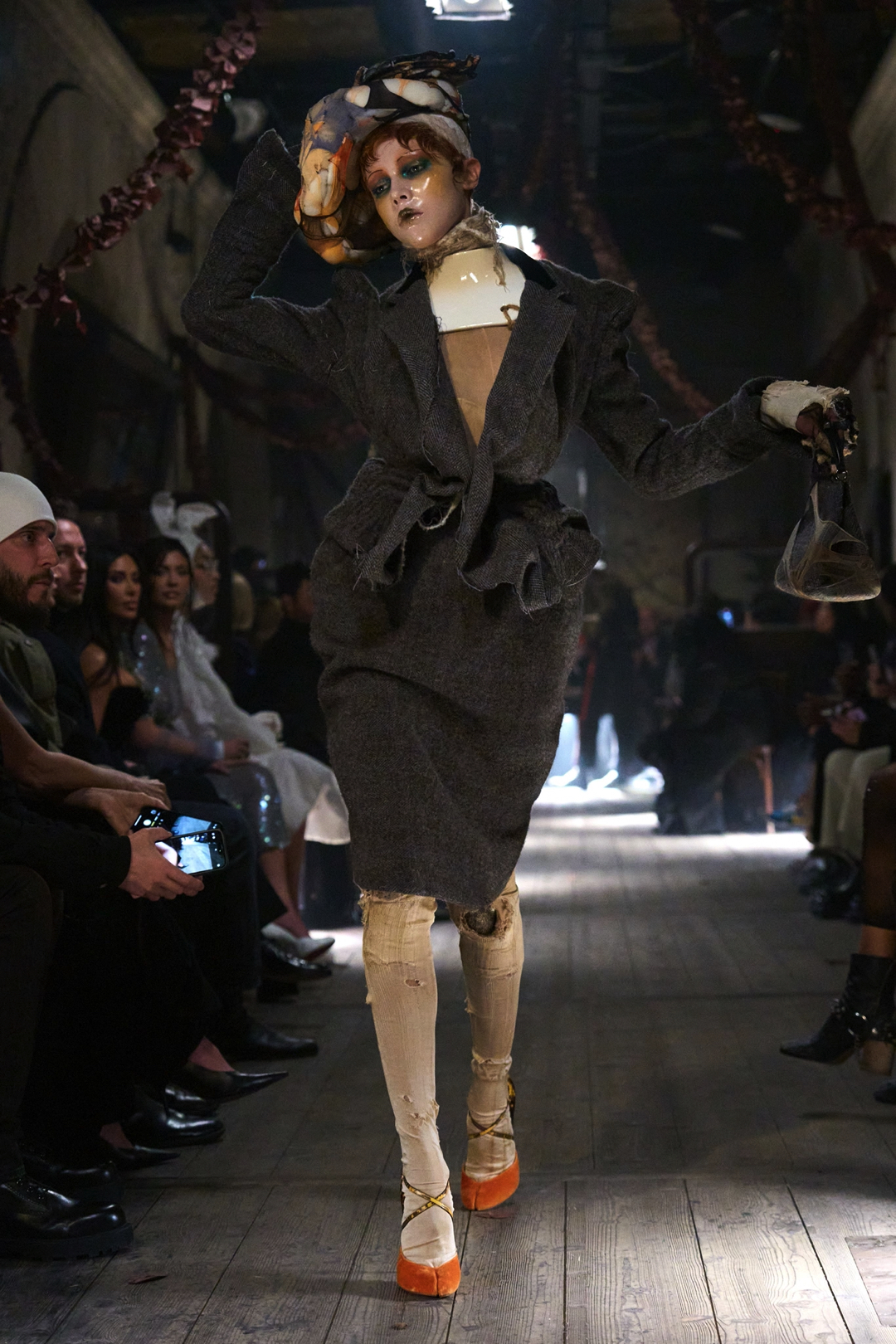
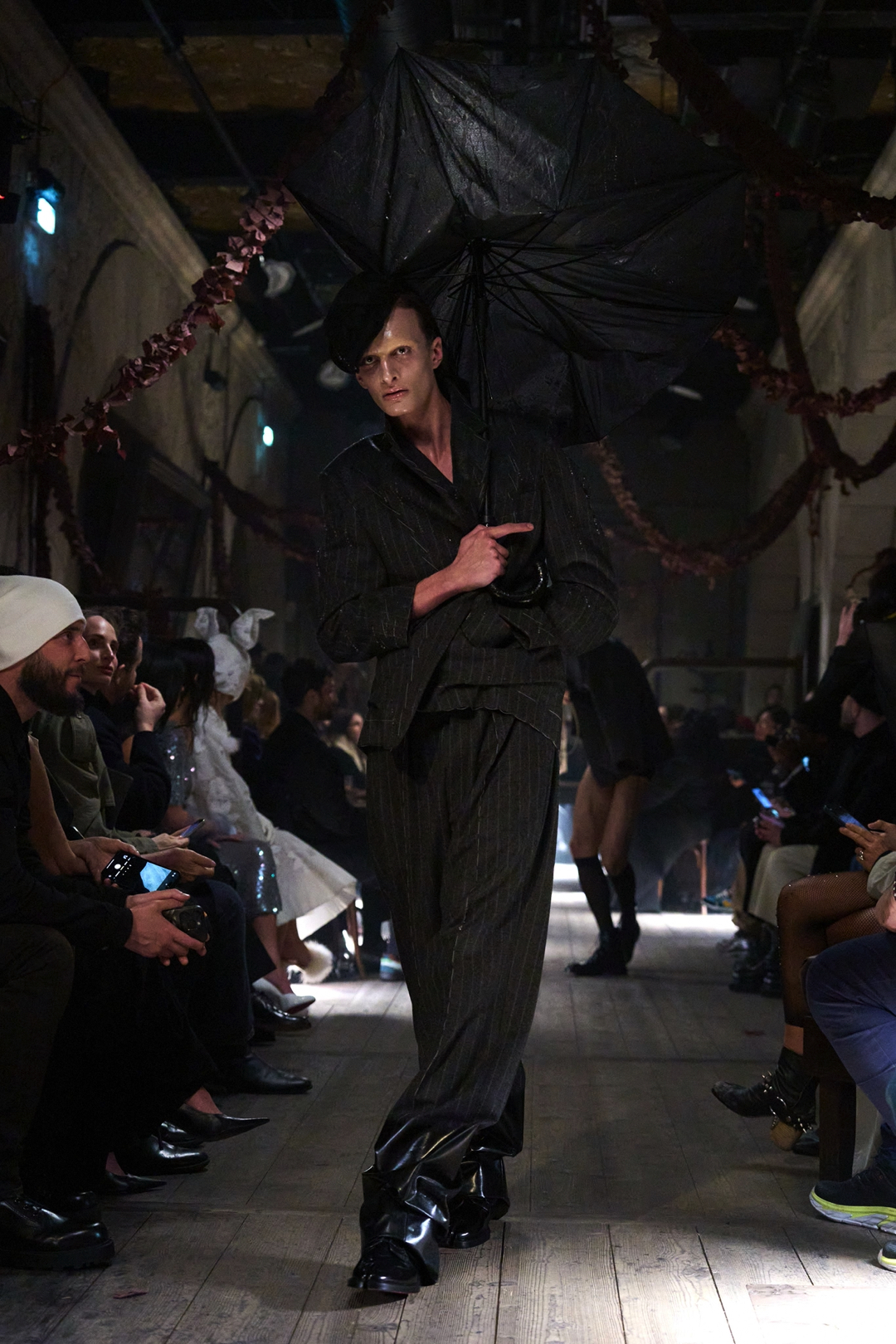
Galliano’s models appeared more like characters than traditional runway figures. They moved slowly, with the affect of silent film actors. Each walk across the room became part of a larger narrative arc. The makeup, crafted by longtime collaborator Pat McGrath, gave the models an uncanny stillness: glassy eyes, pallid complexions, and the appearance of porcelain figures come to life. The effect was eerie, stylized, and entirely in keeping with Galliano’s vision.
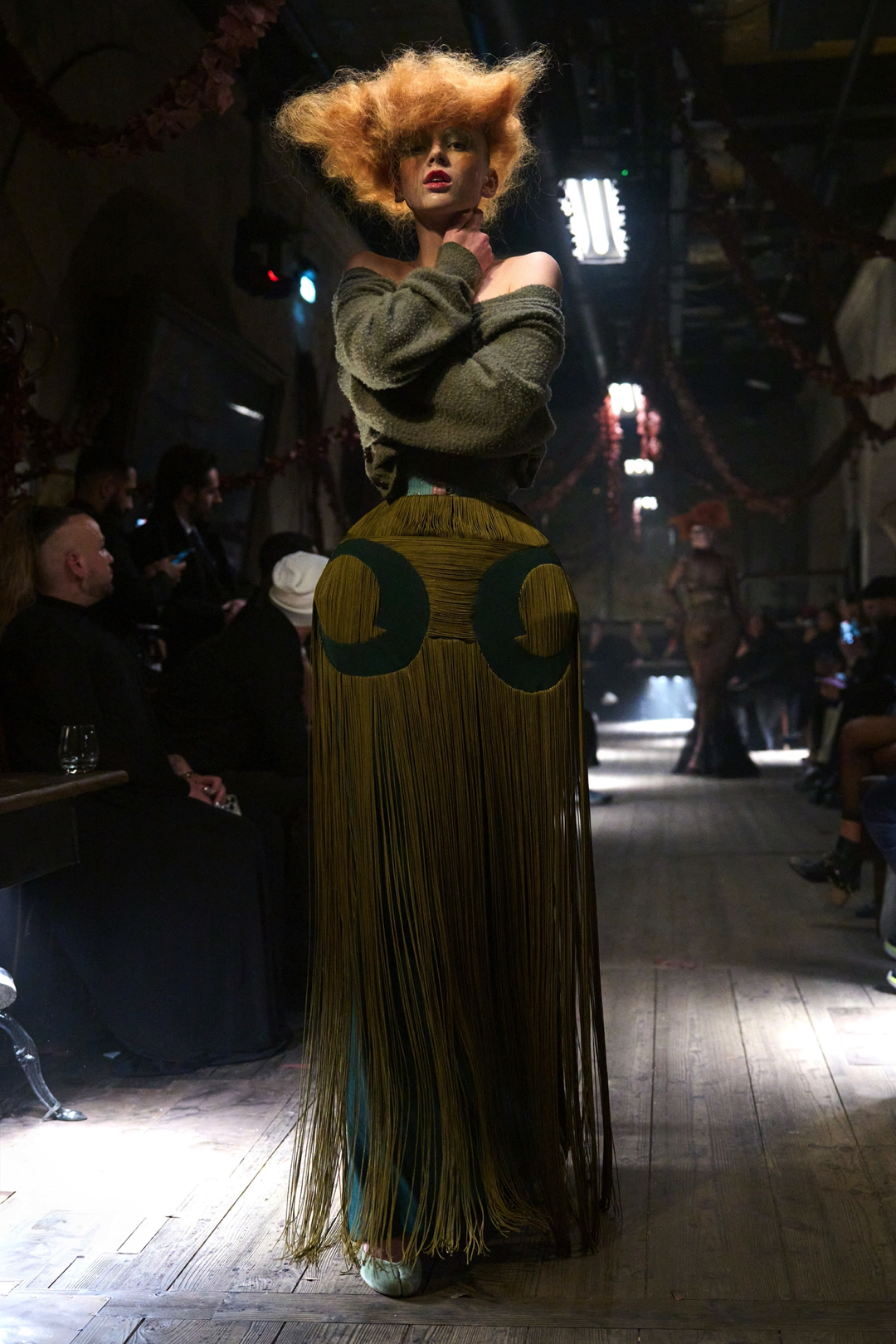
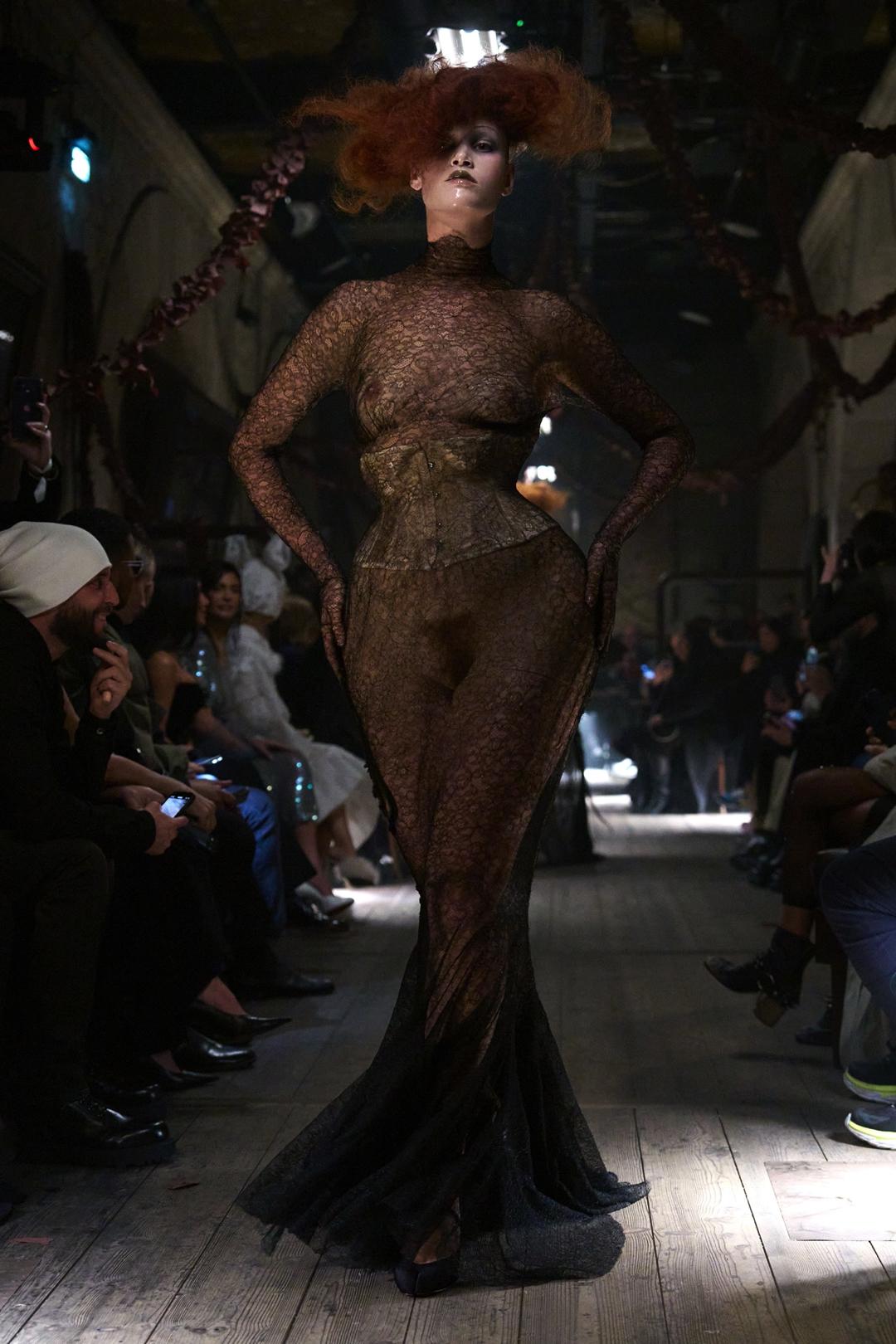
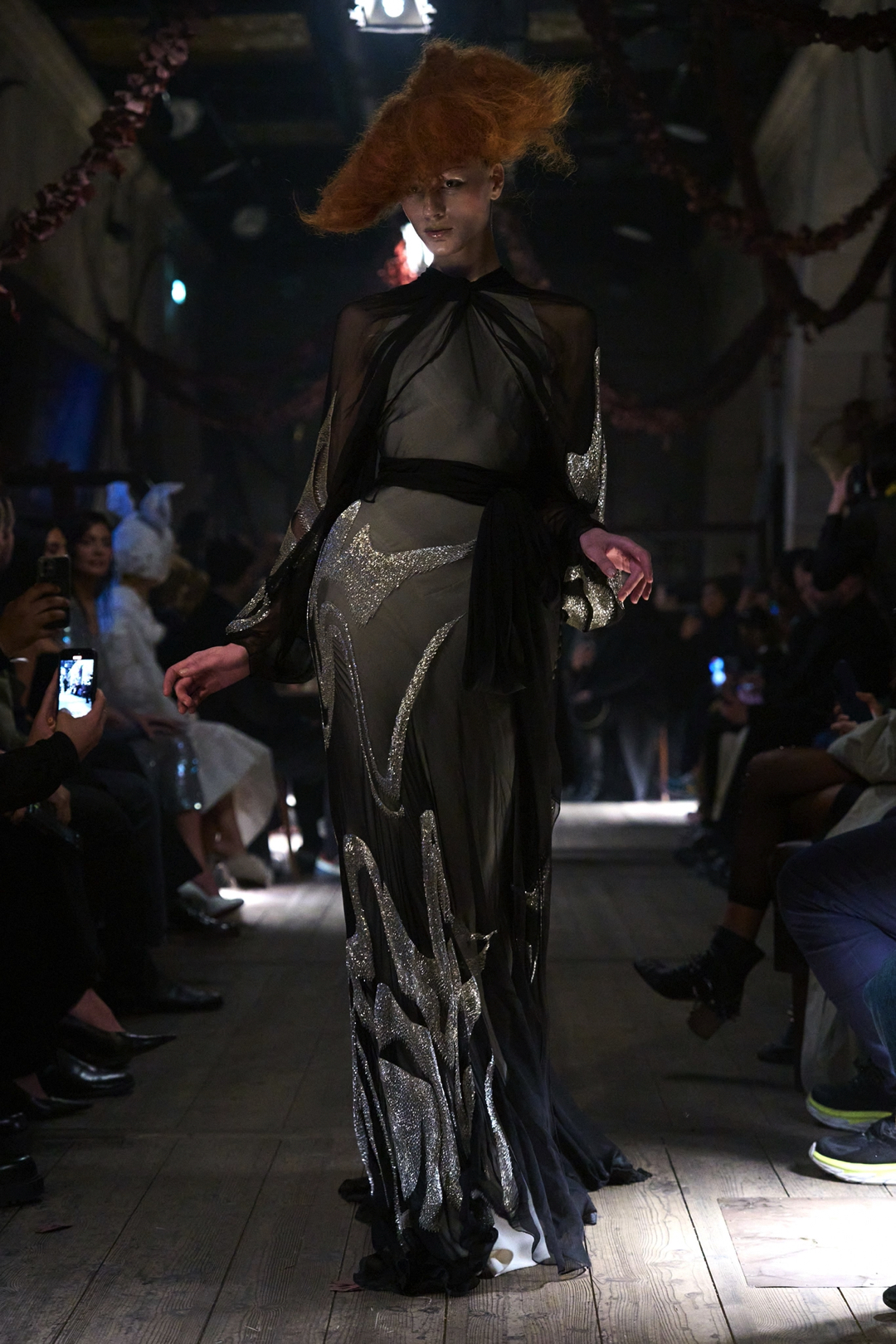
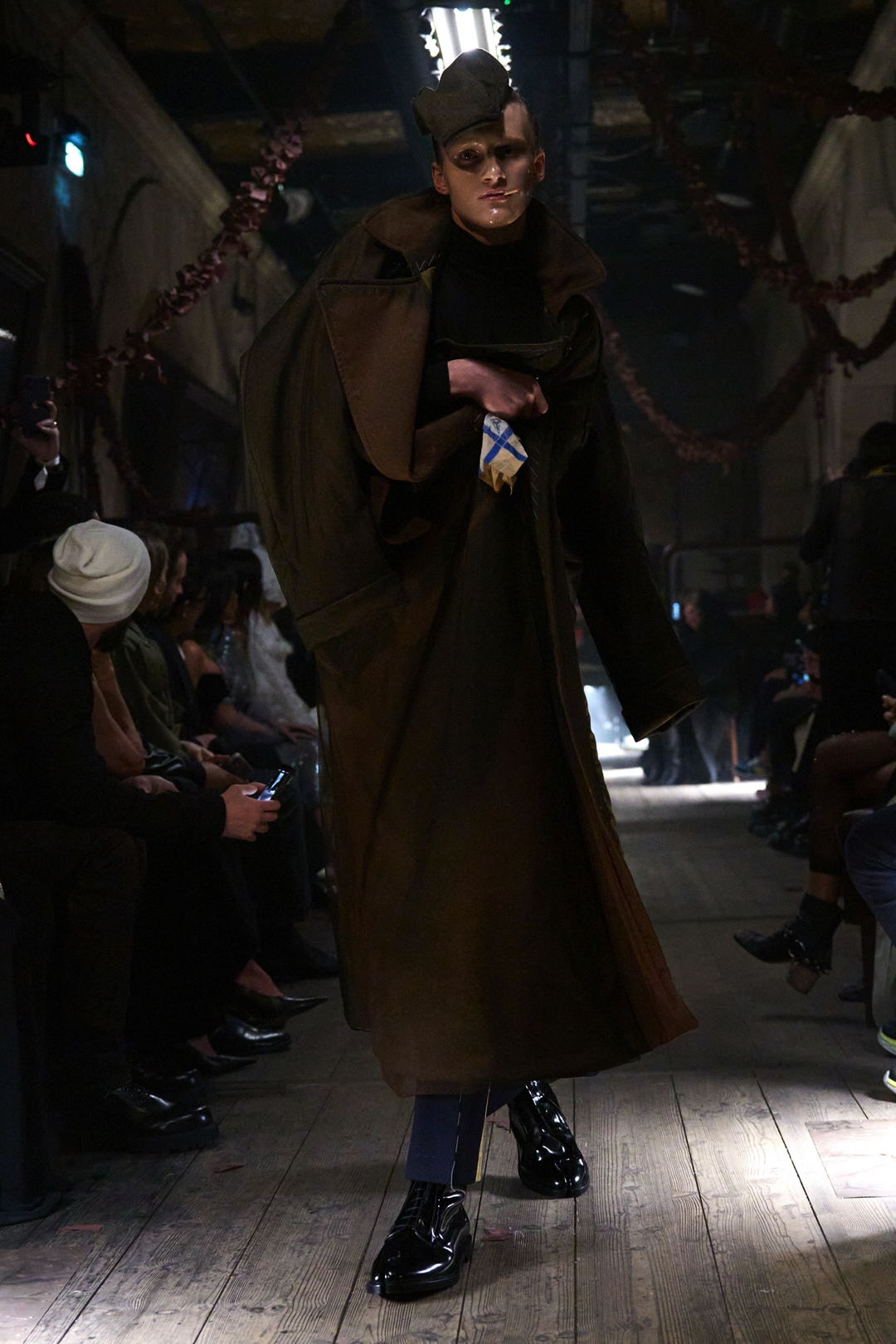
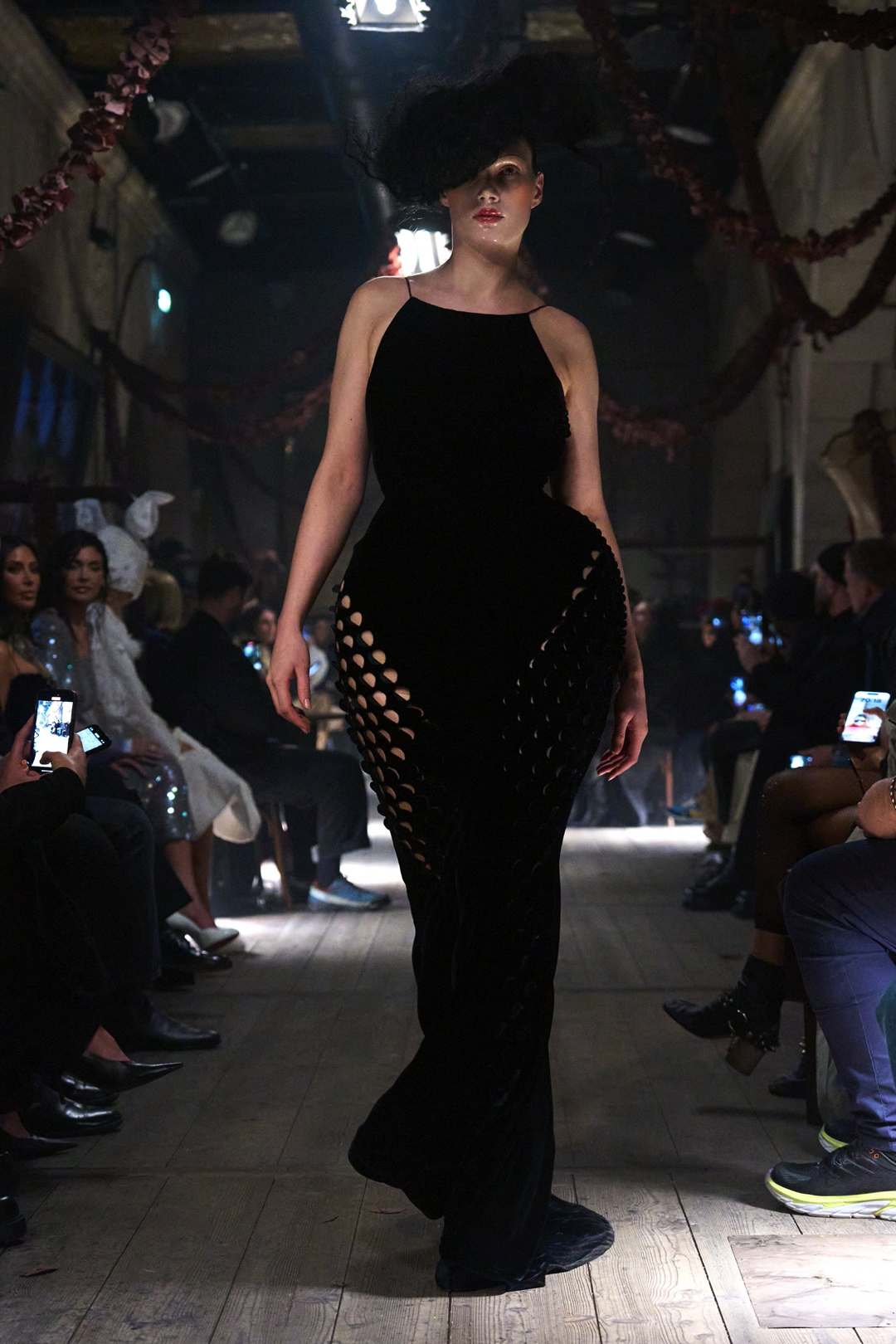
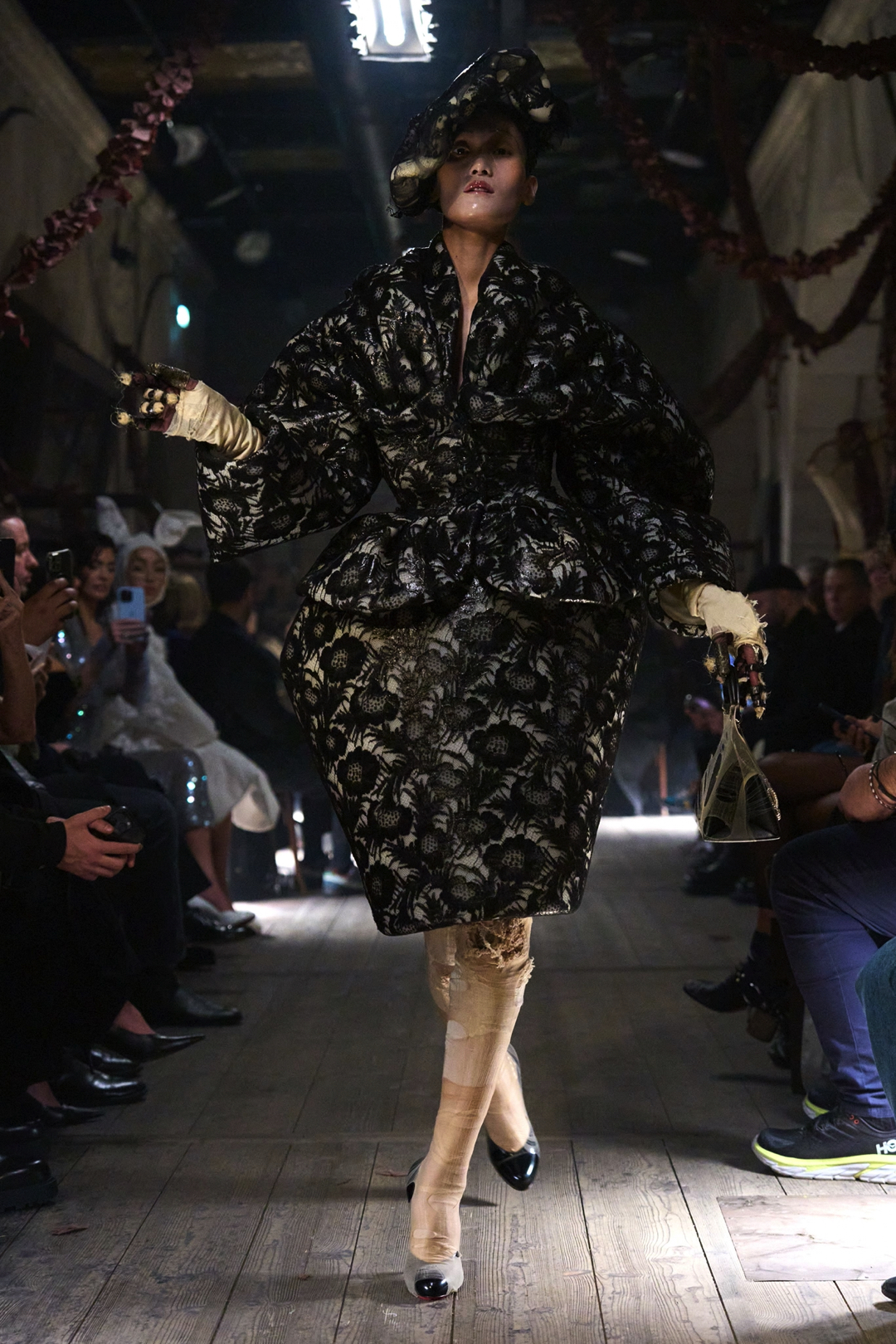
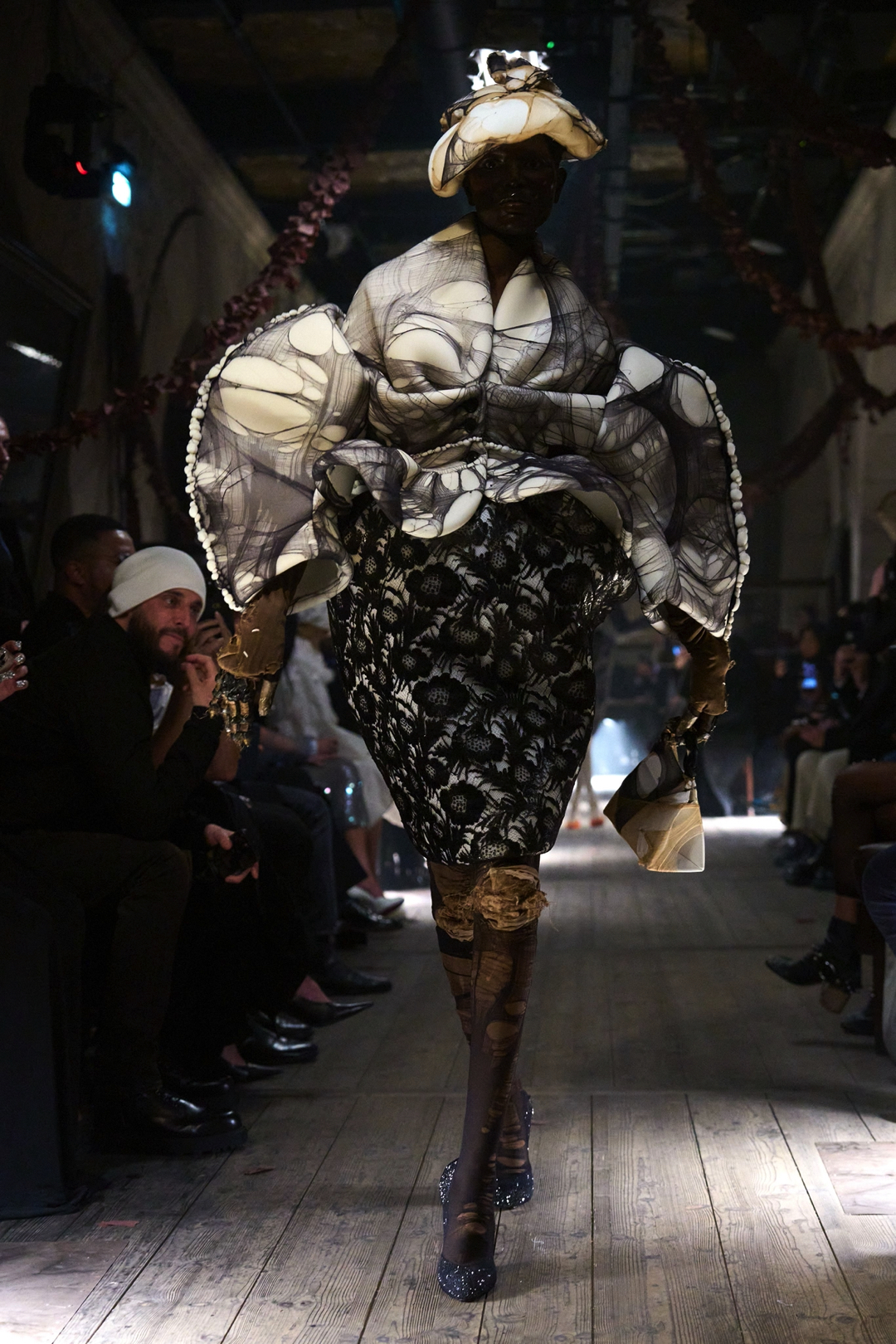
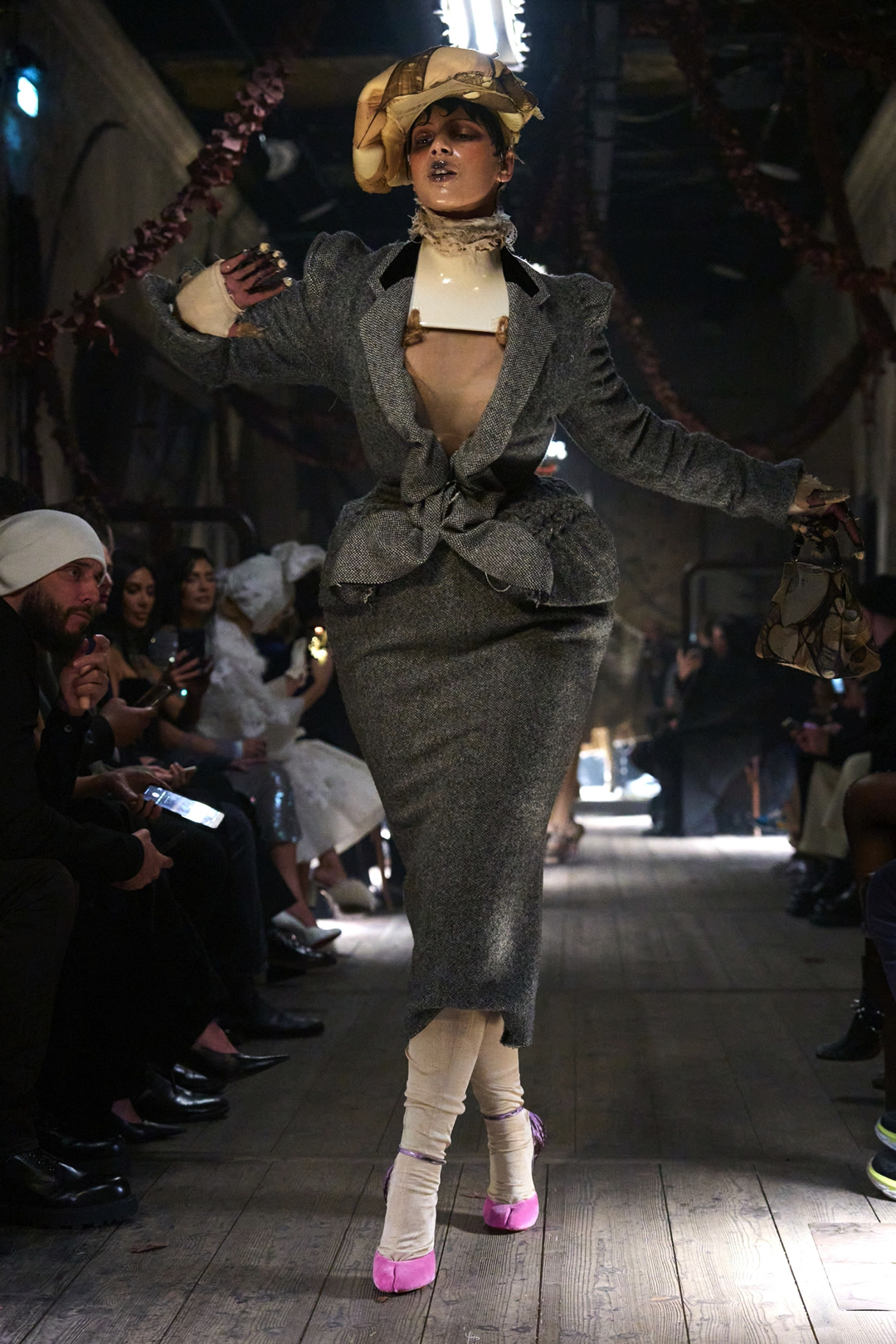
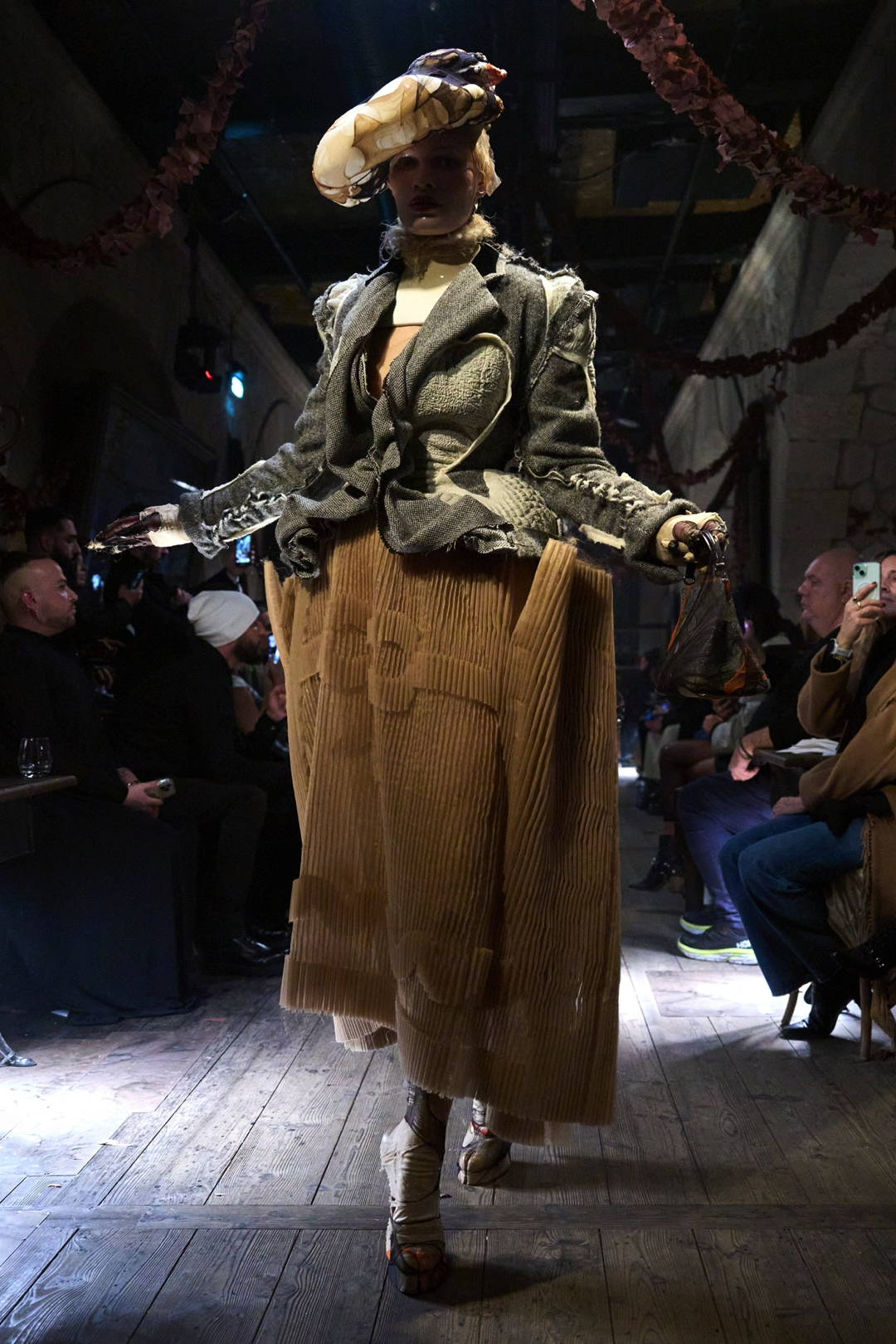
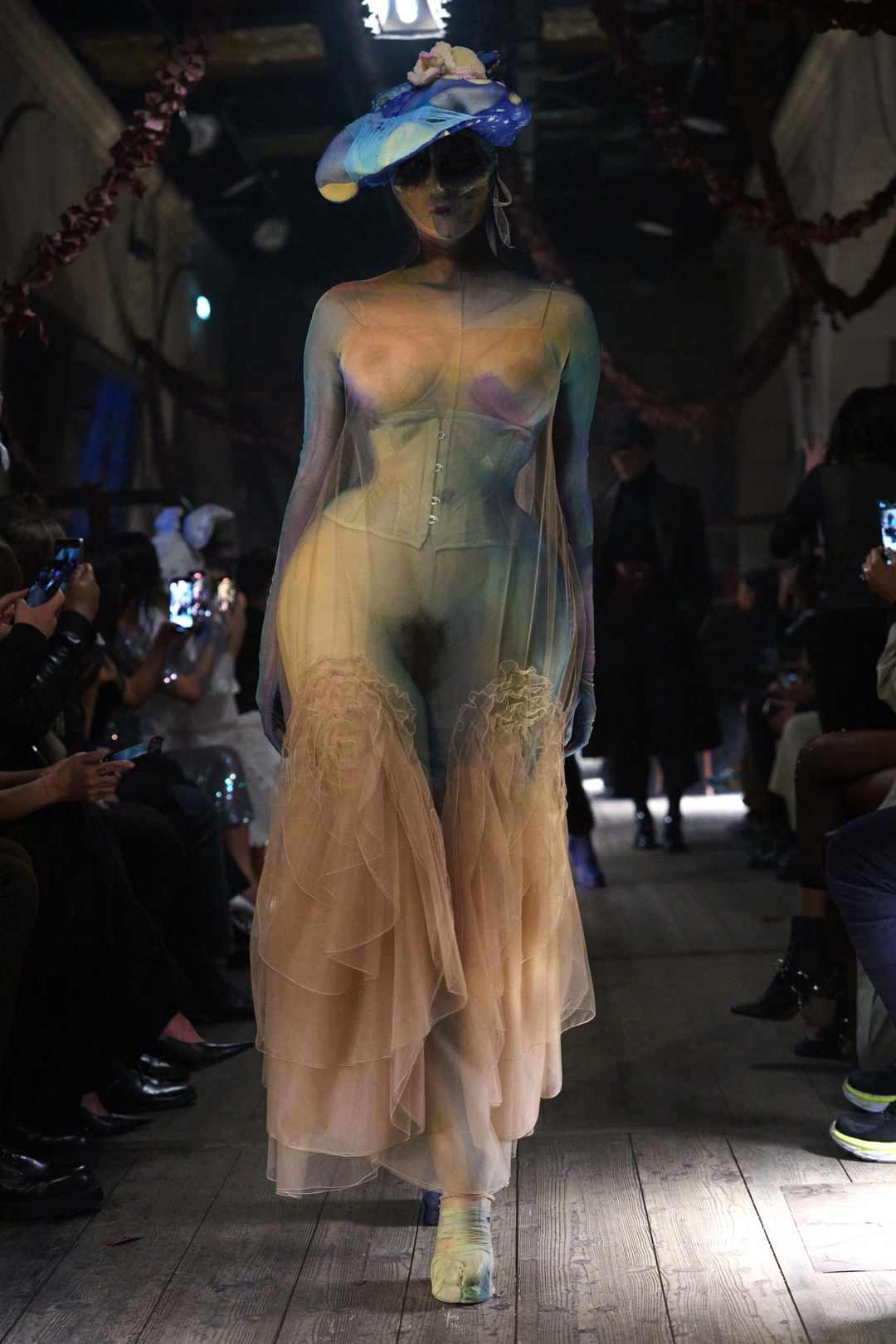
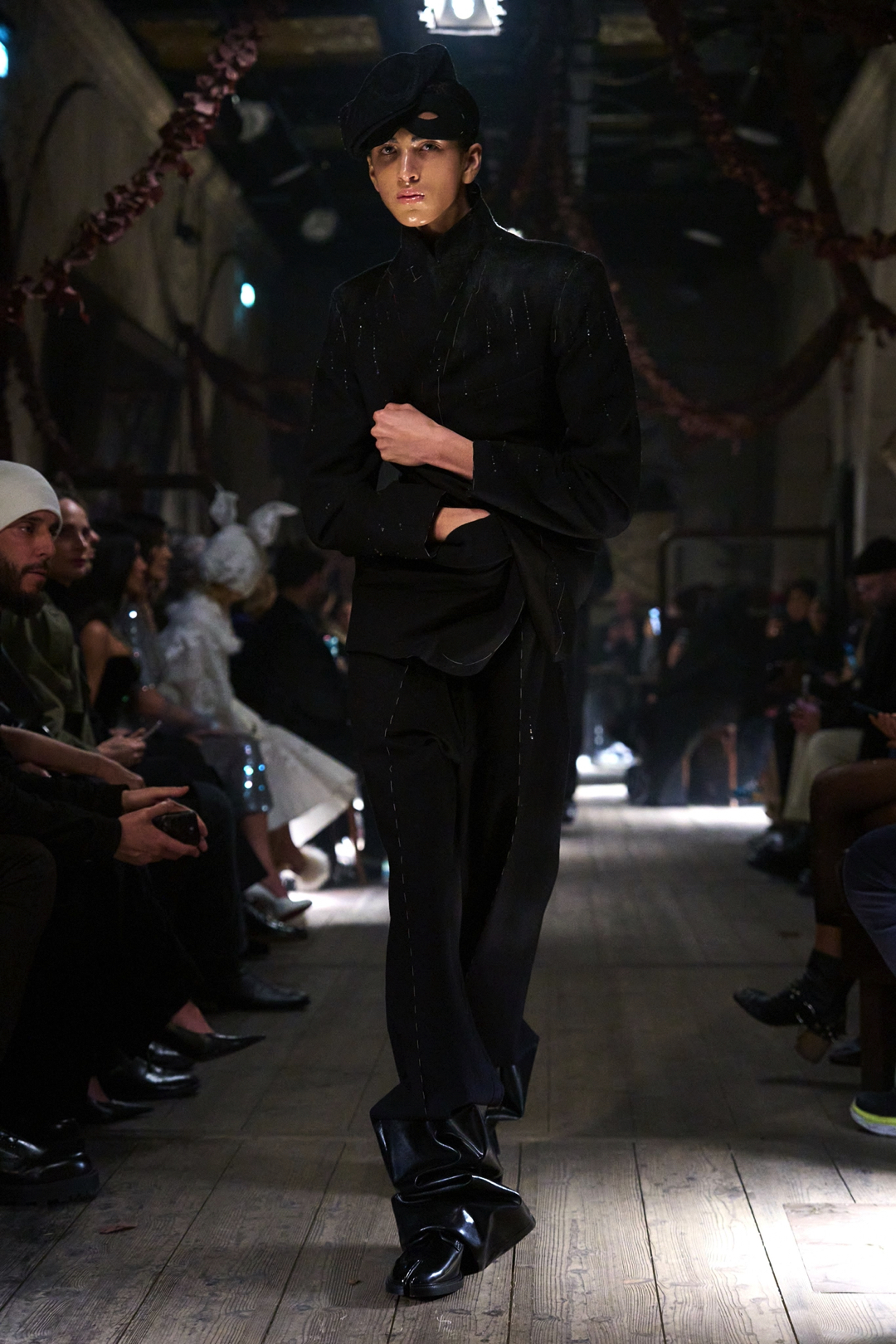
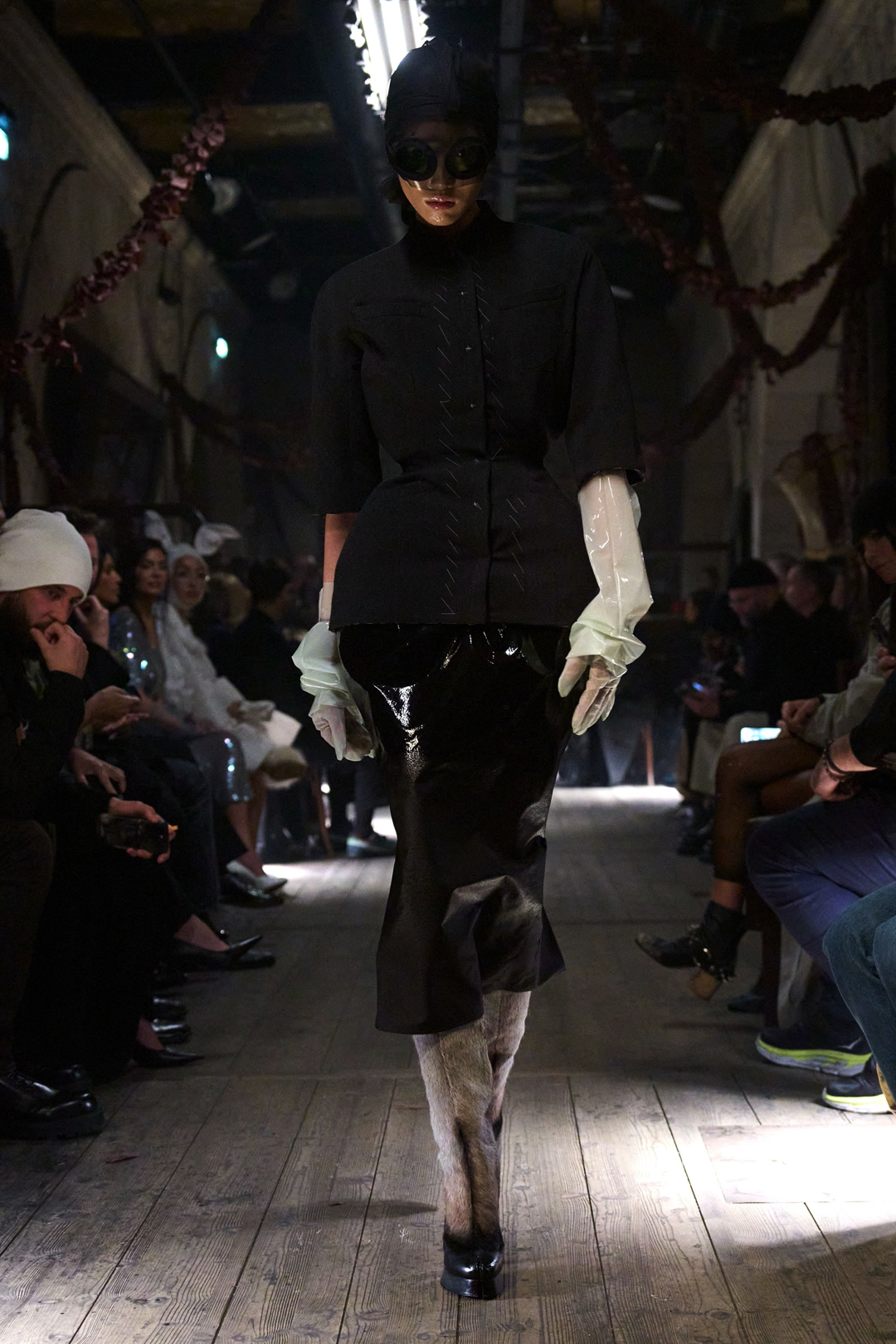
The garments themselves were technically ambitious and conceptually layered. Galliano’s silhouettes referenced Belle Époque and Edwardian dress codes, but they never felt purely historical. He used traditional couture techniques to distort and modernize familiar shapes. Corsets were exaggerated and sculptural. Organza was manipulated to mimic the texture of tweed. Coats appeared soaked in oil but were, in fact, featherlight constructions that had been dyed, coated, and treated to mislead the eye.
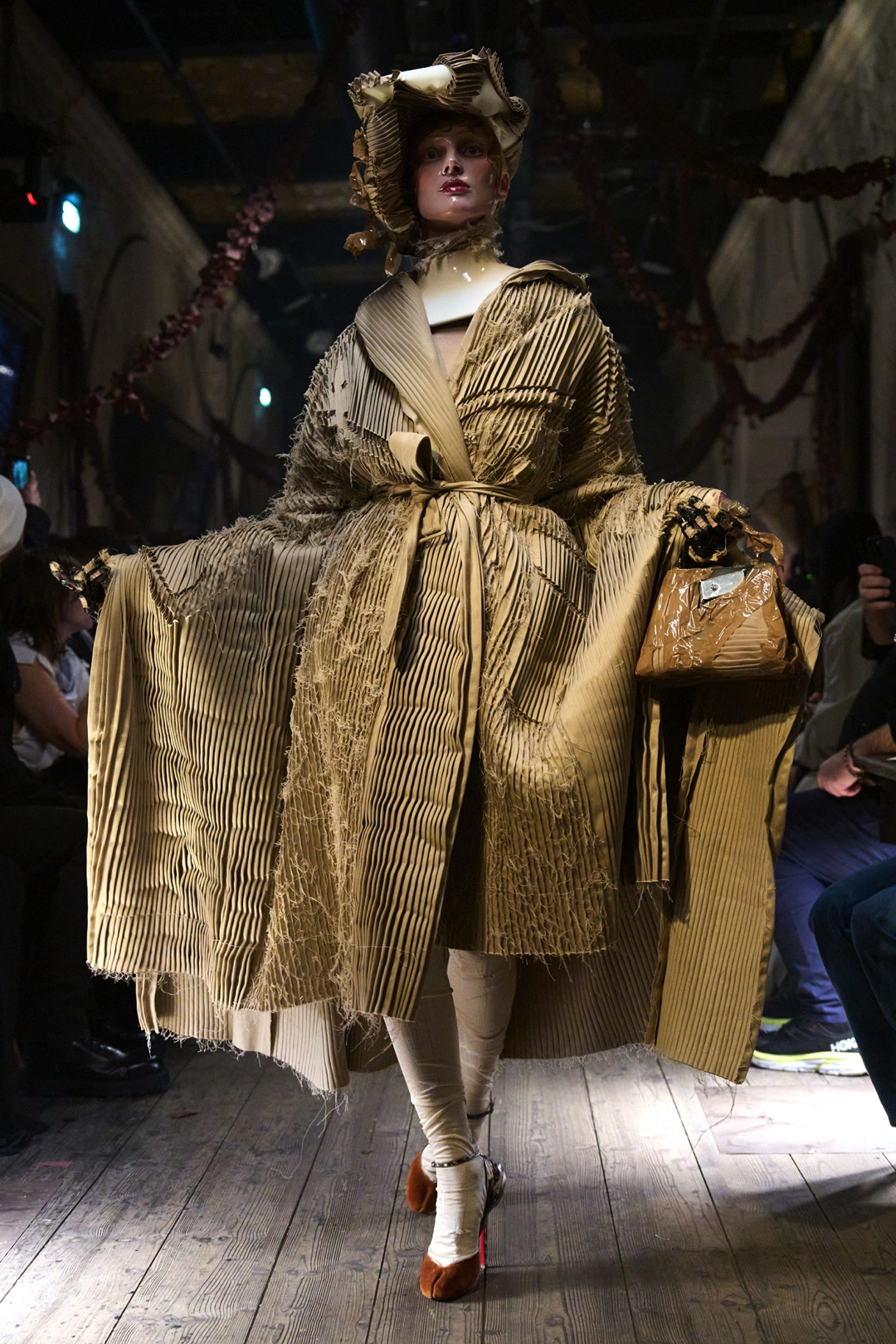
The show’s relationship to time was particularly striking. The clothing felt suspended between centuries. Some garments seemed eroded, as if pulled from the past. Others looked as if they belonged to a speculative future. Techniques were so time-intensive that several pieces reportedly took months, even years, to realize. This was not fashion designed for immediate consumption. It was work that asked for attention and reflection.
Distortion extended beyond materials to the garments’ structure and silhouette. Galliano stretched shoulder lines, exaggerated hips, and layered textures in ways that created deliberate imbalance. At times, the garments enveloped the body entirely. At other moments, they revealed it with disarming precision. This tension between concealment and exposure gave the collection its complexity and emotional pull.
Despite the theatrical framing, the collection remained grounded in Maison Margiela’s original codes. Anonymity, transformation, and the construction of identity through clothing were all present. But Galliano approaches these ideas with a different voice. He replaces Margiela’s minimalism with excess, silence with monologue, restraint with emotion. Yet the philosophical core remains intact. Both designers, in their own way, interrogate what fashion can communicate beyond aesthetics.
As the show came to a close, the applause felt incidental. What endured was the atmosphere: the weight of a gaze, the echo of footsteps, the flicker of candlelight on painted leather. Beneath the surface spectacle, Galliano offered a vision of couture rooted in imagination, discipline, and depth. He did not present clothes. He created an experience.
The Spring 2024 Artisanal collection was not built for social media clips or fashion week soundbites. It was meant to linger in memory. Quiet, deliberate, and unforgettable.
Photos: Filippo Fior / Gorunway
@maisonmargiela
www.maisonmargiela.com
HIGHLIGHTS FROM THE COLLECTION