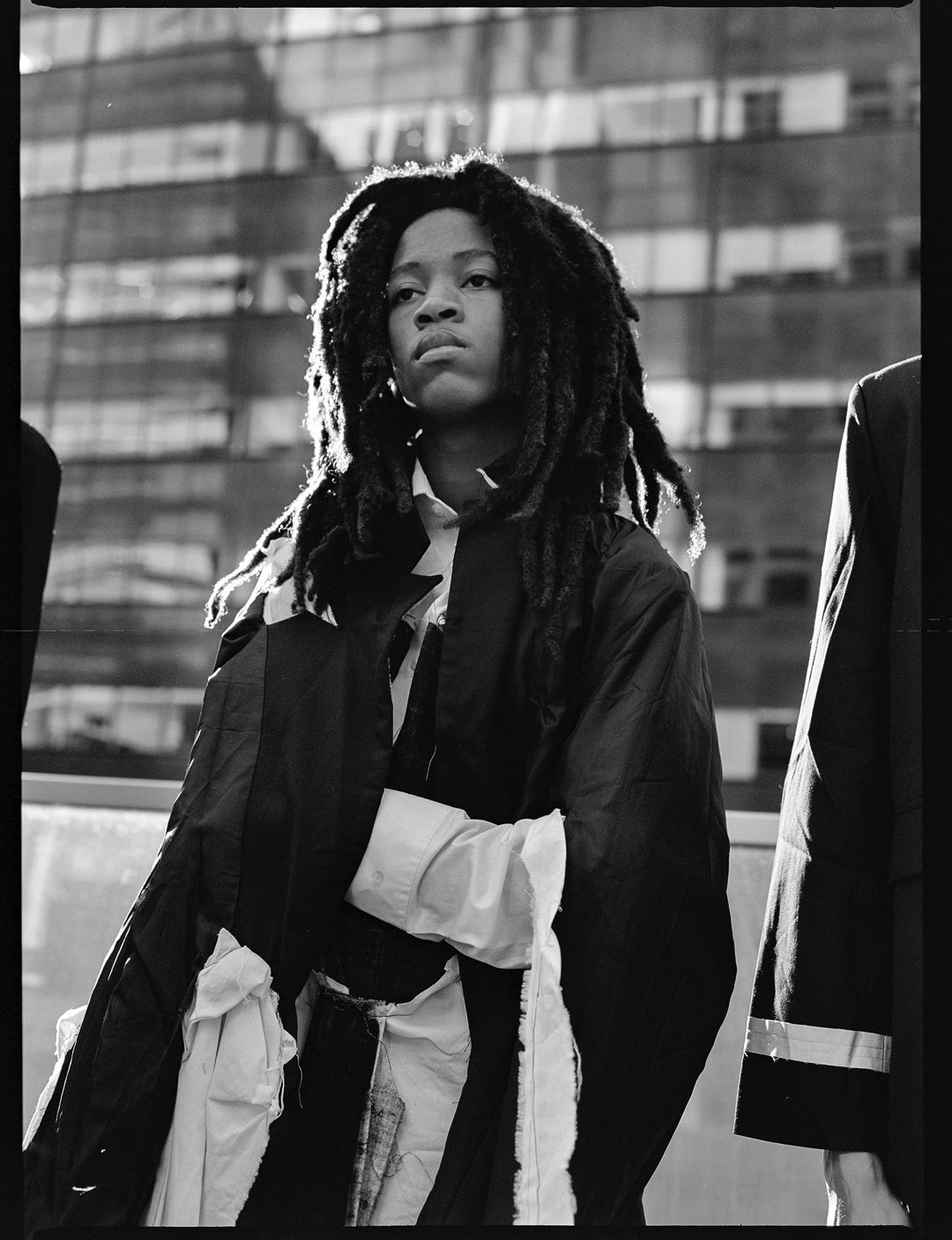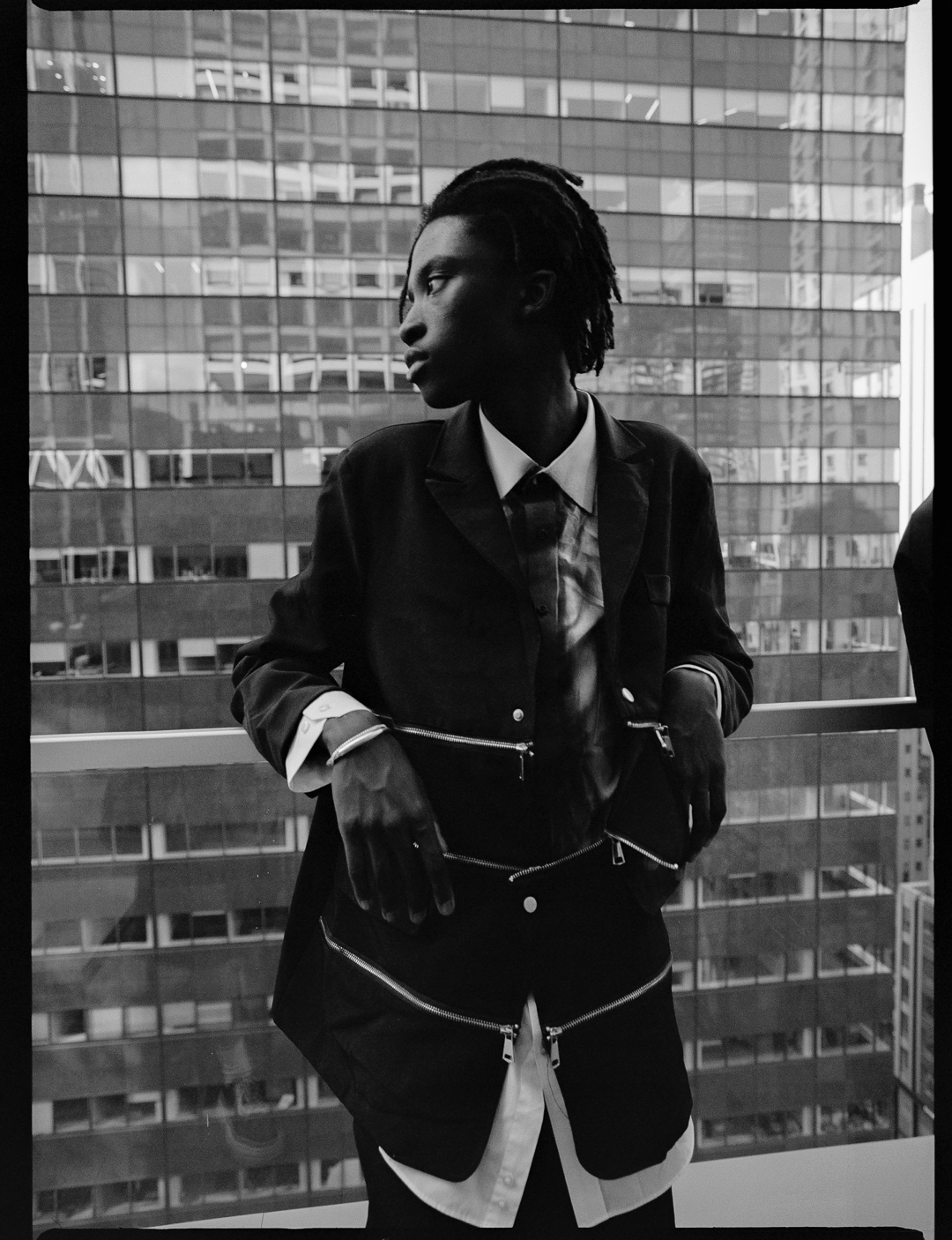
Hikari no Yami’s Spring/Summer 2026 collection, “Chapter 9: The Invisible Man”, confronts the uneasy space between recognition and erasure. Drawing on Ralph Ellison’s “The Invisible Man” and Frantz Fanon’s “Black Skin, White Masks”, creative director Jakarie Whitaker examines the psychological dissonance of being seen yet unseen, acknowledged yet never fully humanized. Through garments conceived as vessels of protest, the collection positions invisibility not as power but as burden, a haunting absence in places where presence should demand recognition.
Whitaker grounds this collection in material and symbolic tension. Deadstock Japanese cottons, recycled wool, and polyester-blends form the basis of a palette limited to black, white, and grey, colors that function not only as design choices but as symbols of reduction and erasure. Silhouettes merge Japanese design sensibilities with American streetwear, including wide cut denim and patchwork, blending high fashion and the everyday while dismantling conventional notions of what clothing can signify.
The show’s location, a dentist’s office in Midtown Manhattan, extended the theme of fractured aspiration. Once on the path to medicine, Whitaker abandoned anesthesiology for design, a decision catalyzed by the influence of Virgil Abloh, whose foundation supported this collection. The setting therefore became a site of both past ambition and reimagined purpose, underscoring the tension between imposed roles and self-determination.

Footwear appeared through a collaboration with Under Armour, a reworking of the brand’s “Echo” sneaker. Scrap materials from the ready-to-wear collection were stitched into the sneakers’ surface, leaving the athletic sole intact. The result, neither wholly sportswear nor fashion object, spoke to the collection’s broader concern with duality, resistance, and the dismantling of inherited categories.
“Chapter 9: The Invisible Man” does not propose answers so much as it exposes contradictions. It asks what liberation looks like when invisibility is no longer tolerated, when garments become mirrors reflecting the structures of a society that looks through Black men rather than at them.
Photos: Courtesy of Hikari no Yami
www.hikarinoyami.com
@hikarinoyamii
@jakariewhitaker
HIGHLIGHTS FROM THE COLLECTION