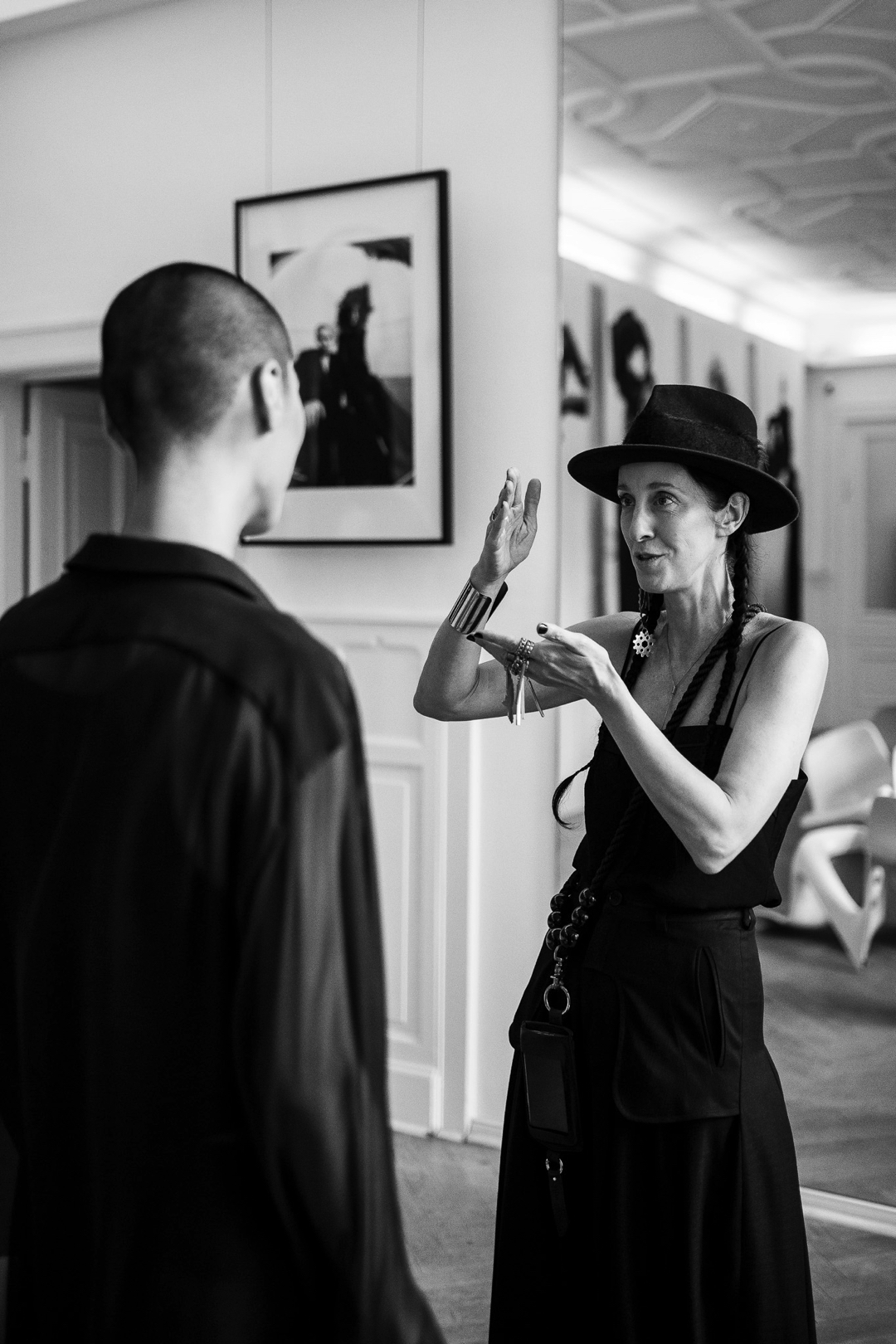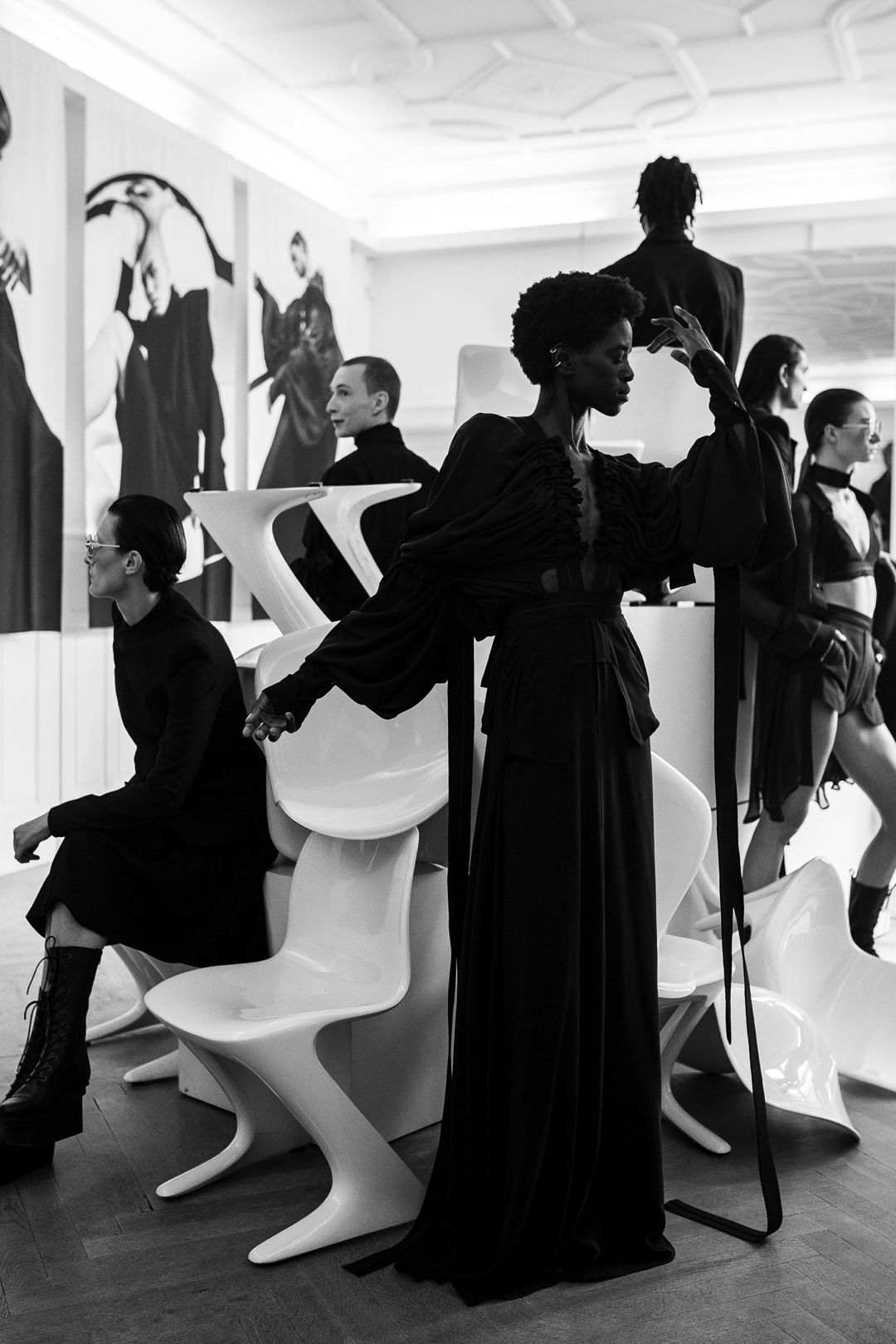
At Berlin Fashion Week, designer Esther Perbandt offered a study in stillness. Her presentation of “Black Tailored Summer”, held on July 3rd at the Fashion Council Germany, moved away from the runway format entirely. Instead, it favored a live, spatial installation that emphasized presence over performance. For Perbandt, “fashion should move with you. The story doesn’t end on the runway.”
The collection suggests an evolution in Perbandt’s approach. From expressive showpieces to elegant, wearable avant-garde. “Black Tailored Summer” is still unmistakably hers, anchored in her signature all-black palette and structured silhouettes. But it moves toward wearability without abandoning edge. “Precise, refined, and in my signature color: black,” she writes. The garments balance presence with control: silk skirts, shirts, tailored jackets, dresses and asymetric coats that whisper rather than shout.
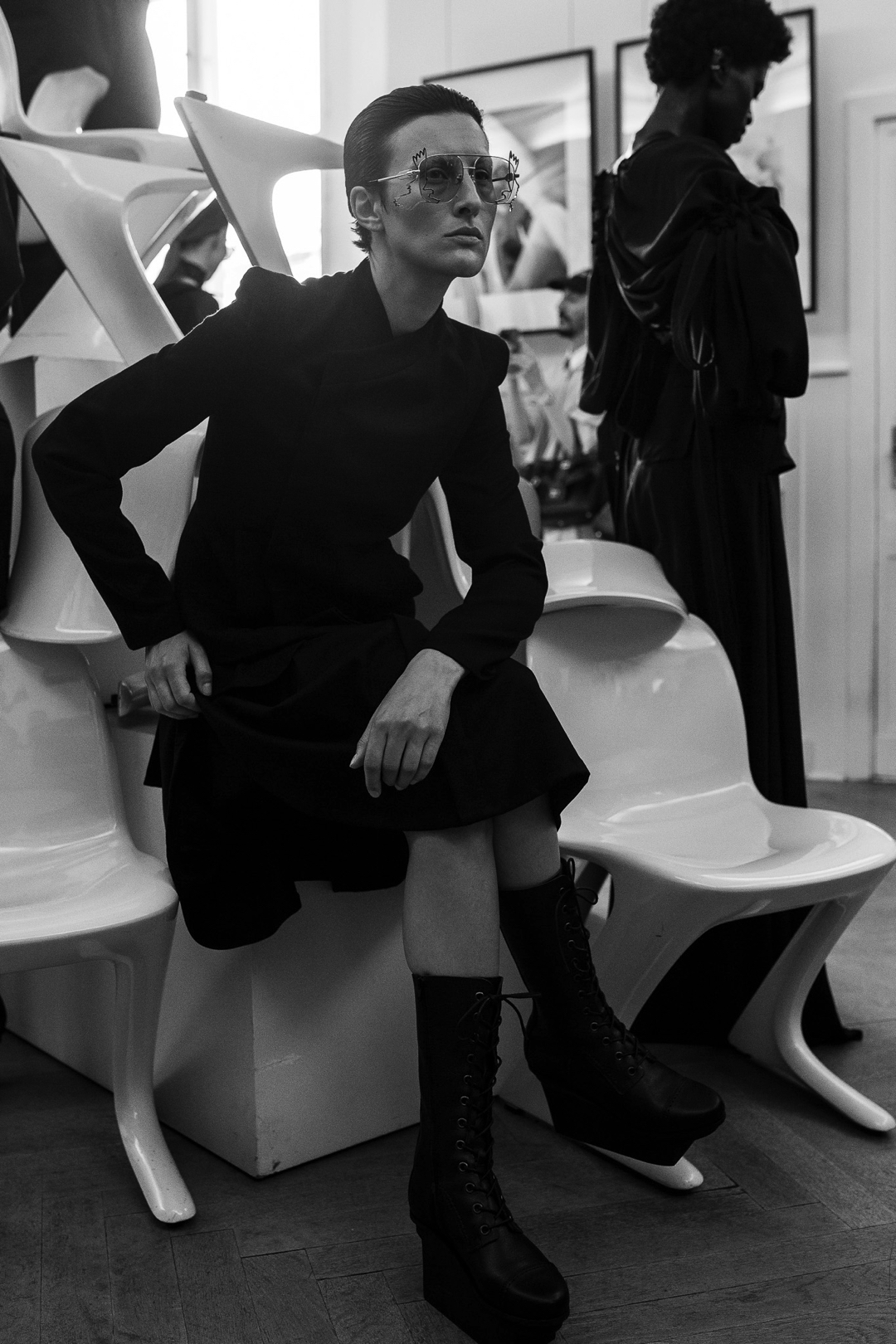
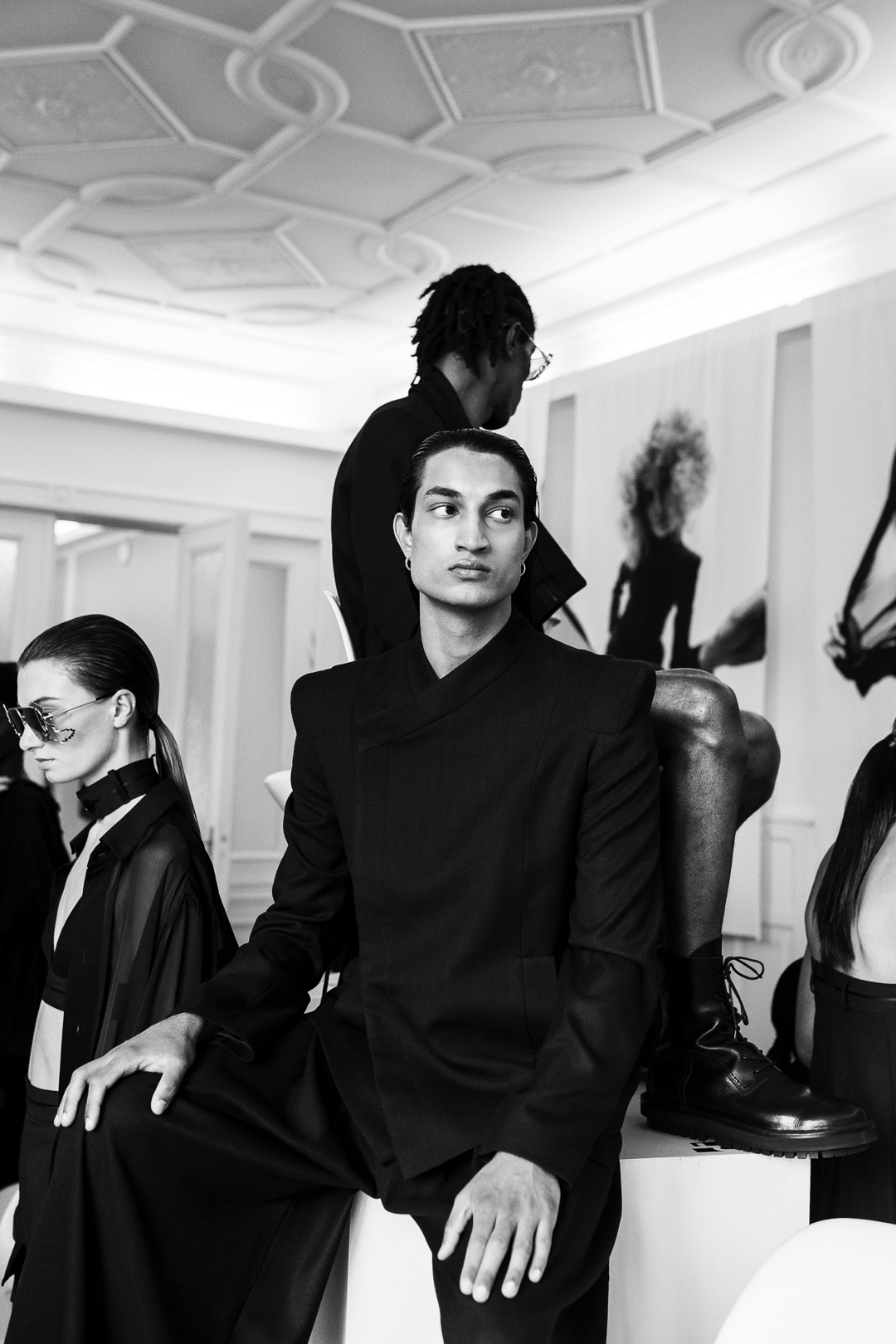
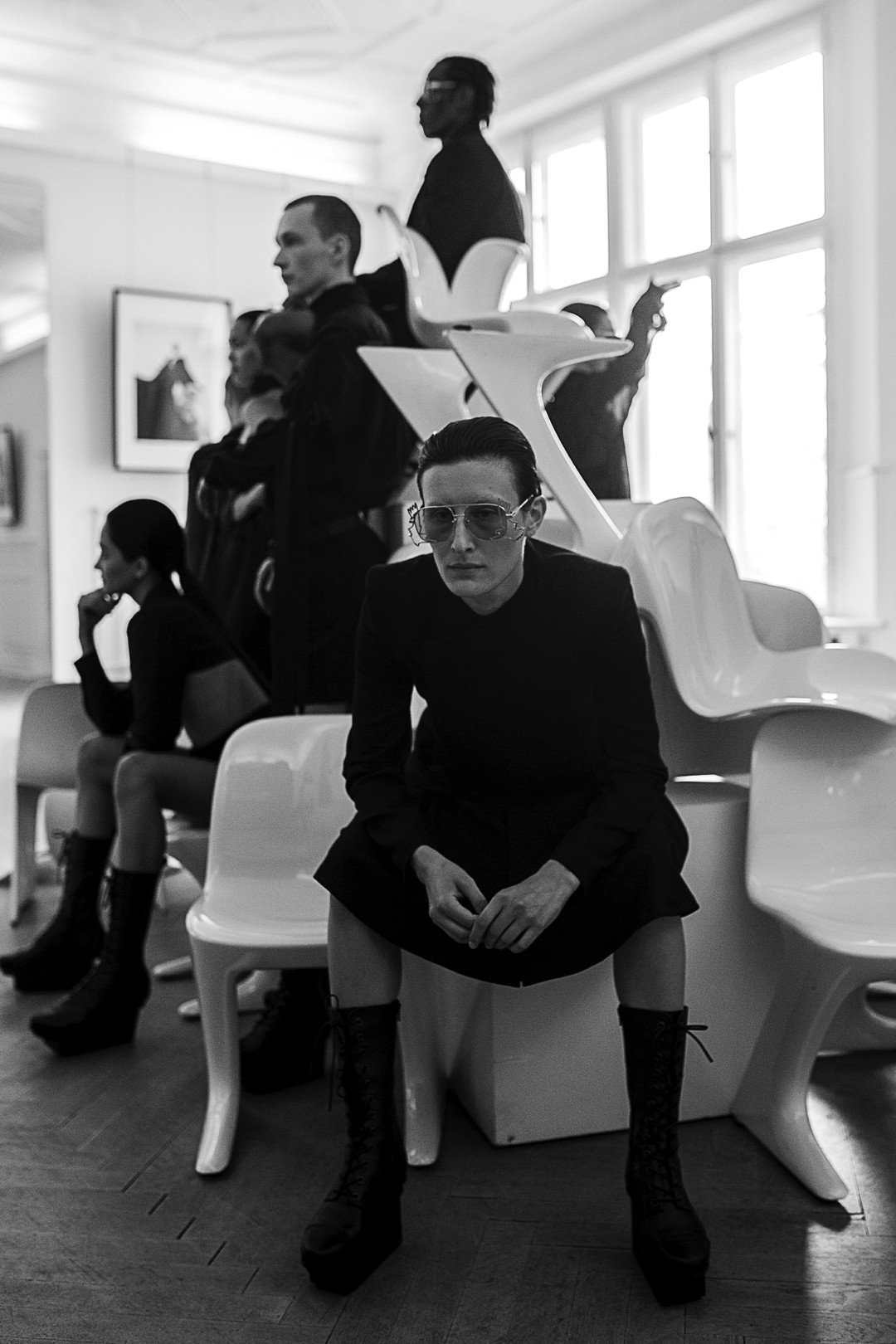
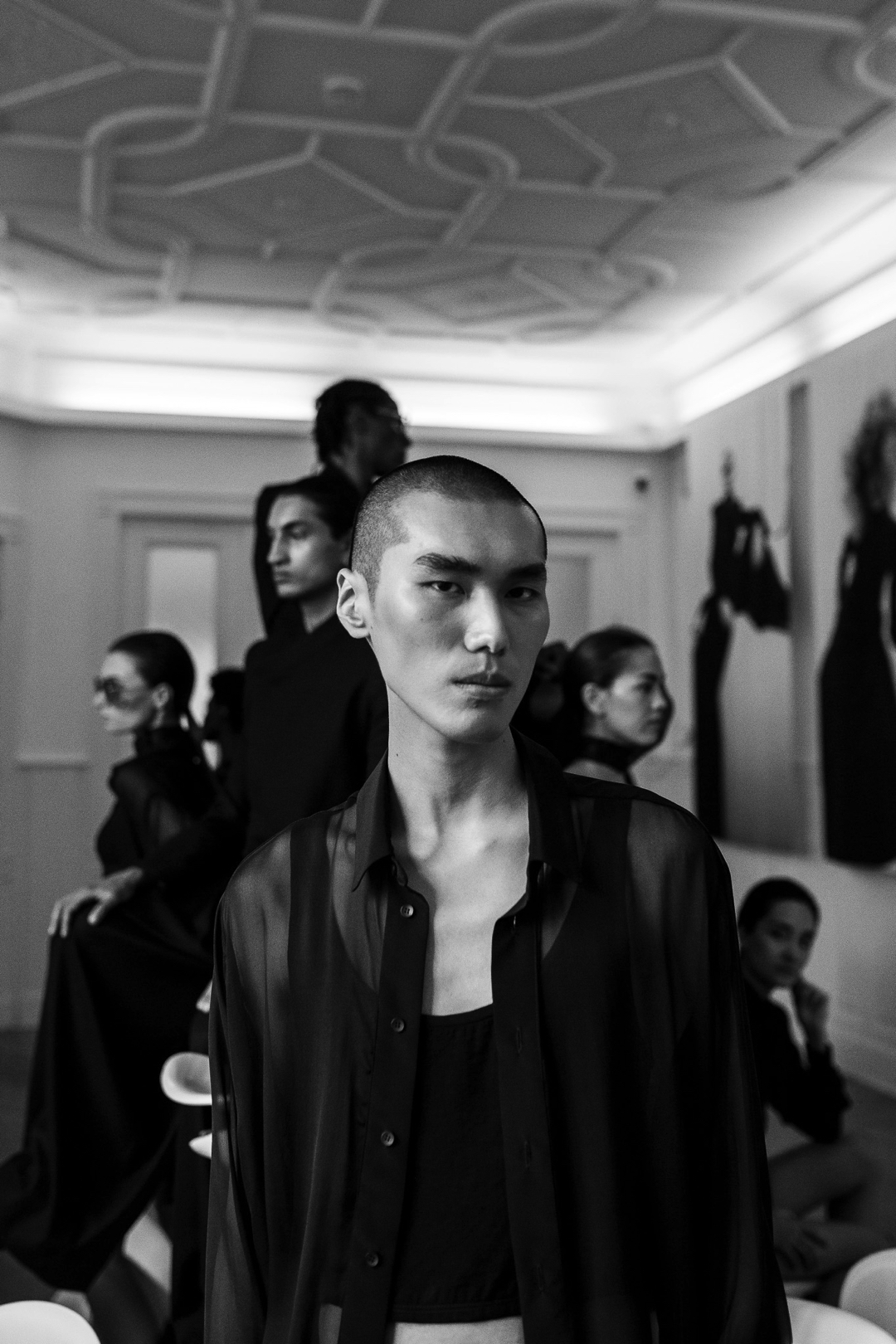
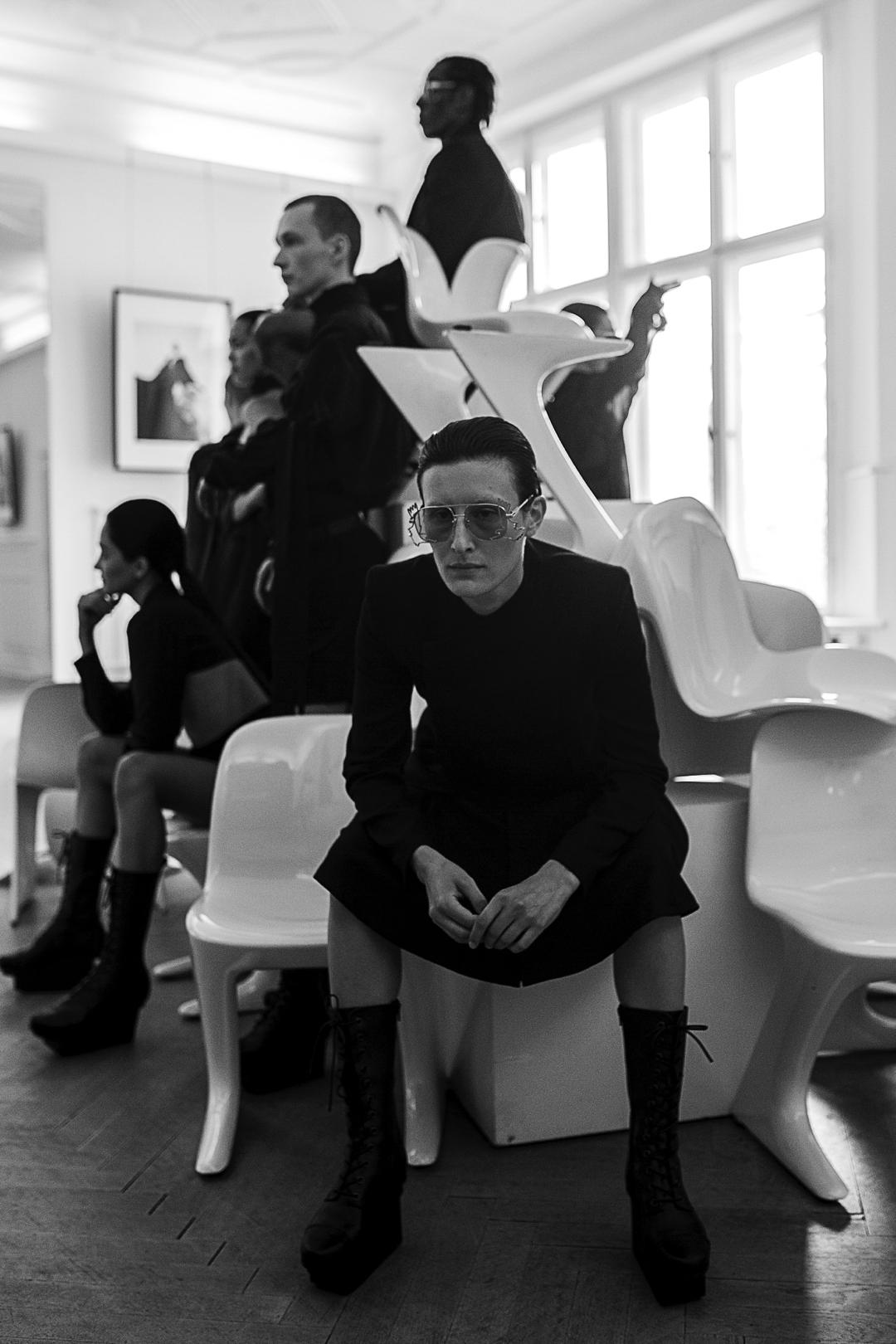
Nine models enacted the garments in slow, meditative poses. There was no music, no walk, just presence. Elevated on a tower of white chairs, some stood, others sat or crouched, creating a living sculpture. The audience moved around them, absorbing the quiet power of black.
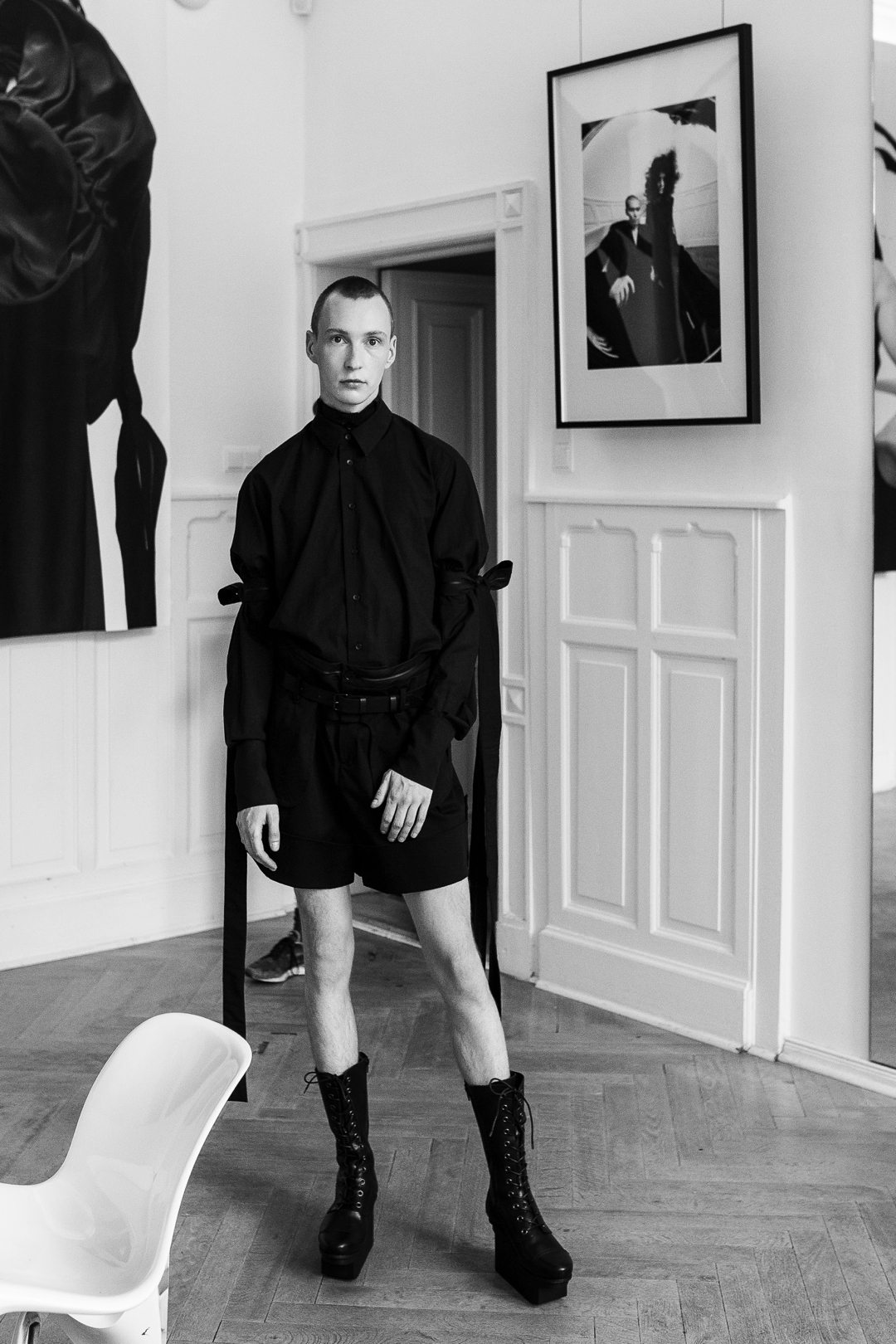
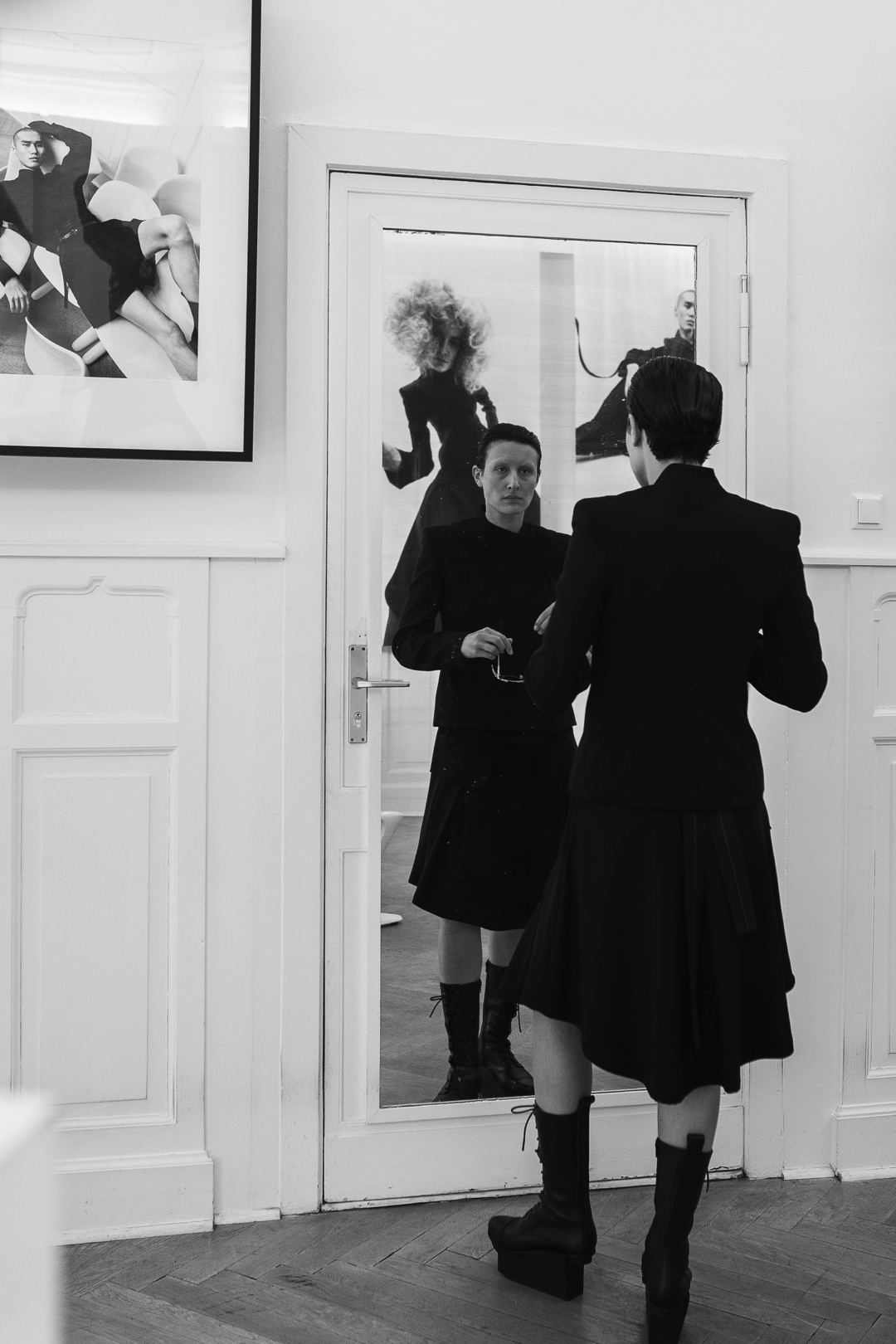
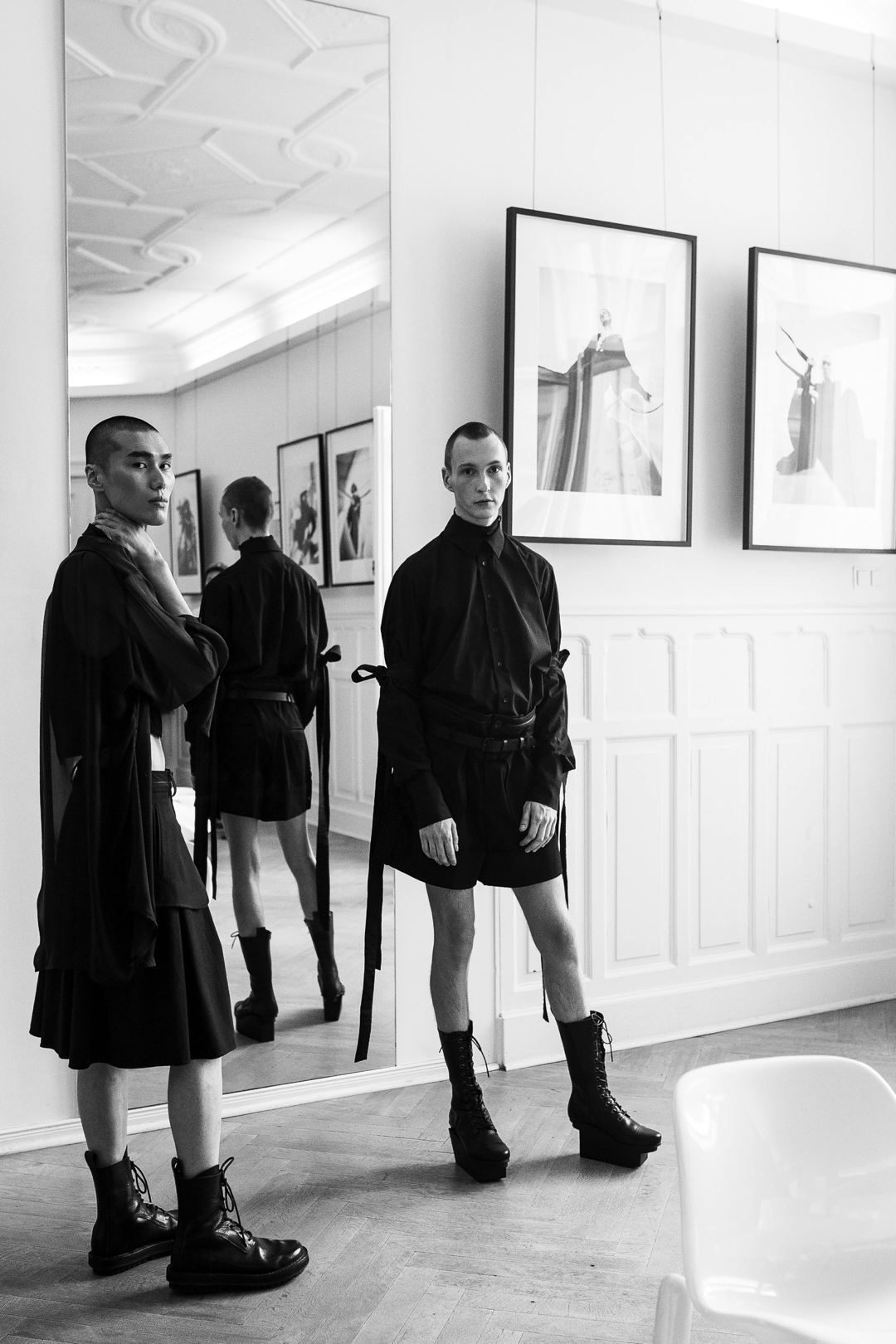
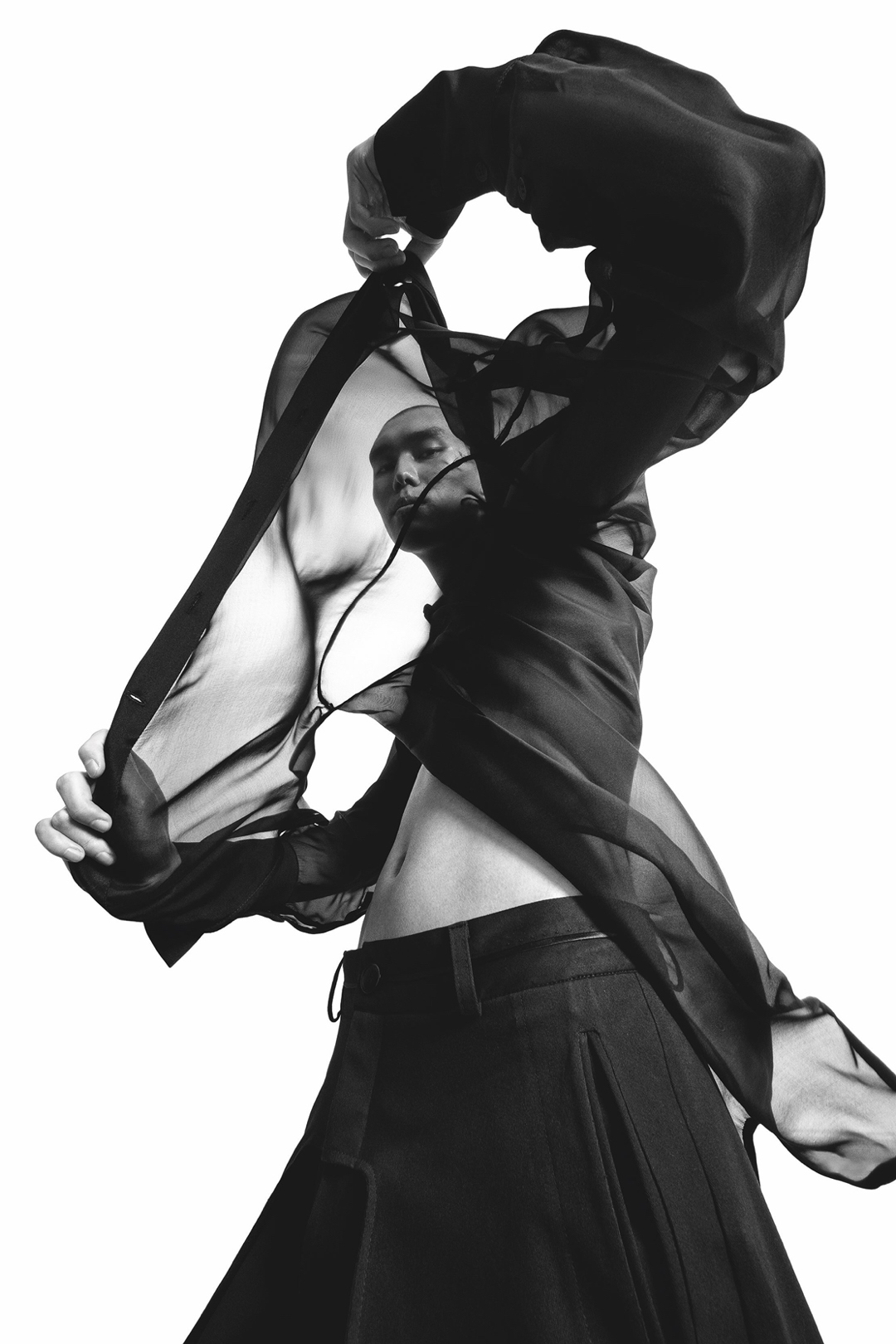
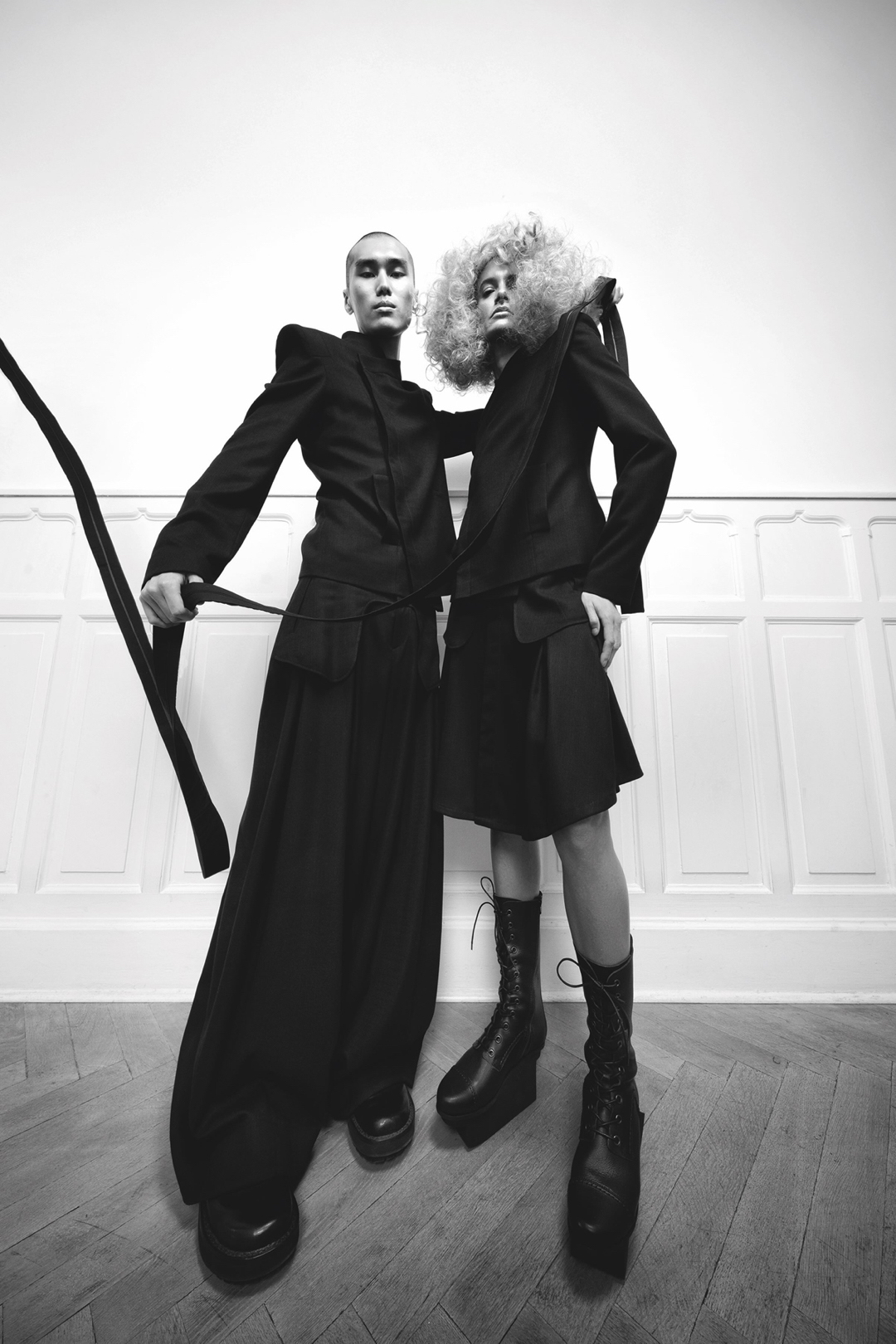
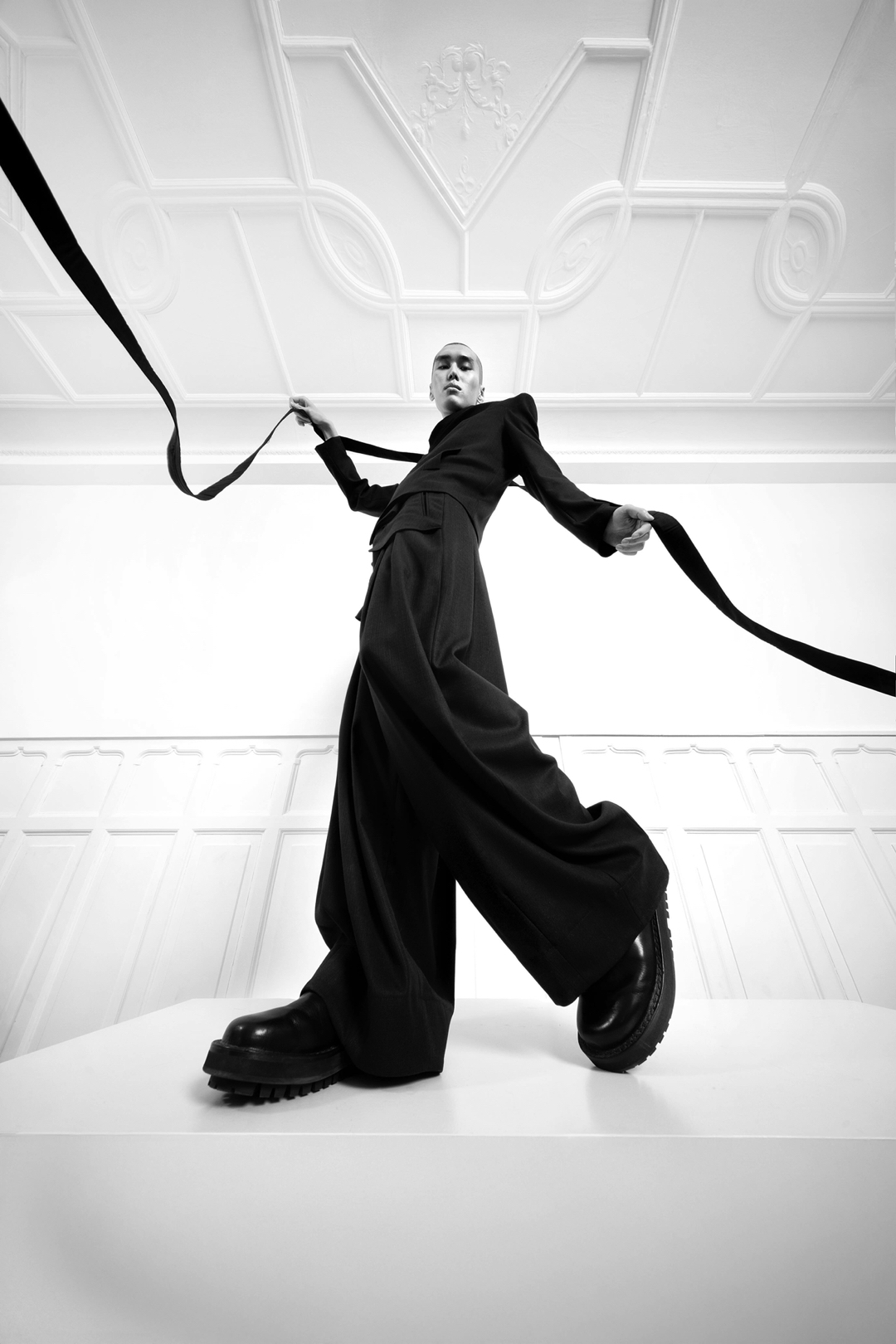
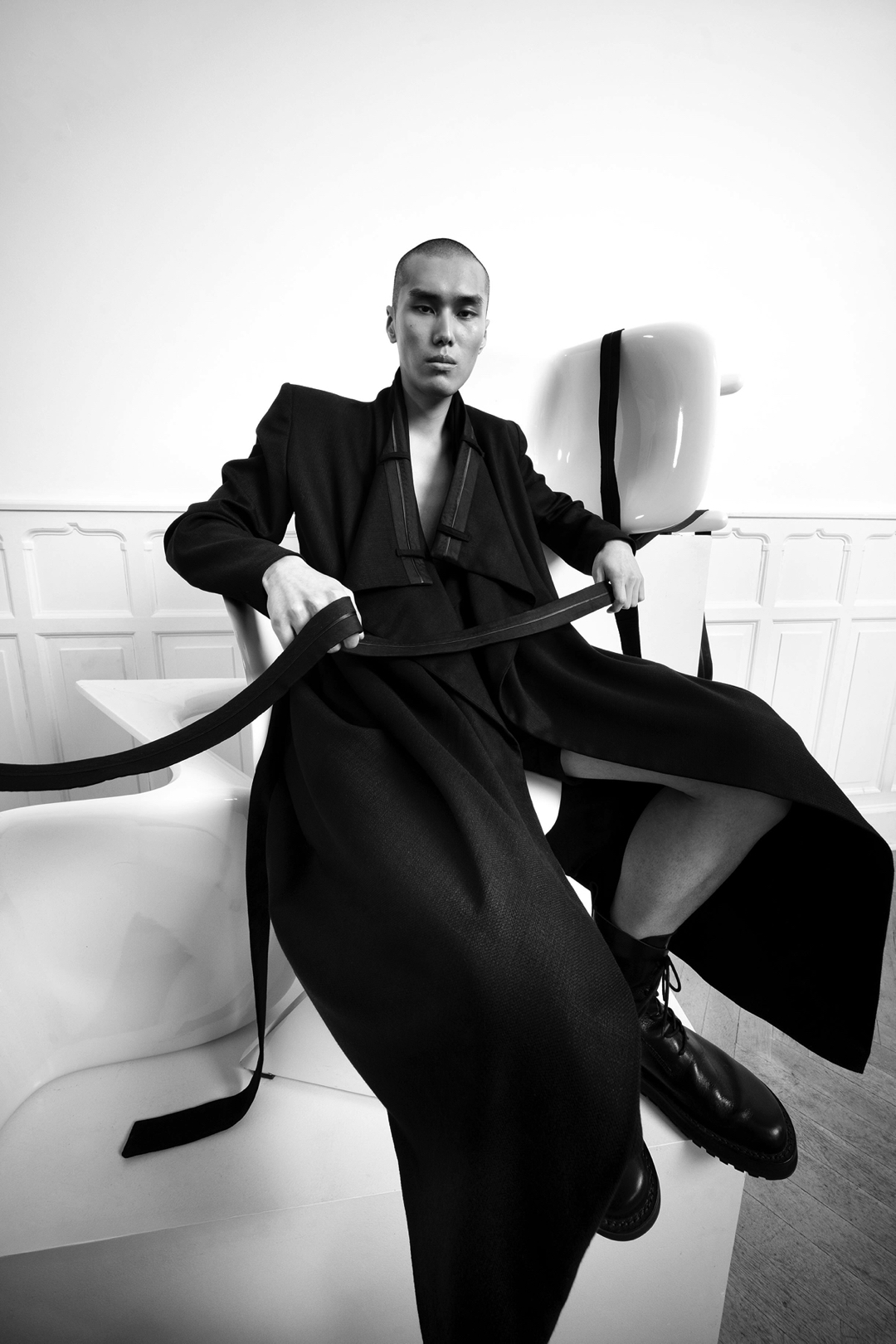
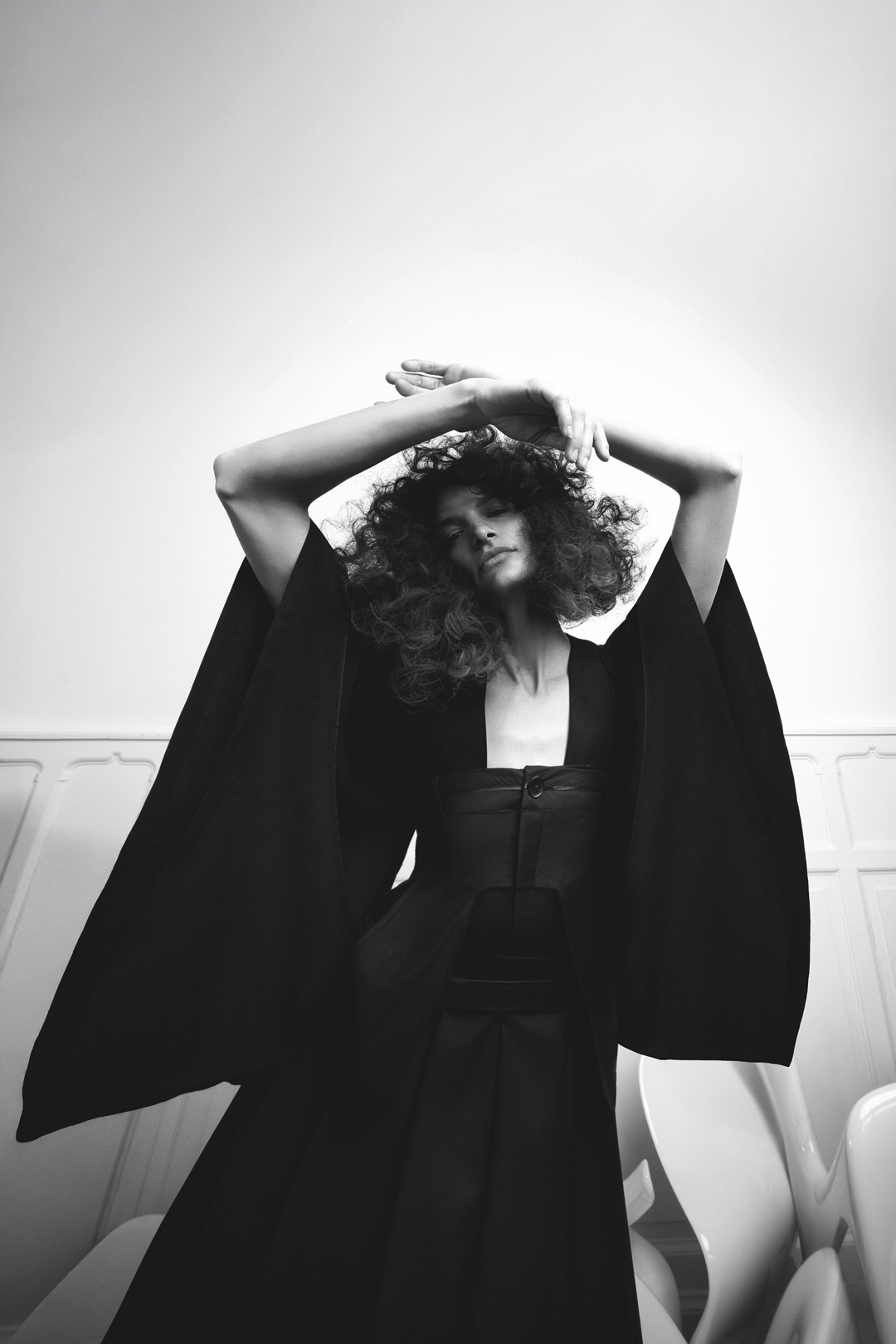
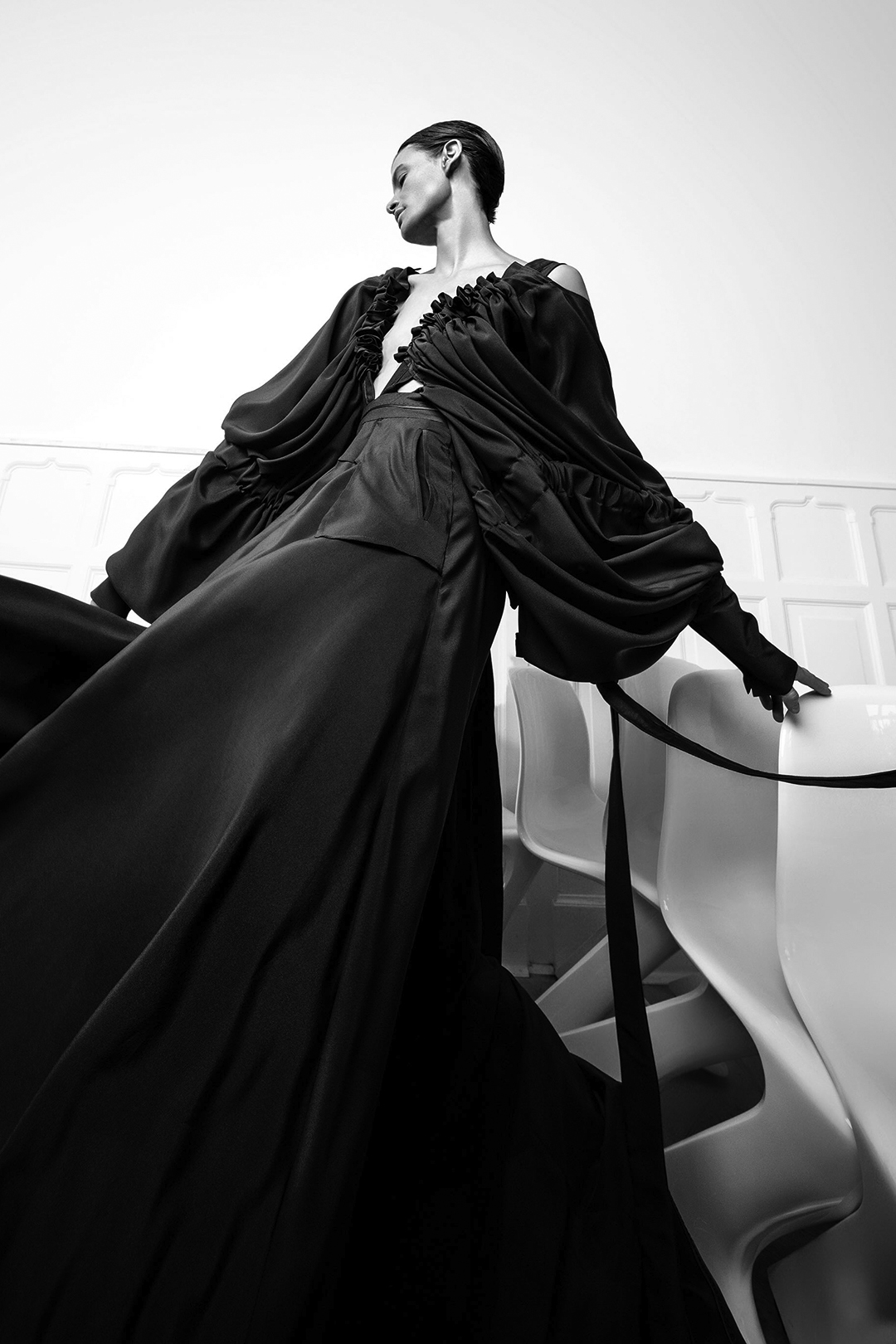
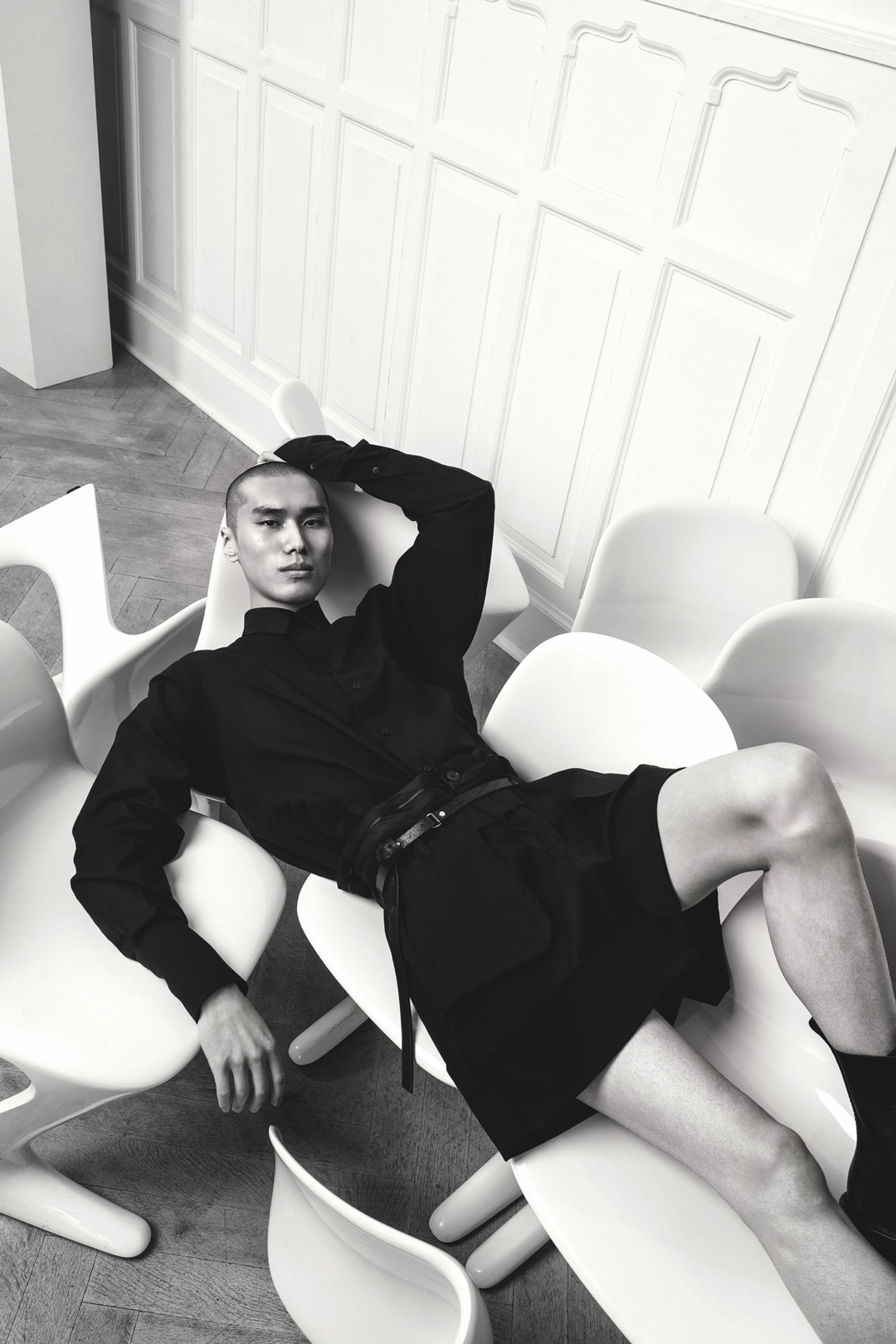
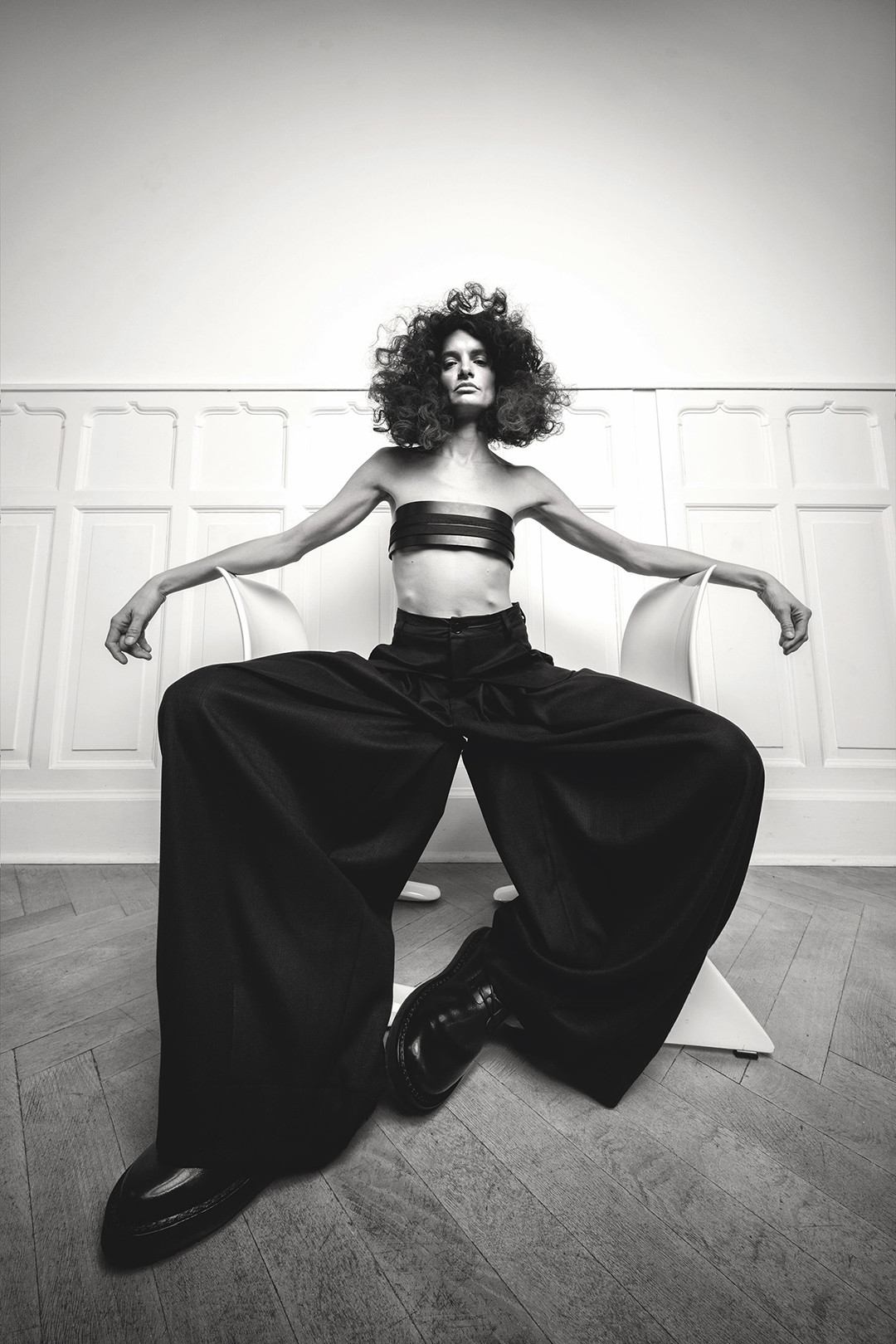
Photographic works by Sylwia Makris lined the space, offering yet another layer to the installation. Her large-format editorial images extended the performance into two dimensions, acting as a visual echo of the living models. Visitors were given black ice cubes and tea, gestures that reinforced the tonal and sensory language of the installation.
Tailoring was genderless, shifting fluidly between masculine and feminine archetypes. Coats with ribbon closures, unisex silhouettes, and fluid draping offered no fixed identity. A silk dress constructed from twelve meters of fabric embodied both severity and softness. Even the materials, wool, cotton, and silk, played in contrasts: matte and shine, heavy and translucent, structure and movement.
The installation also served as the launchpad for two new collaborations. The first, a stark black boot developed with Trippen, featured the label’s iconic 10 centimeter Geisha sole. Architectural and grounded, it echoed the installation’s sculptural ethos. The second, a pair of sunglasses designed with Kreuzbergkinder, came with interchangeable lenses and a custom case. Together, they extended the language of “Black Tailored Summer” into object and accessory, where form followed function with clarity and intent.
Esther Perbandt’s “Black Tailored Summer” doesn’t demand attention. It earns it. By replacing noise with precision and speed with stillness, she reminded Berlin, if not the broader fashion system, that clarity and restraint can occupy the same space.
ABOUT Esther Perbandt
Esther Perbandt is a Berlin-born designer whose work merges fashion, performance, and post-feminist thought into a singular avant-garde language. Raised in a politically engaged household during the 1970s and ’80s, she was shaped by values of equality, individuality, and imagination. These values continue to define her interdisciplinary practice today. From an early age, she cultivated her vision without compromise, eventually refining it across Paris and Moscow before returning to Berlin to establish her eponymous label. Her designs defy binary norms, reworking classical menswear codes into non-gendered silhouettes that emphasize autonomy, presence, and timeless elegance.
Beyond fashion, Perbandt is also a musician, performer, and frequent collaborator across film, music, and theater. Whether working with artists like Till Lindemann, choreographer Sasha Waltz, or conductor Theodor Currentzis, her work consistently crosses boundaries while staying rooted in purpose. Music remains a personal and creative refuge, closely tied to her fashion narratives in movement and tone. With every project, she continues to evolve her vision while remaining grounded in the ideals that shaped it.
Photography: Editorial | Sylwia Makris @sylwiamakris, Event | Roman Krainski @krainskiroman
www.estherperbandt.com
@estherperbandt
Editorial Gallery by Sylwia Makris
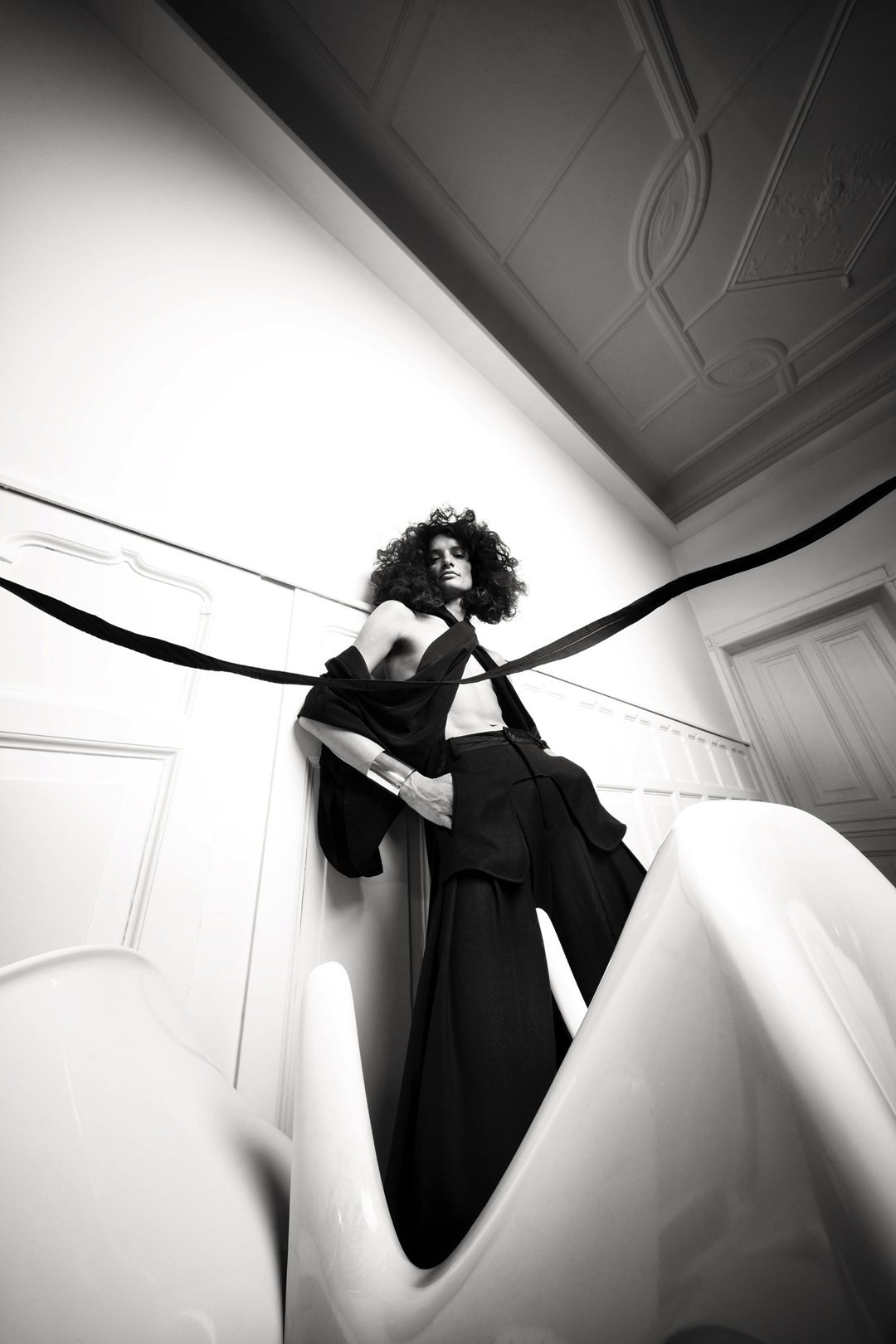

Event Gallery by Roman Krainski