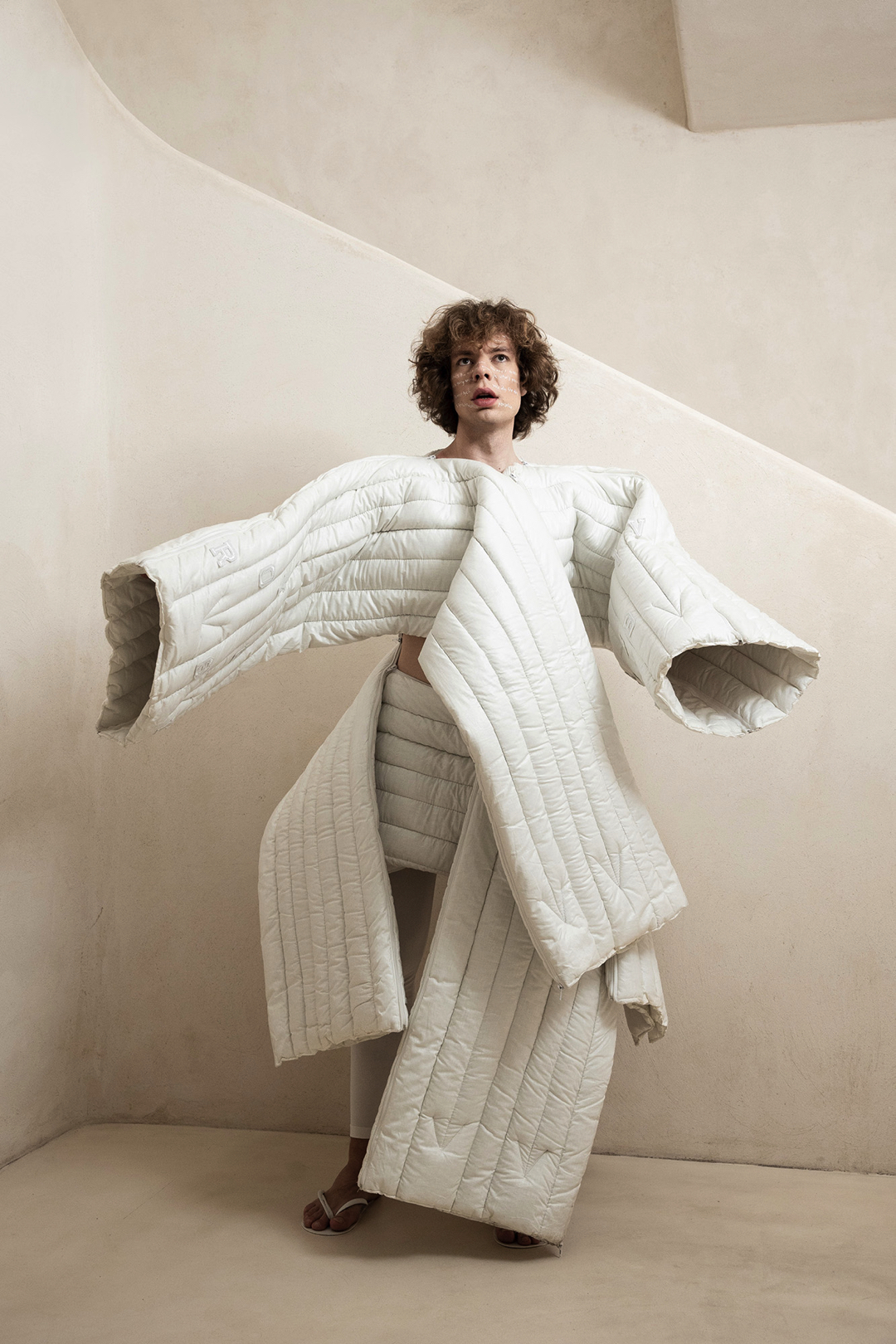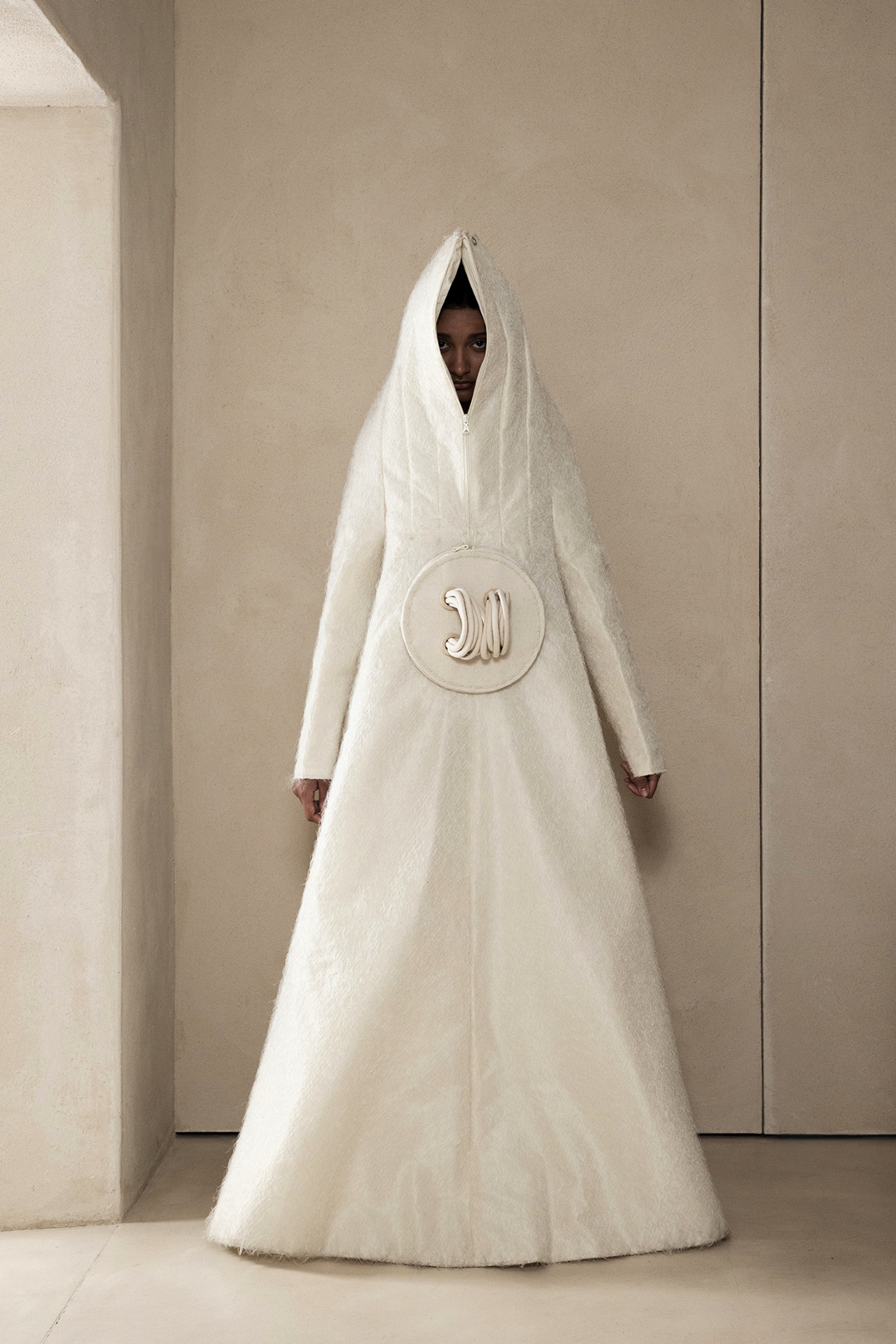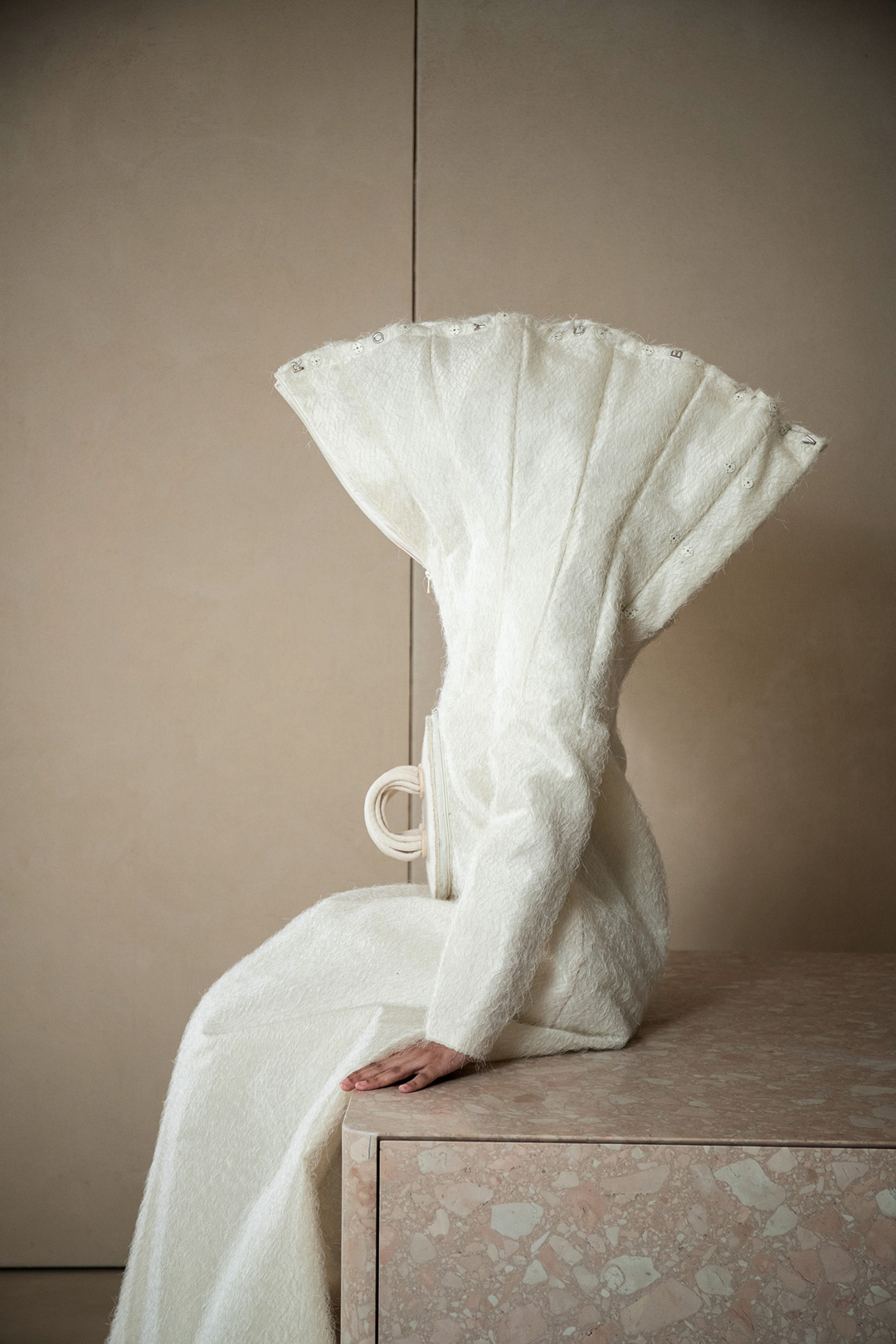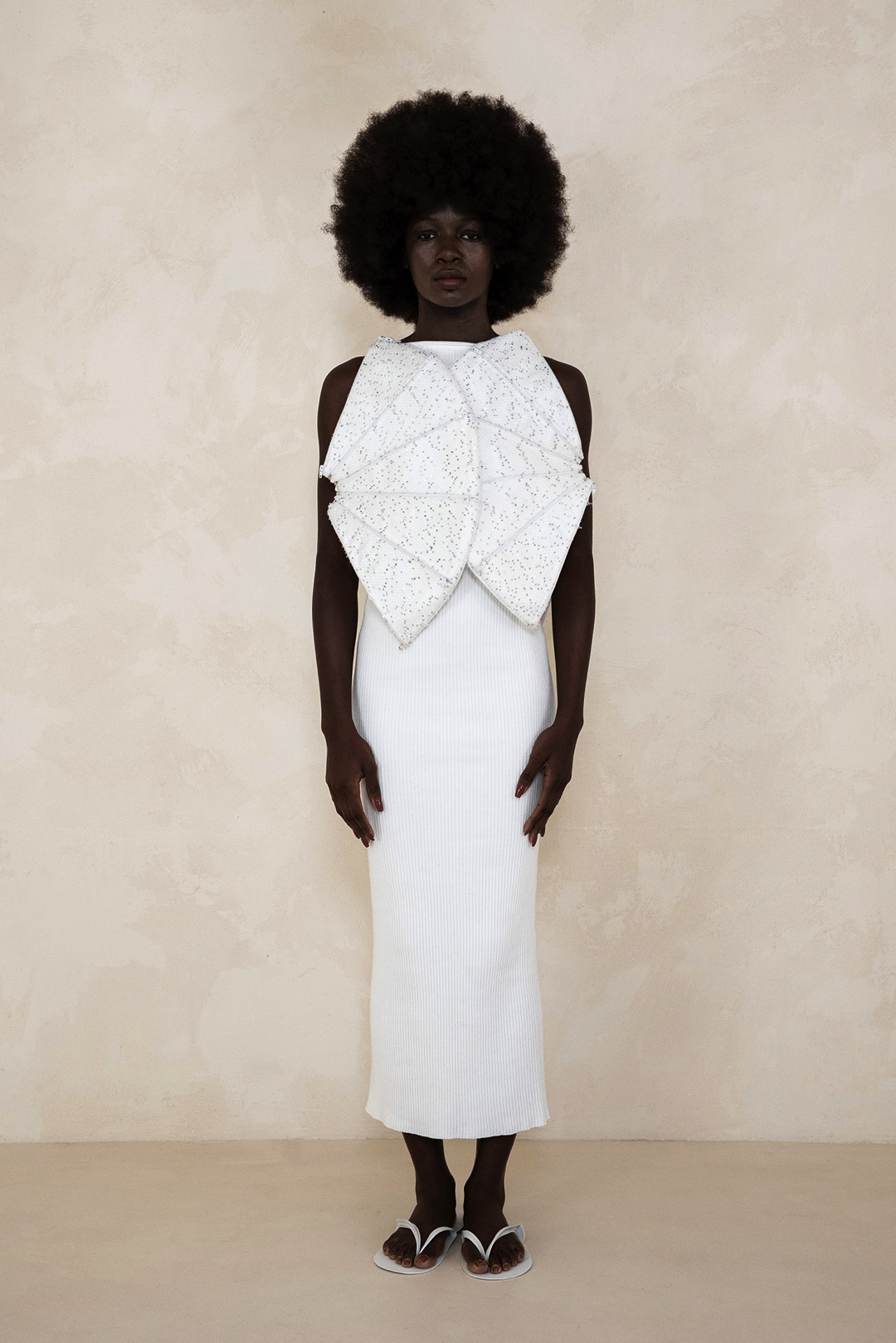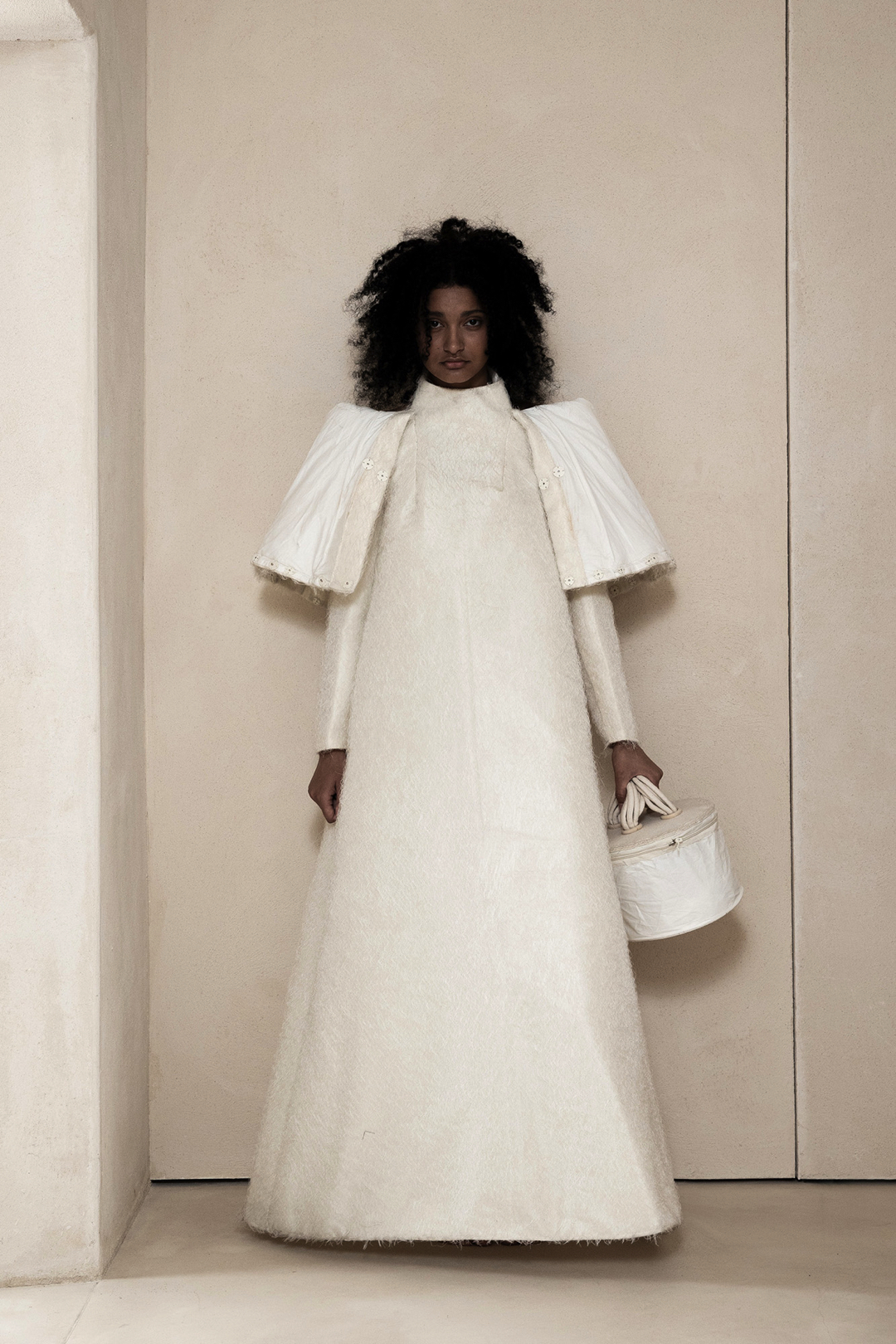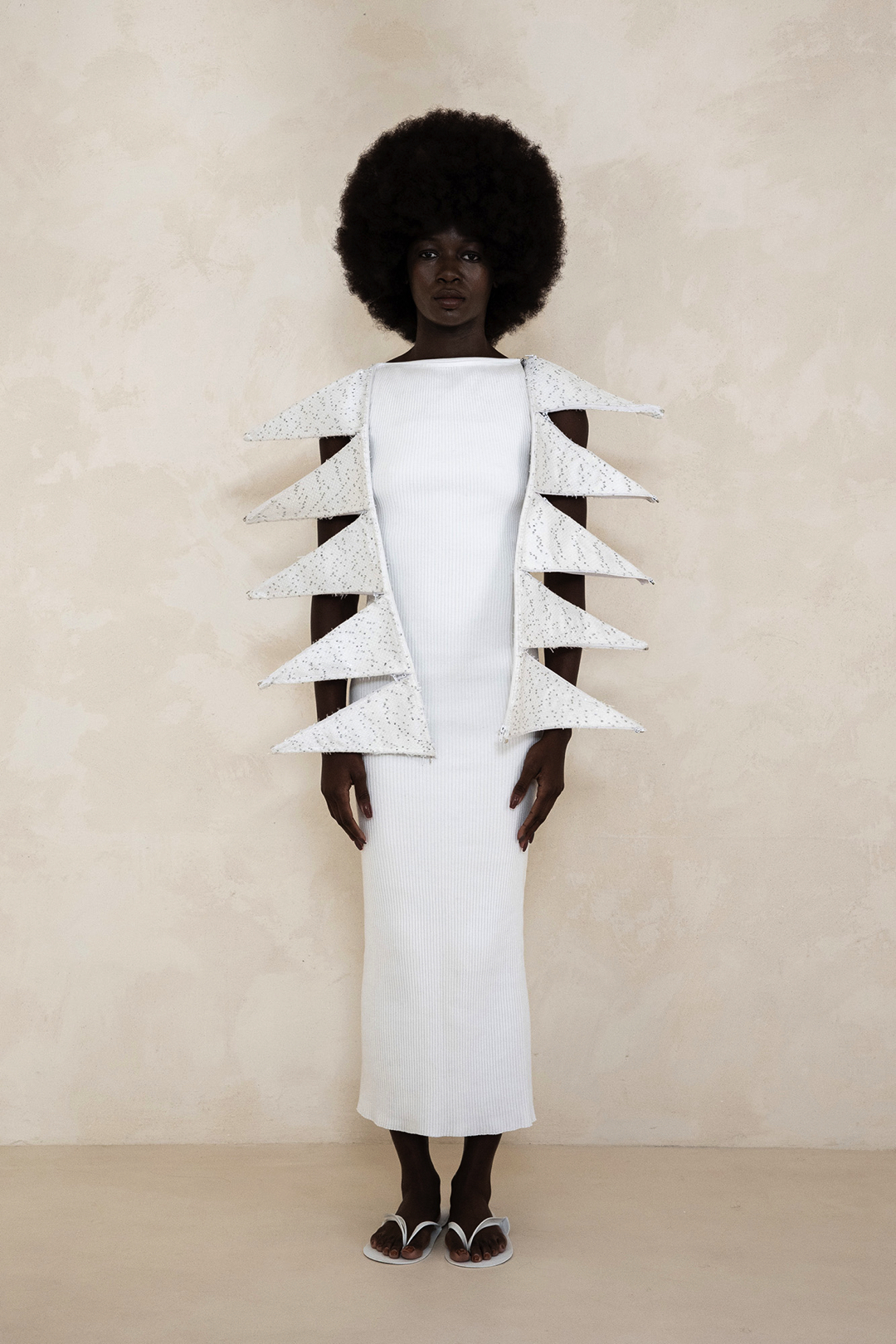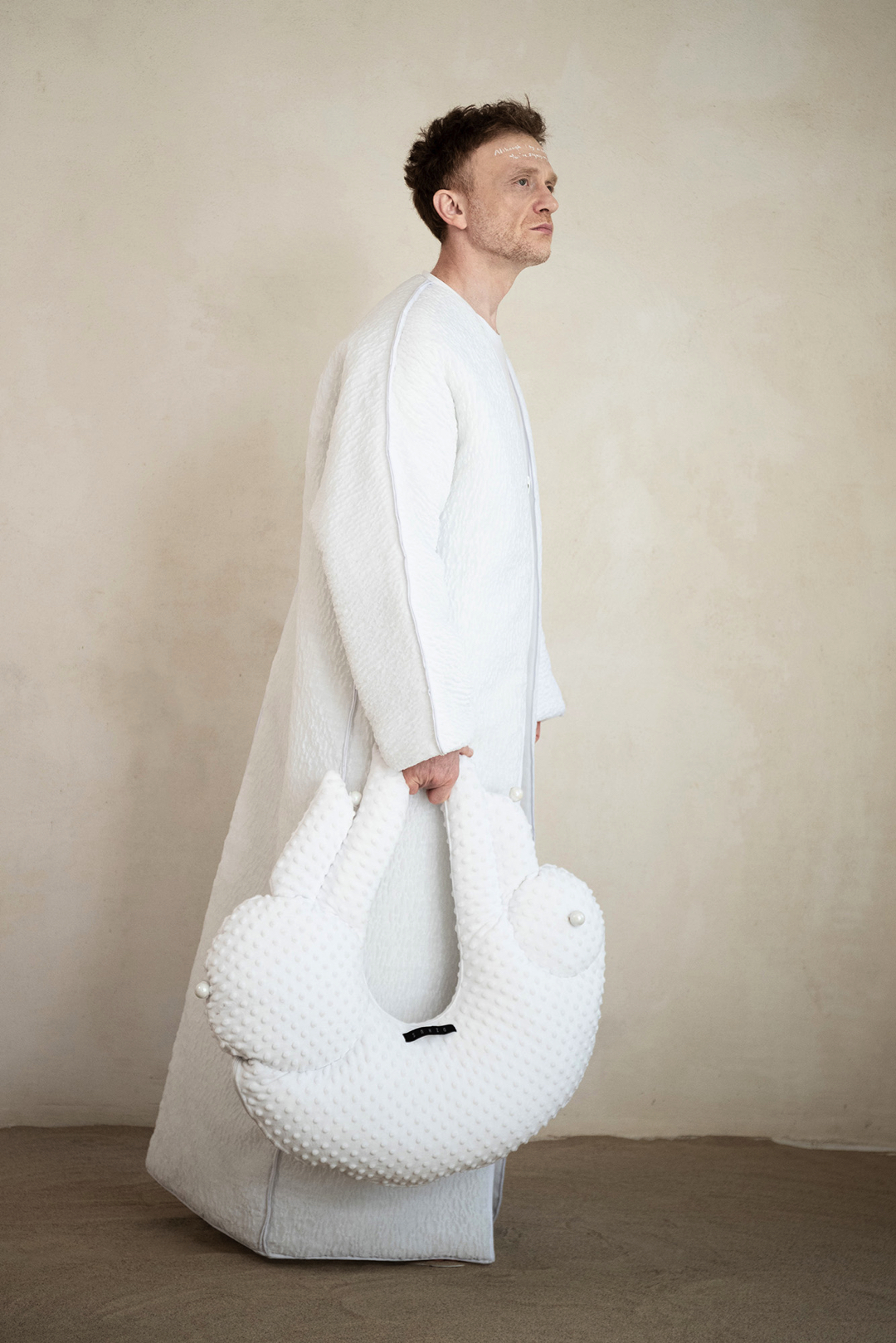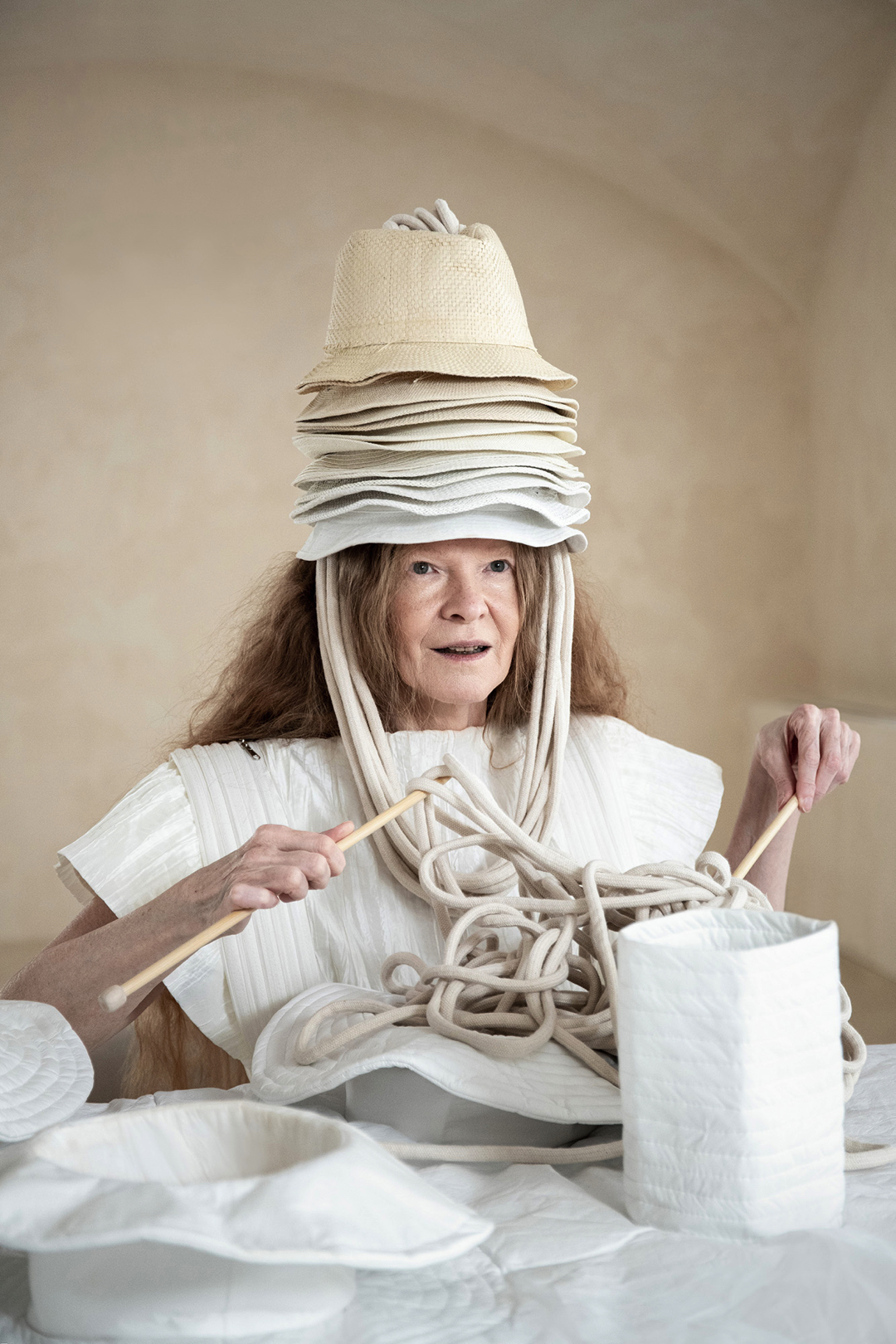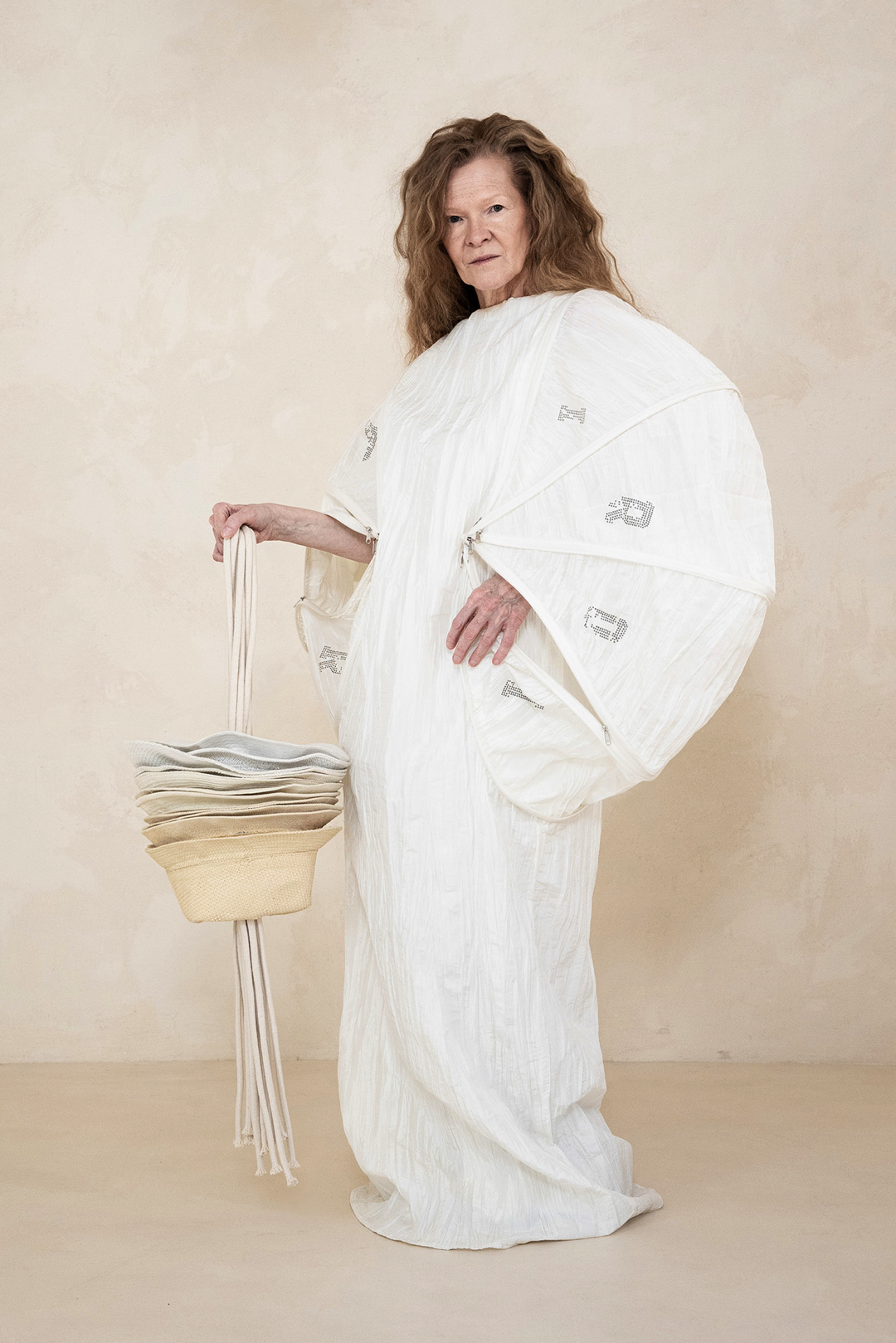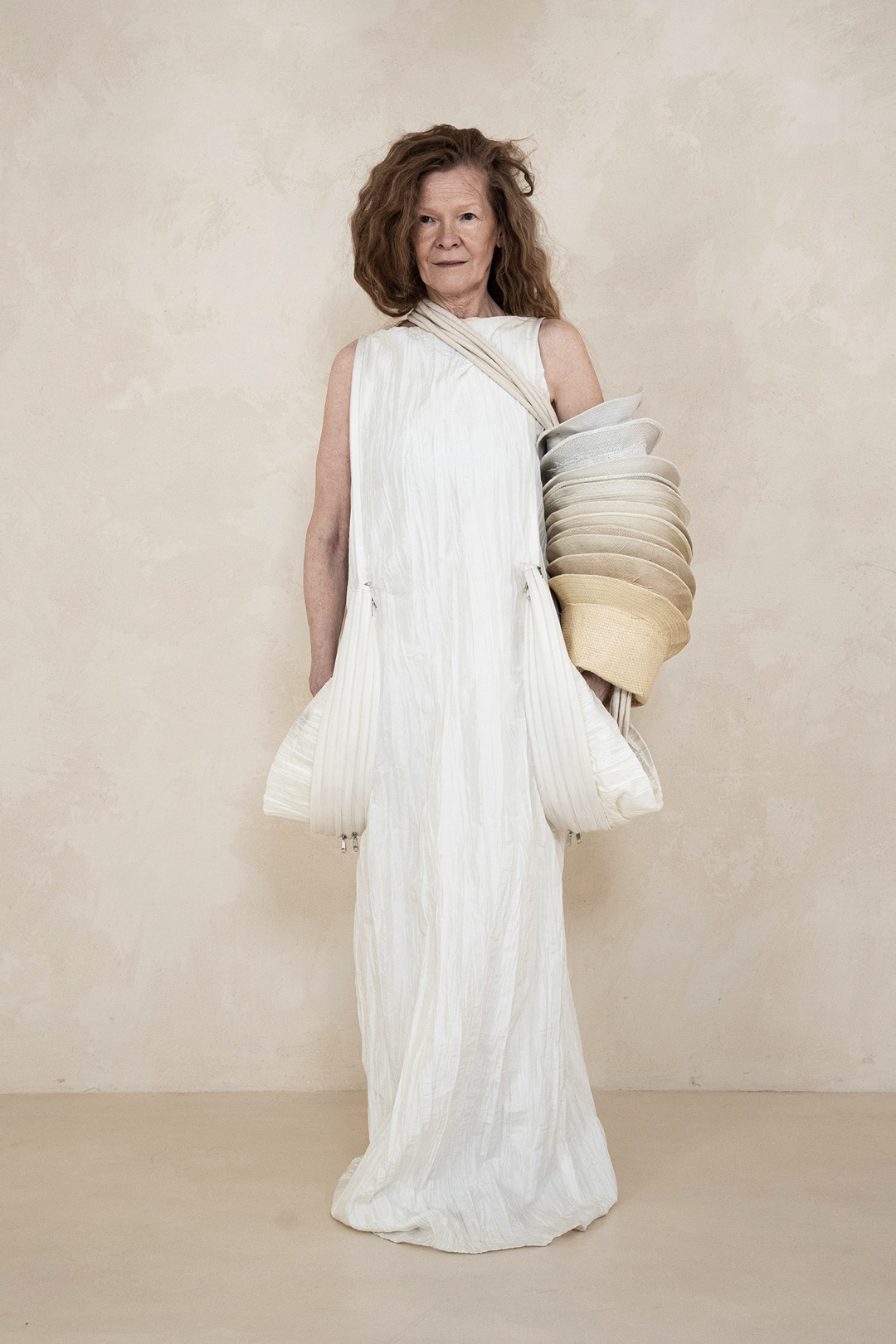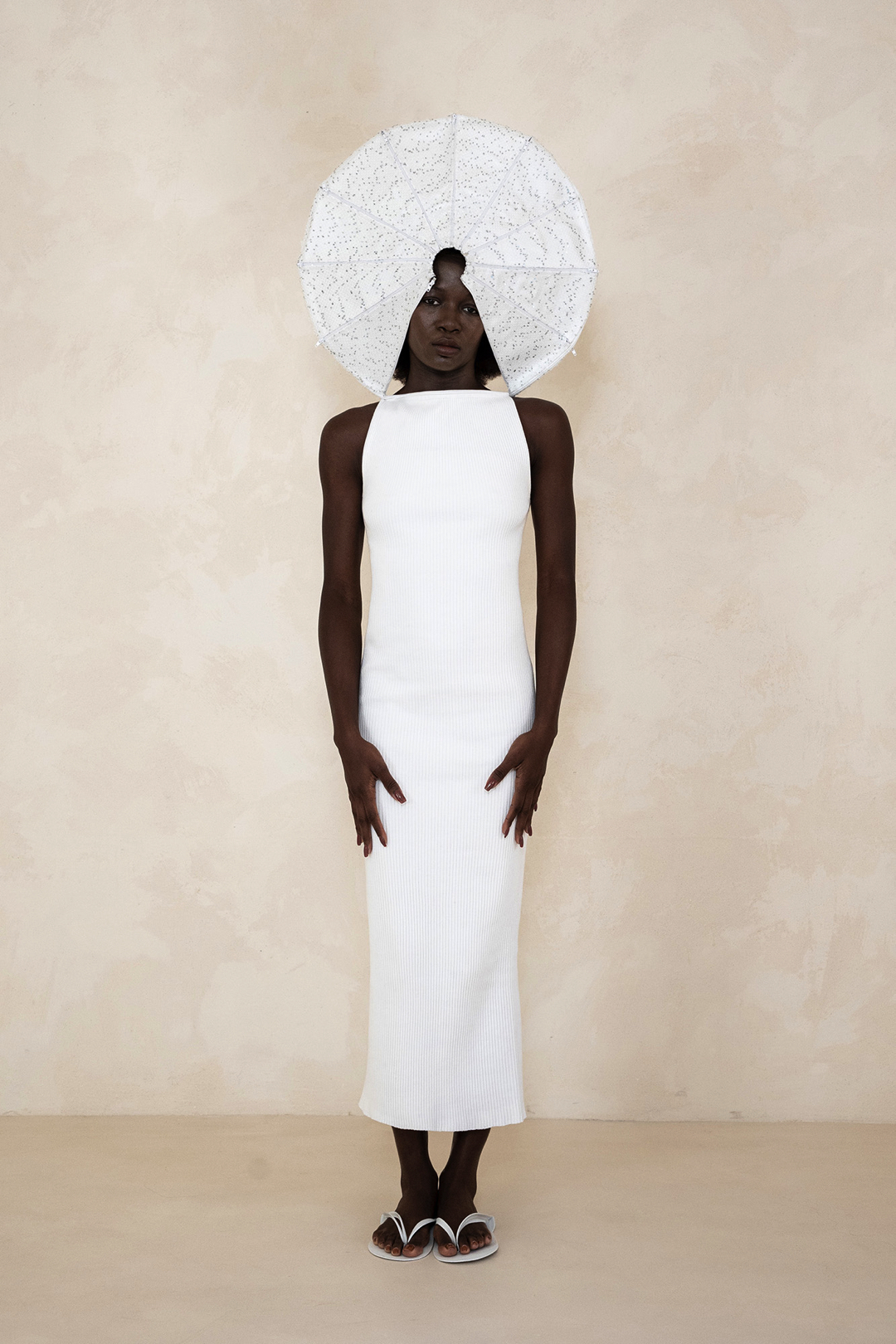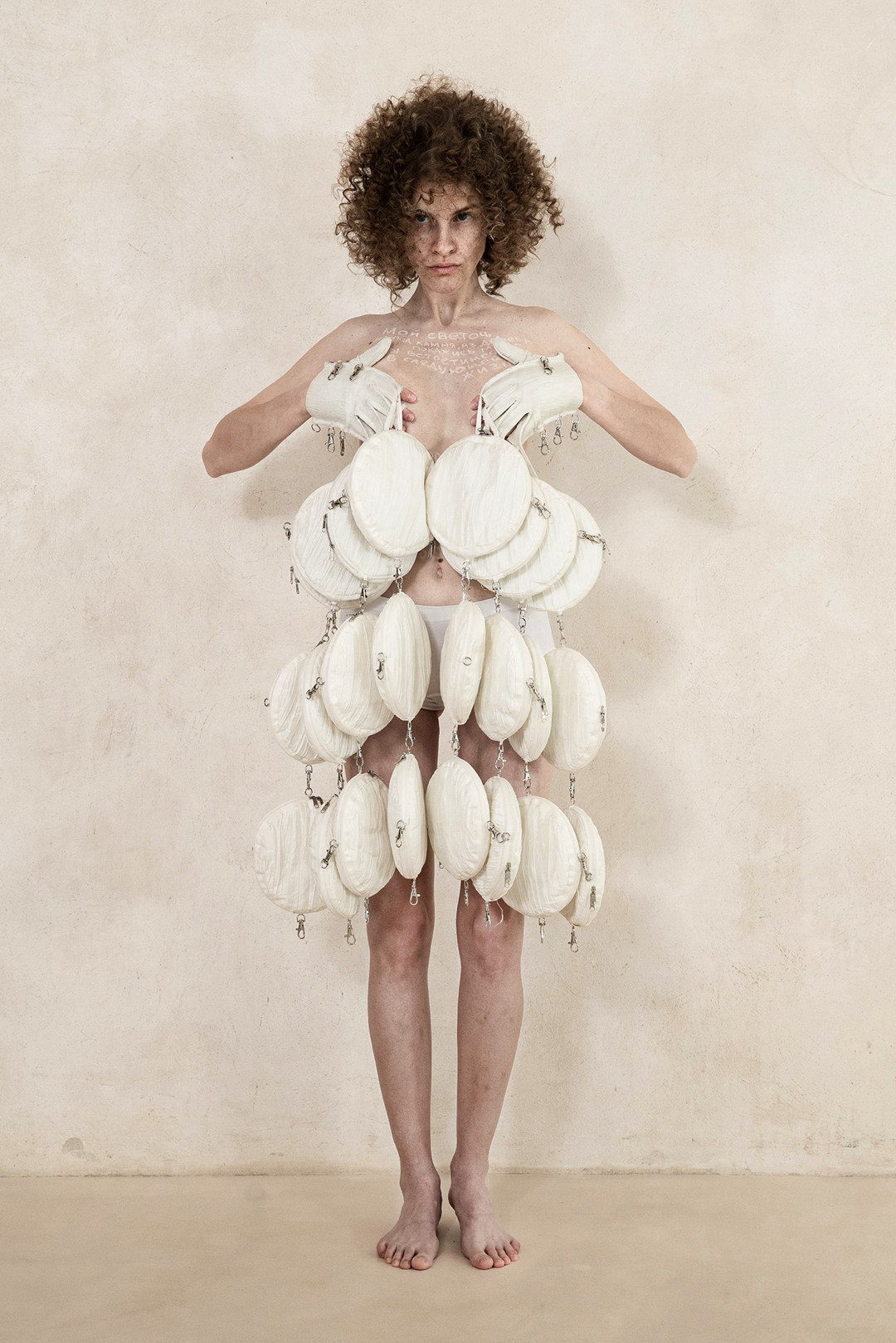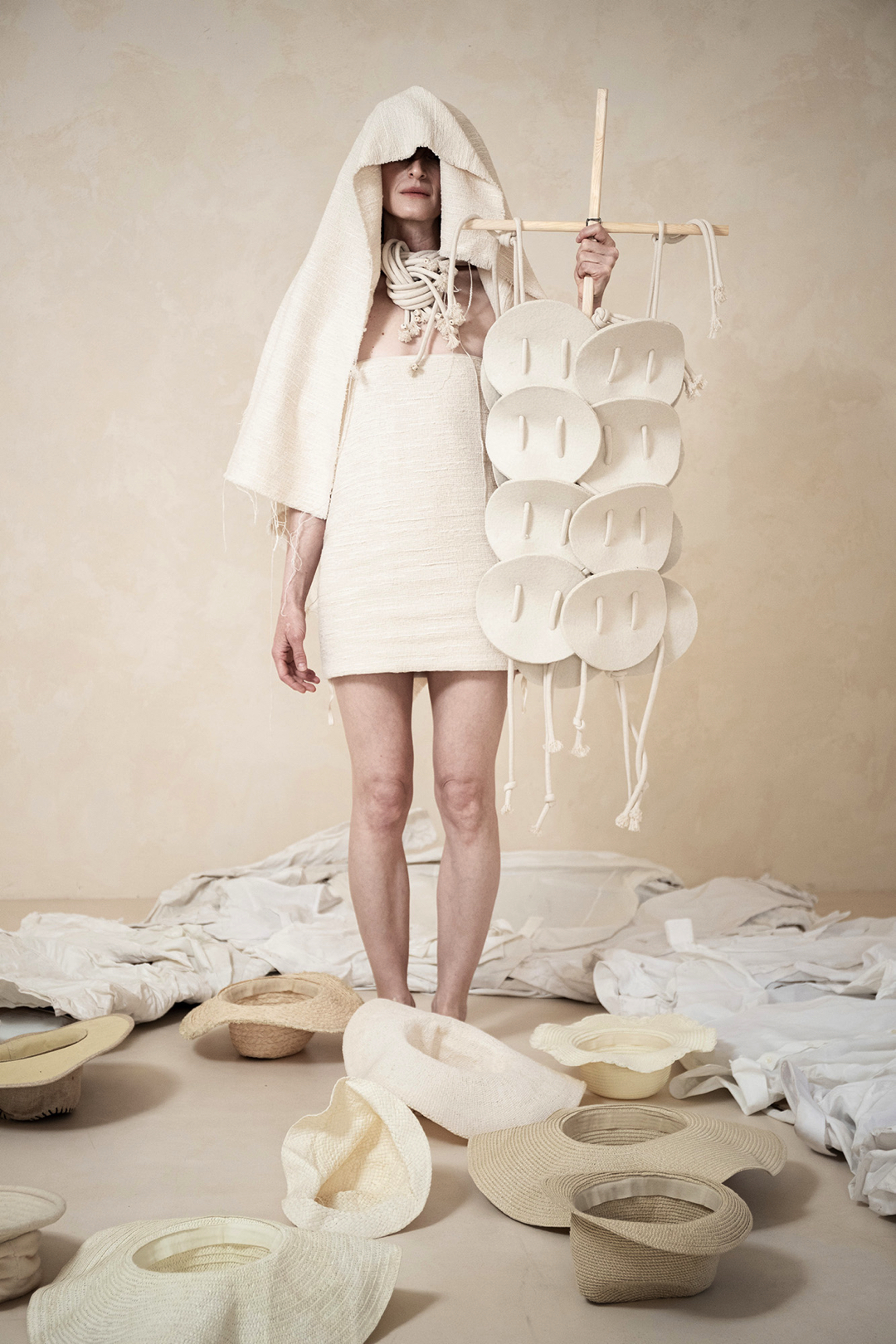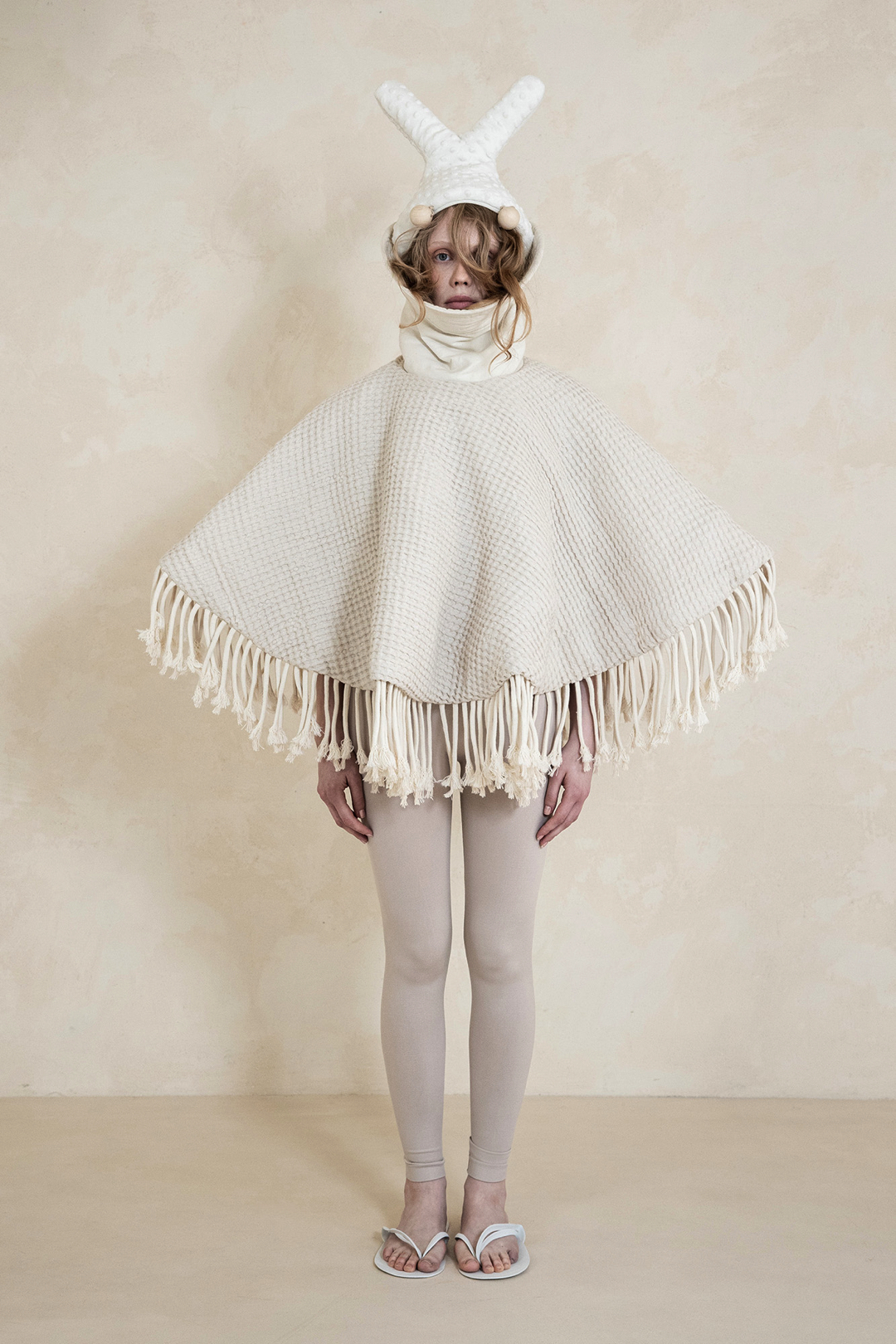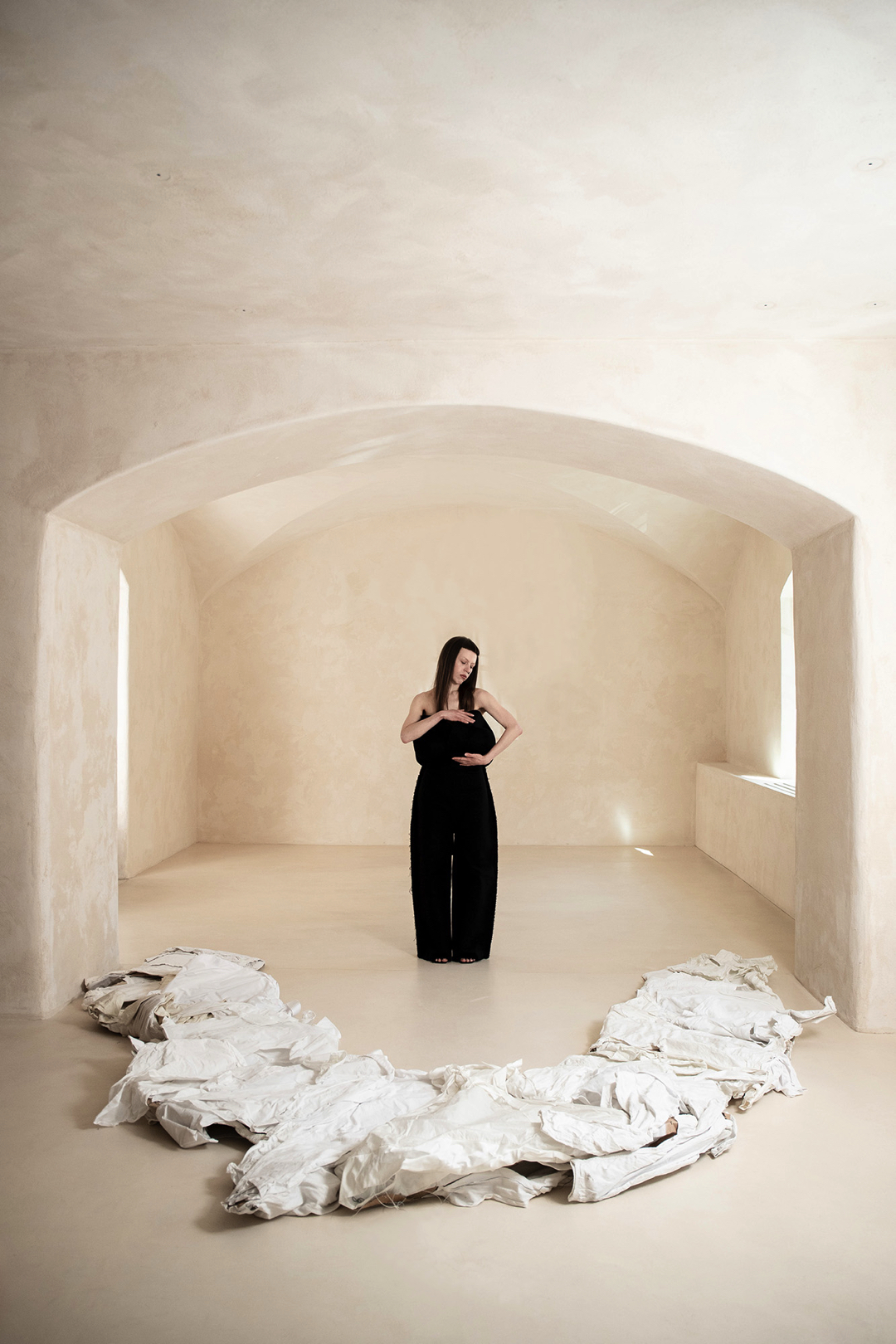
Dzhus unveils “Anticon” at the one-of-a-kind Concept_11 space, a project speculating on humanity’s “Utopia codes” designed to program happiness. Deciphering her own intimate trauma, Irina Dzhus saturates this cathartic collection with narratives of sociocultural conformism. Convinced that frustration grows on expectations, the Ukrainian designer ironises about the conventional symbolism throughout the entire history of mankind.
Irina points out to a correlation between a natural desire for self-discovery and the urge for homecoming – and reflects with an open question: “Can finding ‘where you belong’ in life replace the essential feeling of home?”. She defines her escapist coping experience as ‘inter-refuge’ and suggest utilising the civilisation’s semantics database to pave a path to a subjective idyll. Thus, any sign, term or notion appears to be a metaphysical source of power serving as a vector to ‘self-settlement’, as an efficient strategy versus existential dilemmas.
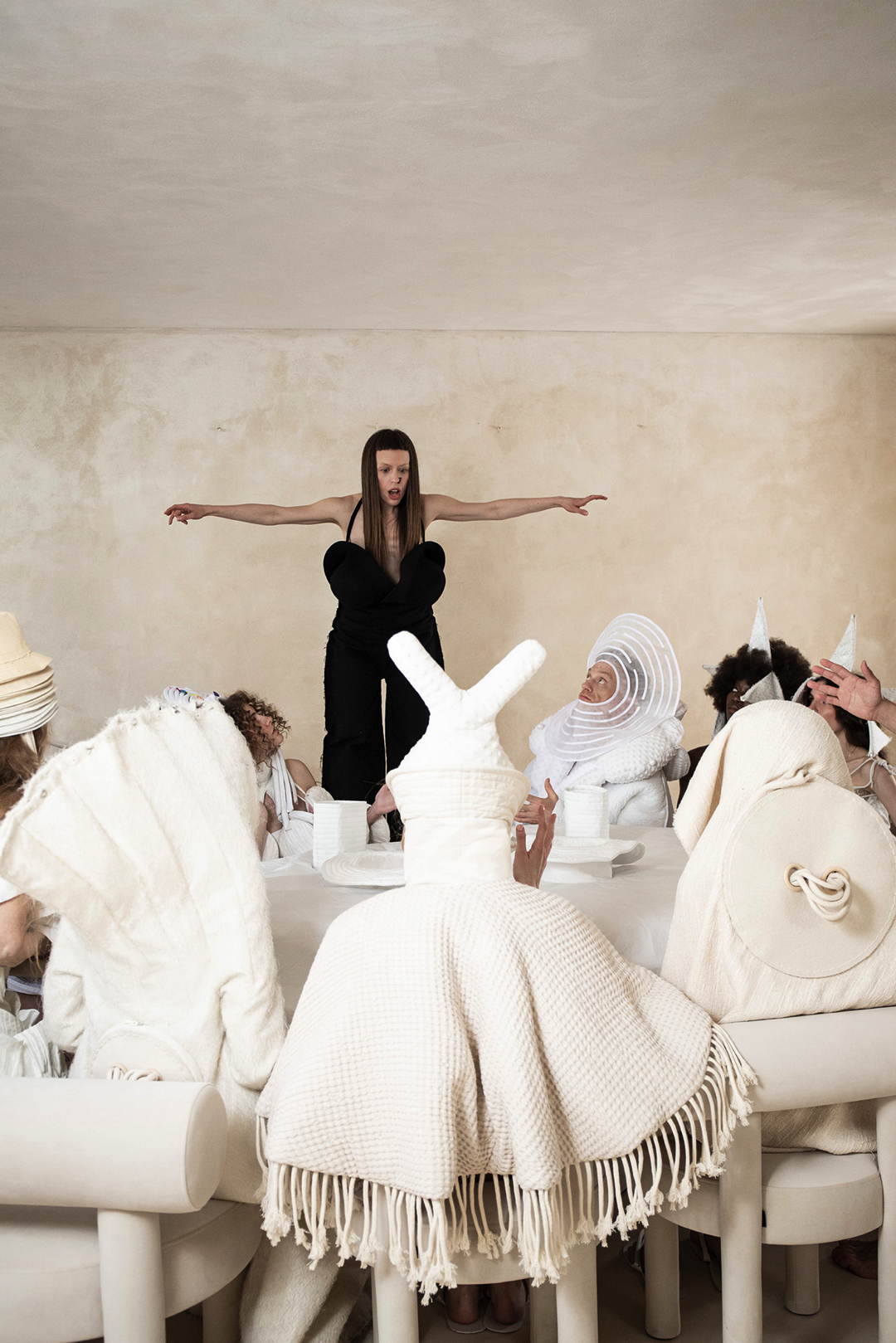
Irina Dzhus pays tribute to the world’s declared encoding systems, from spirituality to commodity. She desaturates the chromatic spectrum, replacing colours with abbreviations. The society’s self-consumerism is traced to gastronomy-related sacraments typical for all the major religions. Thus, a series of ensembles is inspired by ritual table setting. The mirrored modules also allude on this ‘autophagia’ phenomenon: a shape is indivisible from its antipode, a ‘counter-shape’, as they interact and co-nourish.
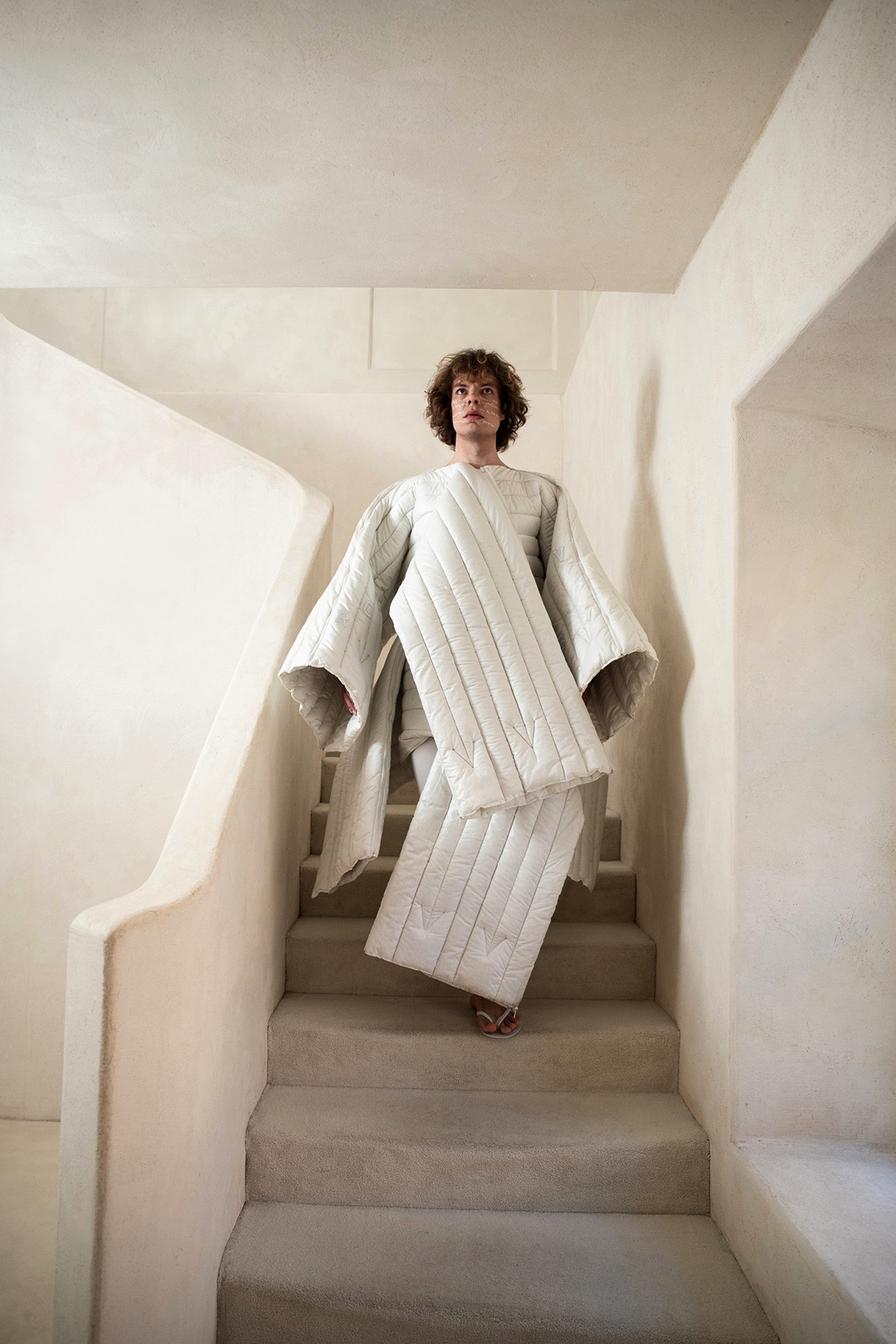
As she refers to Gnosticism, Kabbalah, Judaism, official and alternative Christian teachings, Irina Dzhus admits the burden of personal values and duties. Stoicism and self-sufficiency are translated through the ‘object=subject’ statement, embodied in multifunctional clothing items. Dzhus believes: whichever conventional system chosen to refer to is relevant as long as its waymarks show a way out of desperation. Furthermore, randomised references may well (if not better) lead to a destination point.
Irina Dzhus encodes the rainbow in blank, quilted surfaces. Leaving the exterior pure, she embellishes pockets and lining with rhinestones and jewellery, commemorating her own escape from the war in Ukraine through an eloquent tribute to the heartbreaking Holocaust stories. The labyrinth motif is dedicated to the Sinai wanderers driven by a spirit of homecoming. Unexpectedly, colours pop from underneath the clothing, as Dzhus paints the ‘wrong’side in the rainbow gradient. This ‘secret’splash of pigments amidst the total white collection carries a life-asserting message, suggesting an insight as a route to home, joy, and hence, fulfilment.
Compassionate to animals in the first place, Irina caricatures the society’s dualistic approach: from treating them as food to idealistic speculations about pets’ afterlife. Not only can we notice zoomorphic elements from Byzantine iconography, but also tiny paw prints on Dzhus’ rainbow. Glorifying a reunion with our true self, Dzhus flirts with the gender stereotypes, fetishising the lingerie leitmotif and corpcore, deconstructing the traditional social roles and accentuating their fluidity. While white sartorial trousers transform into an iridescent corset, Dzhus does not stop there and incorporates wearability into homeware objects. Thus, a tablecloth with serving on appears to be a flat-cut cape.
The “Anticon” performance conquered the catwalks in Berlin, Brussels, Prague, and Warsaw with a metamodernist version of the Last Supper mystery. The metaphorical, semi-interactive act evokes a sensation of a spiritual initiation as Irina Dzhus presents her innovative multipurpose designs. Dzhus plays a tricky intellectual game with its audience: in fact, a manifestation of abstract symbolism, “Anticon” provokes associations on the verge of conventionally acceptable. The Berlin Fashion Week premiere also marked Irina Dzhus’ international poetic debut as she accompanied the show with her intricate and sharply intimate multilingual verses.
The film premiere took place in Berlin at the Ukrainian art festival Volia on August 23, 2025.
A brand with a Ukrainian soul, Dzhus considers it a duty to support its country in these challenging times. The collection was fully produced by Ukrainian craftswomen, with the soundtrack composed by Hennadii Biliaiev from Kharkiv.
ABOUT DZHUS
Dzhus is a Ukrainian conceptual brand known for its multi-purpose outfits made of cruelty-free materials, created by designer Irina Dzhus. Her pattern-making innovations allow a sustainable wardrobe to be built from a few transformable garments. Since the war began, the brand has relocated to the EU, donating 30% of its profit to Ukrainian animal rights organizations.
Winner of the Cruelty-free Fashion prize in 2019 and shortlisted for the International Woolmark Prize in 2015, Dzhus is stocked in concept stores worldwide. The brand incorporates gender representation dilemmas into the core of its unisex design, challenging social standards and glorifying the human physique in its versatility.
Clients include American avant-garde musicians Zola Jesus and EYIBRA, and Eurovision 2016 winner Jamala from Ukraine, while the brand’s work has appeared in Vogue, Dazed & Confused, Elle, Dezeen, and Harper’s Bazaar. Dzhus has also collaborated with major productions such as The Hunger Games and Star Trek Discovery. Genuine and innovative throughout its 15-year history, the brand continues to challenge stereotypes about eco-conscious design and promote a thoughtful approach to contemporary fashion.
Photos: Courtesy of Dzhus
Location: Concept_11 @concept_11_warsaw
General partner: Choice Ukraine @brands_by_choice
Organisational support: Ototo Art Foundation @ototo.art.foundation
Film premiere partner: Hotel Continental – Art Space in Exile Berlin @artspaceinexile
Direction, poetry, styling, photo editing: Irina Dzhus @irina.dzhus
Sound design: Hennadii Biliaiev @man_without_one
Campaign photography: Marta Chudek @martachudek
Lookbook photography: Maria Salivonova @salivon_ph
Video: Yuliya Simutkina @sssimutkina
Styling assistance: Mariia Horbenko @mariia_horbenko
Makeup & hair: Karolina Żukowska @flying.brushes, Marta Kozłowska
@martakozlowska_makeup, Agata Kowalska @agatakowalska_makeuplover, Sveta Safronovskaya @sveta_saf_beauty
Technical production: Sviatoslav Mykhailov @mhlvsv, Gianluca Pica @notgianlu, Filip Kurczyński @filipkurczynski, Wojtek Nurzyński @wojteknurzynski, Oleh Shypkov @olegshypkov, Maciej Kowalewski @maciek_kowalewski
Backstage photography: Tina Zaborowska @ztinavl
Models & actors: Marta Gac @gacwoman, Adriana Gołębiowska @_adrianqa_, Kolas Vodonovsky @vodonovsky, Yuri Vedenyapin @yurivedenyapin, Kate Artman @katesmile2121, Yeva Batriak @rosyands, Agnes Samuel @agnessitta, Barbara Dmowska @kosmiczna_trumna, Rita Jako @rita_jako @ Gaga Models, Denis Novikov @deonij, Lena Shtyk @lenashtyk, Ania Kos @ania.e.kos
Soft furniture: Noom @noomhome
www.irinadzhus.com
@dzhus.conceptual.wear
Highlights from the Collection / Campaign