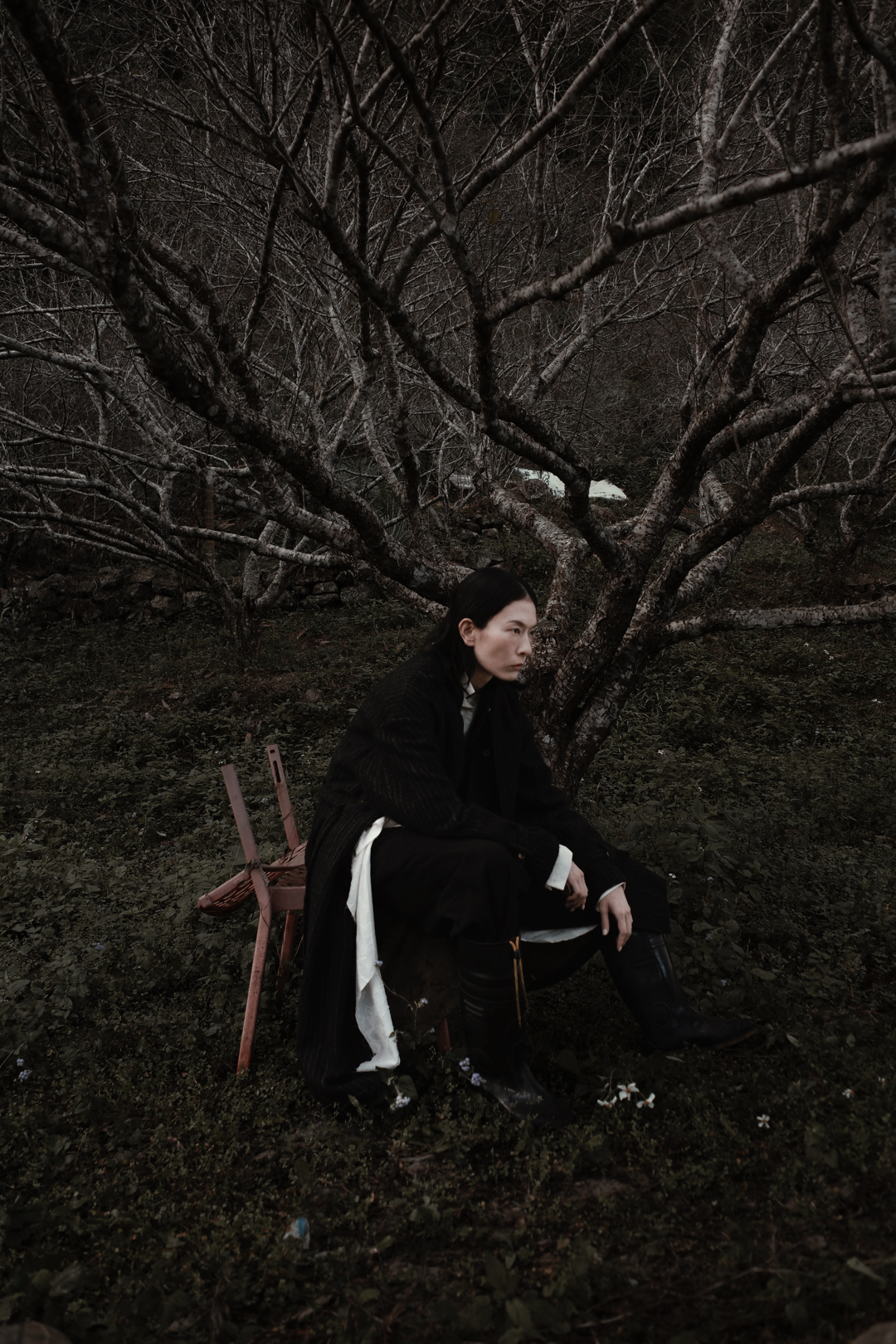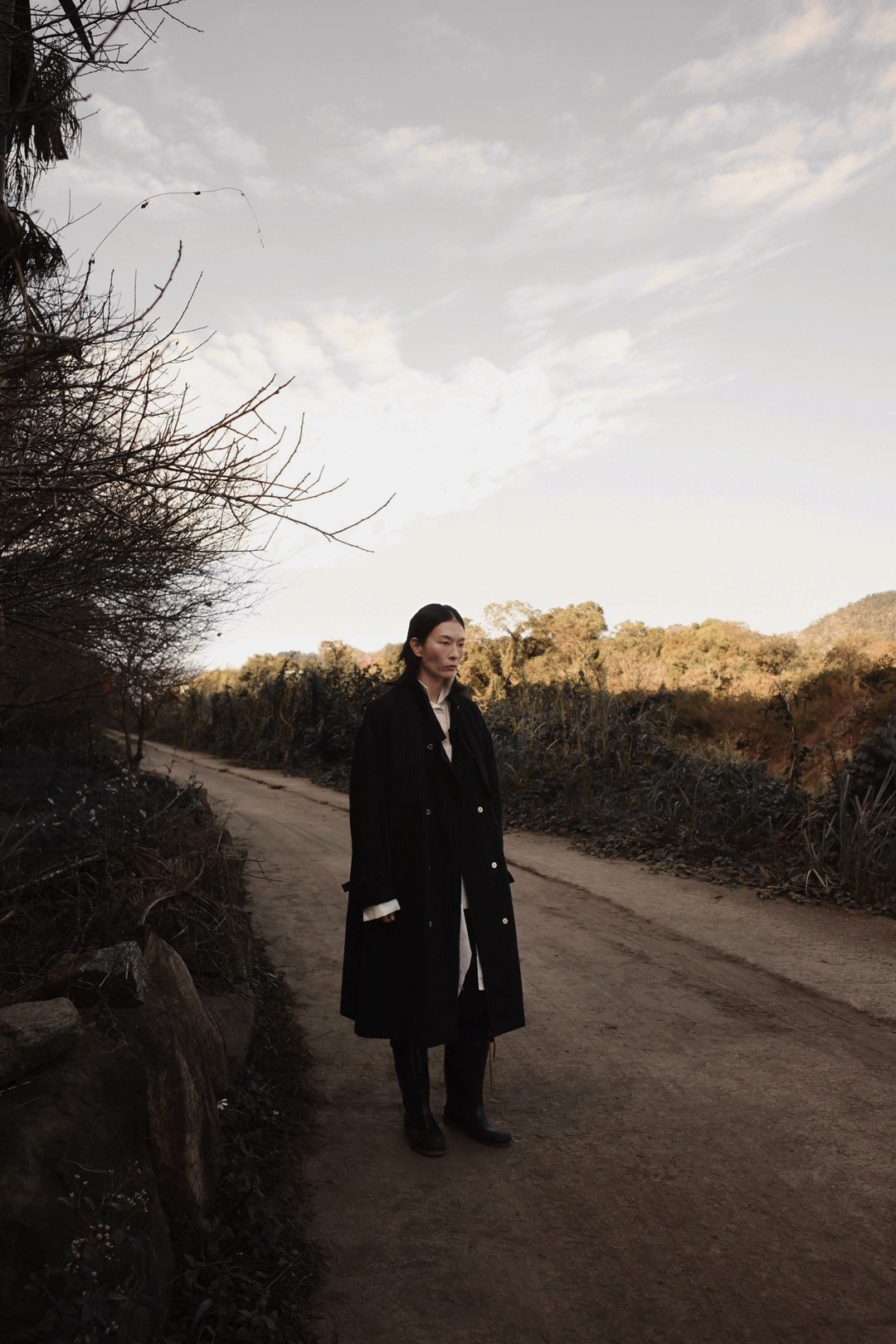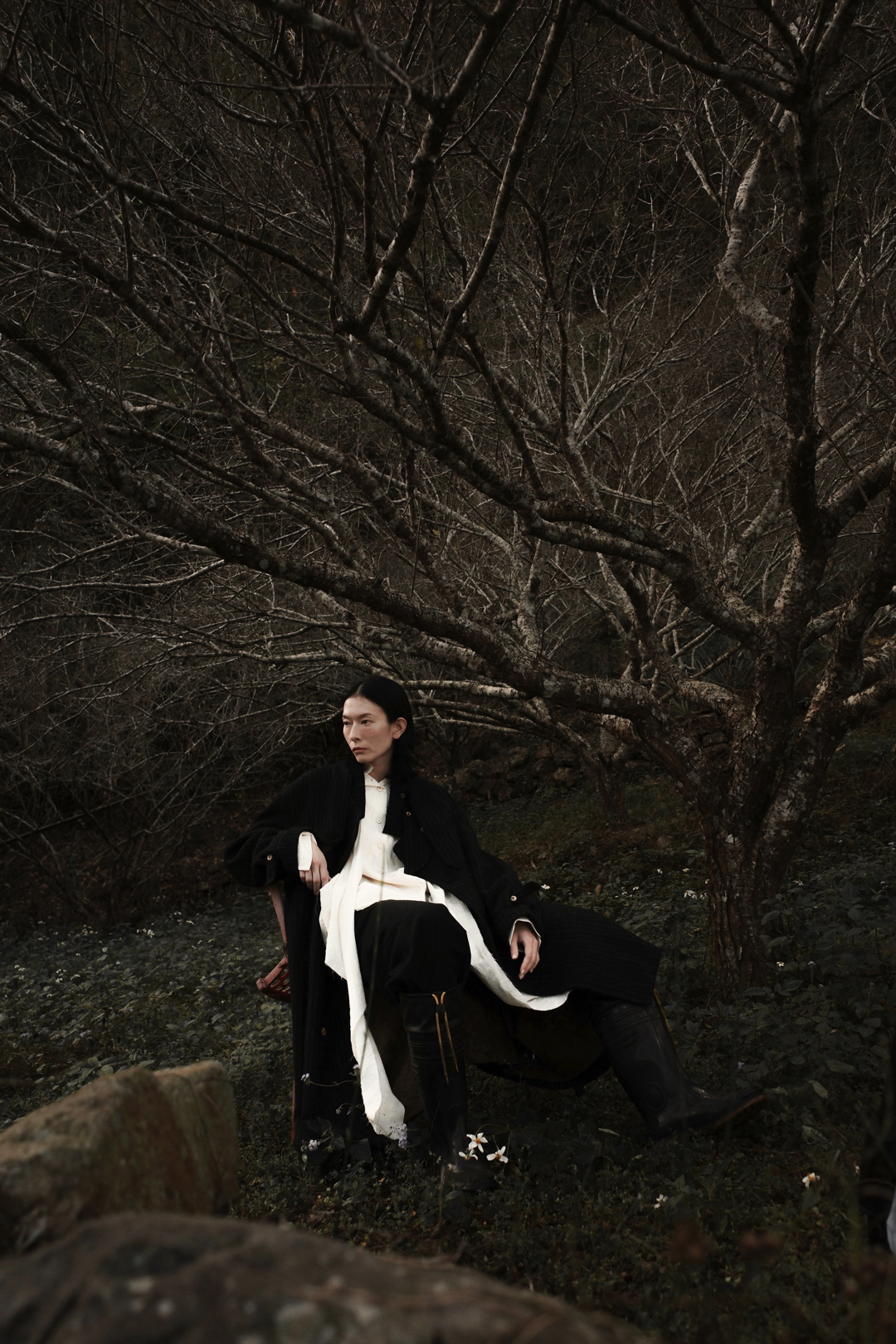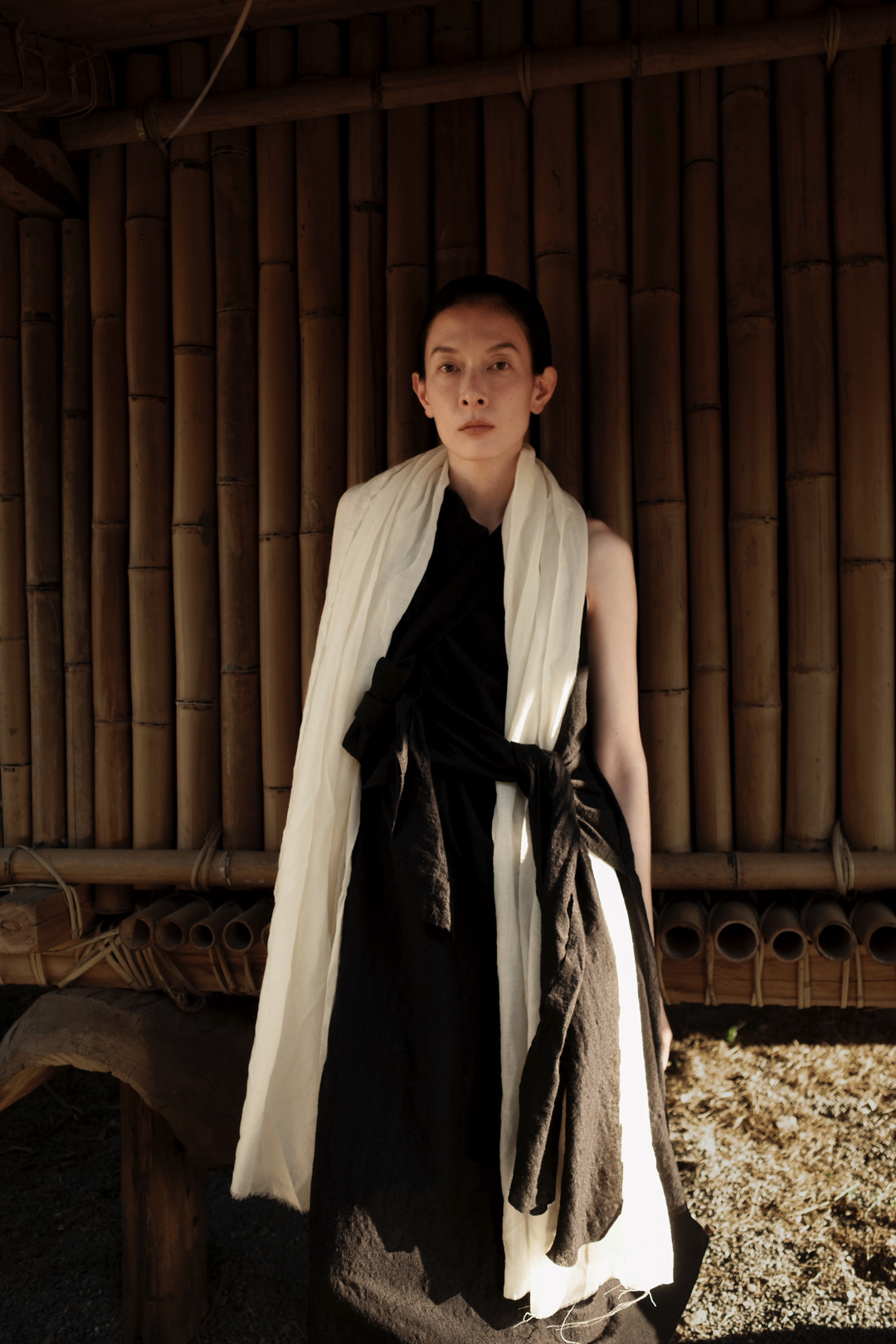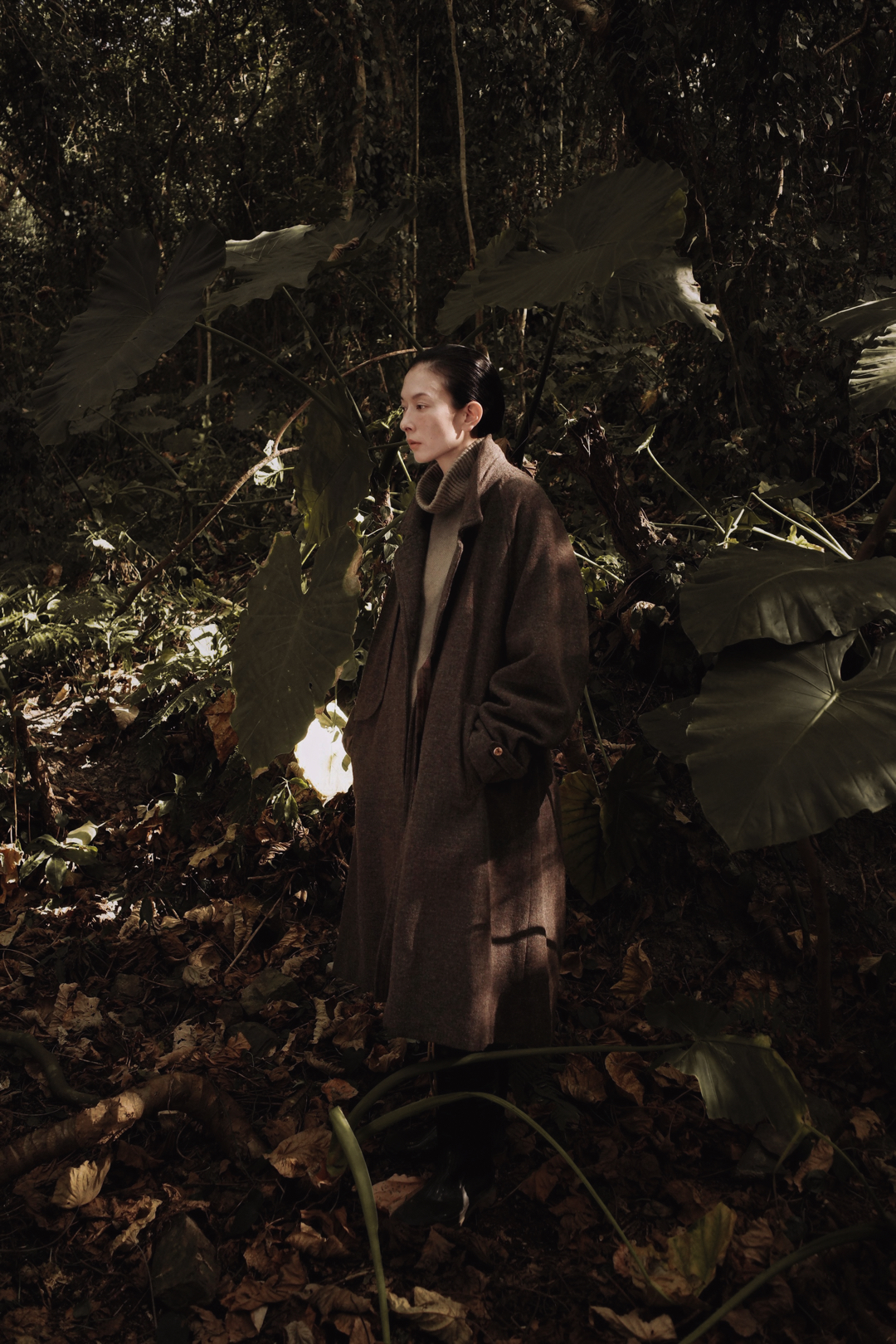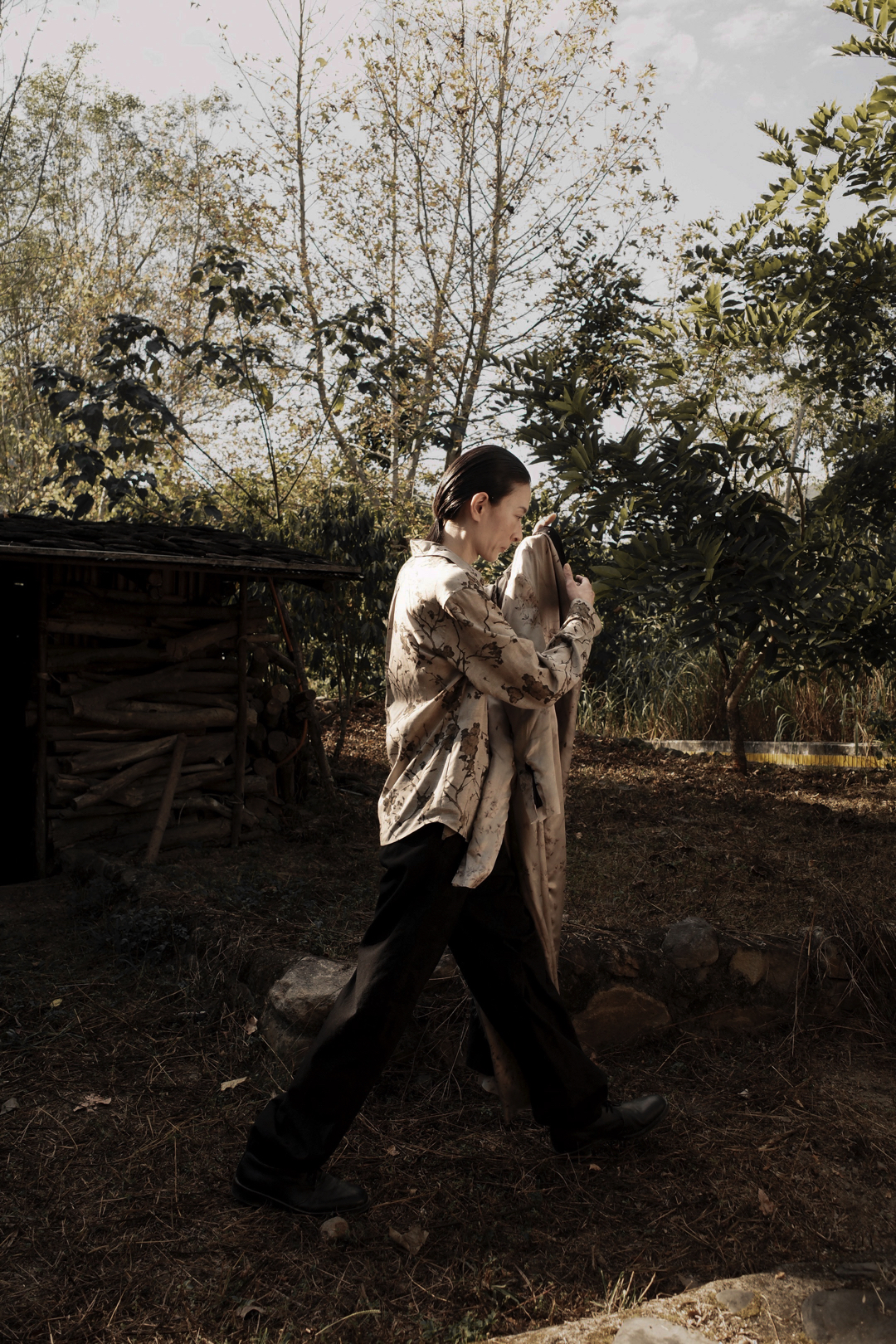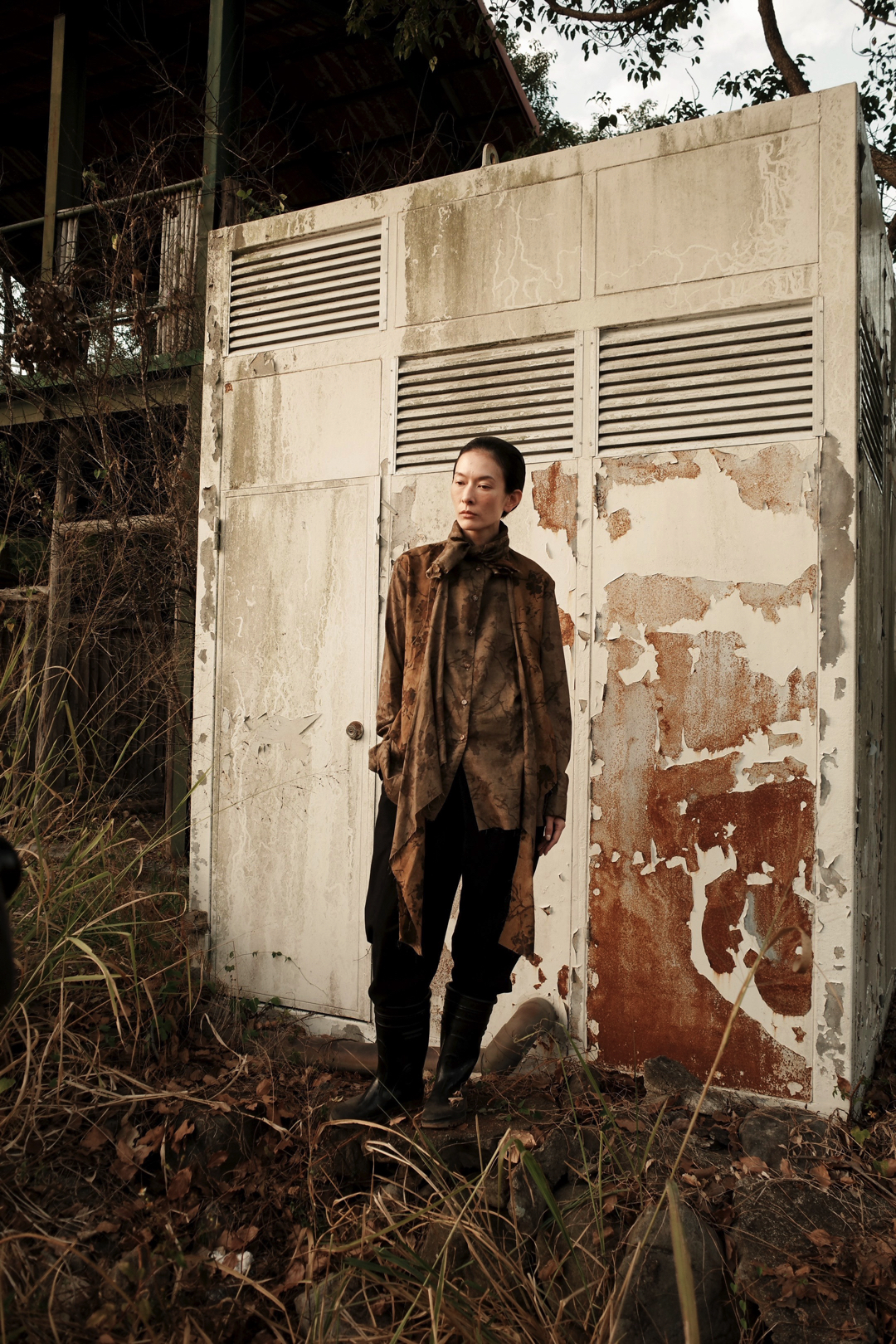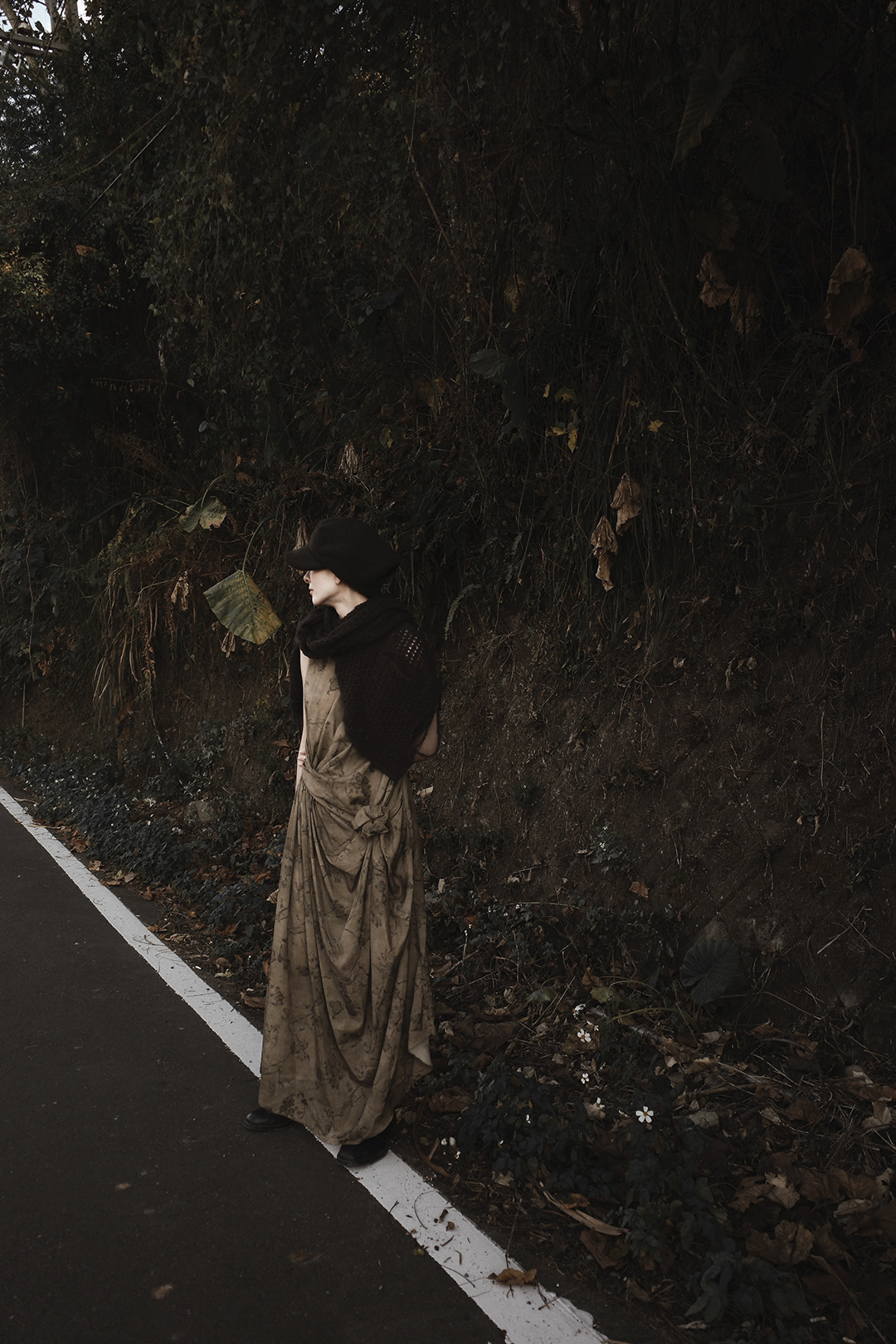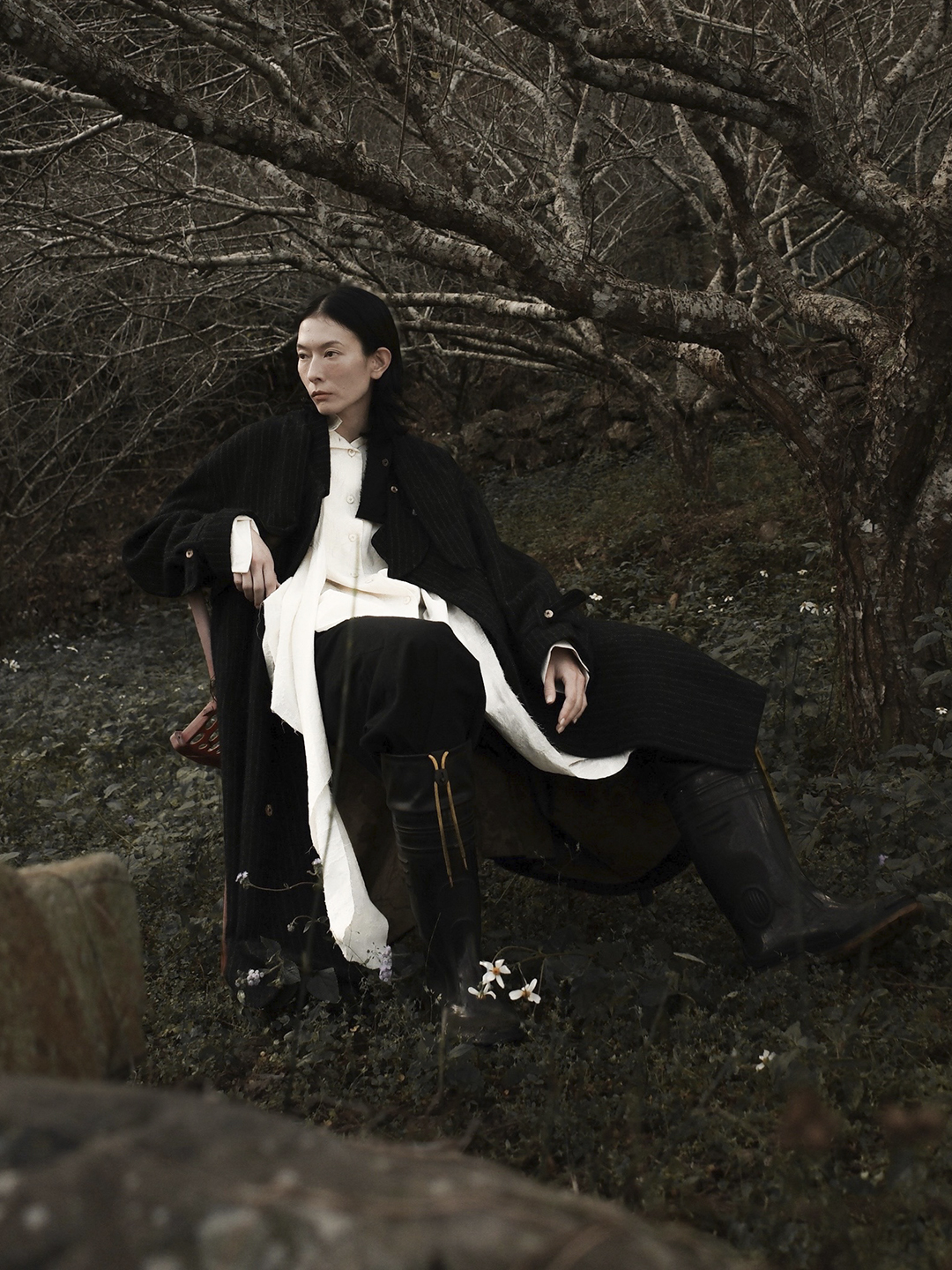
Existing at the crossroads of inheritance, assimilation, reinvigoration, and difference, Chiahung Su’s FW26 collection engages with the far-reaching historical tapestry of the Seediq, positioning Taiwan as their pre-historic homeland rather than a contemporary point of reference.
Developed in collaboration with artist and preservationist Seta Iban, and in dialogue with Italian and Japanese weaving artisans, the collection retraces cultural threads connecting Indigenous communities dispersed across East Asia, from the heartlands of Taiwan to the islands of Polynesia. These exchanges unfold through shared techniques and material practices rather than symbolic citation.
In addition to utilizing Taiwanese-grown linen and ramie, Chiahung Su and Seta Iban continue to work within a circular biosphere by planting and harvesting their own ramie fibres, weaving them into bespoke textiles using methods passed down by the Alang Nakahara tribe’s elders. Hand-woven fabrics derive their earthy tones from traditional dyeing processes: ramie absorbs its sun-bleached hue from Shoulang yam flesh, cotton draws earthen color from pomegranate skins, and silks take on deeper shades from blood wood and Chinese gall.
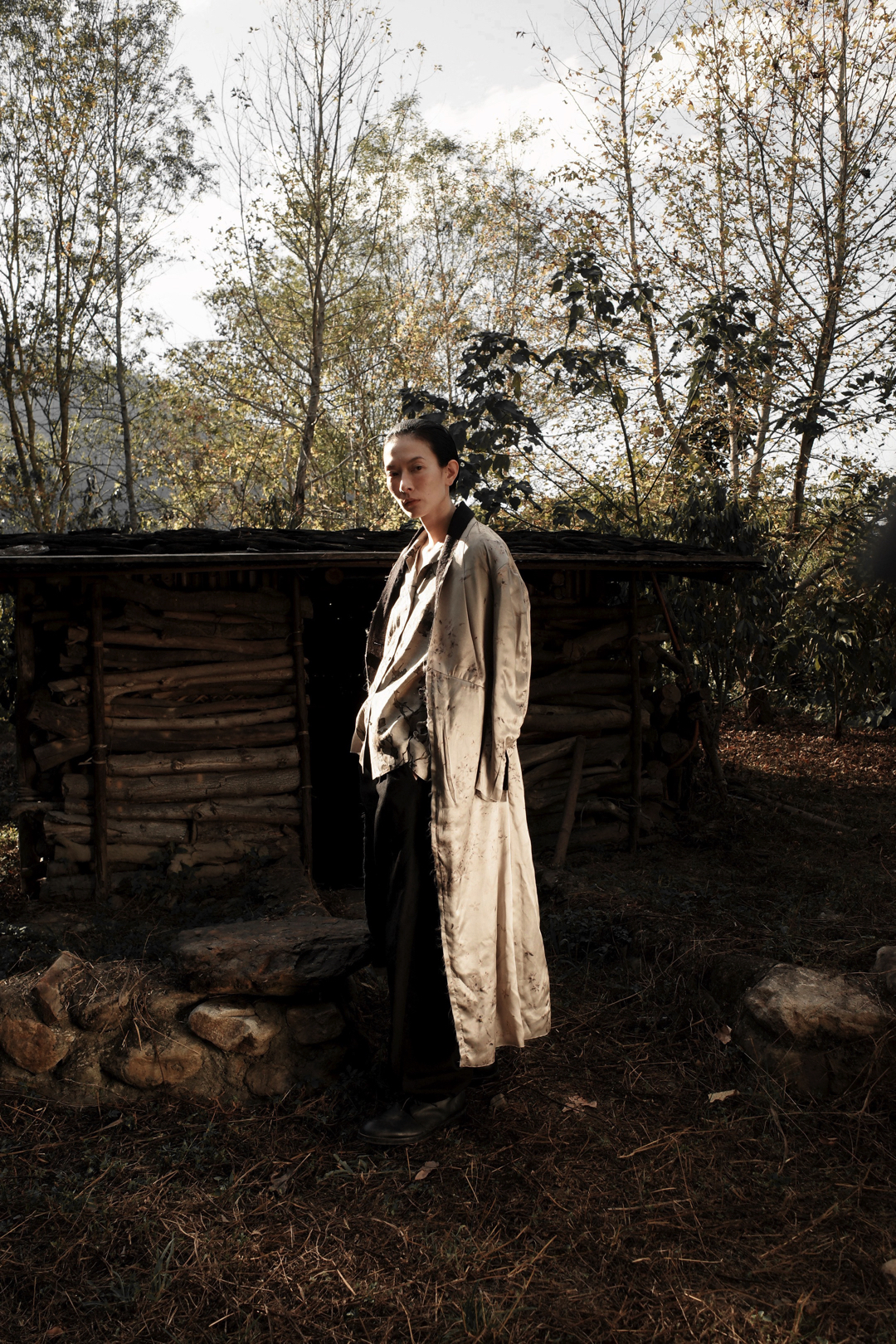
This season, the collection brings together the hands of Alang Nakahara artisans and Kuni weavers from Aichi, Japan, each contributing techniques transmitted across generations. Their narratives converge within co-woven fabrics, where wool yarns hand-twisted by Indigenous makers interlace with cotton, linen, and ramie fibres woven by Seediq craftsmen.
Across the collection, traditional patterns recur as structural markers rather than ornament. The bow evokes protection for hunters; the wave reflects the river as maternal force; and the rhombus symbolizes the ancestral eye. The latter also draws from the form of the traditional Seediq bamboo basket, an object that accompanied women throughout their lives, appearing resilient, yet functioning as a soft net safeguarding the family’s livelihood.
Taken as a whole, the collection unfolds as an anthropological map of East Asia, shaped by multiple bloodlines, shifting appearances, and interwoven histories of Taiwan’s Indigenous peoples.
ABOUT CHIAHUNG SU
Built on the Japanese aesthetic principles of wabi-sabi and mono no aware, Chiahung Su’s unisex garments are informed by the beauty of impermanence and imperfection. The label draws from a convergence of Japanese and Indigenous Taiwanese cultures, working with ancestral textiles and techniques from both traditions. Garments are crafted from reclaimed materials using fully sustainable practices.
Photos: Courtesy of Chiahung Su
www.chiahungsu-store.com
@chiahungsu_
Highlights from the Collection