

By Anastasiia Spasova | Fashion Writer and Curator
RESTRAINT AS FORM
Graduate shows tend to reward volume, and most young designers know it, which is why it takes a particular kind of nerve to arrive with a debut about restraint. Antonína S. Jarisk’atsi presented “S.Control”, her final collection for the BA in Fashion Design Technology: Womenswear at London College of Fashion, at Candid Arts Trust on 10 December 2024, with show production by Fetchish Studio. From the first look it was clear that she had chosen the harder path. The collection is about discipline, and it keeps returning to one question: at what point does the structure that holds a body upright begin to confine it?
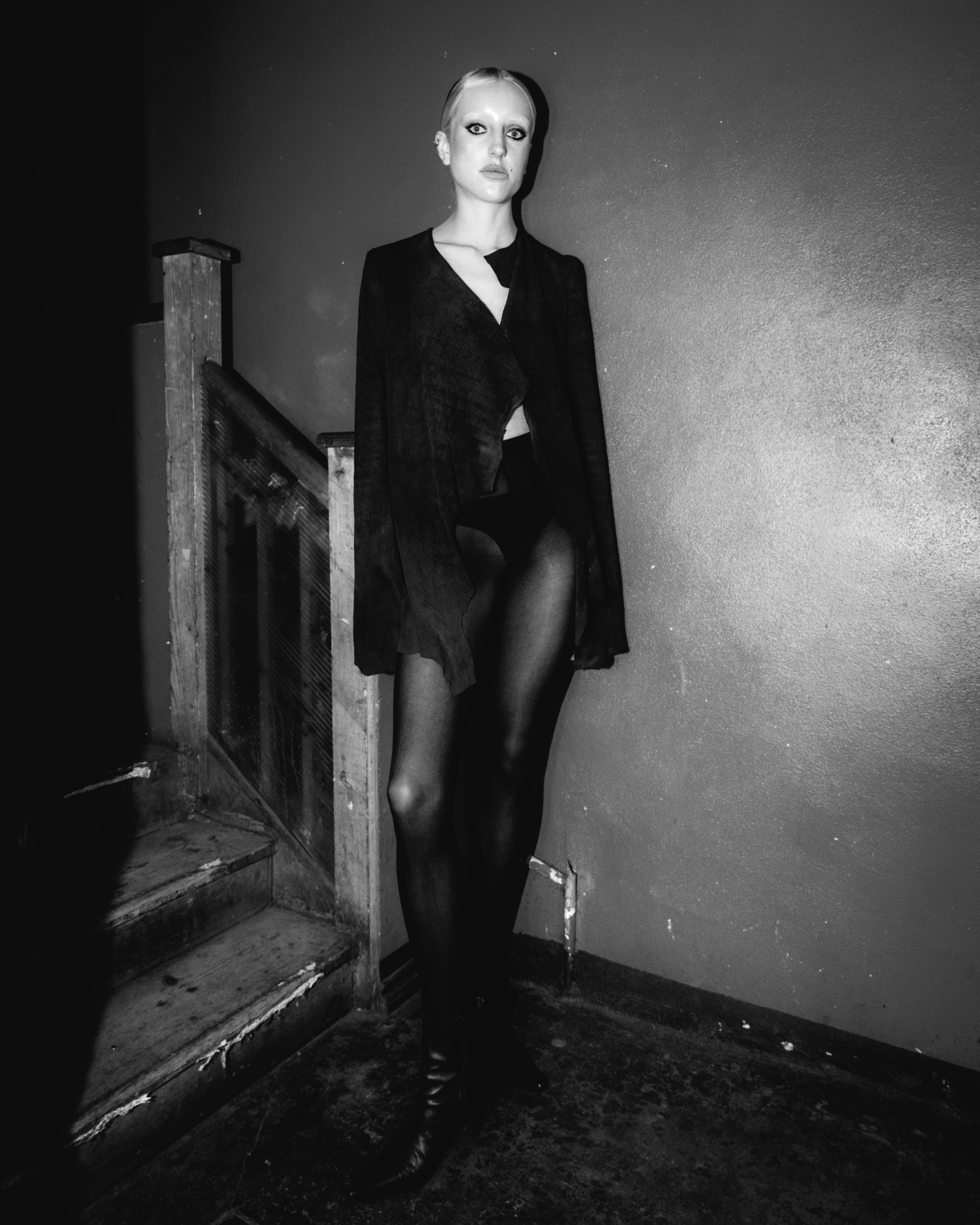
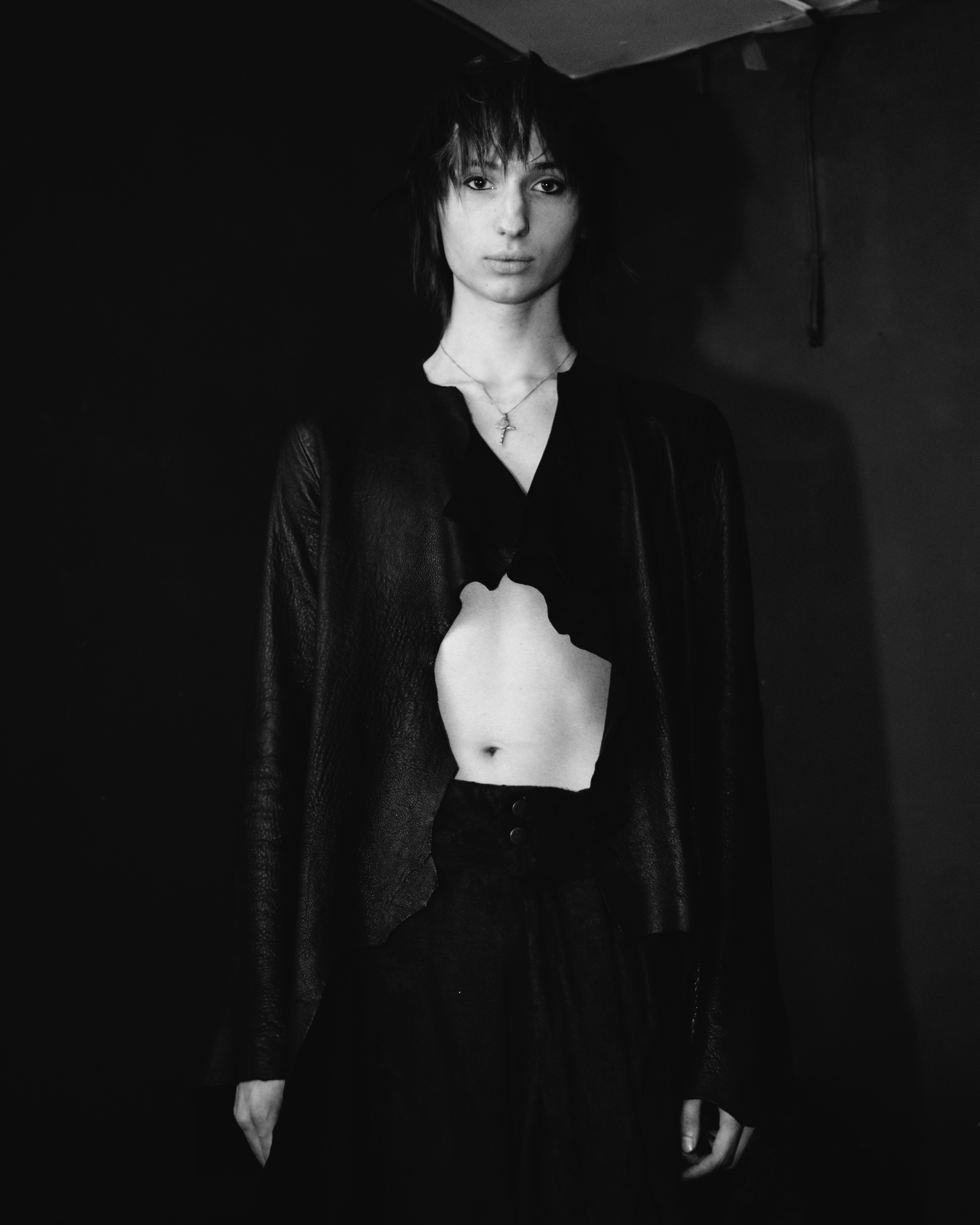
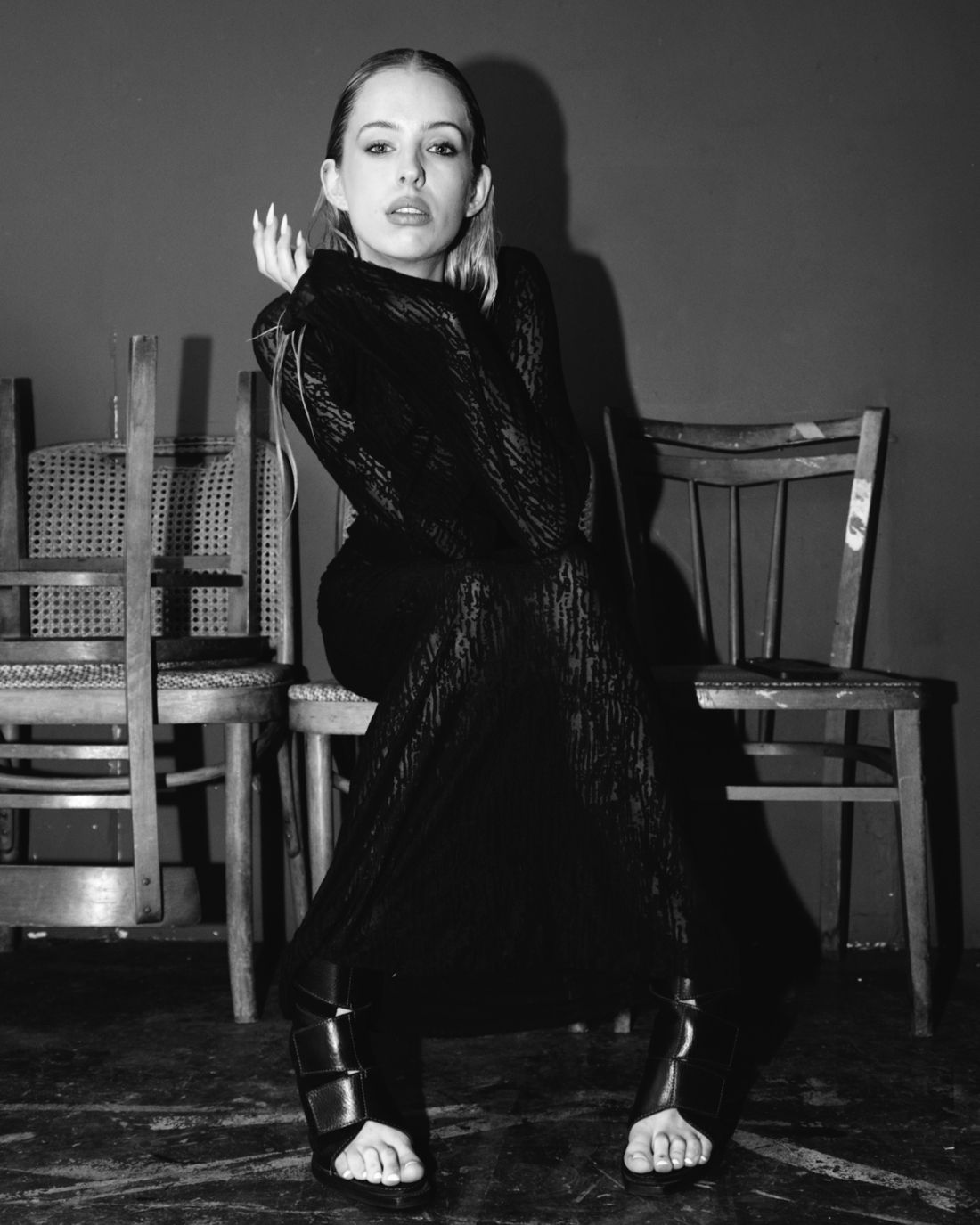
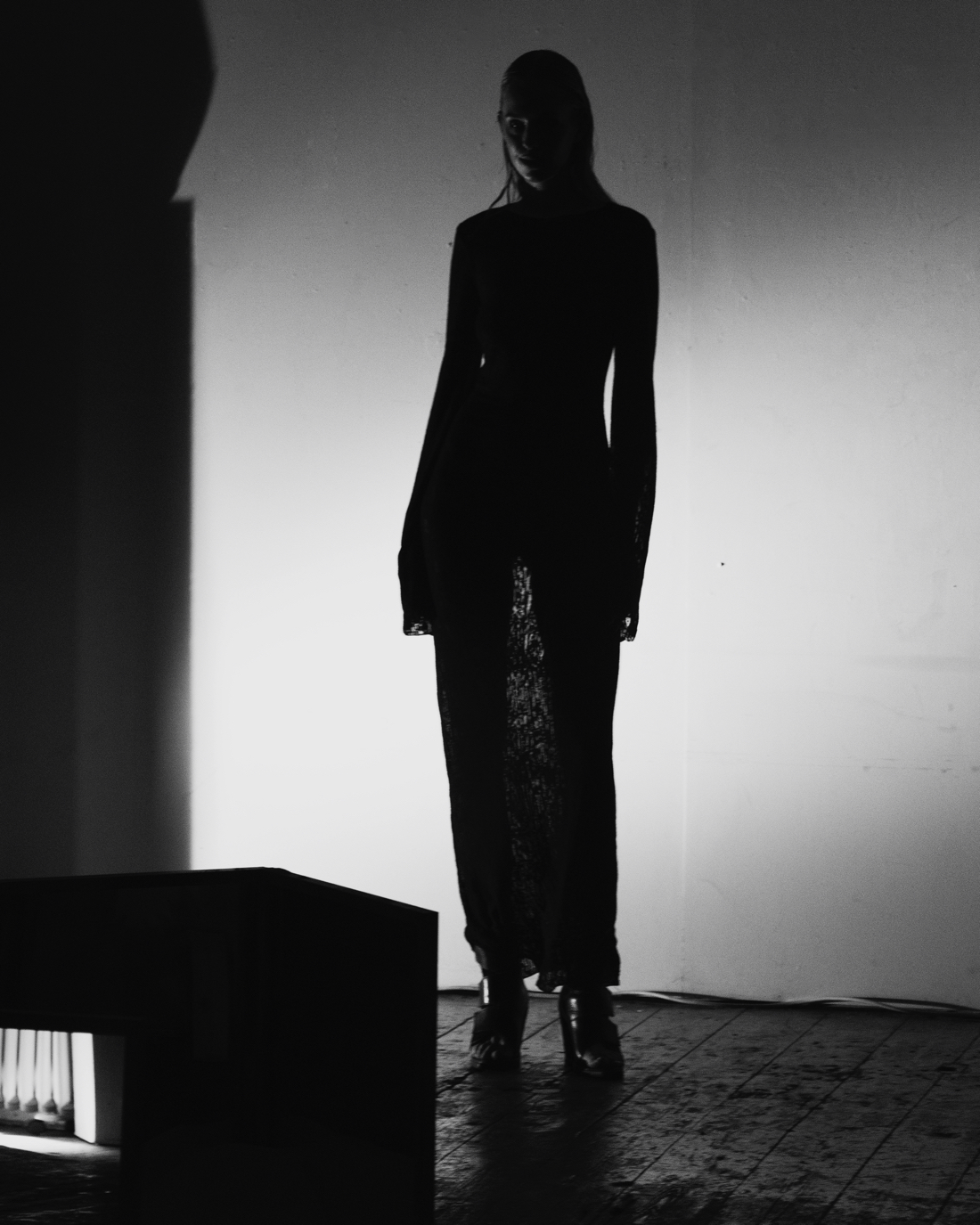
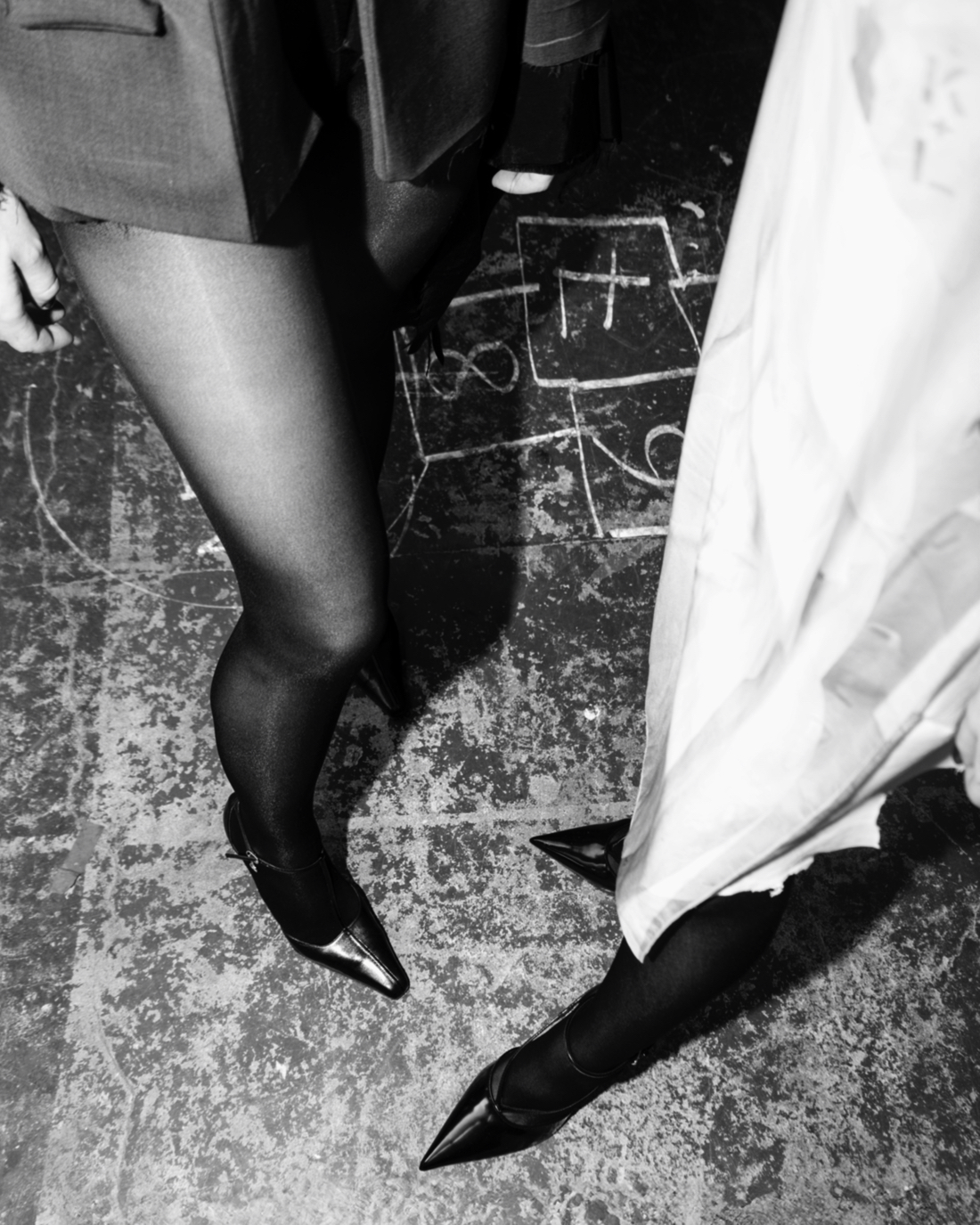
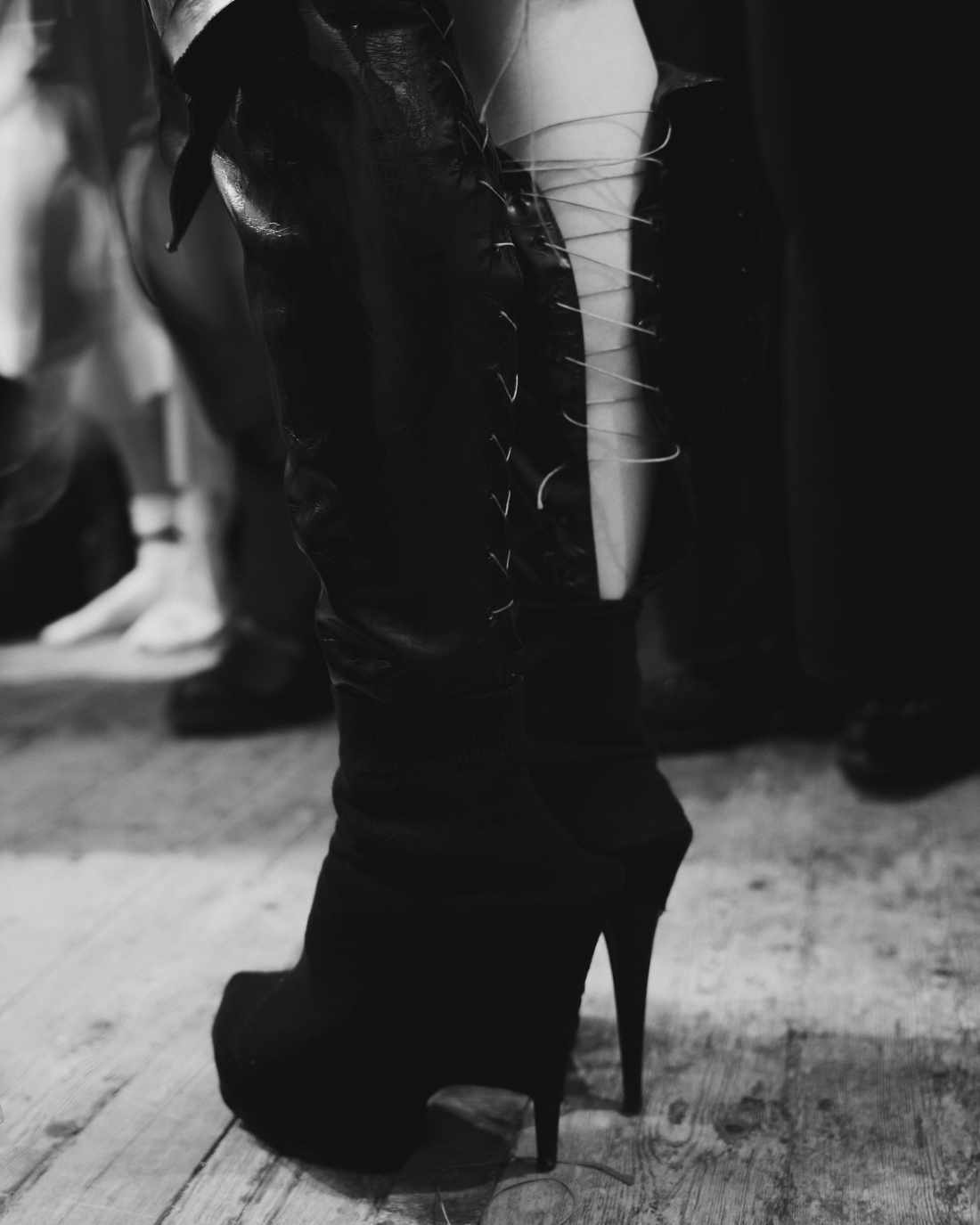
Her answer begins with the palette, which she keeps deliberately narrow: black and white, joined only by a run of earth tones moving from clay to bone to tarnished bronze. Within these limits the collection finds a surprising range of registers. A hooded jersey dress sits so close to the body that it reads as a second skin, while a floor-length leather coat opens like a cassock and seems to belong to an older, more ceremonial order of dress. Wide pleated trousers pool over the shoe beneath a jacket cut short at the ribs, and the tension between those two proportions does more work than any ornament could. There is, in fact, no ornament for its own sake. The hand-stitching that runs through the pieces is left visible, so the labour stays where the eye can find it. The severity has a clear lineage in the Antwerp tradition of letting construction show, but Jarisk’atsi treats it as a grammar and uses it to write sentences of her own.
INHERITED STRUCTURES
The research explains where this discipline comes from, and it is more personal than graduate research usually allows itself to be. Jarisk’atsi builds the collection between two poles that at first seem incompatible. On one side stands t.A.T.u., the Russian duo whose songs of adolescent defiance and longing set the show’s emotional temperature. On the other stands her Orthodox faith, which gives the collection its structure through repetition, the covered head and the discipline of return. One pole pulls towards rebellion and the other towards obedience, and the clothes live in the friction between them.
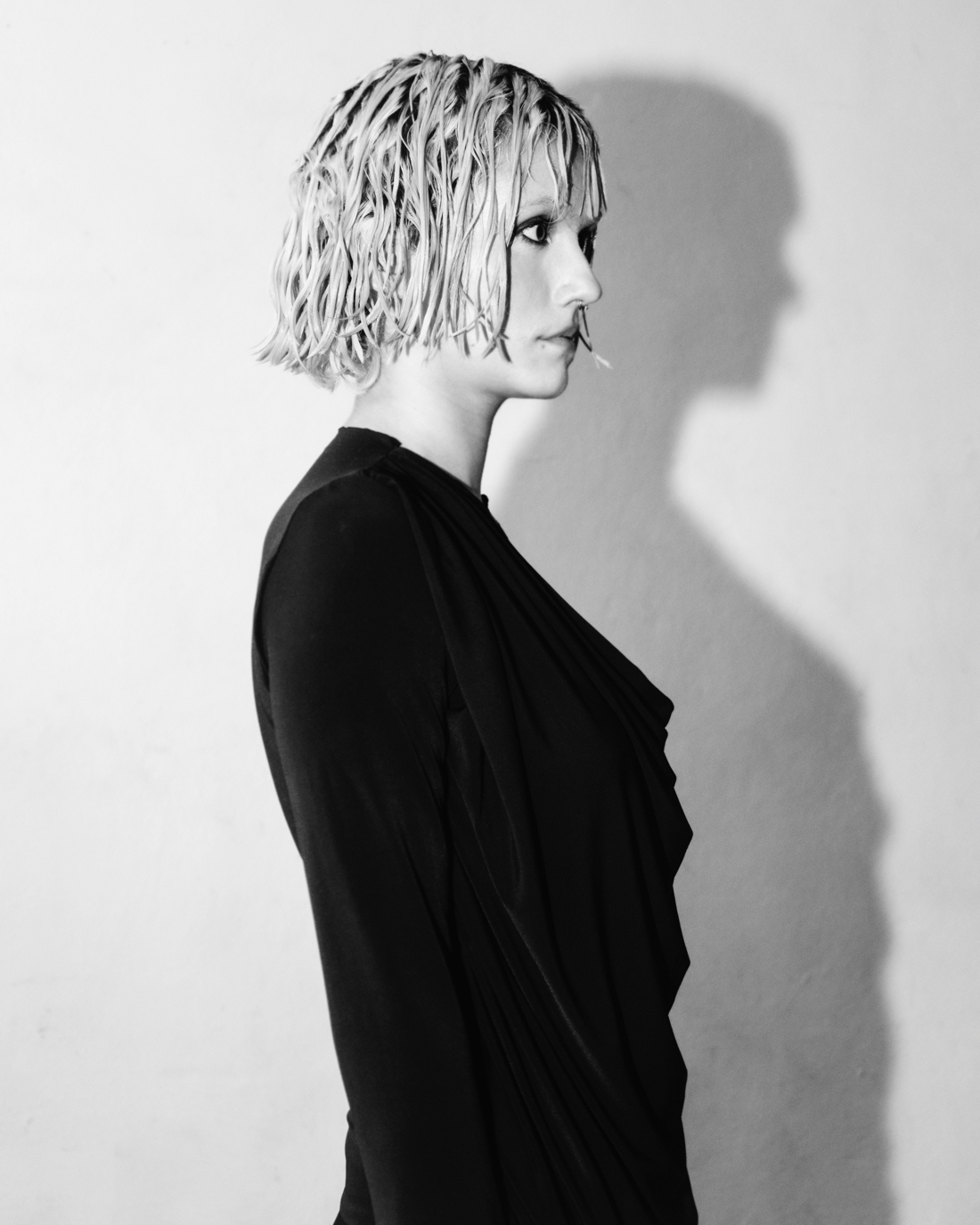
Berlinde De Bruyckere’s sculpture adds a third element: the body as something vulnerable, worked over and exposed. Her influence is clearest in the leather and shearling headpieces that sag over the face like a hide lifted from one body and laid over another. The literary thread comes from Yuli Daniel’s poem “A Prayer”, written in 1965 from inside the Soviet penal system, a text about endurance and quiet refusal. Jarisk’atsi never illustrates it, and that choice matters, because the poem’s logic of holding on under pressure resurfaces throughout the collection in material form and ties its very different sources into a single story.

CAUGHT IN THE MAKING
The same refusal of literalism is where the collection’s technical intelligence lies. Photographs of draped mannequins are printed onto chiffon and layered over the body, so that a garment caught mid-construction becomes the surface of a finished one.
The wearer appears dressed in the memory of another dress.
The device may bring Margiela’s trompe-l’oeil prints to mind, yet here it loses their irony and gains something warmer and more painful: the sense of clothes handed down with the shape of another person still inside them.
Slavic embroidery follows that logic of inheritance. It arrives as memory carried into the present, far from folkloric decoration, and sits naturally beside the printed mannequins. The collection’s central theme finds its most direct image in its plainest piece, a white T-shirt printed with a page of text across the chest and worn with a leather bonnet that erases the face entirely. The text speaks while the wearer cannot, and in that single look Daniel’s poem and the covered head of Orthodox worship meet as two forms of the same silence.
THE AVANT-GARDE AS DISPLACEMENT
Seen together, these choices explain why “S.Control” belongs to the avant-garde without chasing novelty. Jarisk’atsi takes systems of dress that carry authority, among them religious vestments, uniforms, inherited embroidery, protective leather and the conventions of tailoring, and quietly unsettles them until each garment hangs between protection and confinement, construction and collapse. Her silhouettes loosen the familiar relationship between the body and the clothes that contain it, and leather and fur obscure the face where fashion would normally adorn it. The method is displacement. Codes the audience already recognizes are made unfamiliar and emotionally loaded, then left open, and that openness is what keeps the collection from sliding into a pastiche of its references.
THE MIRROR AND THE BODY
The show carried this displacement into space. Working with set designer Maria Bahrim, Jarisk’atsi turned the runway into a field of mirrors and optical illusions, so that each model met her own reflection before she reached the audience. Mirrors on a runway can easily become a gimmick. Here the idea holds, because the gaze is turned inwards, towards the wearer, and because the clothes have already established that the self and the structures containing it are the real subject. The fractured reflections simply restate, at the scale of the room, the question the garments had been asking all along: where does the body end and its constructed image begin?
VERDICT: A DESIGNER TO WATCH
What makes “S.Control” convincing is that its austerity is earned. The collection is aware of the lineage that runs through Antwerp and Paris and makes no attempt to hide it, yet the tailoring carries its own weight and the proportions feel decided. Few graduates leave college with a material language this settled, and fewer still can build an entire show around one idea and sustain it to the final look.
For a graduate collection it feels unusually resolved. It leaves several of its questions open, and that is precisely what gives its design language room to develop well beyond a single season. Jarisk’atsi shows conceptual clarity, technical conviction and a controlled hand with silhouette, material and image-making, and her strongest ideas do not depend on a styling
device or a runway gesture. They are embedded in the way she thinks through dress, with restraint as structure, inheritance as material and the body as a site of protection, discipline and transformation. That consistency points to a practice with longevity, one able to evolve while remaining recognizably her own.
Which brings the collection back to the question it opened with. “S.Control” distinguishes between the discipline that binds a body and the discipline that gives it shape, and in the end it demonstrates the second kind on itself: every constraint Jarisk’atsi imposes, from the narrow palette to the absence of ornament, becomes a source of form. If this debut is an indication of what follows, she has the potential to become a distinctive voice within London’s emerging generation of designers, and “S.Control” reads as the opening chapter of a practice that is only beginning to define its reach.
ABOUT ANTONINA S. JARISK’ATSI
Antonína S. Jarisk’atsi is a London-based ready-to-wear label combining artisanal craftsmanship with conceptual design. Rooted in philosophical inquiry, the brand explores identity, melancholia and transformation through sculptural silhouettes and experimental textiles.
Words: Anastasiia Spasova @vbmgr
Photos: Antonína S. Jarisk’atsi and Stefano Giovanni Giuliano @stefanogiovannigiuliano
@antoninasjariskatsi
www.antoninasjariskatsi.com
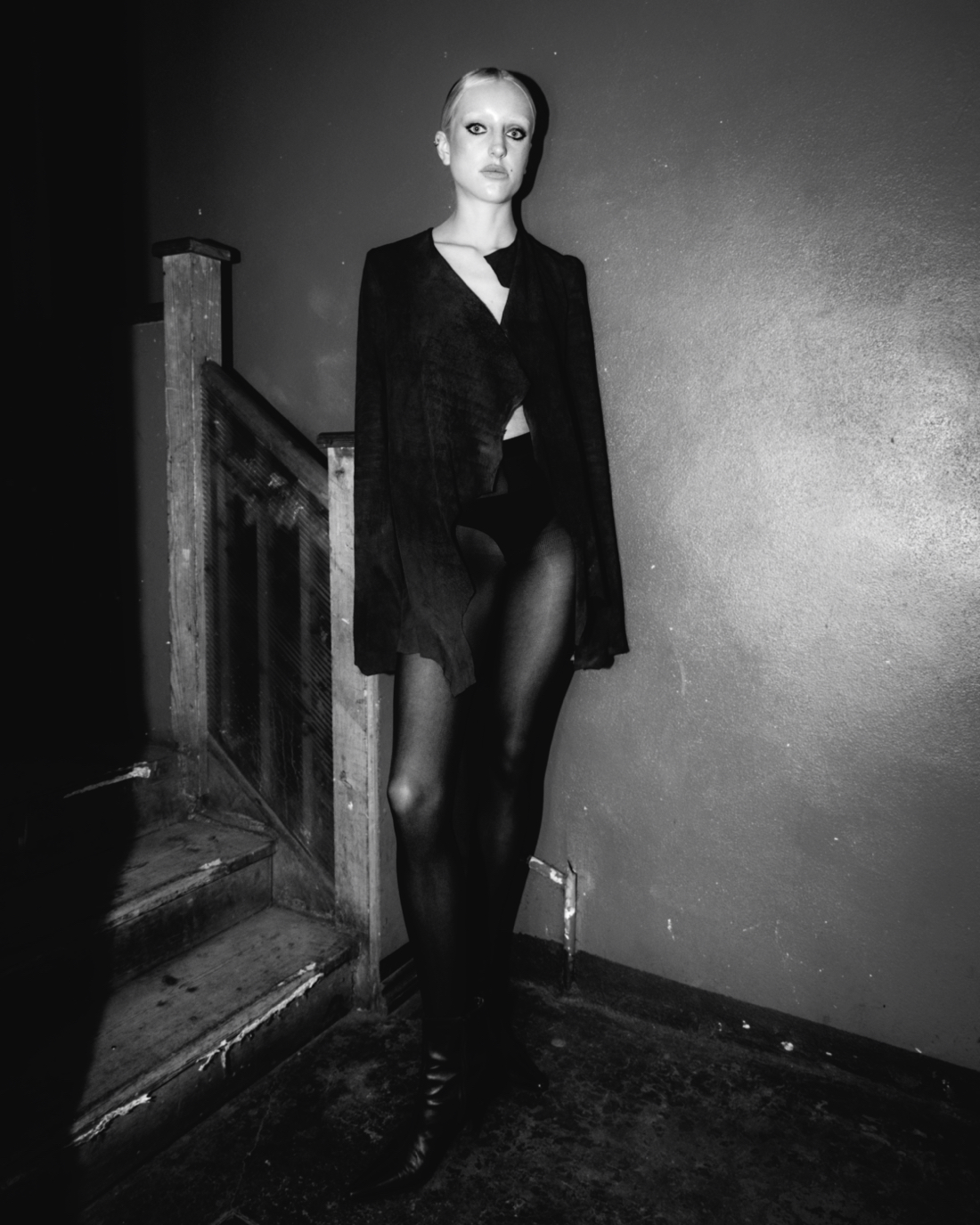
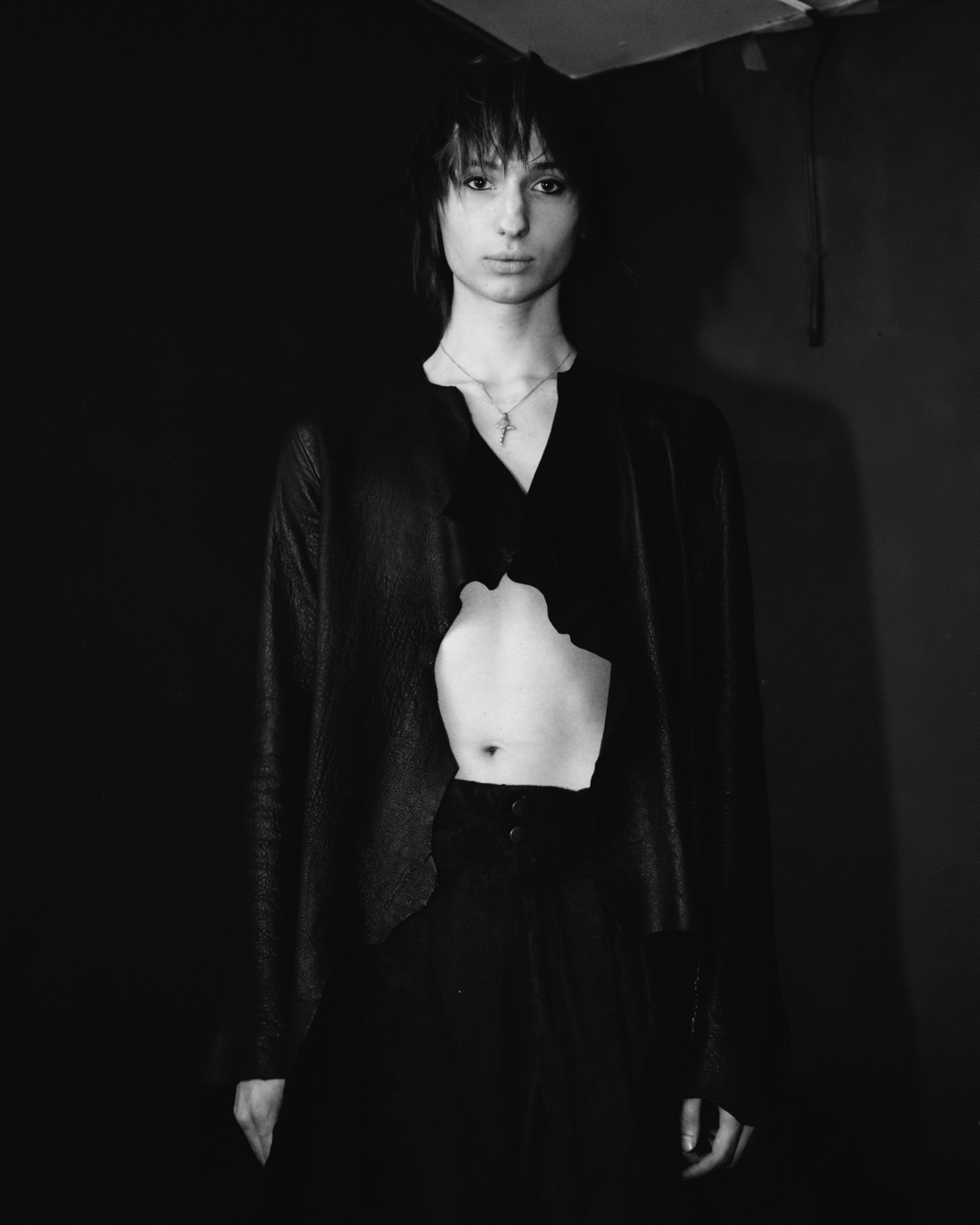
HIGHLIGHTS FROM THE COLLECTION


Comments are closed.