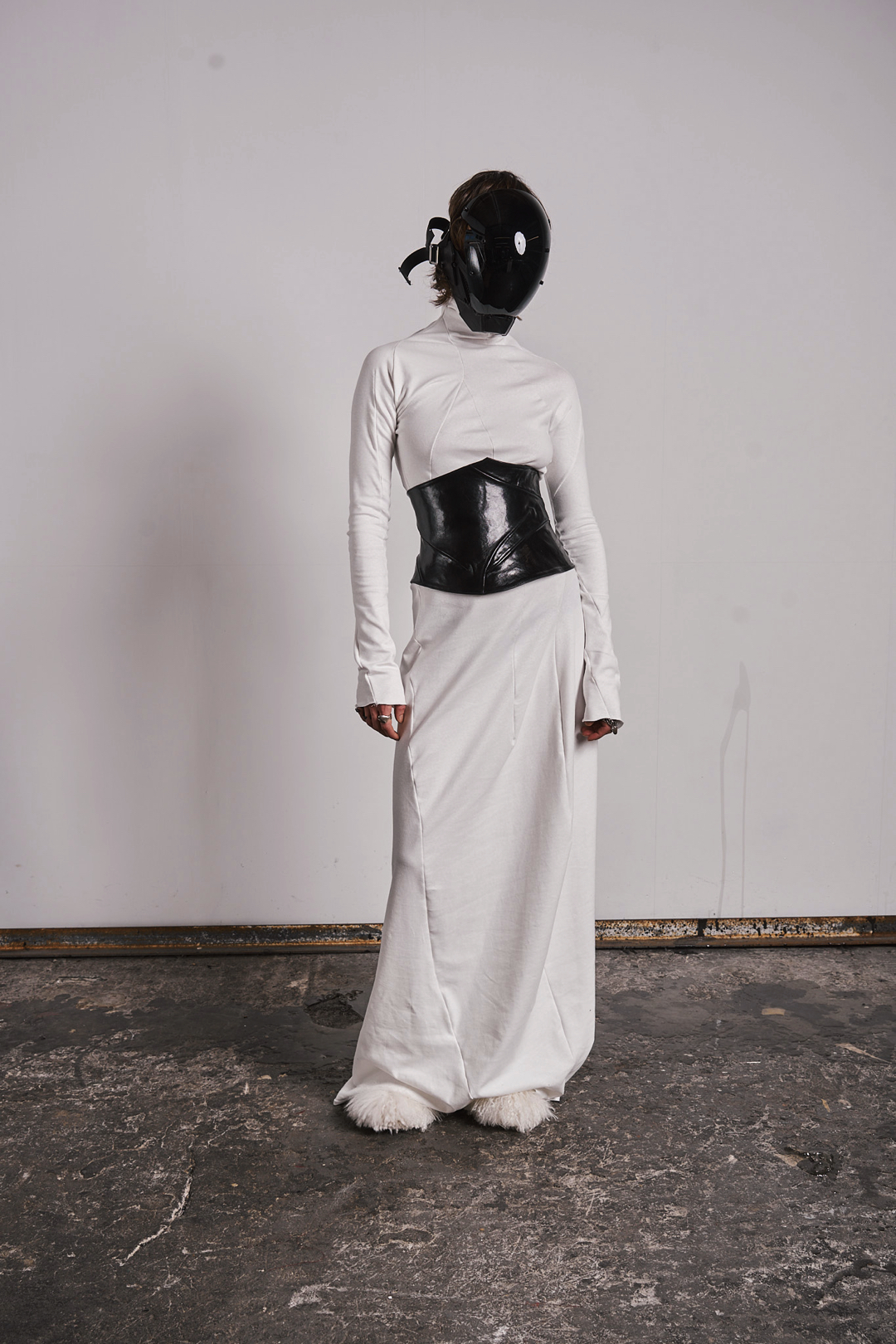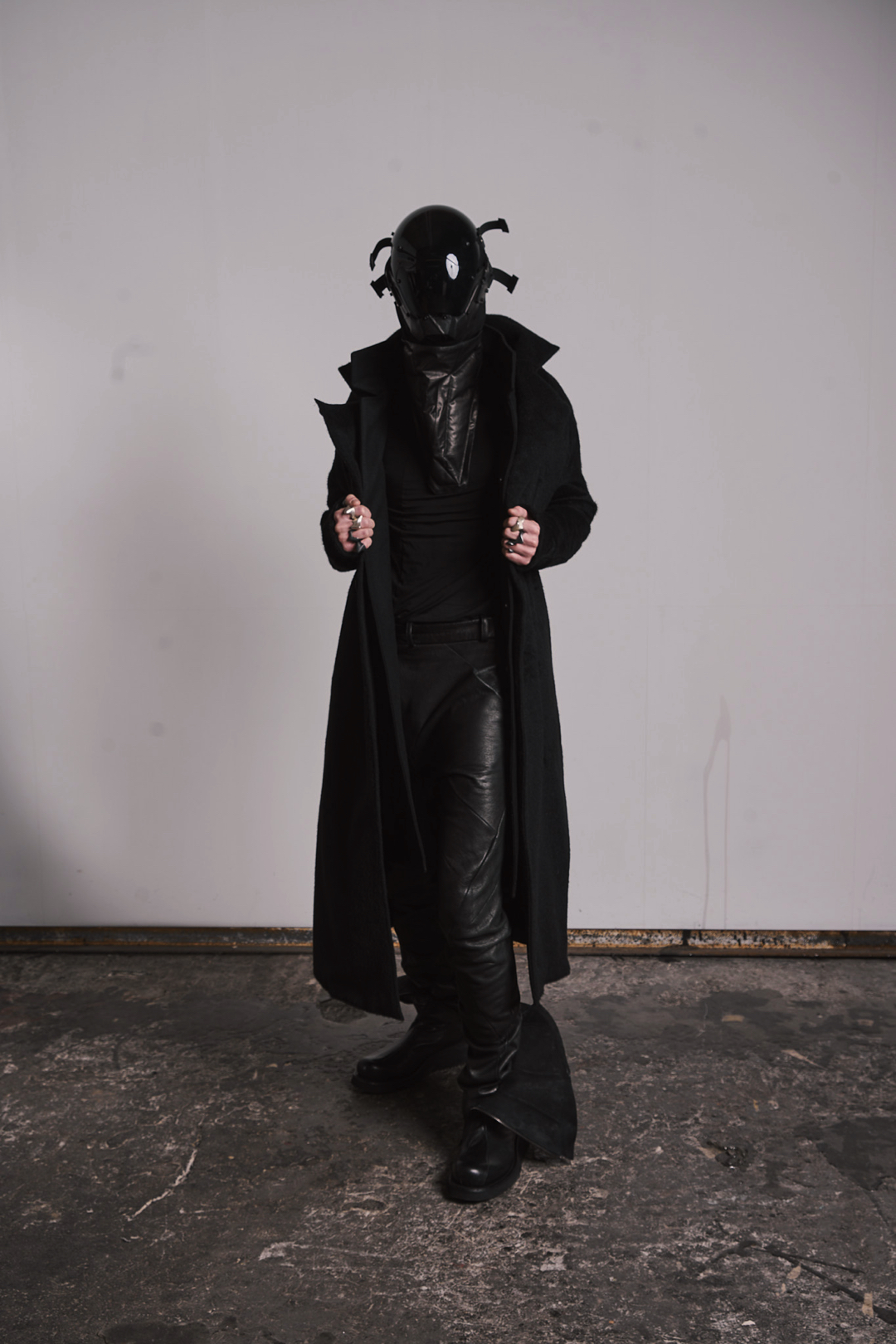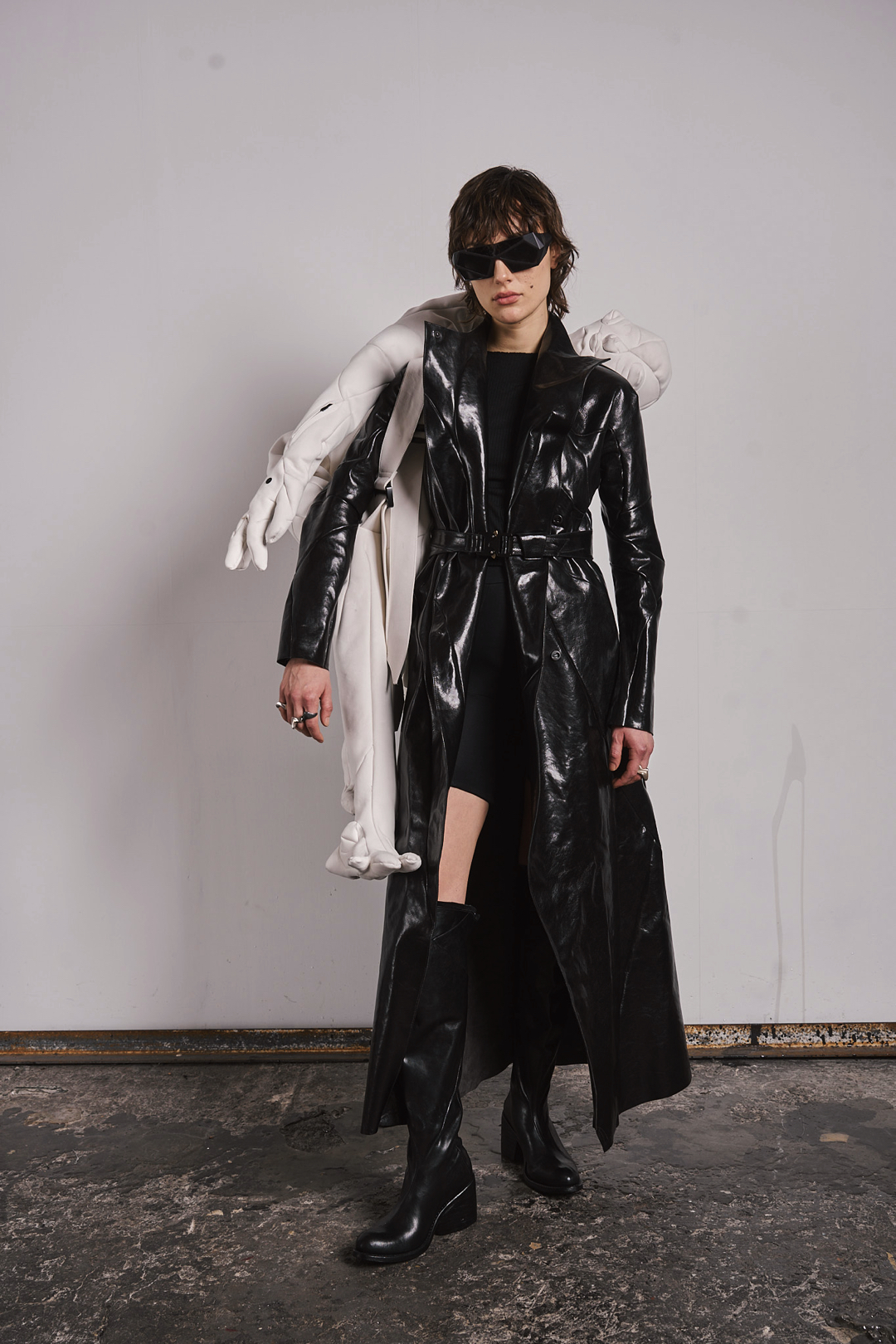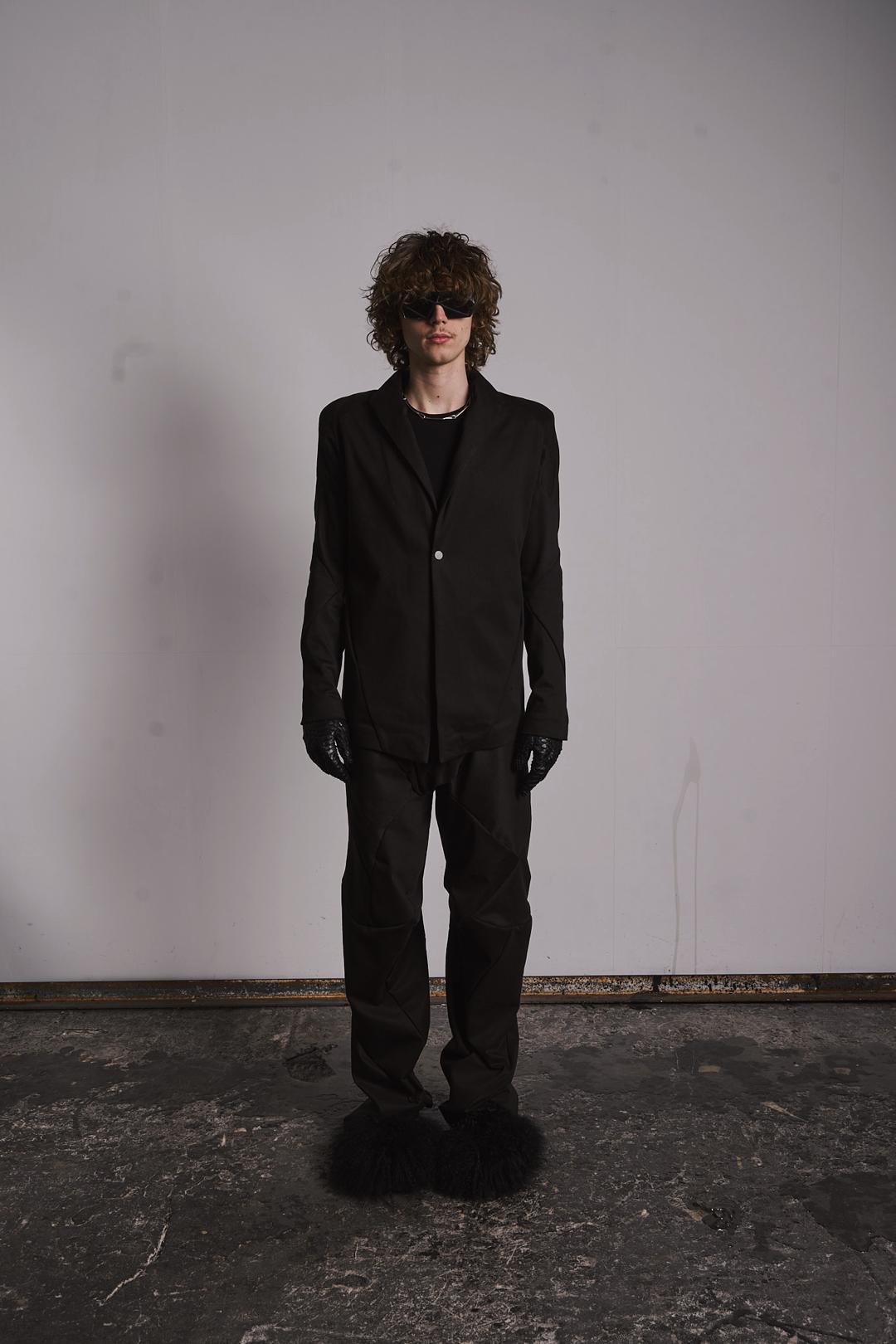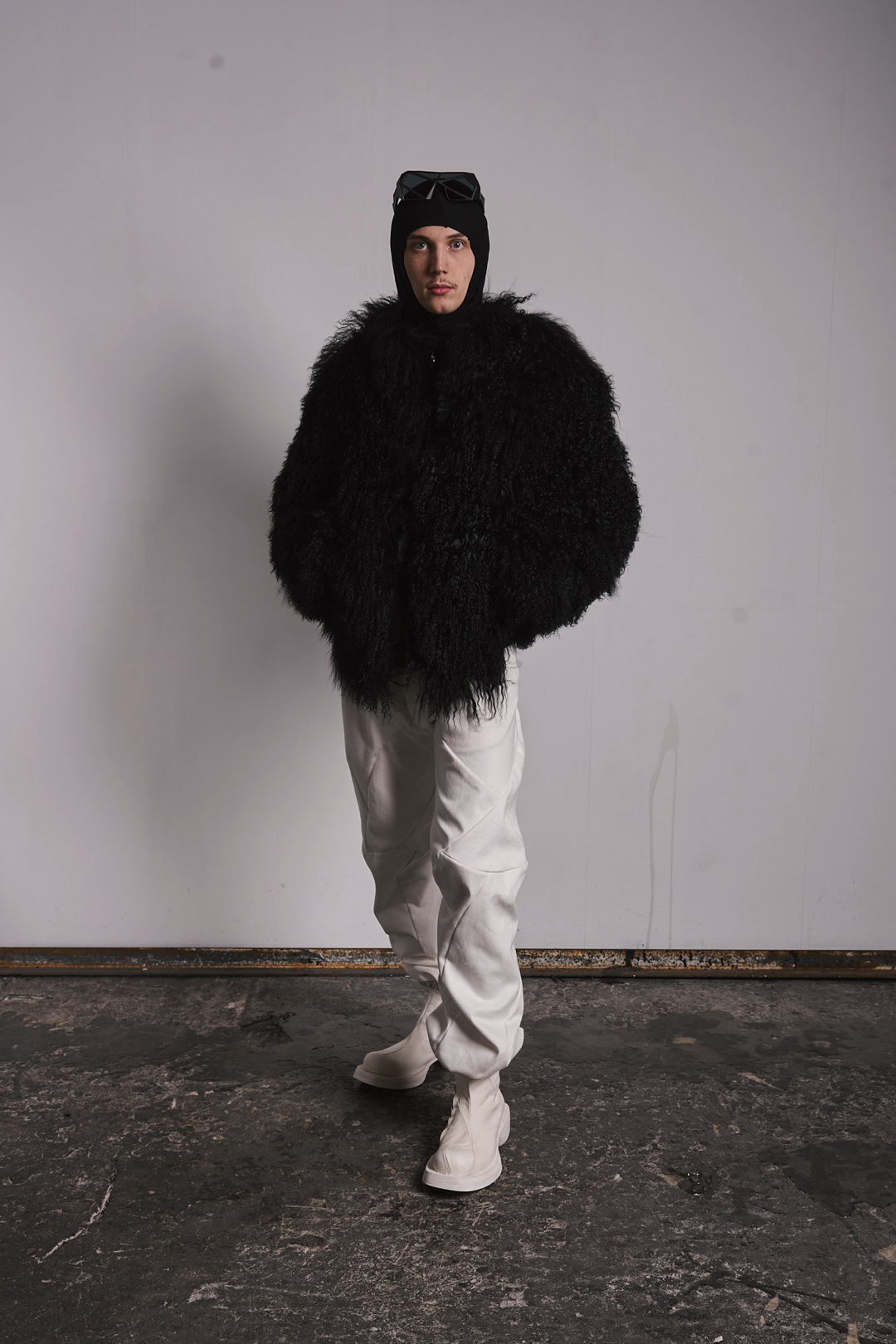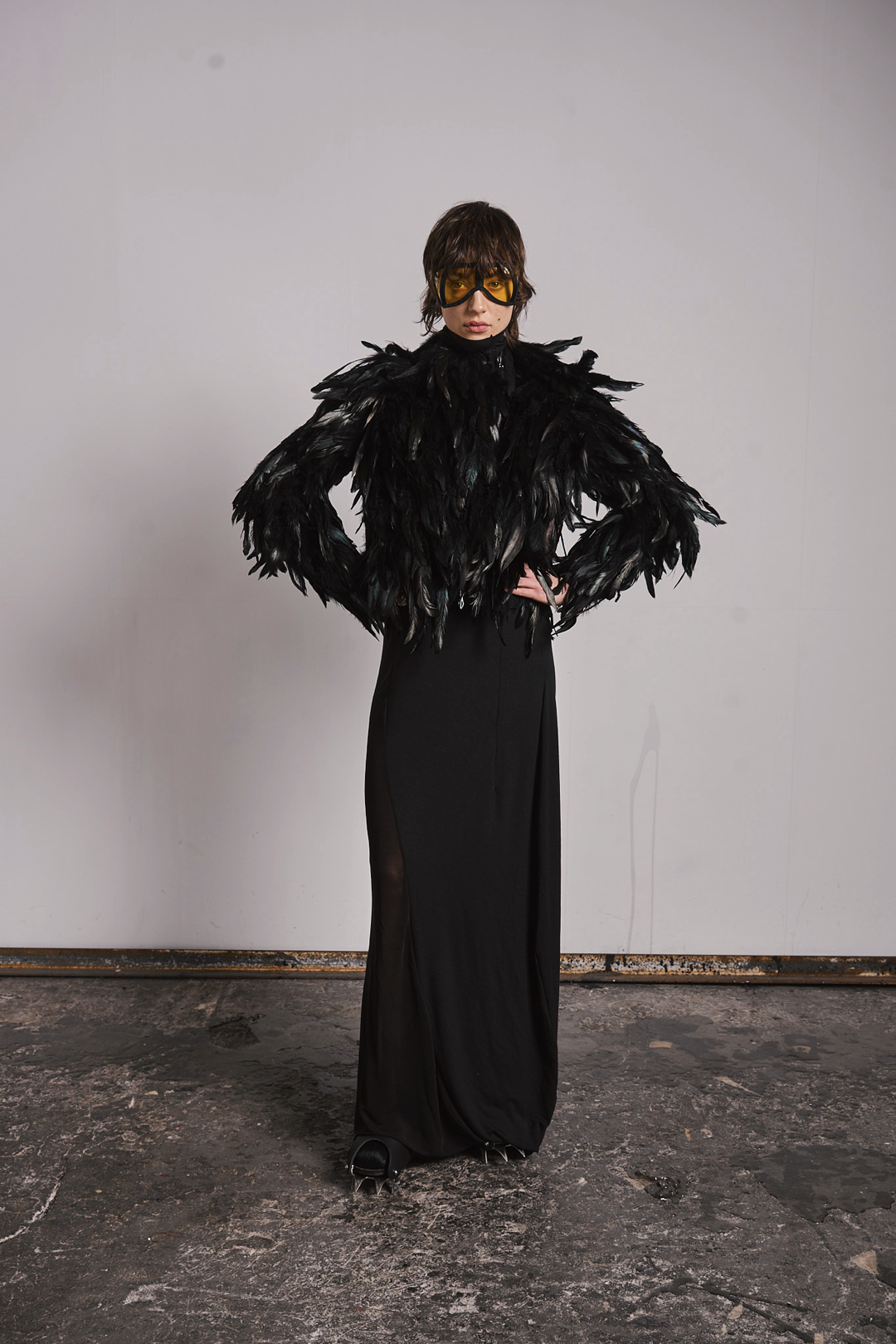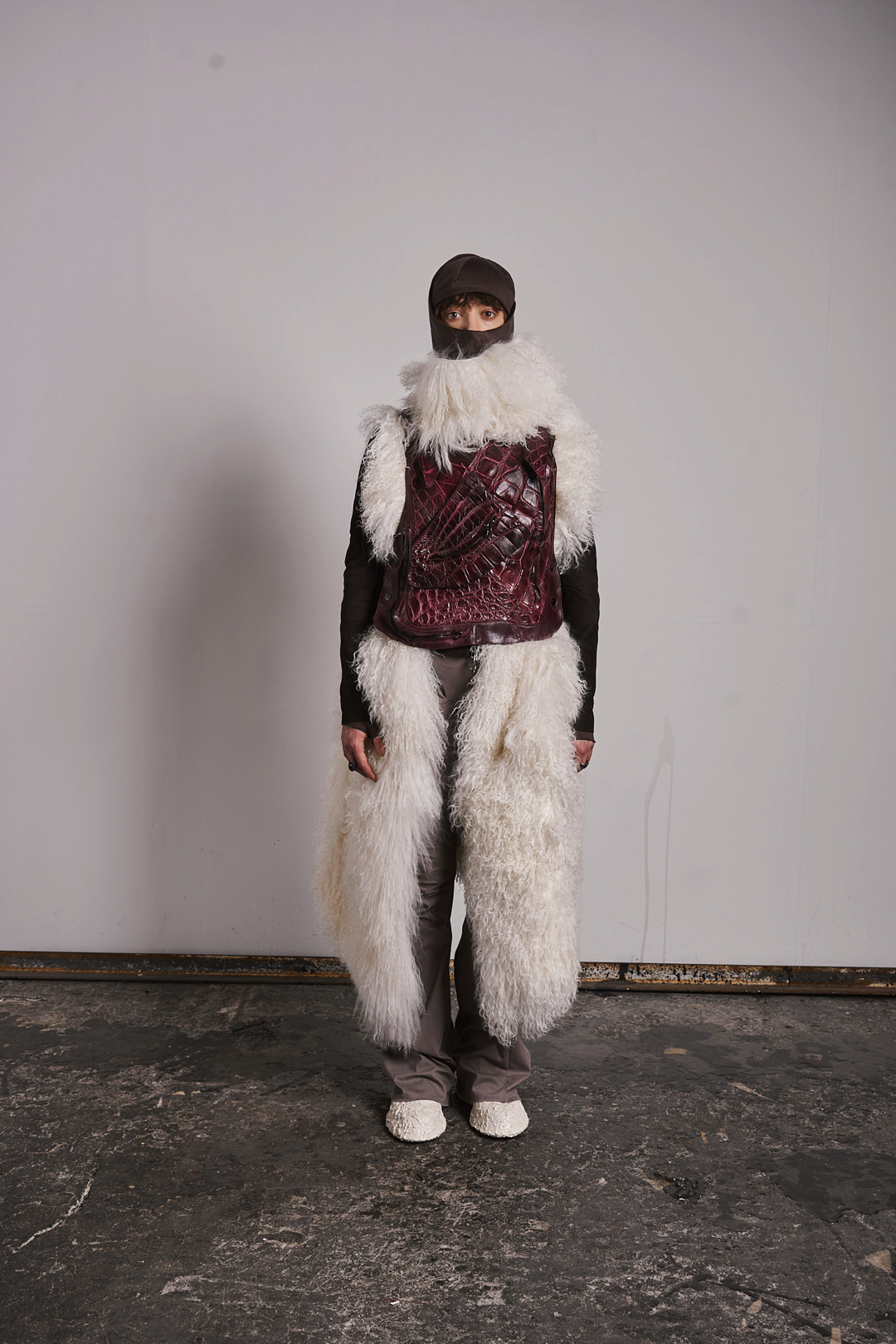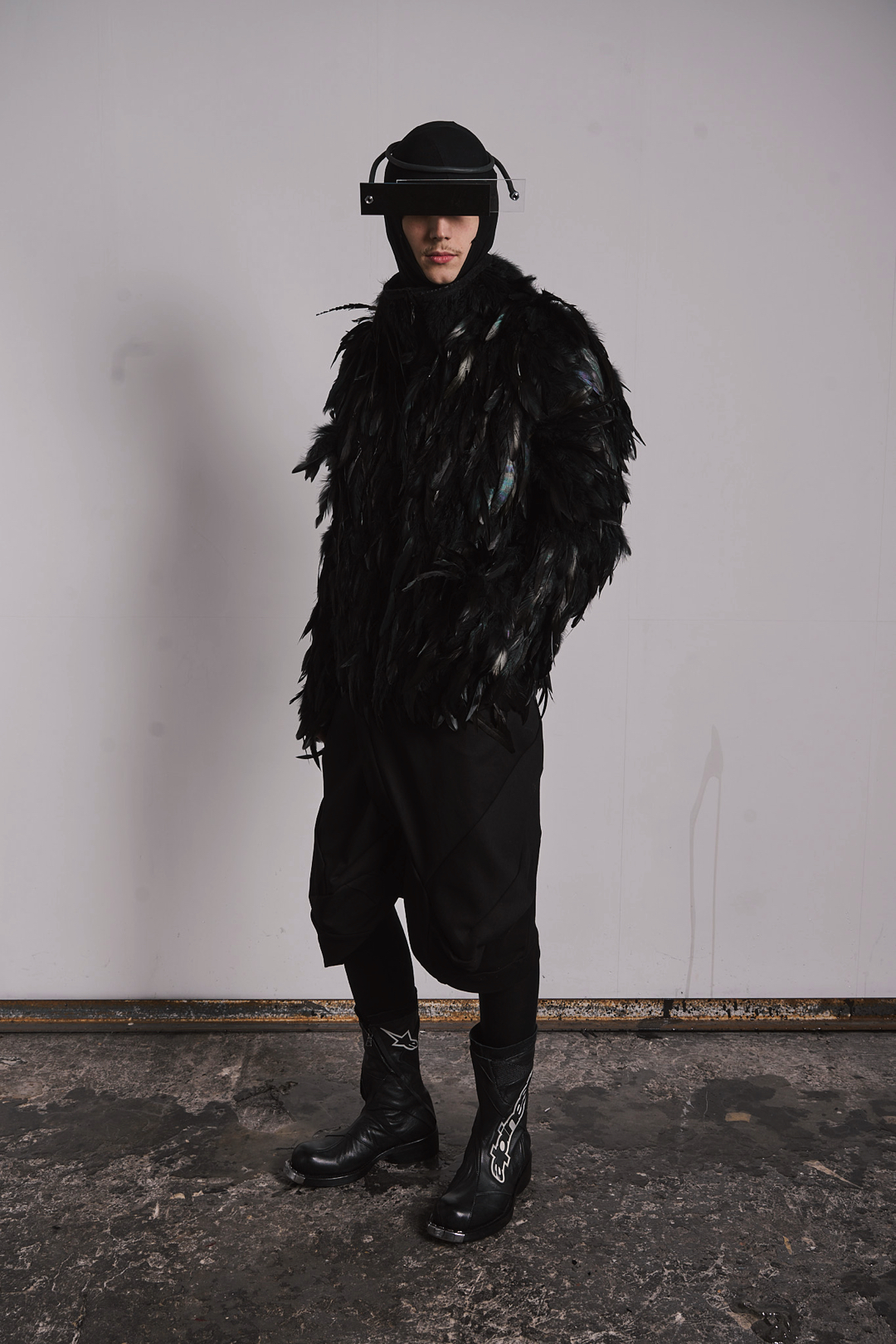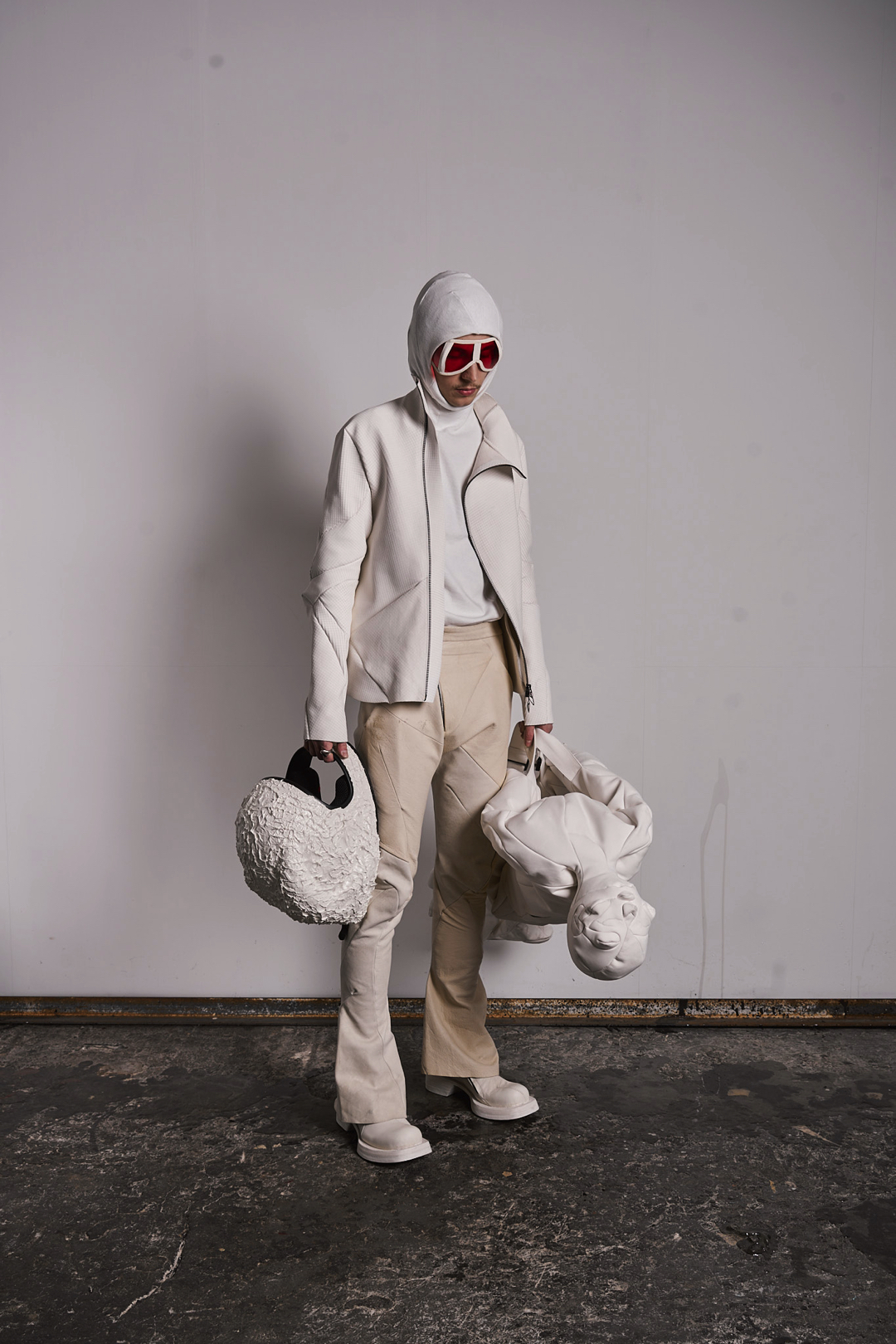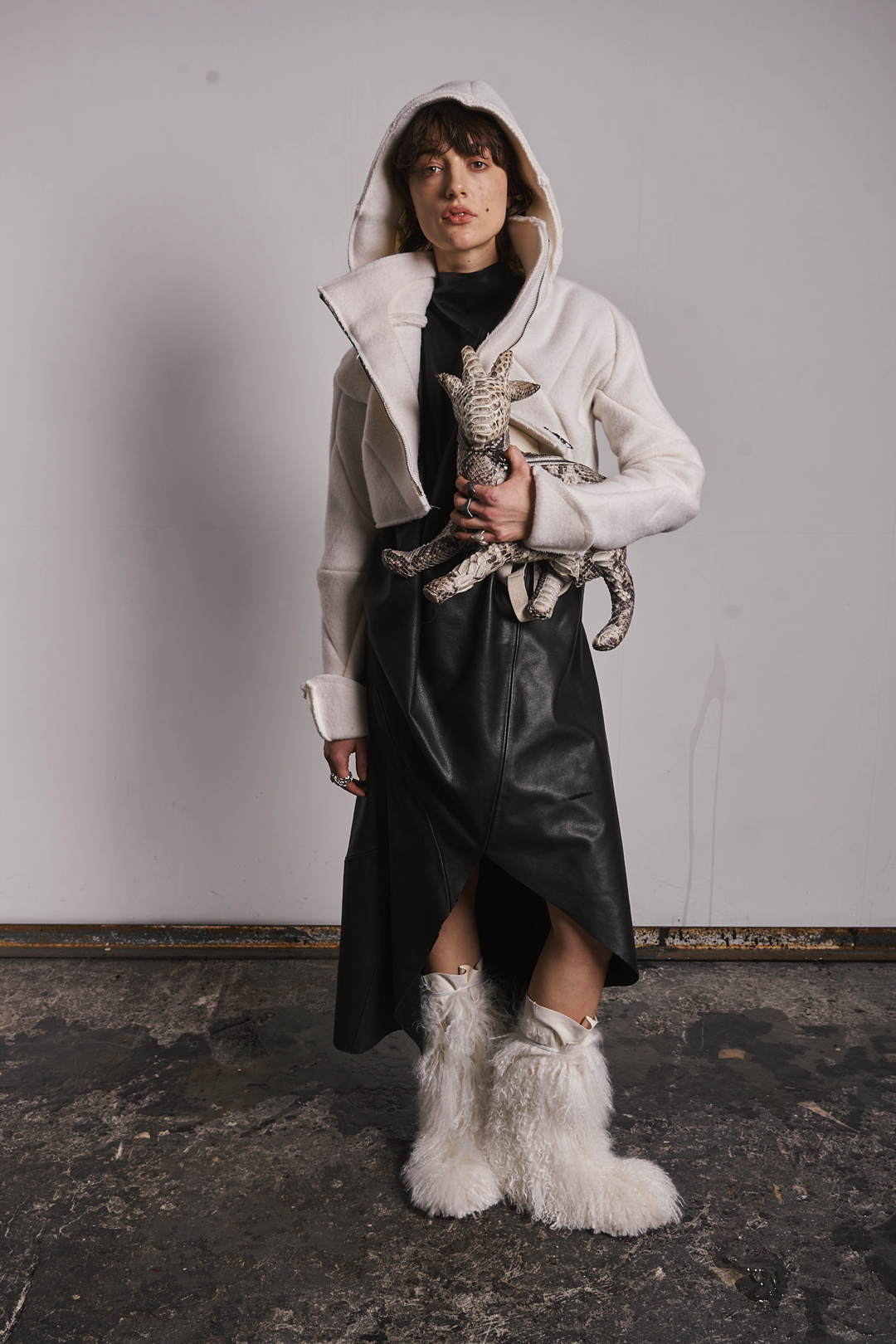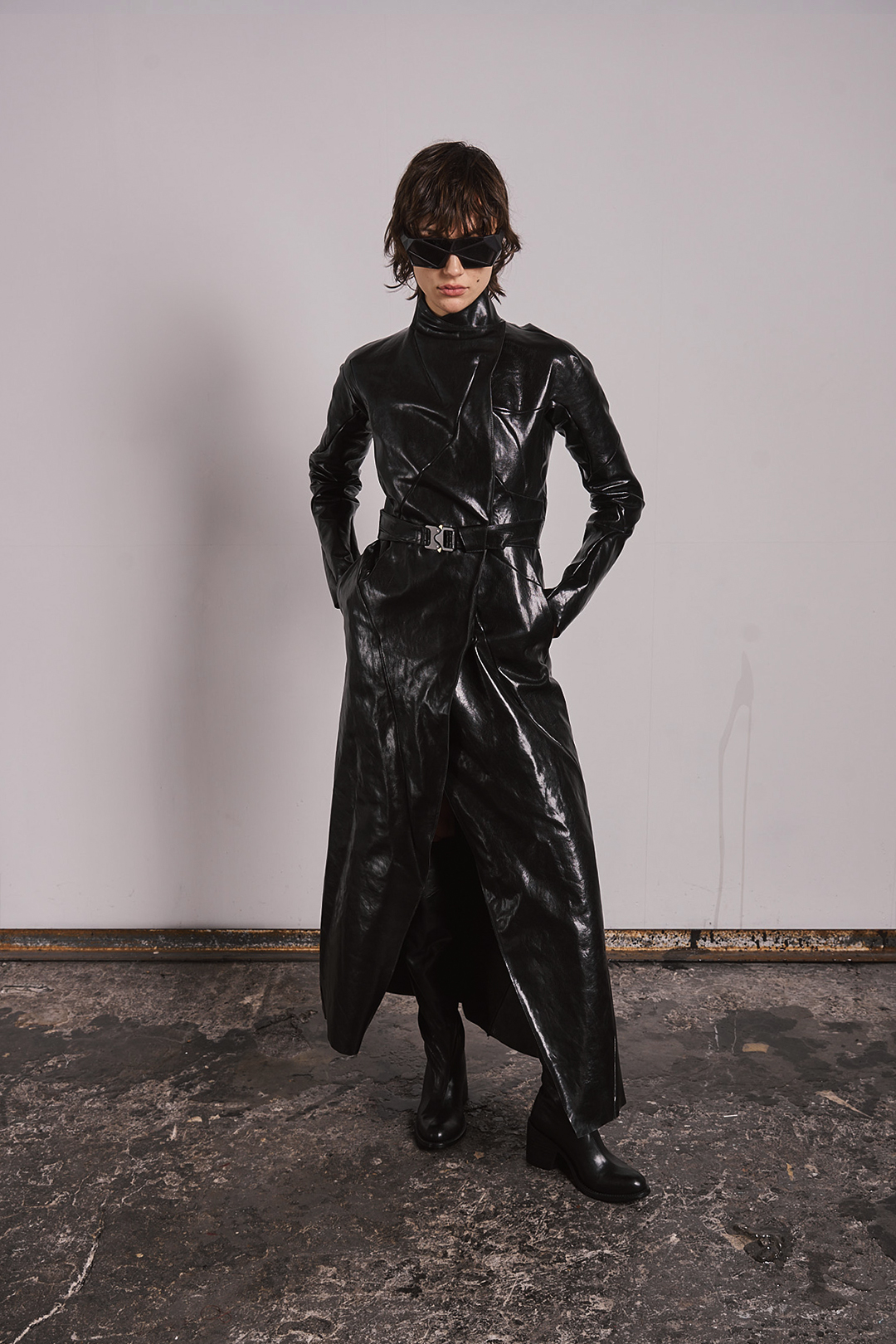
In the very early stages of the collection, Leon Emanuel Blanck found himself contemplating life, reflecting on the realities of being a designer and maintaining a fashion label. This led to a question: what does it mean to compete with long-established brands and fashion houses that have existed far longer than Leon Emanuel Blanck?
At this point, the Greek philosopher Zenon and his famous Achilles paradox came to mind, in which he argues that it is impossible for Achilles to catch up with even a tortoise if the latter had a head start. The reasoning lies in the infinite divisibility of distance, implying that Achilles would need to take an infinite number of steps to reach the tortoise. By the time Achilles arrives at the tortoise’s previous position, the tortoise has already moved ahead, continually narrowing but never closing the gap.
From this reflection emerged the idea that Achilles would require a vehicle capable of bending space and time in order to catch up and overtake—a motorcycle being the only fitting tool to disprove a Greek philosopher. This thought sparked the concept for a collection built around the theme of motorcycles, ultimately leading to the creation of the “Zenon One” motorbike.
While developing the collection and constructing the “Zenon One”, Blanck delved into the history of classic motorcycle racing attire and soon identified Alpinestars as the leading name in the field. Having previously worn Alpinestars protective gear during his mountain biking days, he was already familiar with their superior quality and design.
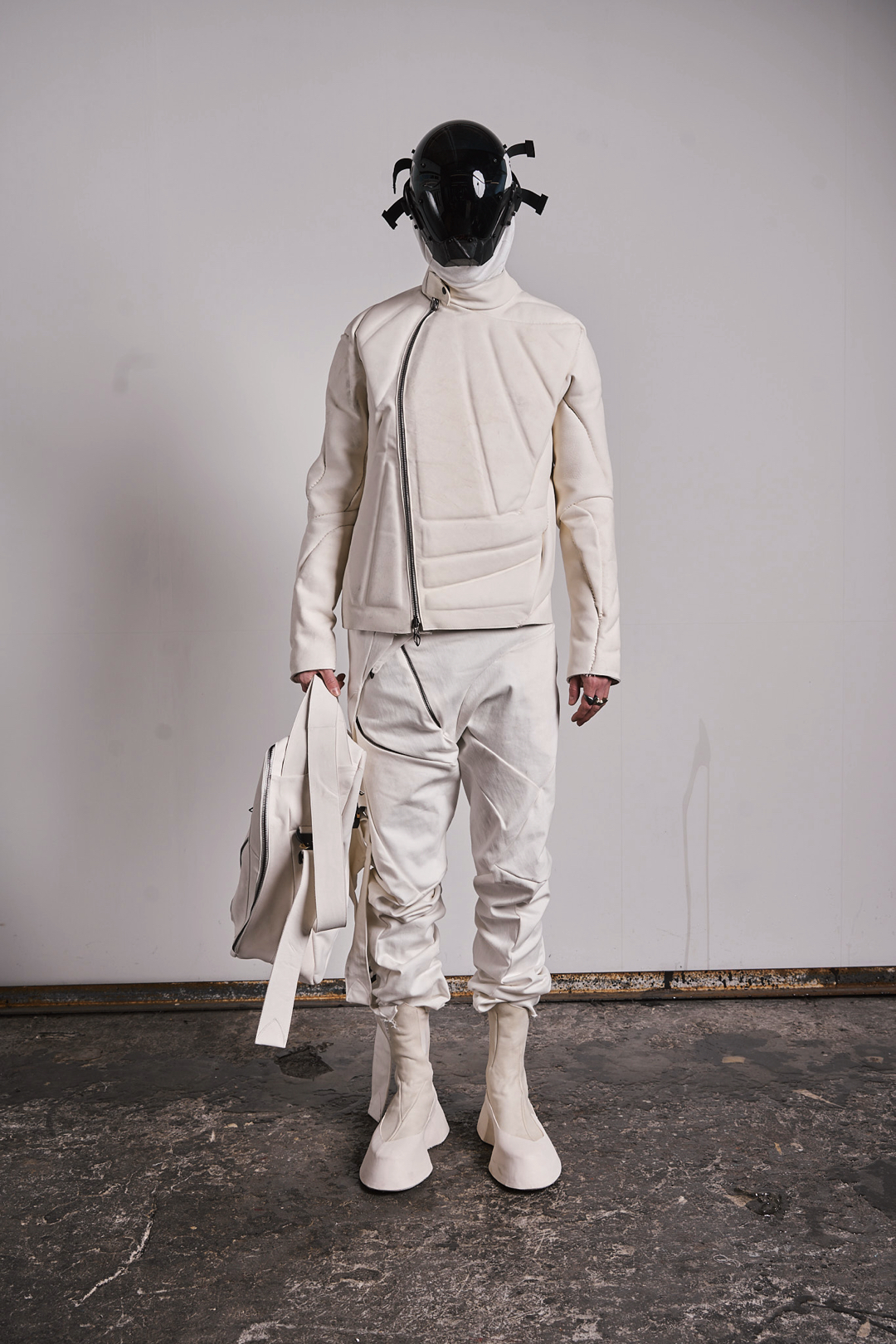
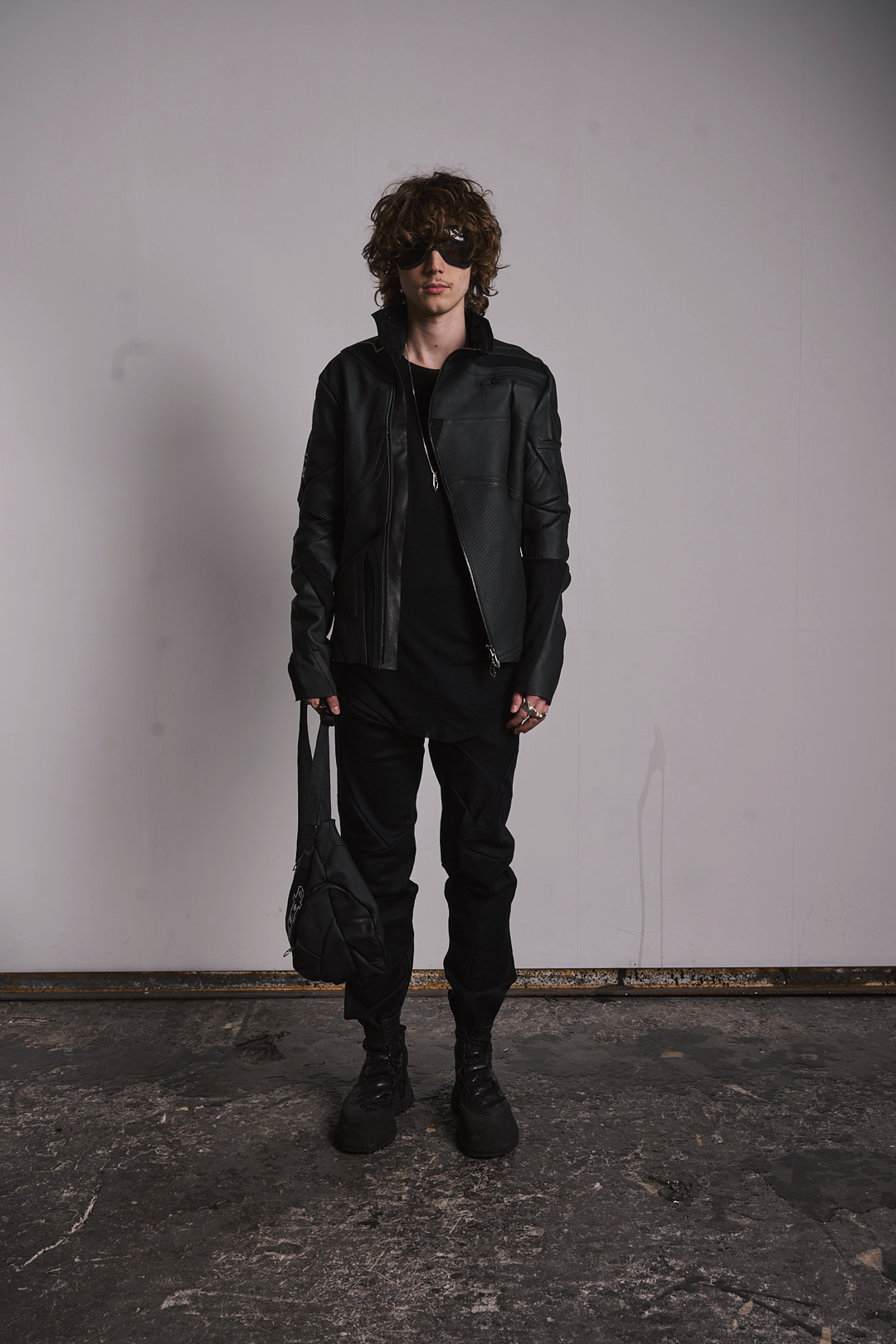
Everything soon aligned, leading to a collaboration between Leon Emanuel Blanck and Alpinestars RSRV on several styles for the FW25 collection, “Zenon”. Repurposing deadstock Alpinestars items presented a new challenge on multiple levels. After extensively dissecting their garments, Blanck was struck by their masterful construction and intricate pattern work. Their anatomical precision resonated deeply with his own vision of human form and protection.
Since his first collection in 2013, Blanck’s designs have always explored the interplay of anatomy, motion, and shape—serving as a kind of metaphorical protection. Through this collaboration, he was able to explore literal protection, a process he thoroughly enjoyed.
For the FW25 “Zenon” collection, original Alpinestars racing gear was deconstructed to the point where new patterns for jackets, pants, and boots could be integrated, resulting in one-of-a-kind limited pieces. Each garment is entirely unique, crafted from multiple Alpinestars components to form a single piece. The collaboration stands as a fusion of Alpinestars’ history and technical mastery with Leon Emanuel Blanck’s distinctive pattern-making and construction method, “Anfractuous Distortion”.
ABOUT LEON EMANUEL BLANCK
Founded in 2012, Leon Emanuel Blanck’s atelier in Germany has become a space where art and anatomy converge. Guided by his original concept, Anfractuous Distortion, Blanck’s work explores a somber, anti-conformist aesthetic that emerges from the tension between material and the human form. His creative practice, which began in fashion, now extends to sculpture, jewelry, and design objects—each a continuation of his exploration of volume, motion, and structure as vehicles of expression.
Rooted in the anti-fashion movement of the 1990s, Leon Emanuel Blanck established his eponymous label with a commitment to authenticity and craft. His collections are carried by select concept stores including hide[m] in Munich, Lab Store in London, Wolfensson in Vienna, BoutiqueW in Tokyo, and H.Lorenzo in Los Angeles. His work forms part of the permanent collection at the Hamburg Museum of Art and Crafts, alongside figures such as Thom Browne and Rei Kawakubo, and has been featured in both subcultural and mainstream publications—from StyleZeitgeist to Welt am Sonntag. Today, Blanck’s presence at Paris Fashion Week underscores his role within the contemporary avant-garde.
Each piece is conceived and constructed by skilled artisans in Blanck’s Berlin atelier, where craftsmanship remains central to the creative process. Working with rare and technically demanding materials such as carbon and glass fiber, kevlar knits, metal weaves, and gold-plated leathers, his garments embody precision and restraint. Through a sculptural method that involves shaping directly on the body, deconstructing, and reassembling patterns, every creation becomes a manifestation of movement and transformation—complex yet seamlessly whole, imbued with the traces of the hands that shaped it.
Photos: Courtesy of Leon Emanuel Blanck
Creative Direction: @leonemanuelblanck, @giulianamamone
Styling: @callumedmonds, @giulianamamone
Collaboration: @alpinestarsreserve
Photography: @bydavidjaeger
Models: @mariiaaivanova, @sarbertalan
www.leonemanuelblanck.com
@leonemanuelblanck
Highlights from the Collection