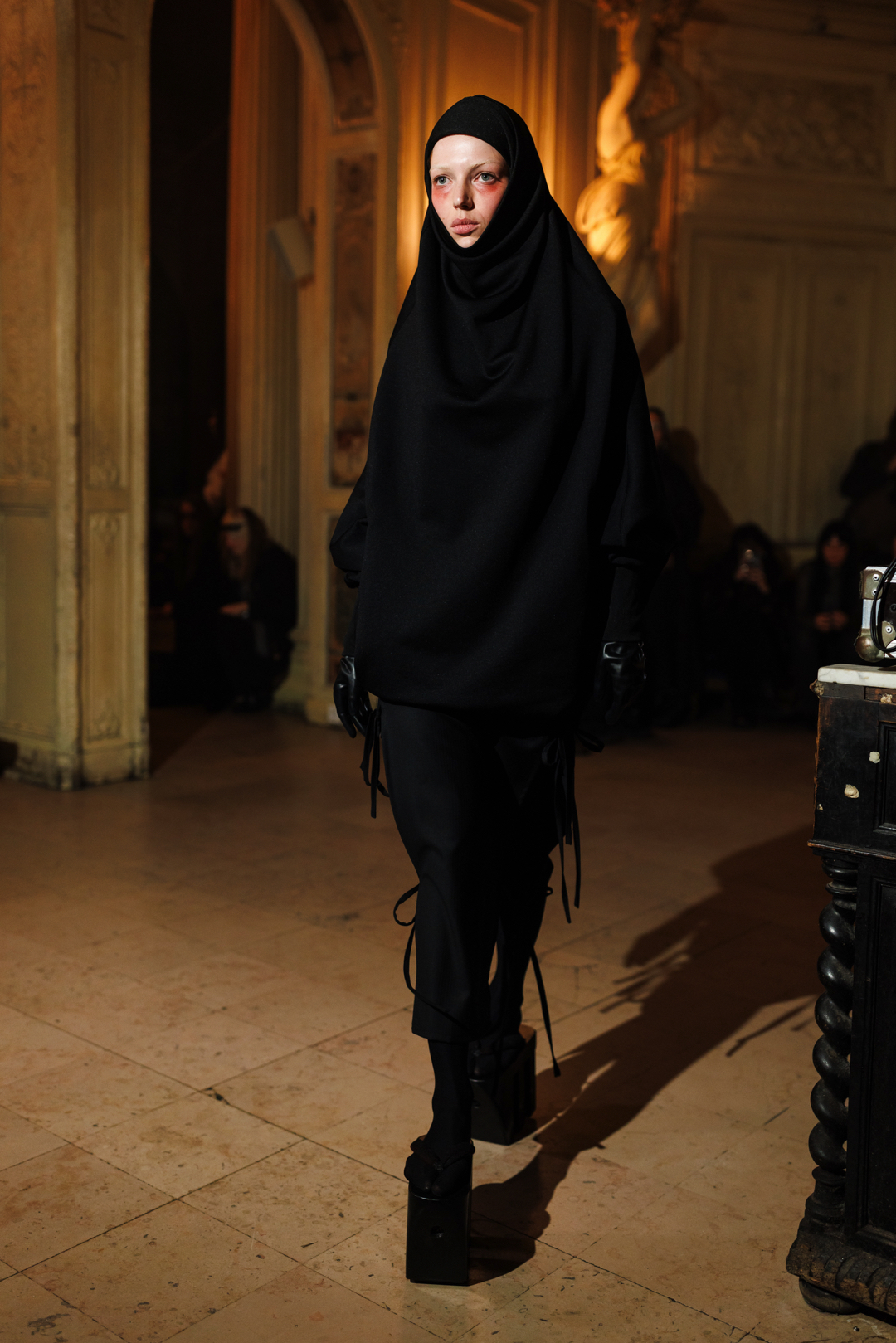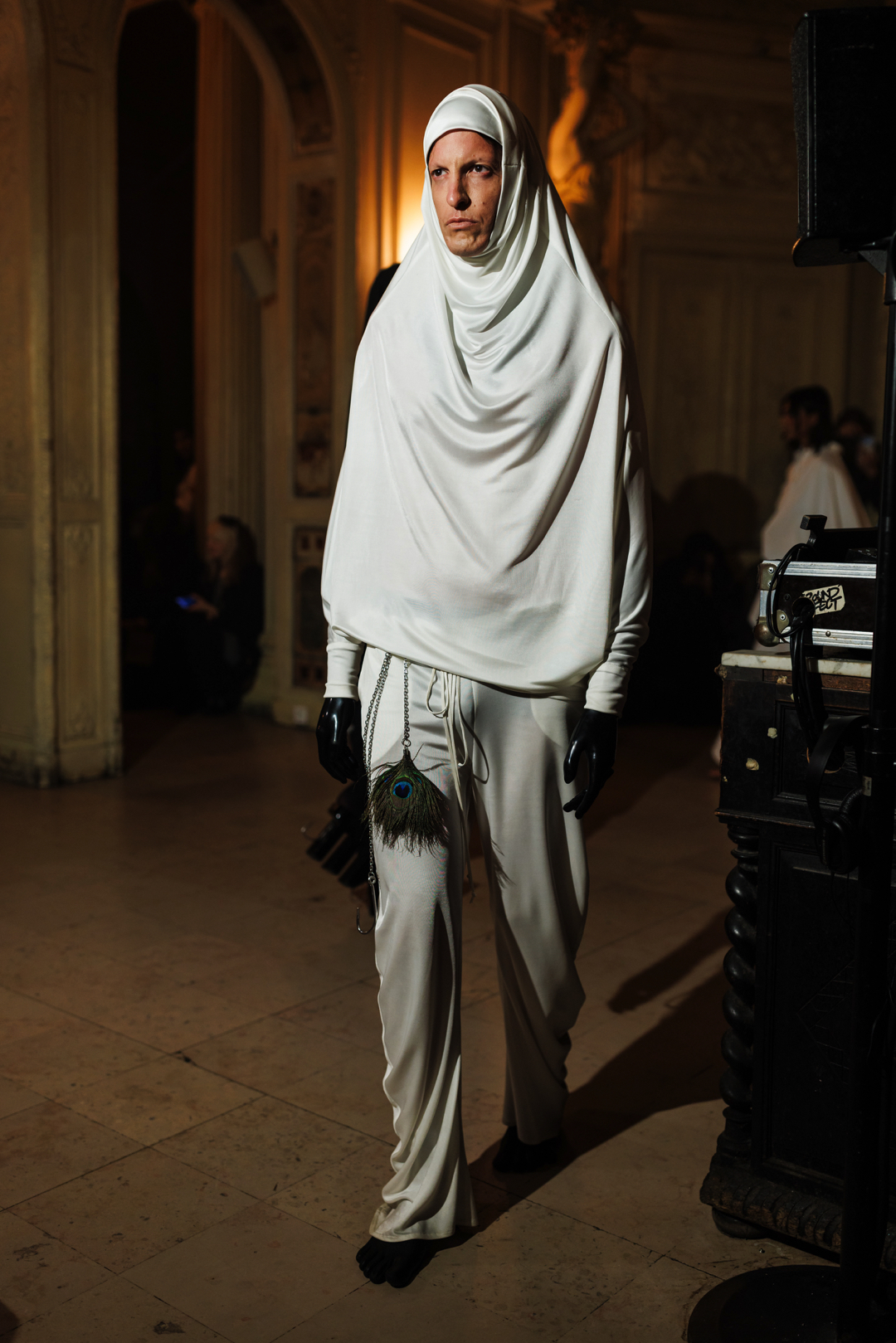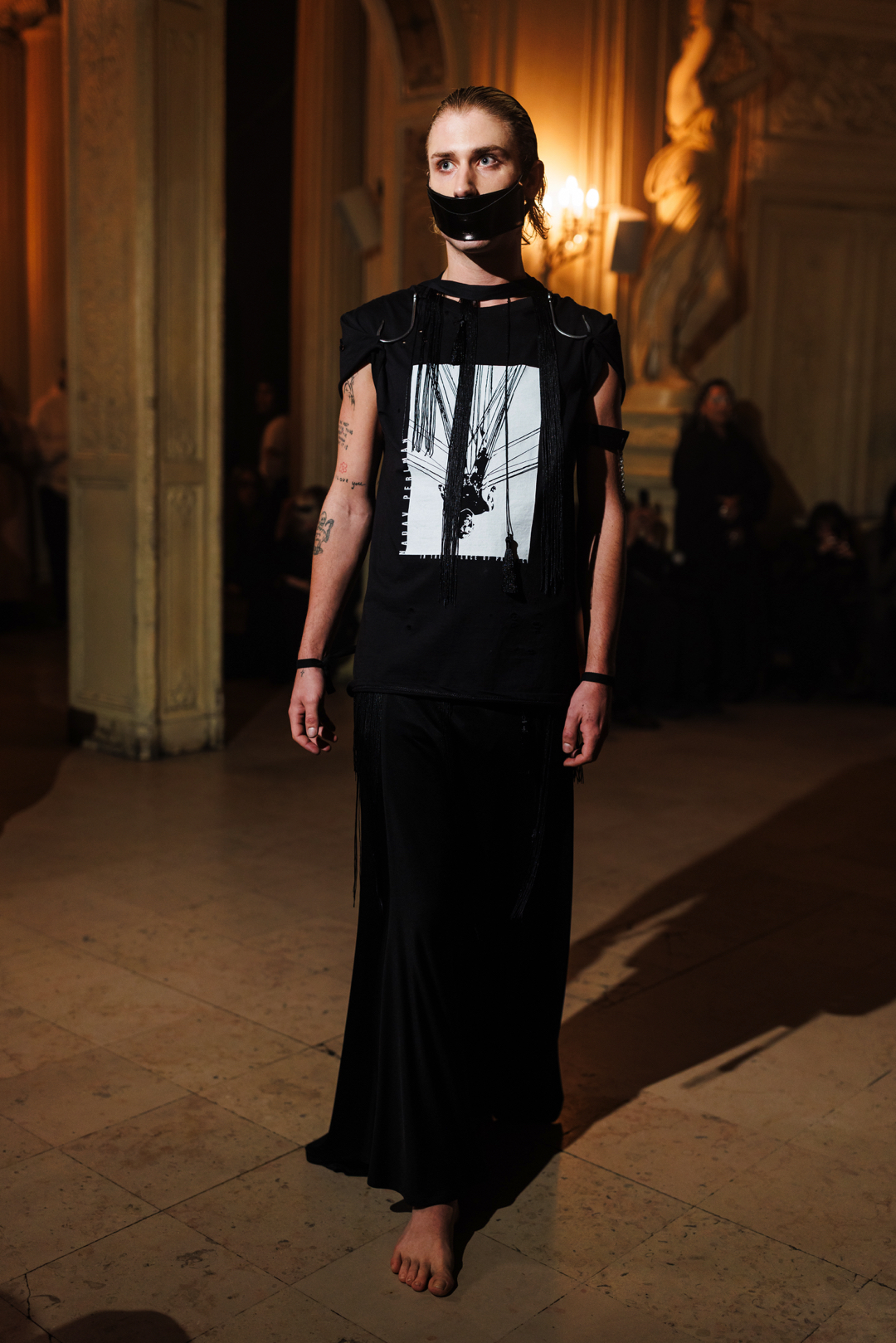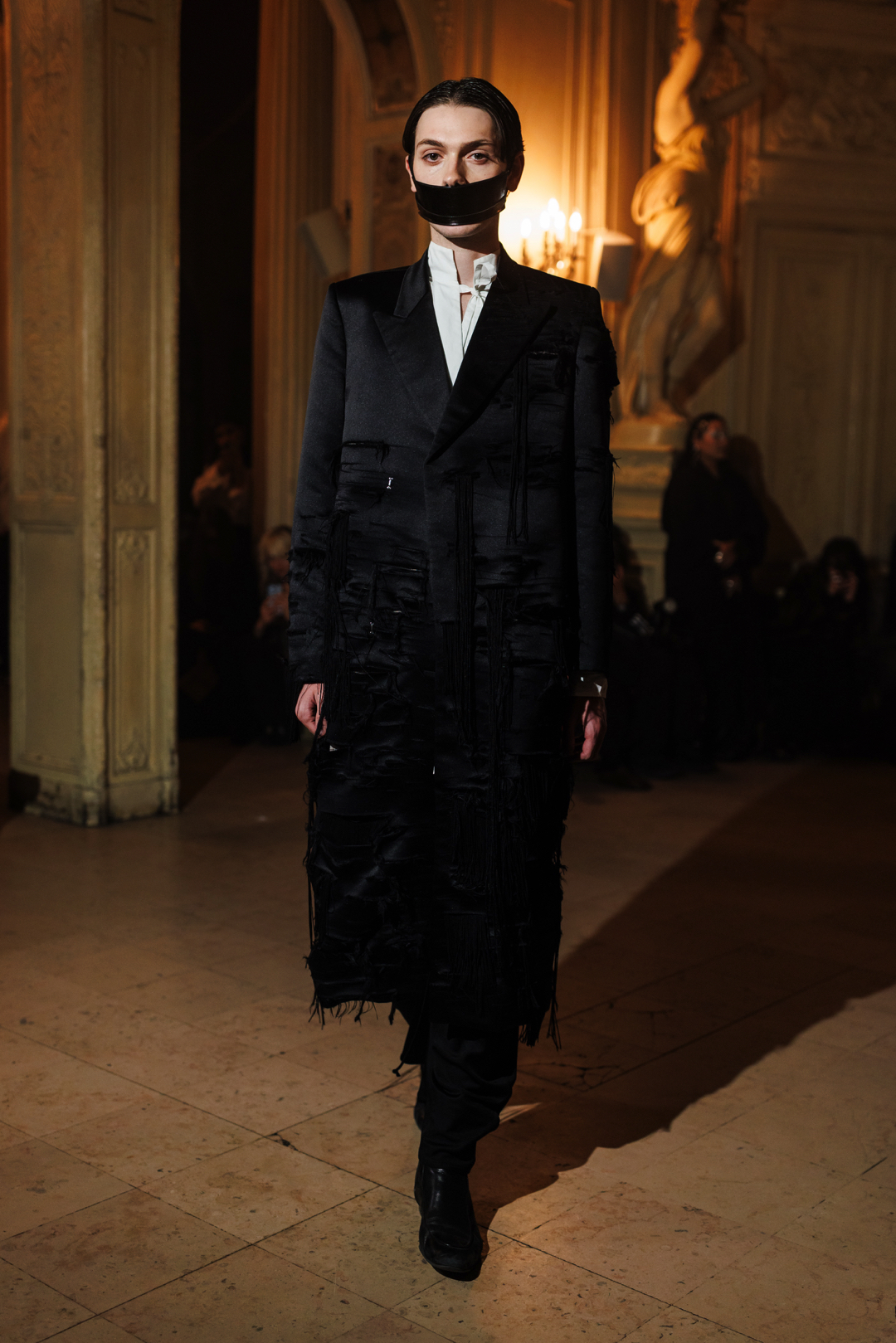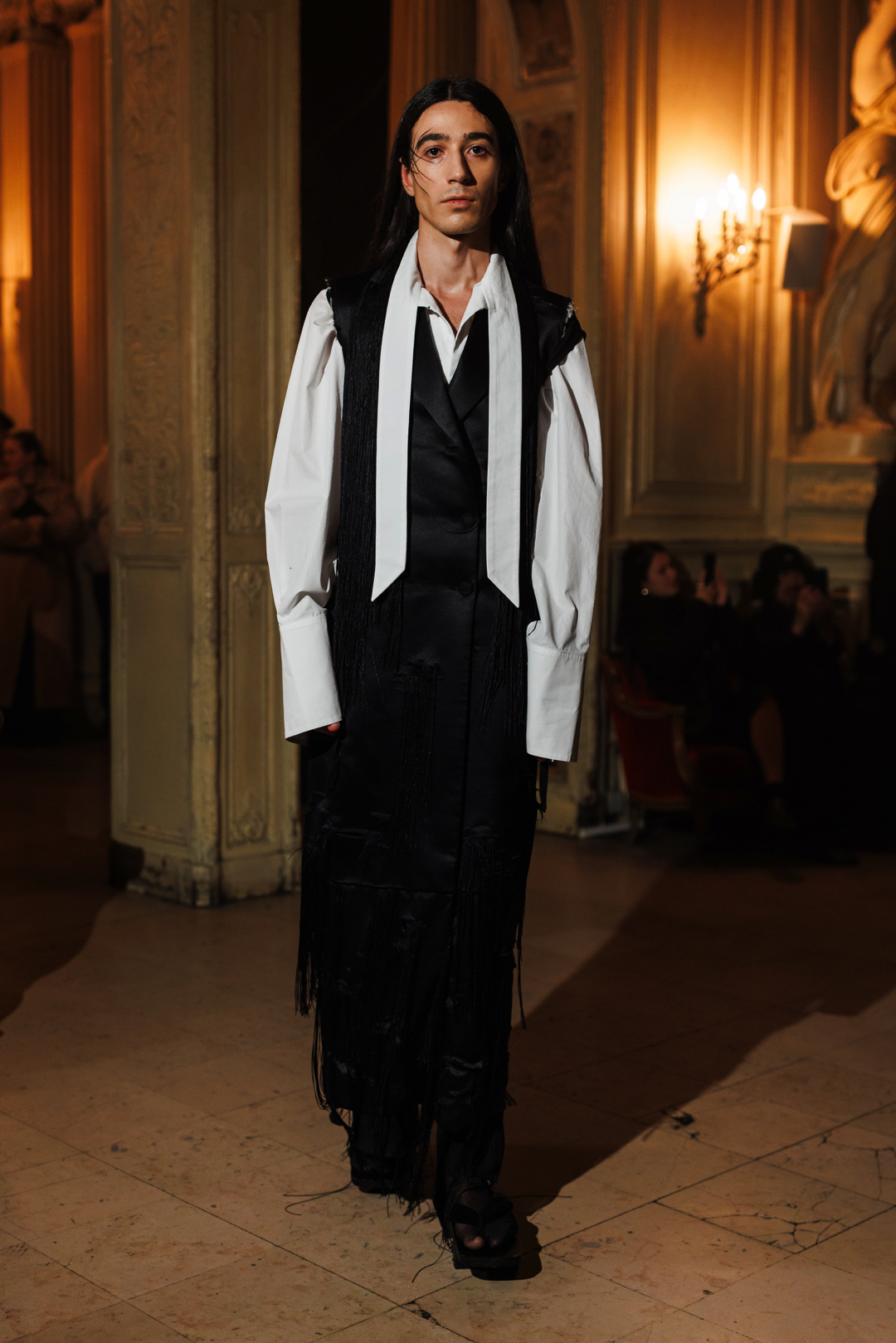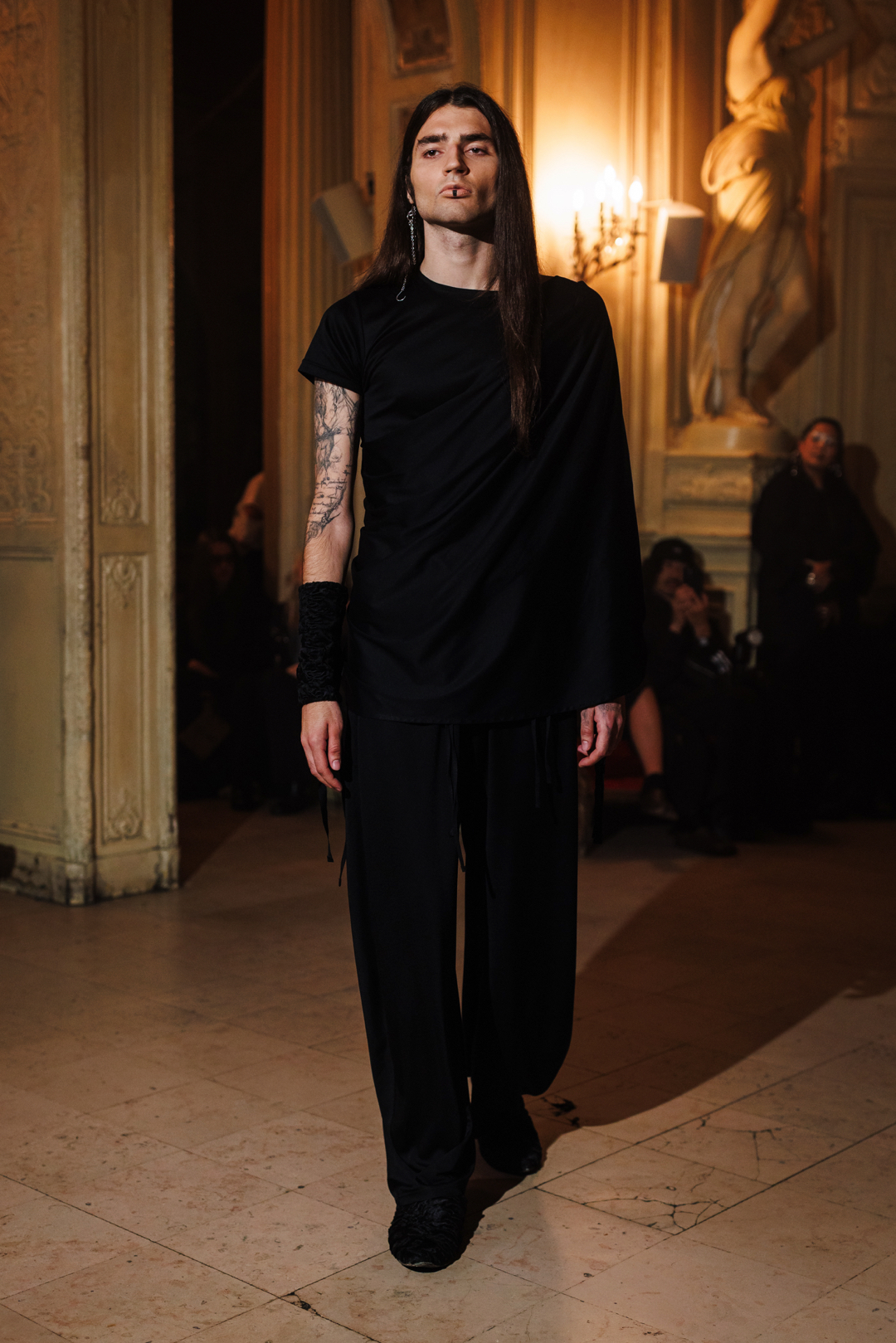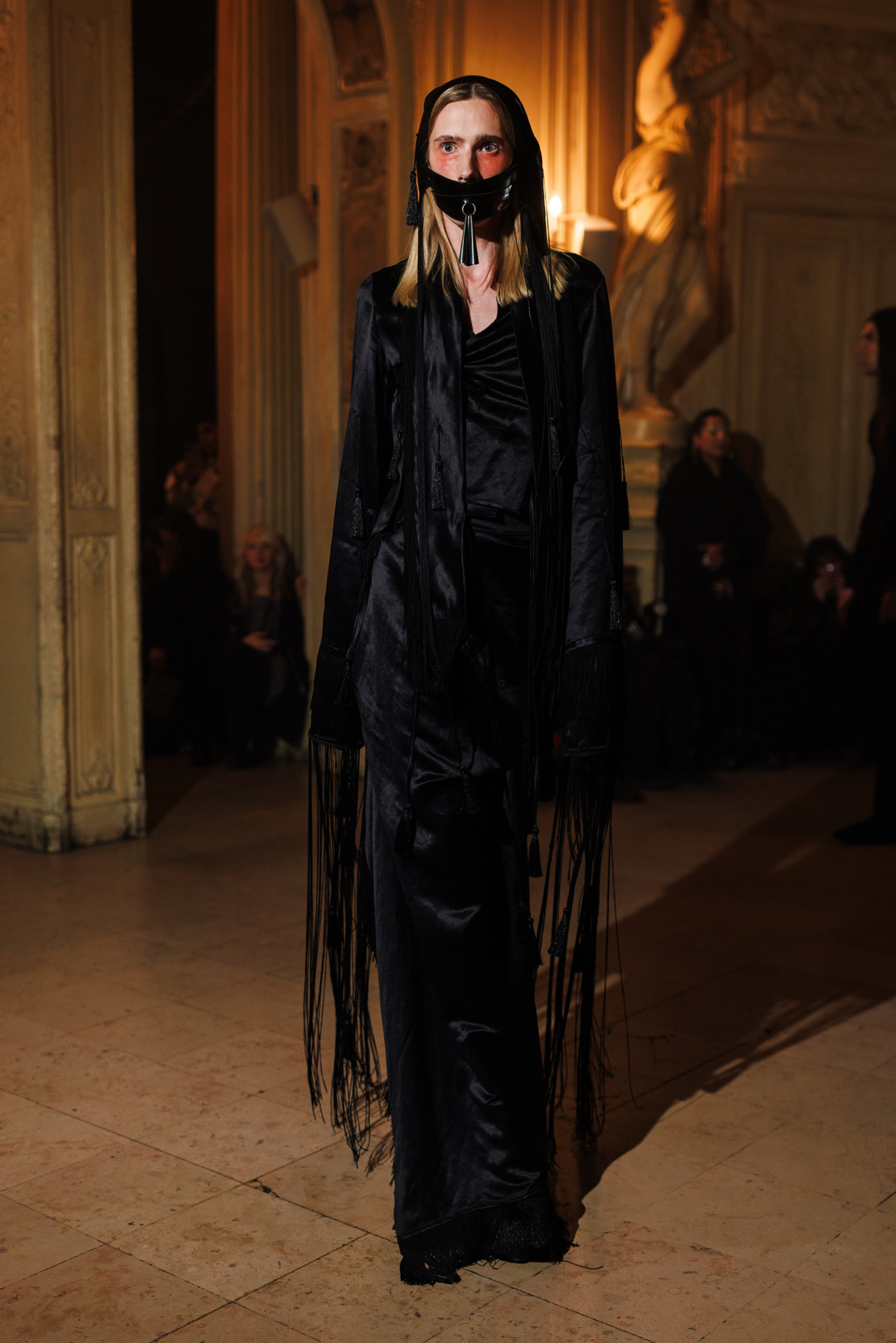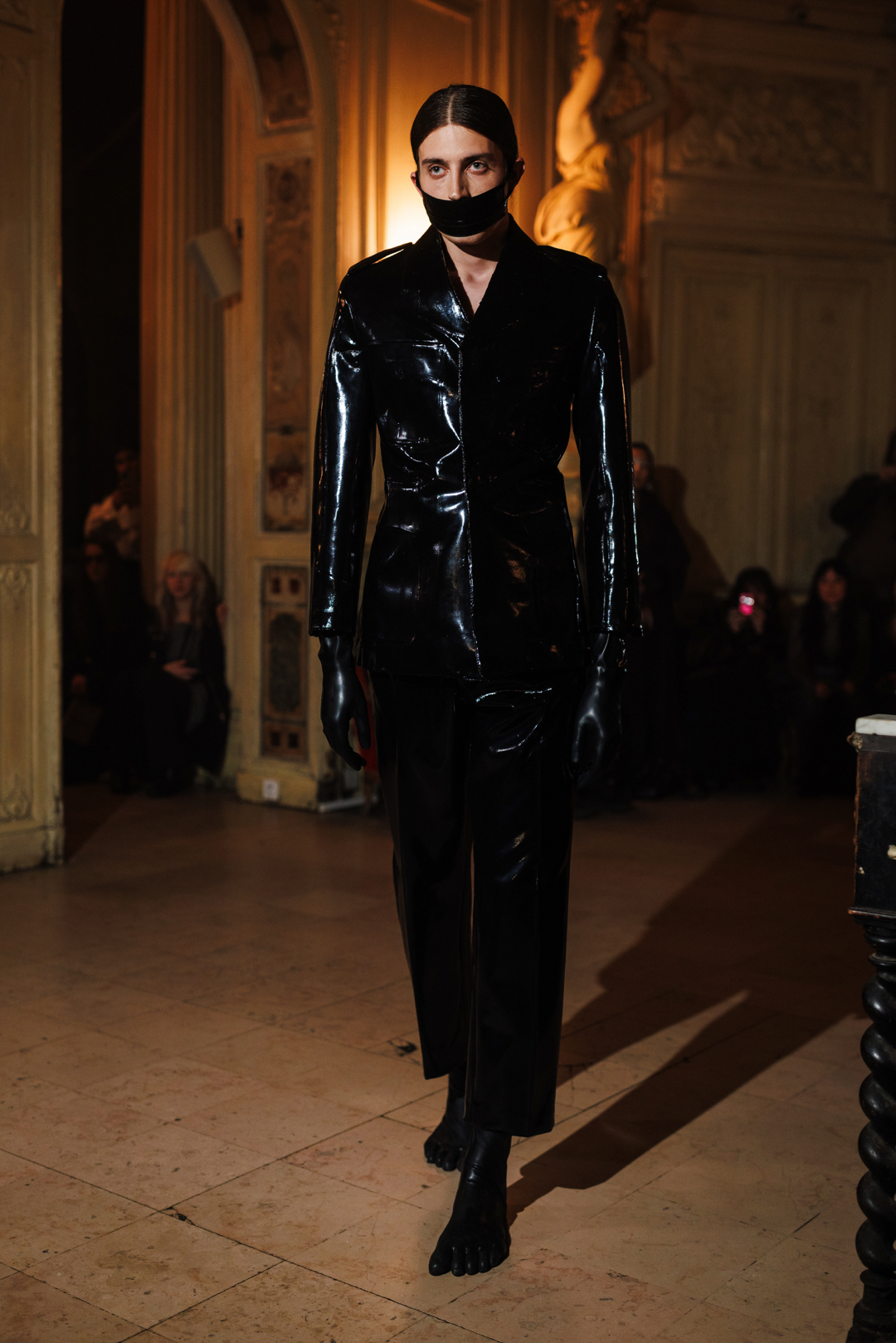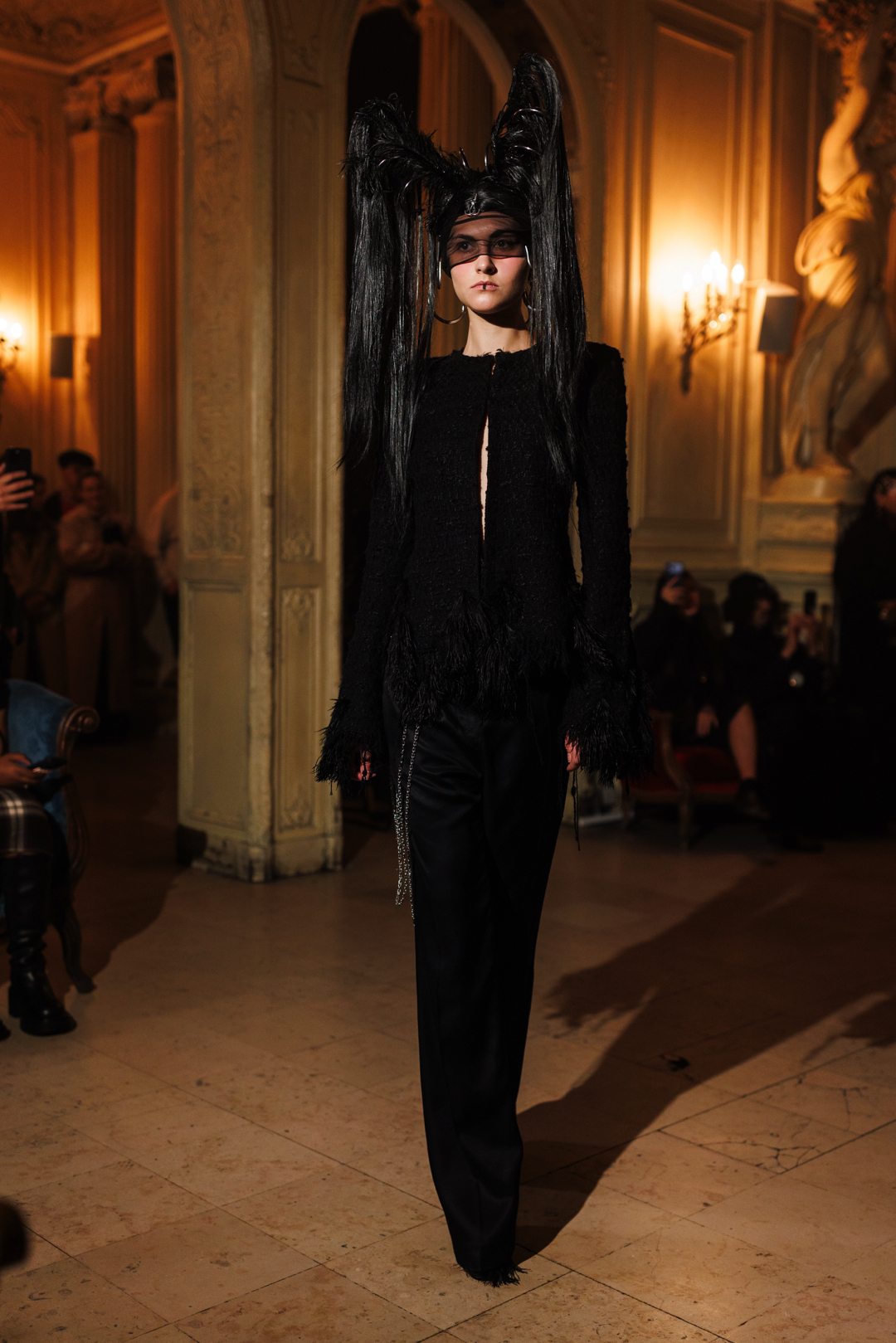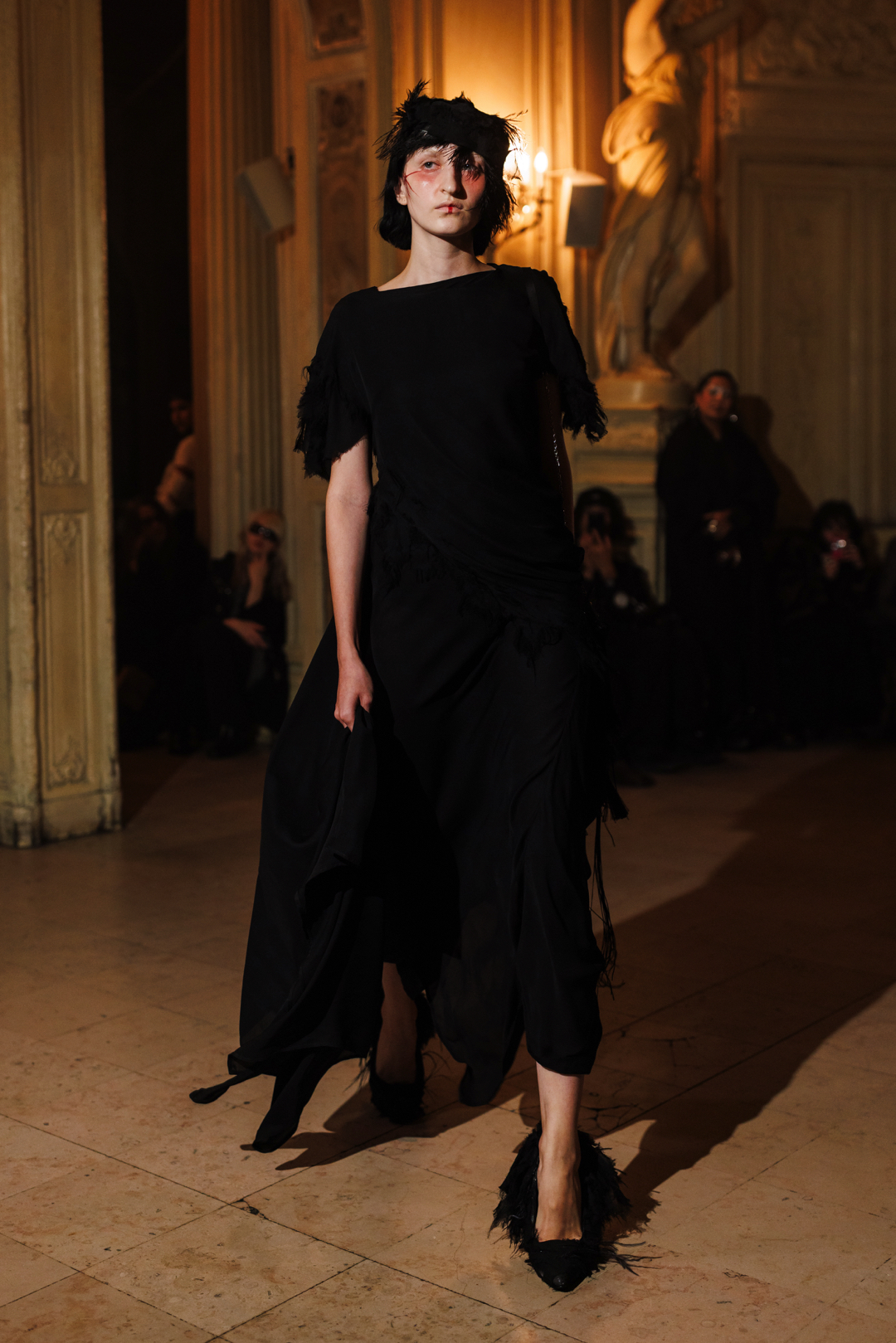
On October 2nd, 2025, during Paris Fashion Week, designer Nadav Perlman presented “In the Absence of Prophecy”, his Spring/Summer 2026 collection, at Le Carmen, followed by a performance.
This marks the brand’s second collection, under which Perlman also creates performances and short films. In his multidisciplinary practice, he looks to spirituality, whether from Eastern or Western traditions, to seek a contemporary expression of this inherent wisdom through fashion and art. His aim is to create what can be seen as a contemporary religious experience, using the universal language of clothing.
This collection is a response to the turbulent times in which we live, where we are constantly confronted with unsettling images of reality. In the 1970s, Austrian performance artist Hermann Nitsch created severe performances that held a strong aesthetic beauty. He explained that society at the time was still haunted by the horrific images of the Second World War but lacked a healthy outlet through which to process and confront those images. His actions invited audiences to witness confrontational imagery, including crucifixion motifs and animal blood, that drew heavily on religious symbolism.
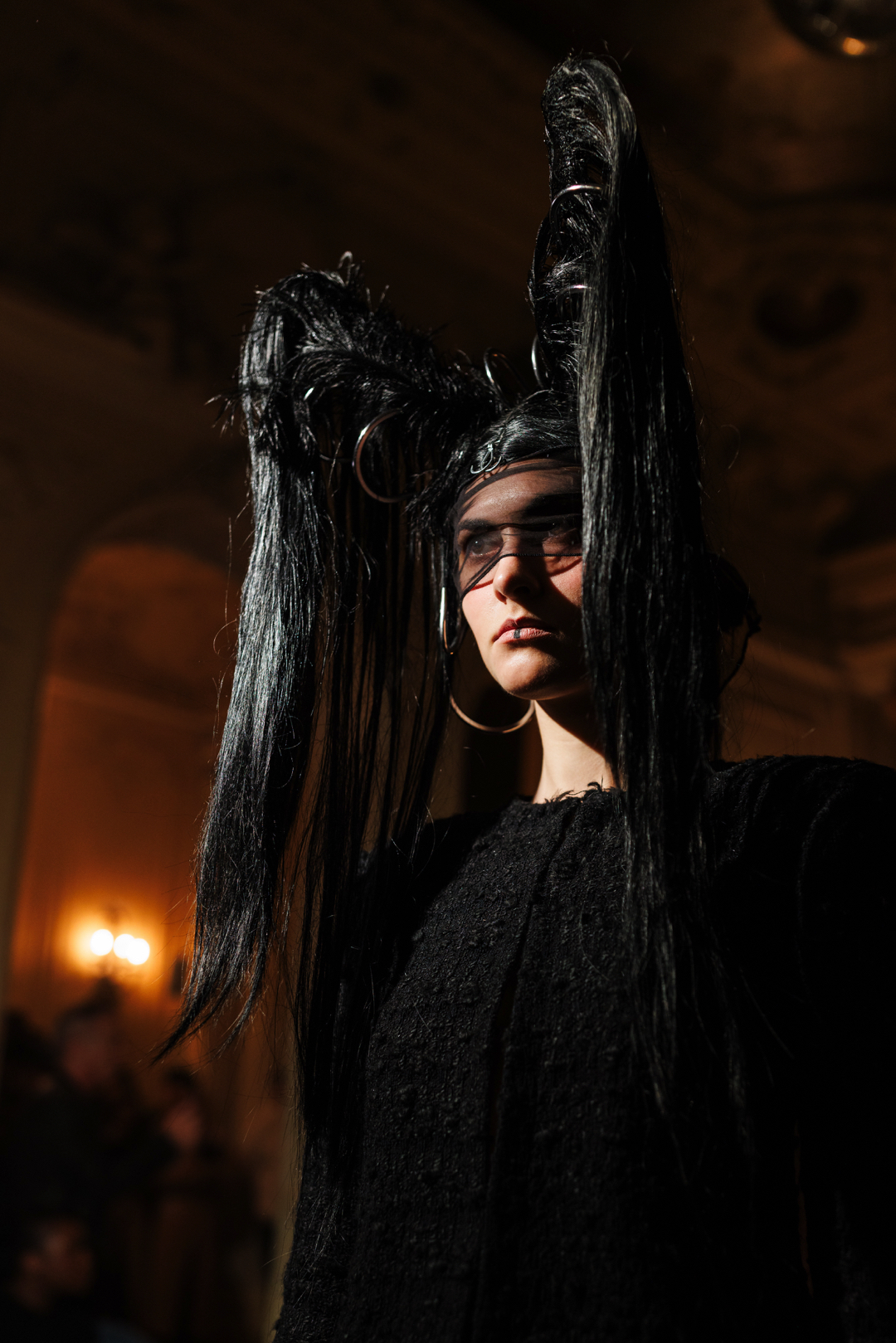
Perlman found this idea, that through art we can create a space to confront unsettling images in a healthy and intentional way, deeply inspiring. He became fascinated by the different ways in which humans use such images and experiences for the sake of transcendence and growth, choosing to face them consciously rather than escaping or being overwhelmed by them.
This led him to search for other practices in which humans intentionally come into contact with pain and discomfort in both aesthetic and spiritual ways. He was particularly drawn to hook suspension, which became a central theme in this collection. Although he had been aware of it before, learning about the practice in the current context allowed him to see a new kind of beauty in it, powerful yet fragile. He found a poetic resonance between hook suspension and Nitsch’s artistic approach. The practice is embodied in the collection through the incorporation of hooks into the garments in both a decorative and functional way, as they transform the shape of the garment. The encounter between heavy metallic objects and soft fabrics reflects the contrast between fragility and severity that runs throughout the collection.
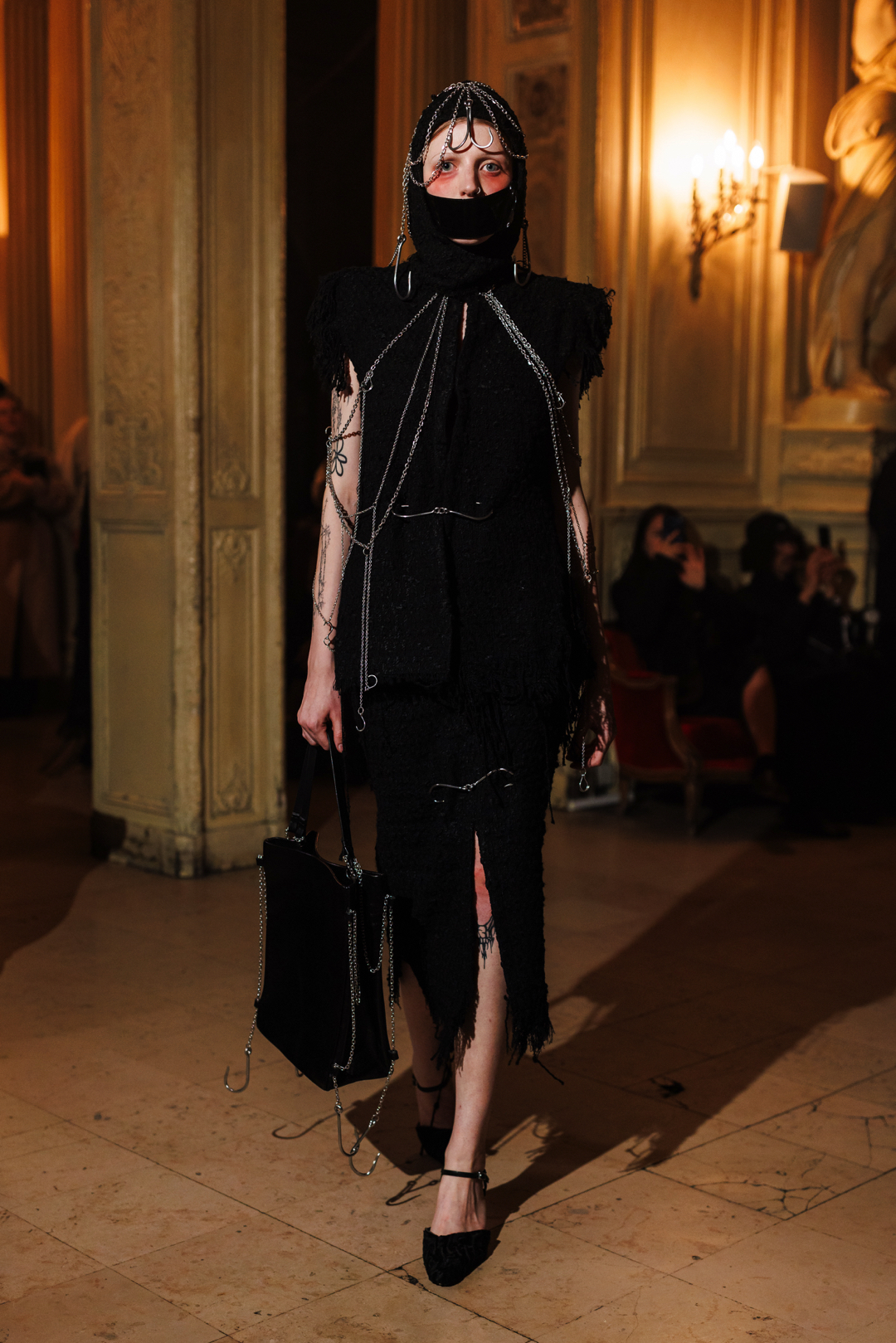
In the same research, he encountered various Jain philosophies, an Indian religious tradition centred on purity and non-violence, which also includes rigorous practices. Examples include periodic vows of silence and the use of a muhapatti (a small mouth-cover associated especially with Śvetāmbara sub-traditions) as a symbol of restraint and care, and the initiation rite of kesh-lochan, in which hair is plucked by hand. Some monks carry a peacock-feather whisk (often called pinchi) or a small broom (rajoharana) to gently sweep the ground before sitting, so as not to harm even the smallest creatures, an enduring symbol of non-violent living. Monastic dress varies by sect: Śvetāmbara monks and nuns wear pure white robes, while Digambara monks traditionally practice nudity (with exceptions in some clerical roles).
The monks’ draped forms appear in the collection, accompanied by peacock-feather charms and accessories. The jersey-draped pieces are soft and fluid on one hand, while also resembling rigid carved statues. The textures throughout the collection aim to balance refinement and chaos, something both rough and delicate. Feathers are integrated, as if plucked from the surface of the fabric. Some pieces were distressed and then embellished with fringes, while others used delicate fabrics with raw, distressed edges. Sheer black garments reflect the purity of the body, while holding a subtle sexual tension. Antique tapestries have been revived and repurposed into new garments, weaving historical richness into contemporary forms.
Photos: Courtesy of Nadav Perlman, Getty Images / Richard Bord
www.nadavperlman.com
@nadavperlman
Highlights from the Collection